






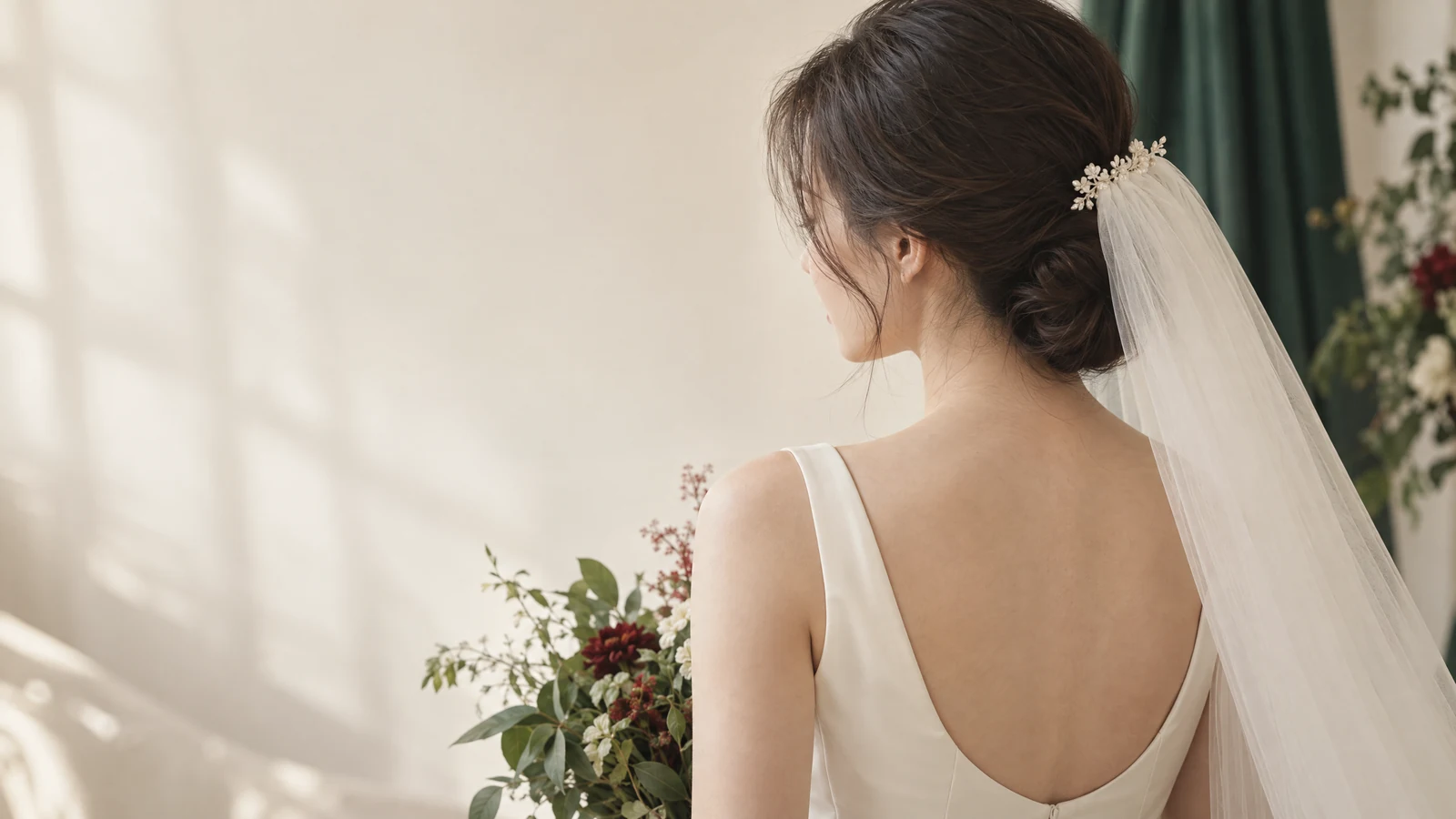
Wedding hairstyle with curly roots and straightened lengths: locate the join
The texture join is the area where the returning natural pattern meets the older treated portion. It may sit near the crown in one section and lower down elsewhere, so it need not form a neat line around your head. Look at the front, sides and back in your normal parting. Notice where the hair changes direction or expands, rather than measuring regrowth alone. That location helps explain why an attractive back-view reference may not answer your concern at the temples.
Find out what was actually done to the lengths. A permanent shape-changing procedure and a smoothing service are not interchangeable descriptions, and photographs cannot identify the chemistry. The guide to how long does hair straightening last explains why treated lengths and new growth need separate expectations. For wedding planning, the practical consequence is simple: do not assume washing will restore an old curl pattern, or that another root service is necessary because the two areas now look different.
Assessing a wedding hairstyle with curly roots and straightened lengths before choosing tools
Bring ordinary photographs as well as inspiration images. A view after your usual wash and drying routine is more informative about the join than a freshly ironed picture. Say where you notice stiffness, tangles or short broken hairs, without trying to diagnose them. The styling discussion should establish whether the transition can remain visible, be partly gathered or be arranged within a softer outline. It should not begin with a promise to make every strand behave identically.
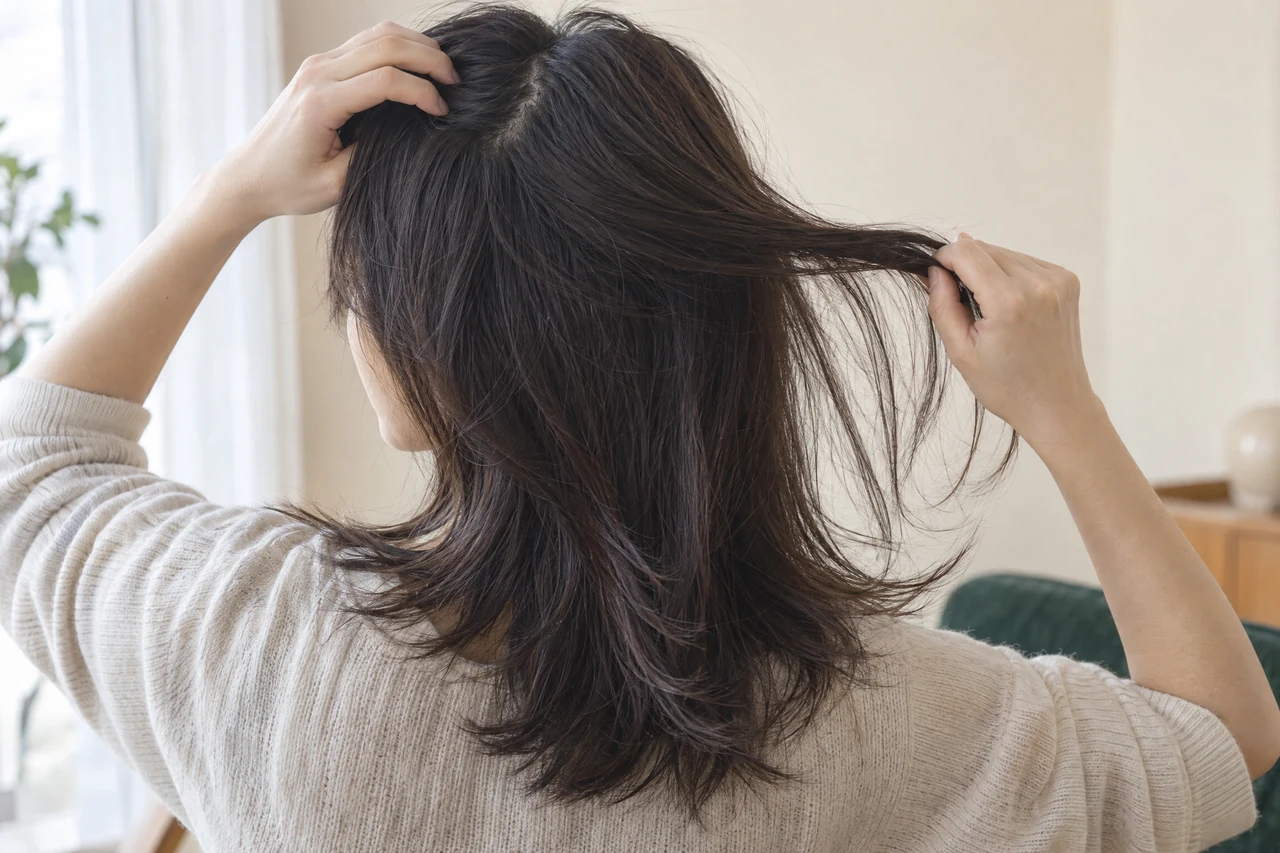
Choose gathered hair when the transition needs containment
A low bun or another gathered shape places more of the older length inside the finished structure. That can make the overall outline less dependent on a continuous curl running from root to tip. It does not mean the roots must be brushed flat. Discuss a crown that retains some natural lift, with the straighter length folded or arranged below. Where shorter sections escape, decide whether they can sit comfortably as part of the style instead of being repeatedly pulled into the fixing point.
Consider a hypothetical bride whose curl-to-straight join is prominent above the ears and who wants an exposed dress back. A softly gathered outline may answer both priorities, but the ear-side view still needs checking. The comparison of updo or hair down for wedding helps weigh the broader shape choices. Here, the additional test is whether gathering the hair resolves the specific transition you dislike without requiring a very tight crown or a deliberately hidden face-side curl.
Contained length is not the same as a tight finish
Ask to see the bun position from the side and to feel the style while turning your head. A gathered shape is an arrangement choice, not an automatic assurance of gentle handling or all-day durability. If it only looks right when the natural roots are stretched firmly towards one point, change the outline. A little crown texture may be a better compromise than a sleek reference that relies on tension you do not normally find comfortable.
Use half-up hair only where partial control is enough
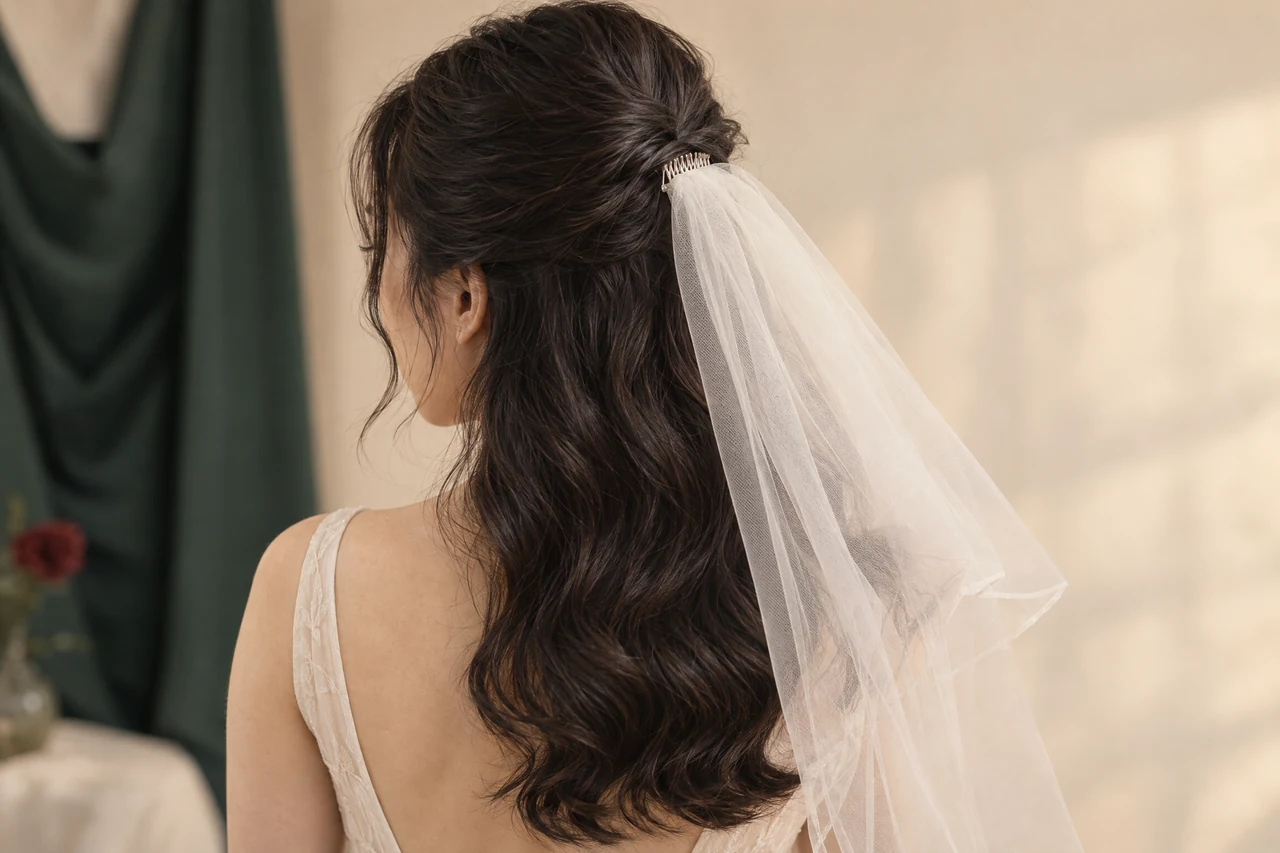
Half-up hair can organise the crown and sides while keeping length visible over the shoulders. Its limitation matters during grow-out: the lower layers still show their own transition. Before choosing it, separate the sections you intend to gather from those that will remain loose. Look at the join in both groups. A half-up twist that tidies the top may leave the strongest contrast directly below the fixing point, particularly when the straighter ends hang against the dress.
Decide whether that contrast is acceptable rather than treating it as a failure to finish the hair. You might prefer natural root volume with a straighter lower outline, or a few selected loose sections instead of a large curtain of hair. Check both sides of the face, because a reference photographed from behind can conceal the area that concerns you most. Half-up styling should earn its place by controlling the right sections, not simply by sitting between an updo and hair down.
Place the veil without making it carry the hairstyle
Bring the actual veil and comb if available. Establish where the hair is held and where the accessory sits; they are related decisions, but they are not the same support. Ask how removal would affect the gathered sections and who could help. A comb positioned attractively in a photograph does not prove it will sit securely or comfortably in your own hair. Test the half-up shape without the veil too, so its outline still makes sense after the accessory comes off.
Leave hair loose only with realistic texture and tool expectations
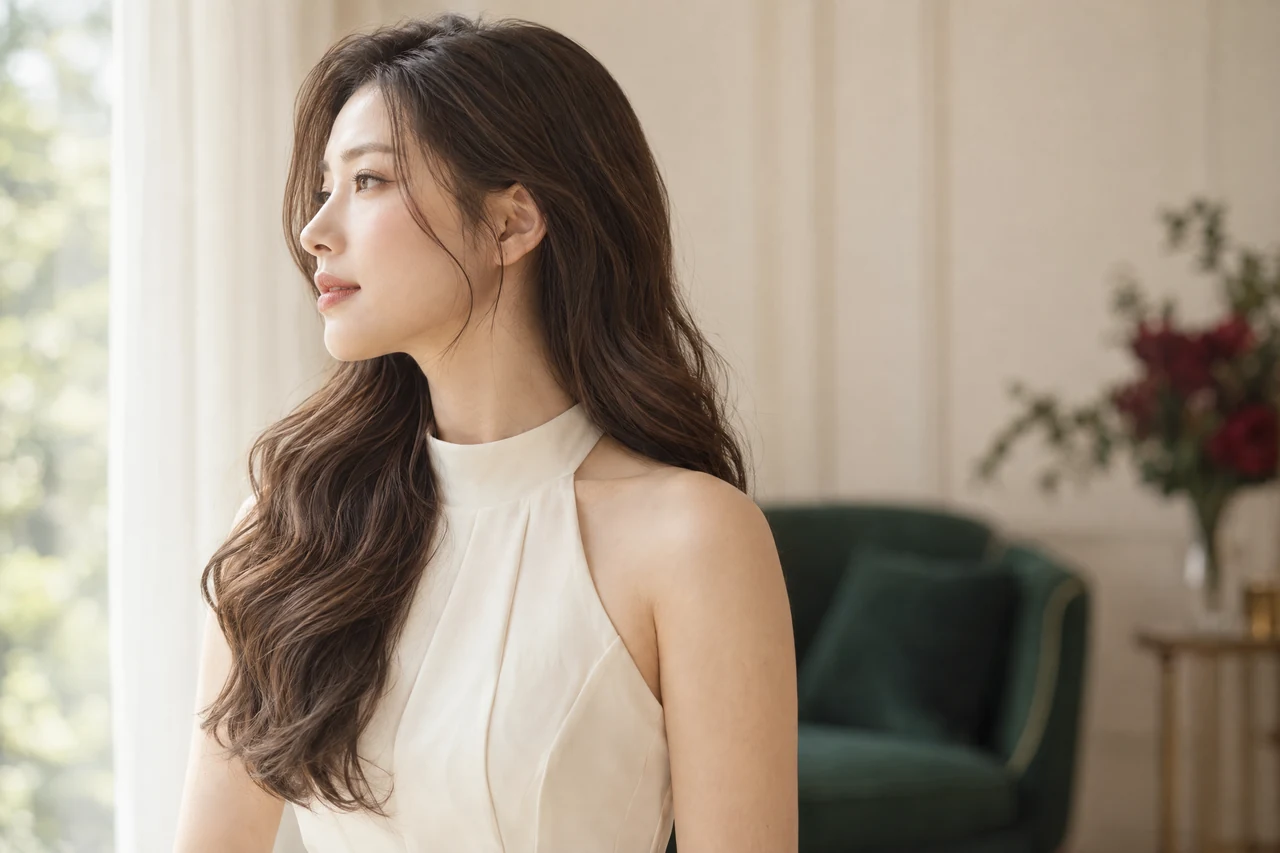
Loose hair exposes the largest amount of the root-to-length transition. That can be a deliberate choice if you like the contrast, but it is less suitable when your entire brief depends on hiding it. Examine the shape at the shoulder, not only at the scalp: fuller roots and straighter lengths can create an outline different from continuous waves. Moving the hair to one side changes what is visible, yet does not remove the join. Check the result against your neckline and normal head movement.
Do not assume a curling iron can turn older straightened lengths into the same pattern as the returning curls. Whether any temporary shaping is appropriate depends on the previous procedure, current condition and its aftercare instructions. The American Academy of Dermatology's hair-care damage guidance recommends lower heat and shorter tool contact, with less frequent use. That general advice is not permission to override a service-specific restriction or to keep reheating a section because its curl has dropped.
Let the permitted method decide the achievable finish
Confirm any restrictions with the provider of the earlier service rather than borrowing a waiting period from someone else's treatment. If the procedure is unknown, or the lengths are fragile, discuss a no-additional-heat structure before pursuing a waved finish. Rollers or other non-chemical methods also need assessment; they are not guaranteed to produce matching textures. The loose-wave concept image here illustrates a neckline and silhouette only. It is not evidence that your treated hair can reproduce those waves.
Rehearse comfort and keep an existing-hair backup
Use a trial to test the main style and a simpler alternative on the hair you actually have. Look at the transition after sitting, turning and walking, and again after any planned veil removal. Keep the preferred parting consistent so you can compare the same areas. If your schedule includes outdoor photographs, notice what happens to the loose sections rather than assuming the gathered parts control them. A changed outline is a reason to reconsider the arrangement, not automatically to increase heat or tension.
Check comfort as carefully as appearance. The American Academy of Dermatology's guidance on hairstyles that pull links repeated tension over time with hair loss and advises changing a style immediately for pain, stinging or scalp crusts. Do not wait for a wedding photograph before asking for a painful fixing point to be loosened. If you notice hair loss, seek a dermatologist's assessment rather than treating it as a texture-blending problem for the salon to solve.
Agree the change before you need it
A useful backup might gather previously loose lengths into a comfortable low arrangement while keeping the same parting. Another might release an uncomfortable accessory and retain the underlying half-up shape. Rehearse the exact change and confirm who can carry it out; a salon appointment does not imply someone will attend the venue. Avoid a backup that requires new extensions, unfamiliar tools or chemical processing at short notice. If further straightening is ever considered, make that a separate assessment after the occasion pressure has passed.
Occasion styling during a mixed texture straightening grow out: prepare your enquiry
These 6 preparation details help keep the discussion focused on the texture join rather than a generic bridal reference. Put your service history alongside views of your current hair and mark the part of the outline that matters most to you. It is useful to distinguish a preference, such as keeping length visible, from a limit, such as avoiding additional heat. If neither preferred shape fits those limits, simplify the shape rather than using the wedding date as a reason to repeat chemical work.
Ask about bridal hair to confirm the in-salon scope, preparation, trial arrangements and an individual quotation. Describe both the main outline and the existing-hair backup you want assessed. Do not assume ordinary hair-styling prices cover a bridal trial, accessories or attendance elsewhere. Confirm availability, the appointment plan and any required consultation language by enquiry. An English-language website alone does not establish the language that will be available for your appointment.
Compare temporary structures by the part of the texture transition they leave visible.
| Structure | What it can organise | What still needs checking |
|---|---|---|
| Softly gathered bun | Older lengths arranged within the shape | Root lift, escaping short sections and comfortable fixing |
| Half-up outline | Selected crown and face-side sections | The join in loose lower layers and veil removal |
| Loose outline | Parting, shoulder placement and visible length | The full transition and any permitted shaping method |
| Rehearsed gathered backup | Loose lengths collected without new chemical work | A feasible change using existing hair and available help |
Your preparation checklist
- Name the previous straightening or smoothing service and bring its aftercare instructions.
- Photograph your usual roots, sides and lengths without disguising the transition first.
- Show the dress neckline and bring the actual veil or hair accessory where possible.
- Identify the texture contrast you accept and the area you most want organised.
- Explain tool limits, fragile sections and any discomfort with gathered styles.
- Bring the day's movement plan and request a rehearsed backup using existing hair.
Frequently asked questions
Should I straighten the roots again just for the wedding?
Not simply to make a temporary occasion style look more uniform. First assess a gathered, half-up or deliberately mixed loose outline. Another chemical procedure needs its own suitability discussion, with the previous service identified and the current hair assessed. If that information is missing or the hair is fragile, defer chemical work rather than rushing a decision around the date.
Can a temporary curl make straightened lengths match the roots?
It may be possible to shape some lengths temporarily, but matching the natural root pattern and retaining that finish cannot be assumed. Confirm whether the earlier service permits the proposed tools, and test an appropriate method if the stylist considers it suitable. Temporary styling is not a reversal of the previous chemical change. Keep a structure that works without matching curls as your alternative.
What if the join is still visible after the trial?
Decide whether the remaining contrast bothers you in the views that matter, including the front and sides. If it does, compare gathering more of the loose sections, changing their placement or simplifying the outline. Do not respond by automatically tightening the roots or repeatedly heating the same area. A visible difference can remain part of an intentional wedding style.
Enquire about a temporary wedding shape for your current hair
Send a WhatsApp enquiry to +85253057561 with your wedding date, current hair photographs, previous straightening details and preferred outline. Ask Vit So at 252 Hollywood Road, Sheung Wan, Hong Kong about in-salon bridal styling and an existing-hair backup. Availability, preparation, appointment language and the individual quotation require confirmation; sending an enquiry is not a confirmed booking.
Start your WhatsApp enquirySources & further reading
- 10 hair care habits that can damage your hair — American Academy of Dermatology
Further reading on reducing heat exposure and handling hair gently. These general recommendations do not replace the restrictions or instructions for a particular straightening procedure.
- Hairstyles that pull can lead to hair loss — American Academy of Dermatology
Explains repeated hairstyle tension, discomfort that calls for an immediate style change, and when hair loss needs a dermatologist rather than a styling solution.



