






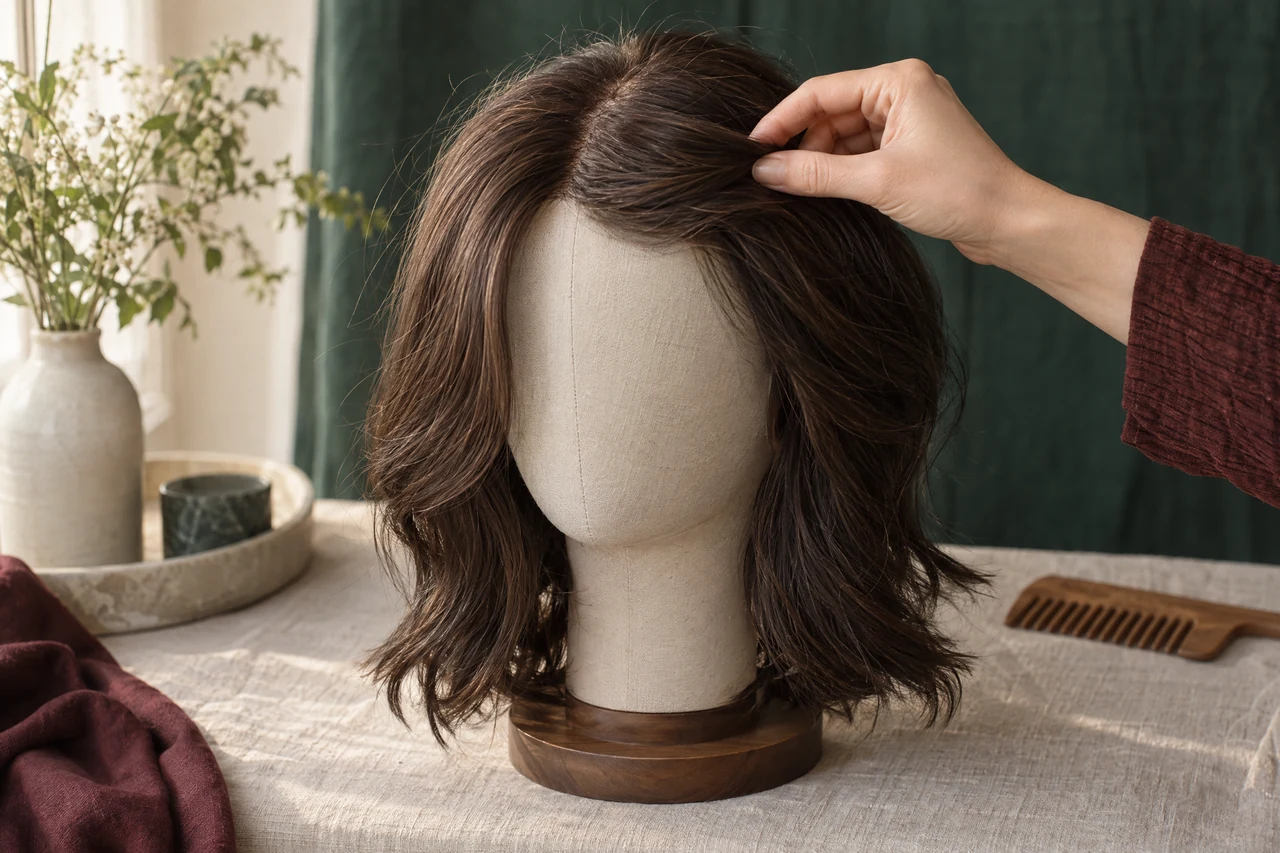
Brand relationship disclosure: OWNSTRAND and Vit So have the same owner. This article provides selection guidance, not an independent review. Confirm styles, supply and visiting arrangements with OWNSTRAND.
Remy wig labels and colour history: separate the label from evidence
OWNSTRAND's guide to Remy human hair wigs describes Remy as commonly meaning that cuticles face one direction. That is a description of handling, not a complete manufacturing history. OWNSTRAND is Vit So's same-owner sister brand, so this is commercial context rather than an independent review. Ask how the maker defines the term for your chosen style; do not turn the label into a claim about virgin hair, a single donor or a particular country.
Keep a short evidence note beside each candidate. Record the precise claim, who supplied it, and whether it applies to the selected colour as well as the style. A manufacturer specification sheet can clarify the stated fibre and construction, but it may not document every processing step. If the seller cannot establish an origin or treatment detail, mark it unknown. Neither a higher price nor a soft sample supplies the missing record.
Material, cuticle description and cap construction answer different questions. The existing guide to human hair vs synthetic wigs can help with the broader material choice, but it cannot resolve a particular Remy claim. Compare similar lengths, density and cap features when considering a premium. Otherwise you may be paying for a different construction or silhouette while attributing the entire difference to one word on the label.
A useful answer names the exact style
Ask: 'What does Remy mean for this manufacturer's style, and which document supports that description?' A reply that only repeats 'premium human hair' leaves the original question unanswered. Distinguish a published specification from a salesperson's general explanation, while accepting that neither necessarily provides a complete chain of custody.

Read processed human hair wig specifications for prior treatment
The OWNSTRAND page for human hair wigs treats the fibre category separately from processing, fit and care. Use it to frame a more specific enquiry: was this shade lightened, coloured or otherwise treated before sale, and what can the supplier confirm? Ask about the chosen option rather than the whole range. A Remy description and a processed shade are not necessarily contradictory, so request the two explanations separately.
Processing matters because appearance-changing treatments can affect the hair itself. The American Academy of Dermatology notes that such treatments can cause dryness and brittleness.[1] Its advice concerns a person's own hair, not permission to colour a finished wig. It nevertheless explains why a documented treatment history is useful when discussing a fibre that you may want to restyle. It does not reveal how much processing any photographed wig has undergone.
Ask whether the finish includes a coating, whether the texture was altered, and what the maker says about further chemical work. These are questions, not assumptions that every wig has received those treatments. Complete records may be unavailable. If later colour change is central to your plan and approval remains unclear, choose a supplied shade closer to your target or delay the decision. Do not interpret an unanswered question as evidence of untreated hair.
Request item-specific documents before discussing payment
For readers looking to buy wigs online Hong Kong, the OWNSTRAND shop provides filters and an enquiry route rather than confirmation that every displayed option is available. Save the manufacturer, style name, colour code and size together. Request the specification and care information for that combination, then ask for a quotation and supply arrangements. A catalogue image, colour selector or message sent to the seller does not itself establish an order.
Read the quotation against your intended use, not just its total. Ask what fitting, cutting or other services are included, whether they are available for that item, and what would be charged separately. Establish which terms apply if the supplied colour differs from the agreed reference or if the fit is unsuitable. Do this before alteration, because you need to know whether cutting, washing or styling changes the seller's return conditions.
Keep dated copies of the answers and note which points remain provisional. For an in-person enquiry, confirm whether a relevant sample or shade reference can be viewed at OWNSTRAND's one Kwun Tong store; do not assume every catalogue item is there to try. Agree the delivery or collection arrangement for the selected option. These practical details protect the comparison from becoming a vague promise attached to a broad category page.
Check the supplied colour, not a hoped-for correction
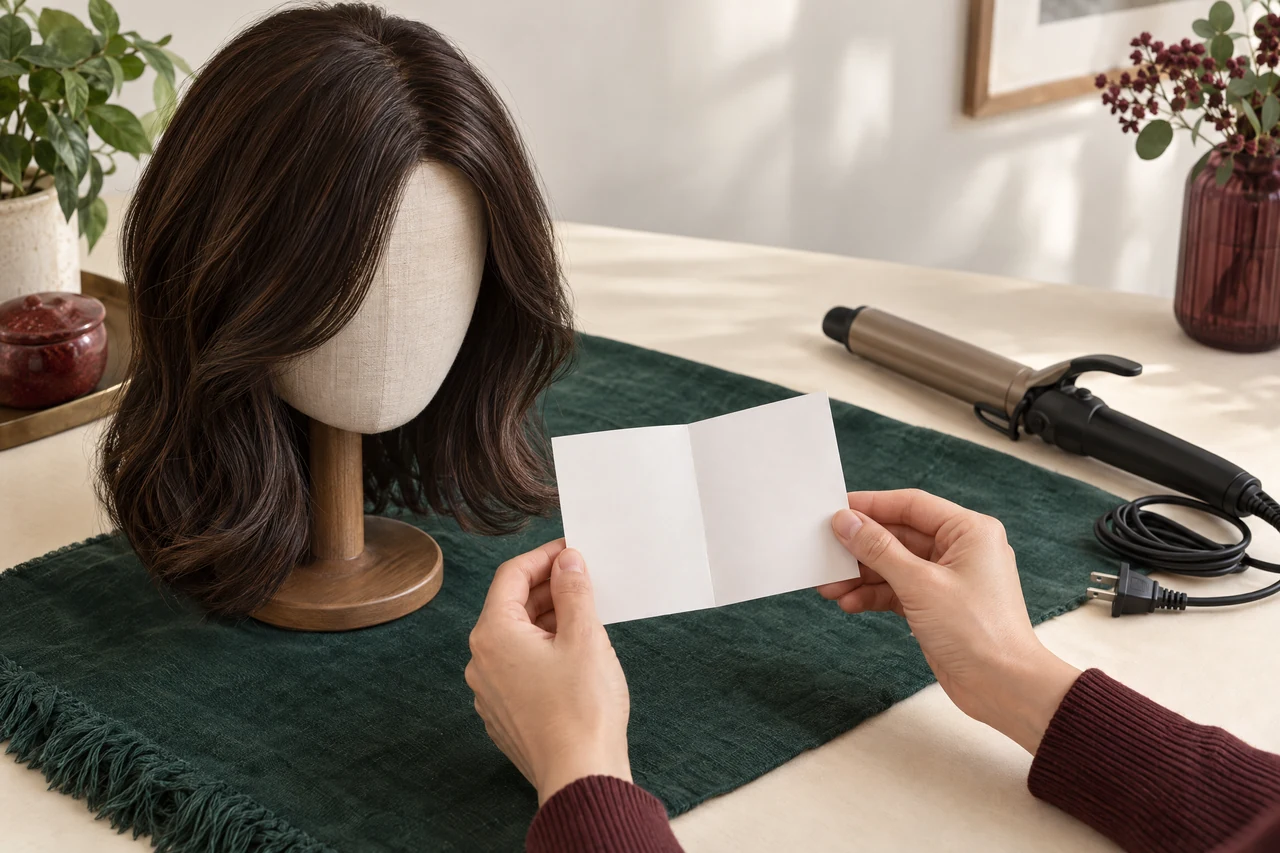
Describe the look in terms a supplier can answer: overall depth, warmth, root contrast and the distribution of lighter strands. Then ask whether the photograph shows your selected colour code or only the style in another shade. Request an original manufacturer reference or a relevant physical swatch where available. A colour name such as 'chocolate' is not enough to compare different manufacturers, and a photograph cannot independently establish processing history.
For consistency, ask how the supplier handles variation between samples and the piece supplied. Check the root, mid-length and ends separately when viewing a sample, because an intentional rooted or highlighted design should not be mistaken for an uneven finish. Look in daylight and ordinary indoor lighting, noting where your reaction changes. This is an appearance check, not a test of cuticle alignment, donor origin or future resistance to fading.
Do not purchase an unsuitable shade on the assumption that a salon can simply fix it. The guide to hair care for colour-treated hair concerns natural-hair care and offers a contrast, not approval to apply those products or methods to a wig. If you want a cooler tone or lighter ends, ask whether a closer supplied colour exists first. Manufacturer permission for the finished piece must precede any discussion of recolouring.
Match the maker's instructions to the routine you will follow
Cancer Research UK advises obtaining and following the supplier's instructions for wearing and caring for a wig.[2] Turn that into concrete questions about cleansing, drying, detangling, storage and any permitted tools. Ask whether instructions differ for your chosen shade or finish. A routine that suits a different human-hair piece may not suit this construction. If a crucial care instruction is missing, request clarification rather than borrowing a temperature or chemical method from another product.
The existing wig care guide helps organise those questions, but the maker's item-specific instructions should lead the actual routine. Decide whether you can realistically carry out that maintenance and obtain any specified products. If you need frequent restyling, find out exactly what is allowed; 'human hair' or 'heat friendly' alone is not a usable tool setting. The premium is less compelling when the permitted care conflicts with how you want to wear the piece.
Stop before an unapproved colour experiment
A hidden test strand is not a substitute for manufacturer approval: it cannot settle every question about the cap, attachment materials or purchase conditions. Ask who can assess an approved service and what limitations still apply. For scalp irritation, symptoms or treatment-related wearing needs, seek advice from a healthcare professional rather than relying on a cosmetic selection guide.

Decide whether the premium buys a benefit you actually need
Use four purchase checks: label evidence, processing history, exact-shade appearance, and permitted care with purchase terms. For each, write what is confirmed and what would change your decision. This is an organising method, not a quality score. A buyer who wants the supplied colour and shape may accept a limited processing record; someone whose plan depends on substantial lightening needs a much clearer answer about that proposed work before paying.
Cancer Research UK points out that buying a more expensive wig does not guarantee a more realistic appearance.[2] Compare the complete candidate rather than expecting the Remy label to deliver the whole result. Examine the face-framing shape, density, hairline and fit alongside the colour evidence. If the more expensive option offers a documented feature you value and a routine you can follow, its premium may make sense. If the only difference is unsupported terminology, the case remains weak.
A decision that does not depend on lifespan promises
Proceed when the supplied look works, the important specifications are clear, and the unresolved details do not undermine your plan. Ask again when one missing answer would change the purchase. Compare another candidate when your preferred style depends on an unapproved alteration. None of these choices requires predicting how many months a particular wig will last.
Four checks for comparing a Remy-labelled candidate with an alternative
| Check | Evidence to request | What it cannot establish alone |
|---|---|---|
| Label evidence | Exact manufacturer's fibre and Remy wording for the style | Virgin status, donor count or origin |
| Processing history | Disclosed lightening, colouring, texture changes or finish | A complete history when details are unspecified |
| Exact-shade appearance | Selected colour code, relevant reference and variation explanation | Future colour stability or safe recolouring |
| Care and purchase terms | Item instructions, quoted services, supply and return conditions | A universal lifespan or suitability for every wearer |
Your preparation checklist
- Save the manufacturer, style, selected colour code and size as one reference.
- Ask what the Remy wording establishes and which document supports it.
- Record disclosed processing, leaving unanswered details marked unknown.
- Confirm that the colour reference represents the option you intend to buy.
- Resolve any proposed heat styling or chemical alteration with the maker's instructions.
- Obtain the quotation, relevant service terms, availability and return conditions before paying.
Frequently asked questions
Can a Remy-labelled wig also have been bleached or coloured?
The label does not by itself establish untreated hair. Ask separately what Remy means for the selected manufacturer's style and what processing is disclosed for the shade. A lack of information should remain an unknown, not be converted into a virgin-hair claim. The finished wig's instructions still determine any permitted future work.
Does a dark shade prove that the hair has not been lightened?
No. The visible shade is not a processing record. Ask what the supplier can document instead of reconstructing a history from a photograph or colour name. If that history cannot be established, decide whether it matters to your plan. It matters especially when your purchase depends on later colour alteration.
What if the supplier cannot provide a full processing history?
Separate unavailable history from the specifications that can be confirmed. You may still assess the supplied appearance, fit and documented care requirements. Do not pay specifically for an untreated or origin claim that remains unsupported. If your intended look requires unapproved recolouring, compare a closer supplied shade or pause the purchase.
Will a Remy premium guarantee longer wear or a more natural look?
No guarantee follows from the label alone. Compare the documented fibre description with construction, fit, colour and maintenance. Cancer Research UK also cautions that a higher price does not guarantee a more realistic appearance.[2] A premium is a personal value decision about the complete item, not proof of a promised lifespan.
Bring your intended look and the unresolved questions
Invite Vit So to discuss your preferred face-framing shape, colour direction and style blending. For item specifications, quotations, availability or a Kwun Tong visit, use the OWNSTRAND guides already linked above and confirm the selected option directly. A style conversation is not product verification or permission to alter a wig.
Start your WhatsApp enquirySources & further reading
- American Academy of Dermatology: Coloring and perming tips for healthier-looking hair
Appearance-changing treatments can cause dryness and brittleness. This natural-hair guidance supplies processing context, not permission to treat a finished wig.
- Cancer Research UK: Wigs, hats and scarves
Obtain and follow supplier wearing and care instructions; paying more does not guarantee a more realistic appearance. General advice, not a product endorsement or lifespan promise.



