







Can You Wear Glasses with a Wig? Start with Your Frames
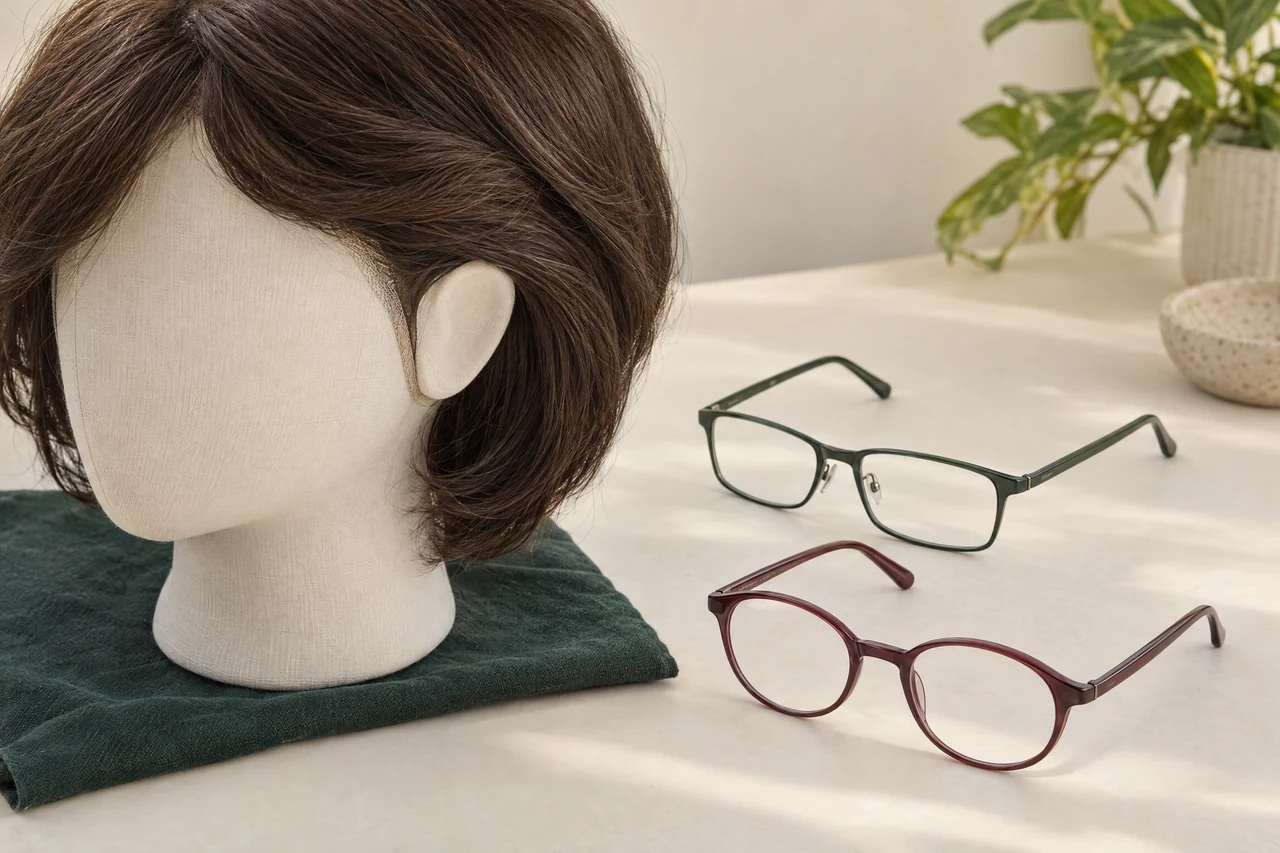
Use the frames you wear most often, including a second pair if their arms differ noticeably. Look at where they sit against the ear and where the cap edge reaches. Do not bend the glasses or cut the cap to force a fit. Record the contact points so a fitting enquiry can address a specific problem rather than a general comfort request.
First, notice how your glasses feel without the wig. Sit in your usual reading position, look ahead and gently turn your head. If the arms already dig in or the frames slide, write that down as a baseline concern. Otherwise, an existing frame problem could be mistaken for a cap problem once the pieces are combined. Your optician is the appropriate person to assess the glasses themselves.
The arms of glasses are also called temples. Follow each arm from its hinge towards the ear and note its thickness and curve. A broad arm and a slender arm can meet the same cap edge differently, even when the front of both pairs looks similar. Compare prescription glasses, reading glasses and sunglasses separately if you routinely switch between them. A frame photograph or size label cannot replace wearing the actual pair.
In its fitting guidance, the American Cancer Society advises removing glasses before trying on a wig and following the directions supplied with it. This gives you a useful starting sequence: establish the wig's intended position first, then gently replace your glasses without driving the arms into the edge.
Review full head wigs to check its service scope and the details to share before arranging the related work.
Can You Wear Glasses with a Wig Depends on the Actual Ear-area Fit
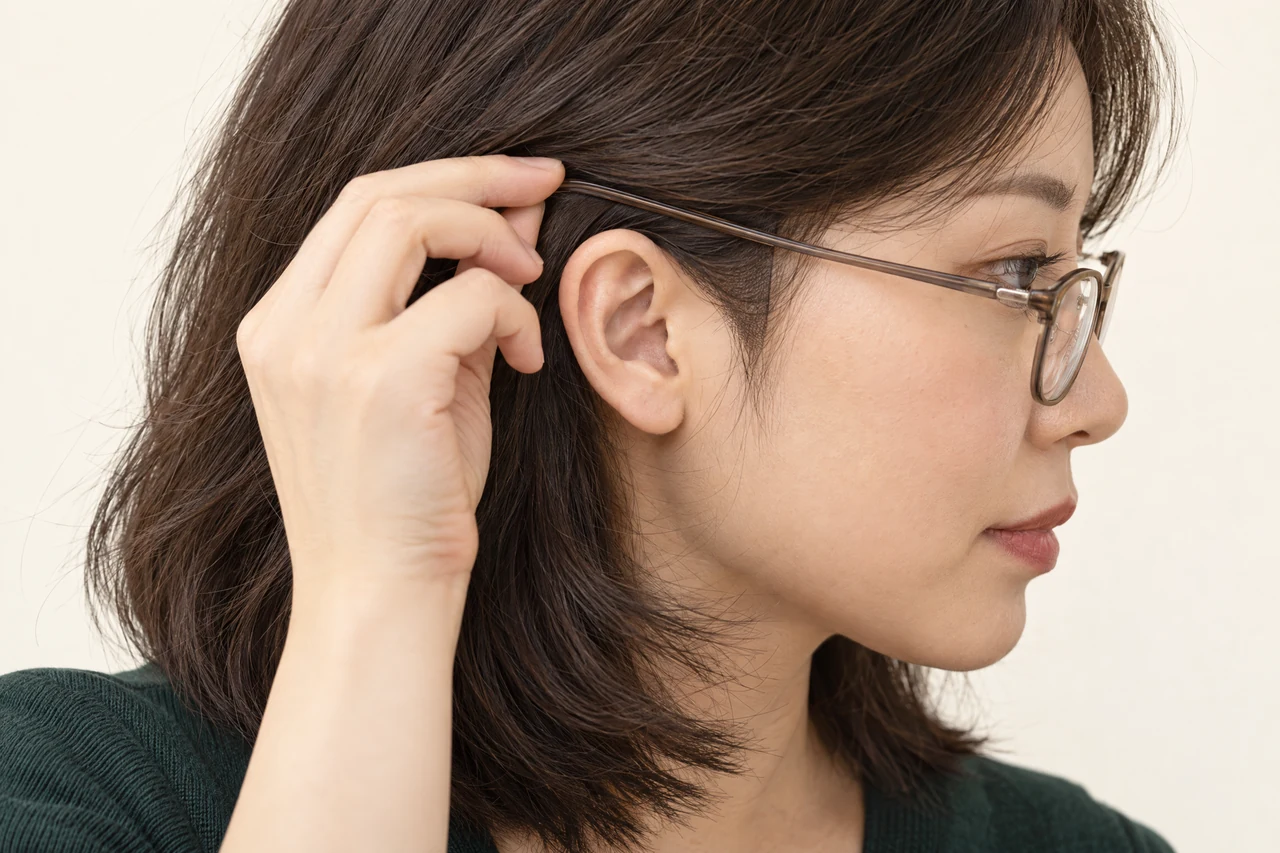
Check the left and right sides individually rather than assuming they will behave alike. Use a side mirror, or ask someone to help you see where the frame passes the ear. You are looking for a repeatable resting position, not a gap you have created by holding the hair aside or pressing the cap down. Let go of both items before judging the result.
Check the Cap Edge and Spectacle Arms Together
Follow the piece's wearing instructions, then observe the glasses and cap while turning your head and moving as you normally would. Note whether the frames lift the edge or the piece changes their position. A static front view may not reveal this interaction. Any adjustment to the piece must respect its construction and needs assessment rather than improvisation.
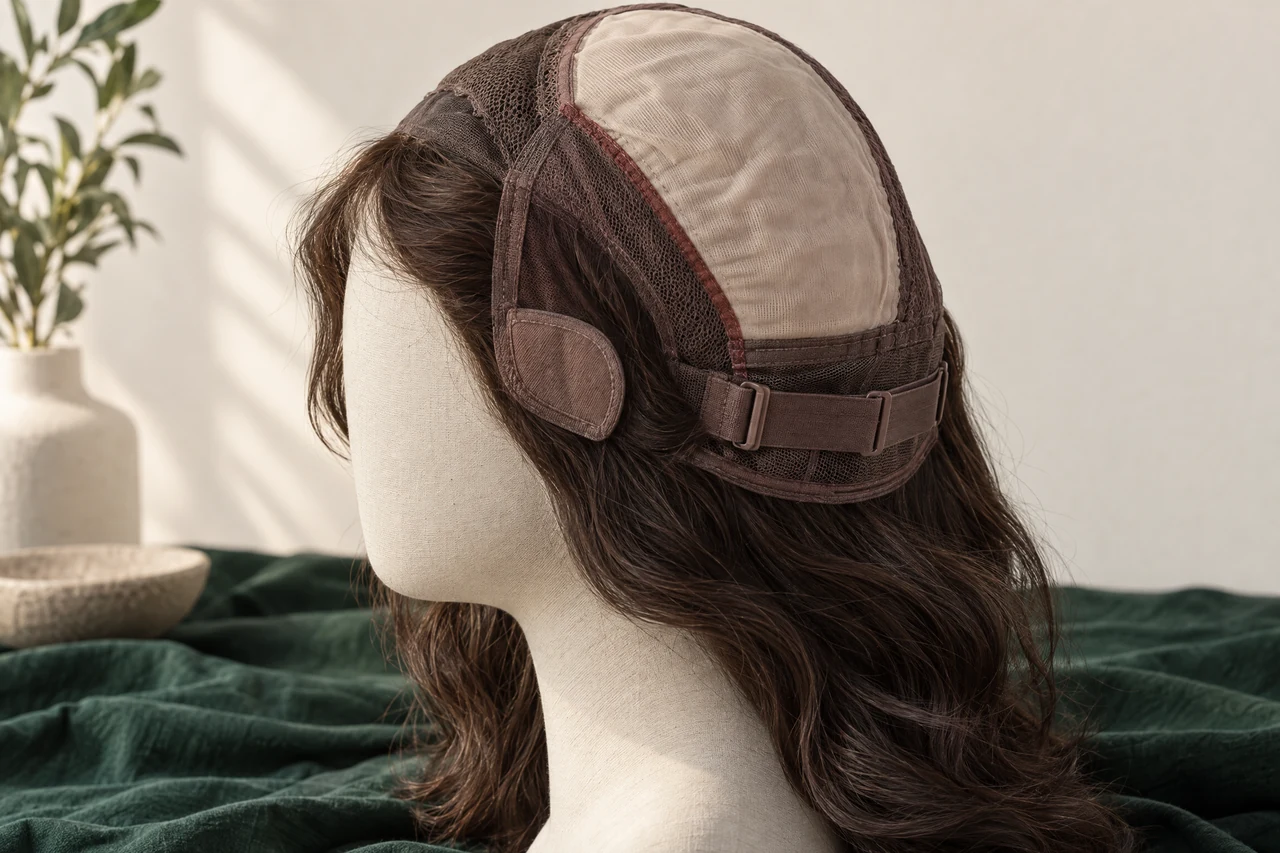
Identify what you are actually touching. The cap edge belongs to the wig's base; an ear tab is a shaped side component found on some wigs. A separate under-cap or liner adds another layer beneath the wig. These are not interchangeable parts. The American Cancer Society describes ear tabs as sitting evenly and slightly in front of the ears, and says the wig should not be placed over the ears. Use your own piece's directions to confirm its construction.
Once both items are in place, look down towards a book, turn as if speaking to someone beside you, and return to a forward gaze. Watch for the edge lifting as the glasses move or the frames tilting as the wig settles. Avoid exaggerated shaking or pulling: the purpose is to recreate ordinary use. If you need to keep reseating either item during simple movement, record the action that triggers it.
Warby Parker's frame-fit guide says the temples should rest on top of the ears without much noticeable pressure and should not press tightly against the sides of the head. Do not accept a more painful frame position just because it conceals the wig edge. Comfort, stable vision and the visible outline need separate checks.
Review custom made wigs to check its service scope and the details to share before arranging the related work.
Movement Can Reveal a Different Contact Point
Observe what happens when you remove your glasses as well as when you put them on. If an arm catches hair or drags the side edge, pause instead of pulling through resistance. Note whether the catch involves loose strands, the base or an underlayer. A hair-placement concern may need a different discussion from a cap that presses against the ear.
Include Ear Loops if You Wear Them
If you routinely wear an ear-loop mask, include that combination in the check. Observe the overlap between loops, spectacle arms and the cap without adding force to keep everything in place. Removing and replacing one item can also disturb another. Describe this ordinary routine when discussing fit rather than checking the wig and glasses separately.
Use the type of mask you normally wear, not an unusually loose substitute chosen for the trial. Look at where its loop rests relative to the frame arm, particularly behind the upper ear. The combination may look tidy from the front while several layers gather in that small space. Check whether you can identify and handle the loop without hooking the glasses or pulling at the hair.
Recreate a normal mask change with care. Follow the mask's own handling instructions, and observe whether lifting the loop changes the position of the wig or glasses. Do not repeatedly stretch the elastic to make a crowded arrangement seem comfortable. If work or healthcare requires a particular mask, explain that requirement before discussing alternatives; a hairstyle adjustment should not compromise required protection.
More Than One Item May Occupy the Same Area
For a Hong Kong day that includes commuting, desk work and a meal break, the removal routine may matter as much as the first fitting. Record whether the combination stays manageable when you replace the mask after a break. If you also wear a hearing device, disclose that ear-area requirement and seek advice from its supplier rather than moving it merely to clear the cap.

Record the Problem Before Asking for Changes
Note the location and whether the concern is pressure, slipping, frame movement or the cap becoming visible. Share the item's construction and the frames involved, then confirm what fitting assessment or change can be considered. Persistent discomfort should not be ignored, and no cap adjustment, new item or fitting arrangement is guaranteed by this guide.
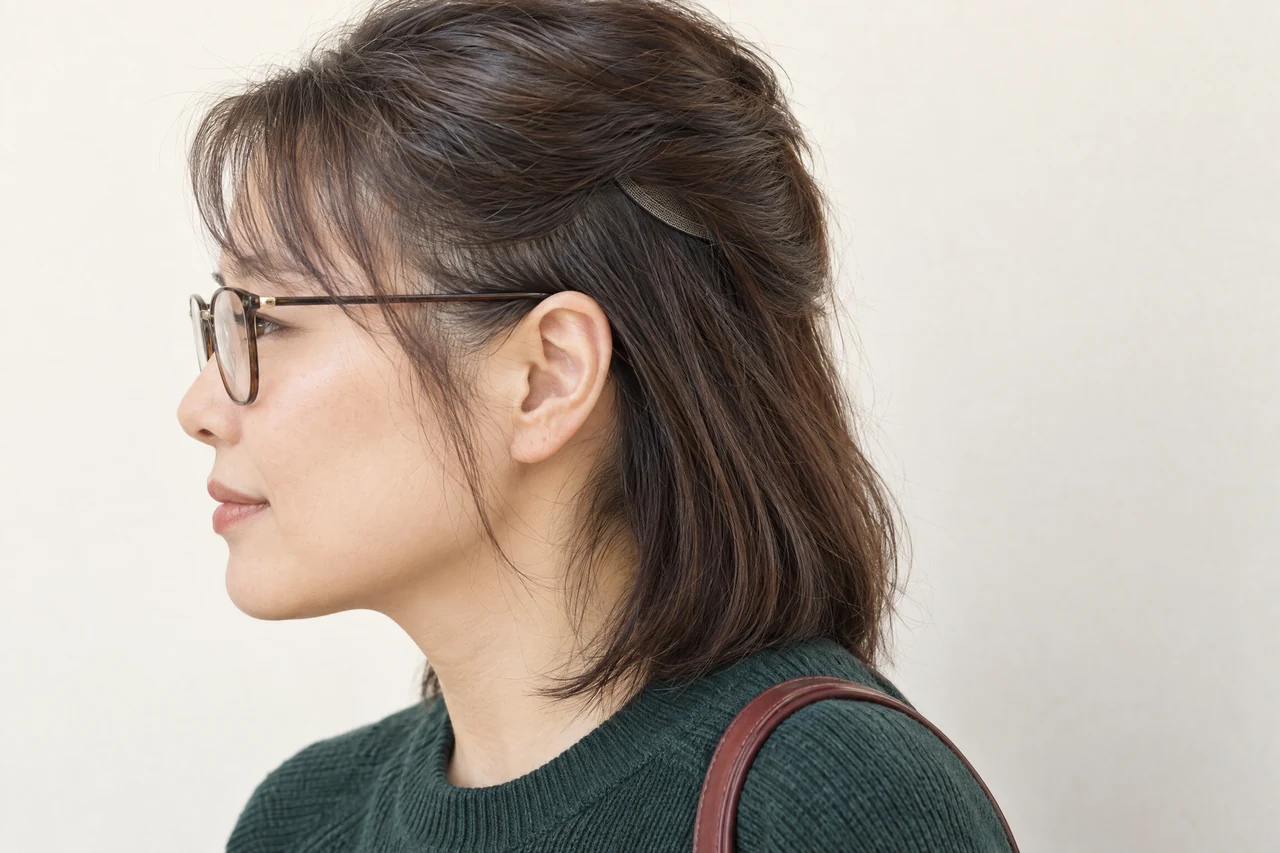
Describe the contact point in ordinary language: above the ear, behind its upper edge or just in front of it. Then identify when it occurs, such as after replacing the glasses or removing a mask loop. A short note that separates location from trigger is more useful than simply saying the whole wig feels tight. Where practical, include a side-view photograph of the actual overlap without pressing anything into position.
Cancer Hair Care's fit guide recognises pressure discomfort when glasses and wigs are worn together and suggests asking an optician for ideas, including whether a finer frame arm may help. That is an option to discuss, not a reason to buy new glasses before assessment. Likewise, a wig fitter can examine the piece's edge and construction rather than treating every contact problem as a need for a smaller cap.
Stop a trial that causes pain rather than extending it to test your tolerance. Persistent skin irritation or soreness deserves healthcare advice, especially if your scalp is sensitive during treatment. Keep that health concern distinct from an exposed edge: hiding the edge with more hair does not address the cause of discomfort.
A Useful Enquiry Identifies Pressure, Movement or an Exposed Edge
Ask what can be assessed on your existing piece, whether the construction permits the proposed change, and what the work would involve. Confirm any charge and the implications of an alteration before agreeing to it. If you are considering a new purchase, ask about its fitting and return conditions before cutting, reshaping or otherwise modifying it.

Compare Coverage Before Replacing the Whole Piece
An ear-area conflict does not automatically mean you need a custom wig, and a custom description alone does not establish compatibility with your frames. Decide what coverage you need first. A full wig covers a wider area than a topper designed for the crown, so the position of the base can differ. The right comparison includes the coverage goal as well as the ear-area contact.
If the crown or parting is your main concern, the hair topper vs wig guide can help you compare coverage before asking whether a smaller base could leave the ear area clearer. A partial piece still needs suitable support and blending; it is not an automatic replacement for full coverage.
Review hairpiece fitting to check its service scope and the details to share before arranging the related work.
Separate Hair Placement from Base Alteration
Loose side hair resting on a frame is a different issue from the base pressing against it. Gently arranging strands according to the piece's instructions may clarify which one you are seeing. If you want to tuck hair behind the ear or change the parting, discuss the visible edge in that intended style. Do not cut the cap or make an opening for the arms yourself.
Prepare a Repeatable Ear-area Fitting Check
Use the 6-step preparation checklist below to make the next discussion specific. This is an editorial checklist, not a clinical test or a comfort score. Keep the same frame and underlayer in place when comparing a permitted adjustment, so you can tell what changed. If you switch several components together, it becomes harder to identify which one affected the fit.
Before you book a hair appointment, explain that your enquiry concerns wig compatibility with glasses and ask whether the relevant assessment can be arranged. Mention whether the piece is already yours, the frame pairs you need to use, and any mask requirement. Confirm what to bring and the proposed scope before travelling to Sheung Wan.
Bring the Combination You Need to Use
Keep your glasses in their protective cases and bring the wig's wearing information if available. A close photograph of its inner edge can help explain an initial enquiry, but it cannot show how the materials feel on your head. The useful outcome is a clear understanding of which combination needs assessment and which changes are reasonable to discuss, rather than a blanket promise that every frame will fit.
Ear-area observations and the fitting question each one raises
| What you notice | What to compare | What to discuss |
|---|---|---|
| Glasses hurt even without the wig | The frames alone against the combined arrangement | Ask an optician to assess the baseline frame fit. |
| Cap edge lifts when an arm passes it | Both side views during gentle placement and removal | Ask whether the piece's positioning or construction needs assessment. |
| Pressure appears only with a mask | Glasses and wig together, then the required mask added | Describe the loop overlap without stretching or forcing it. |
| Hair catches but the base stays still | Loose strands versus direct base contact | Discuss side-hair placement or item-appropriate shaping. |
| Only crown coverage is needed | A full cap versus a suitable partial base | Compare coverage, support and blending before changing piece type. |
Your preparation checklist
- Identify your main frame pair and any other pair you regularly use; compare their actual arms, not just their front shape.
- Record how each pair sits without the wig, including any existing slipping or ear pressure.
- Position the wig using its supplied directions and include the underlayer you intend to wear.
- Replace the glasses gently and check both ears while looking ahead, reading and turning normally.
- Add your usual mask if required and observe careful removal and replacement without forcing the overlap.
- Write down the location, trigger and type of concern, then confirm the assessment scope and charges before arranging a visit.
Frequently asked questions
Should the glasses sit over or under the cap edge?
There is no universal arrangement stated here. Follow the piece's instructions and check the actual cap and frames for movement and pressure; do not force the fit.
Should I bring both pairs of glasses to a fitting?
If you regularly use both and their arms differ, explain that requirement and confirm the fitting arrangement. One pair may not represent every daily contact point.
Can I trim the cap around my ears myself?
Do not cut the cap simply to make space. Its construction may be affected. Describe the overlap and seek item-specific assessment before considering any alteration.
Make your glasses-and-wig enquiry easier to assess
Contact Vit So with the frames you use, your piece's construction and the ear-area concern you have noticed. Ask what fitting assessment may be possible and what details to bring to Sheung Wan. An enquiry is not a confirmed booking; agree the arrangement and any proposed work before your visit.
Start your WhatsApp enquirySources & further reading
- Wigs for Hair Loss — American Cancer Society
Supplied wig directions, removing glasses before trying on a wig, and keeping ear tabs evenly positioned slightly in front of the ears.
- Getting a good fit — Cancer Hair Care
Pressure discomfort from wearing glasses and a wig together, with optician advice about possible frame-arm alternatives.
- How Should Your Glasses Fit? — Warby Parker
Frame temples resting on the ears without noticeable pressure and professional optician assessment for arms that dig in.



