







Down Perm for Hair That Sticks Out in Specific Areas
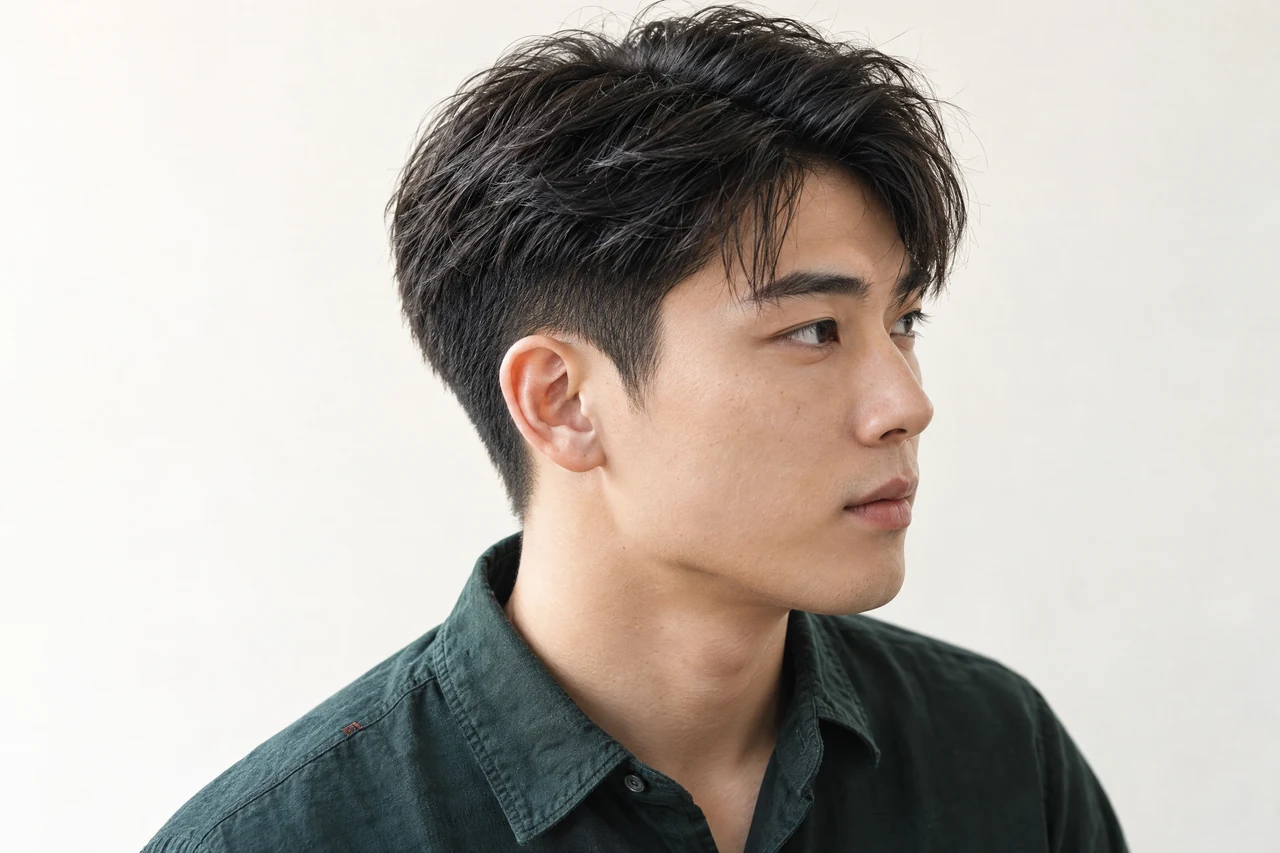
Take front and side views in similar lighting and show where the hair projects above or behind the ears. A dense outline can come from growth direction, retained weight or both. Explain which section bothers you and how it behaves after drying; do not assume that flattening the entire side is the only possible response.
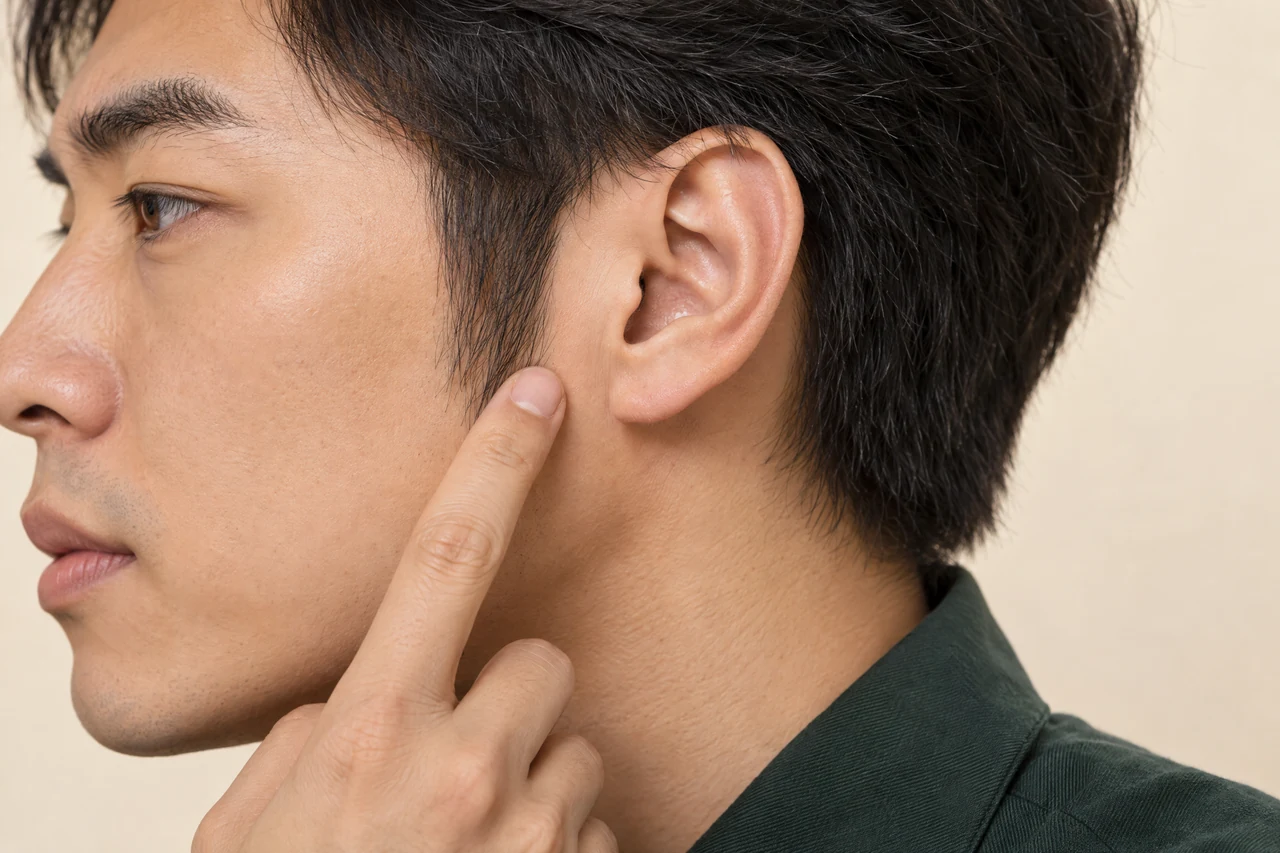
Separate the temple, the area directly above the ear and the back corner of the head. These can look equally wide from the front yet need different decisions. Tell the stylist whether you dislike individual ends pointing out, a solid band of hair below the top, or a rounded outline behind the ear. Pointing to the precise location is more useful than asking for all the sides to be flatter.
Also identify what should stay: coverage around the temple, visible sideburn length or a soft connection to the top. Reducing every part of the side can change that balance. The goal might be a neater ear outline rather than a sharply exposed side, so bring a preferred photo that shows the whole haircut, not only a close crop of the ear.
Review down perm to check its service scope and the details to share before arranging the related work.
Photographs for a Down Perm for Hair That Sticks Out
Photograph clean, fully dry hair after your normal routine, before adding strong-hold product or pushing the sides under a cap. Keep your head upright and show both ears; a rear angled view helps reveal a back corner hidden in a profile. Send a styled reference separately and label it as the shape you prefer. If one side behaves differently, show both rather than using the tidier side as the only reference.

Thick Hair and a Closer Outline
A down perm for thick hair may be considered when the goal is less side projection, but thickness does not establish chemical suitability. Short rigid strands and longer heavy sections can create different shapes. A cut, altered retained length or temporary styling may be part of the discussion instead of treating every dense side in the same way.
Use separate descriptions for the feel of individual strands and the amount of hair in the section. Hair that feels coarse is not automatically dense, and a dense side is not necessarily made of rigid strands. In practical terms, explain whether the section resists lying down, feels heavy, or looks solid even when the strands already follow the head. These observations help focus the consultation without attempting a home hair diagnosis.
Think about the stage at which the sides bother you. Is it immediately after a short cut, only as the ear area grows, or whenever the top is swept away from the sides? For a fuller discussion of retained weight, read how to reduce bulk in men's thick hair before requesting extensive thinning.
Density Alone Does Not Establish Suitability
The stylist needs to assess the hair that will remain after cutting, not only the length you arrive with. Removing weight and shortening the sides are different choices. Ask where fullness would be reduced and which lengths would stay to connect with the top. A closer outline should still look deliberate from behind and around the ear; the densest-looking area is not automatically the area that needs chemical treatment.
Asian Hair Is Not One Texture
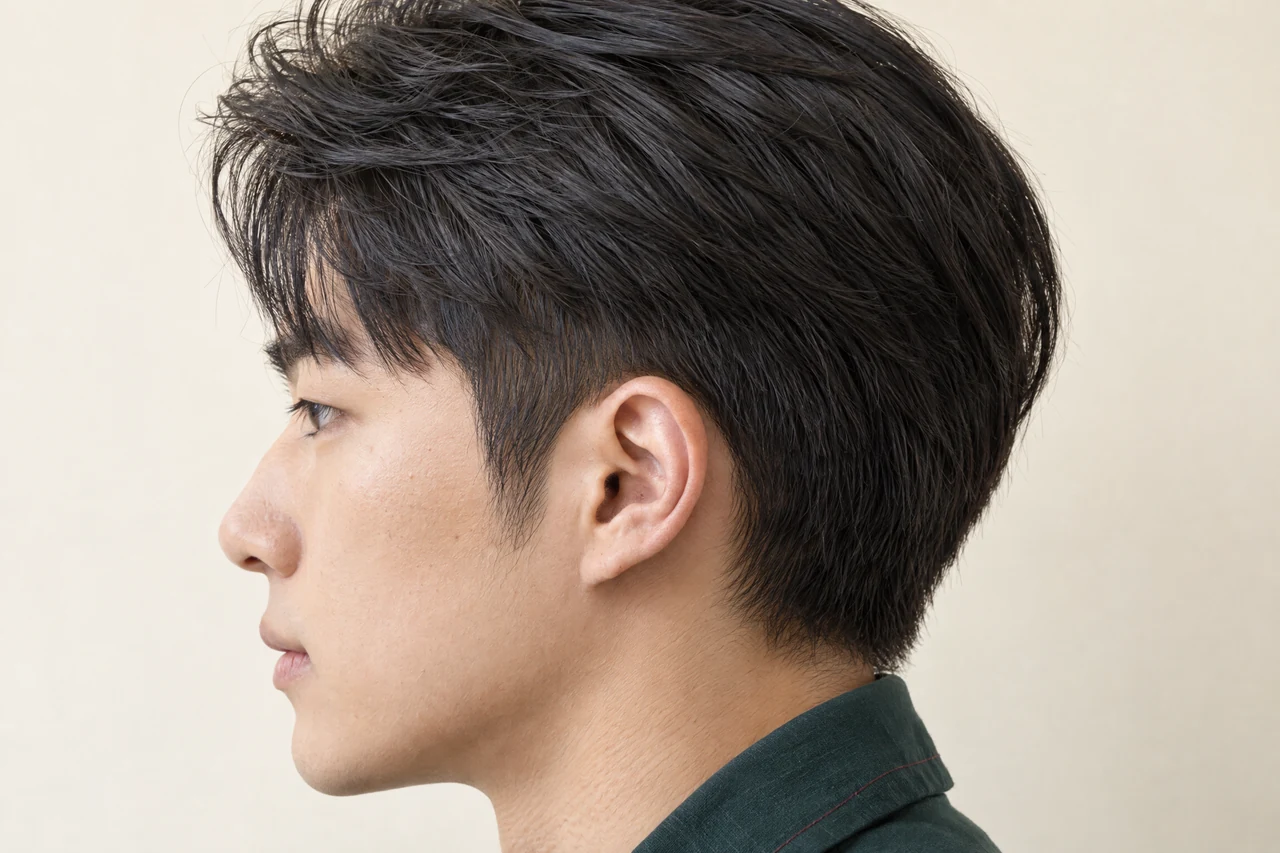
A down perm for Asian hair should still be discussed through the actual strand behaviour. Hair can be fine or coarse, sparse-looking or dense, and previously coloured or untreated. A broad identity label cannot decide the treatment area, the process or the likely outline; current photographs and a clear history are more useful.
Describe what happens between washing and leaving home. The side may stand out while drying, settle when brushed, or spread again after the hair is disturbed. Say whether you normally air dry or use a dryer and whether your preferred part exposes one temple more than the other. A style name or an identity label cannot convey those details.
Reference images are still useful for communicating taste. Choose one with comparable ear coverage and top length, then explain which feature you like. Do not assume that a model's background means their hair behaves like yours, or that the narrowest photographed silhouette is a realistic everyday target for your current cut.
Describe the Actual Behaviour, Not Just a Label
Useful wording is specific: 'The short hair above my right ear points away from my head after drying, but I want to keep the darker coverage at my temple.' Add whether the left side behaves similarly and whether the hair has been coloured. This gives the stylist an area, a visible concern and a length boundary to assess, rather than asking for a standard treatment based on a broad hair category.

When a Cut or Styling Change May Be Enough
If the sides appear bulky mainly because of the cut, discuss a change in weight or transition before adding a chemical process. If the strands still project outward, explain the length you want to keep and assess side control separately. The aim is to choose an appropriate change, not to promise the flattest possible result.
A shorter side can reduce coverage, while a down perm discussion usually starts with the hair you want to retain. Neither choice is a substitute for agreeing on the top-to-side connection. Ask what the outline would look like with a cut alone and what additional change side control is intended to make. This helps avoid adding a service to solve a problem that the planned cut already addresses.
Continue with down perm vs fade for that specific comparison and the preparation questions it raises.
Review men's haircut to check its service scope and the details to share before arranging the related work.
Check Weight Before Choosing Chemical Side Control
A temporary styling trial can clarify whether a modest change is enough for your routine. Ask the stylist to show a manageable drying direction without excessive pulling or heat. The American Academy of Dermatology's hair-care advice recommends the lowest dryer heat setting, air drying when possible and gentle combing. Those recommendations support careful handling, not a prediction that styling will flatten every projecting section.
Hair History and Ear-Area Comfort Before Treatment
Not having a previous perm does not mean the sides are untreated. Share colour, bleach, straightening and any home side-control products, including where they were applied. Give approximate dates if you remember them. Mention roughness, snapping strands or unusual tangling rather than assuming that hair which looks thick can tolerate another process. Photos help explain the shape, but cannot establish chemical suitability on their own.
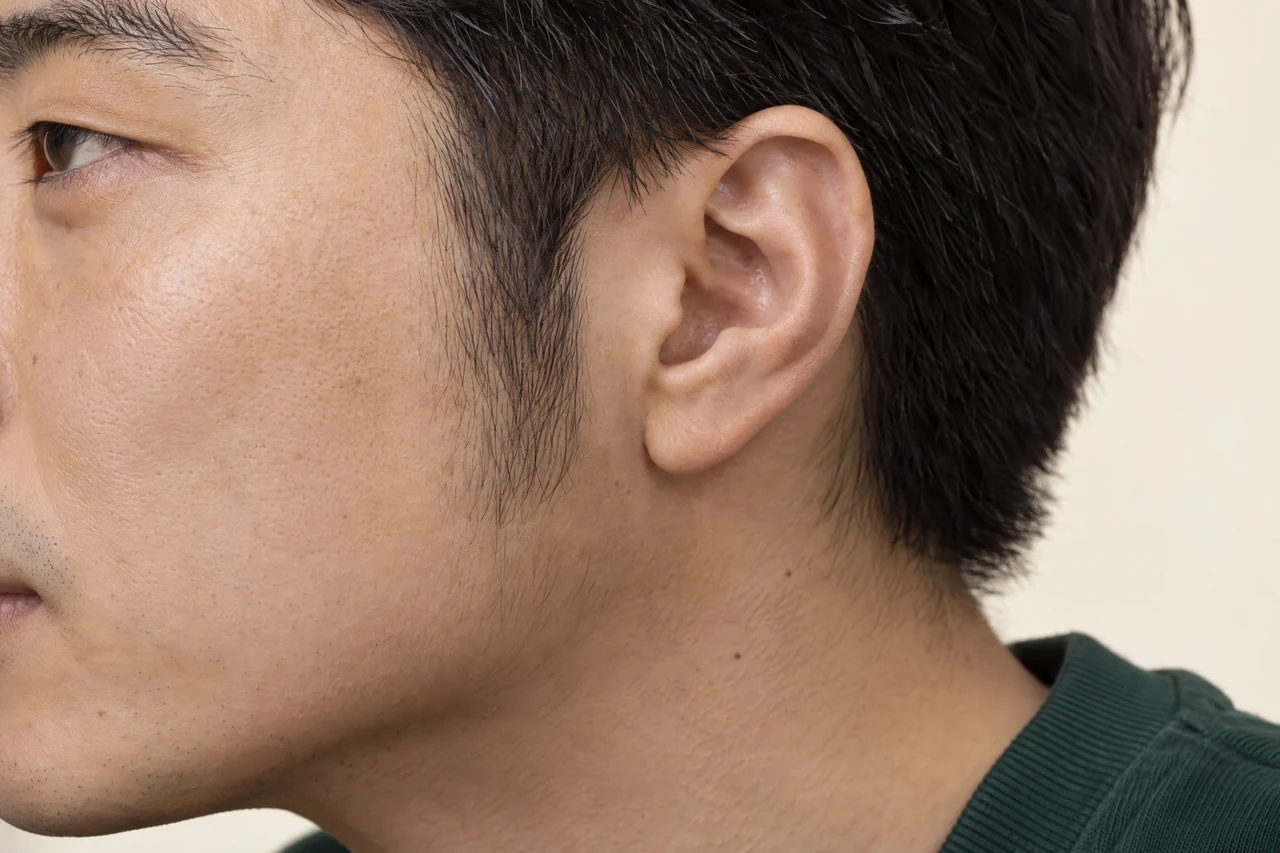
Tell the salon about itching, a rash or soreness around the ears before the visit. DermNet's explanation of contact reactions to cosmetics describes both irritant and allergic reactions, with the ears and neck among common sites of cosmetic allergy. Persistent symptoms warrant clinical advice. This is a reason to discuss comfort and defer a chemical decision where needed, not to diagnose the cause from a hairstyle photo.
Keep Assessment Separate from Home Experiments
Do not try chemical side-control products to create a flatter consultation photo. Ask the salon what assessment is appropriate for the proposed product and your history; do not invent a home testing procedure. If the width appeared after an existing perm, say so clearly. Previously processed sides need a follow-up discussion, rather than being treated as the naturally projecting, not-yet-permed hair considered here.
Agree on the Daily Outline and Service Scope
Bring everyday constraints into the decision. If you wear glasses, show where the arms pass through the ear-area hair. If you leave home without drying the sides into place, say that too. A useful target is an outline you can manage with the routine you will actually follow, not a finish that depends on prolonged styling you do not want to do.
The listed Down Perm service is HK$700. The listed men's wash, cut and blow-dry plus Down Perm package is HK$780–HK$880. These are different service scopes; confirm the package contents, applicable charge and intended treatment area before arranging the work. Do not assume the standalone price includes a haircut.
Discuss upkeep before choosing side control. As length and new growth change, the relationship between the treated section and the haircut can change too. Read how long does a down perm last to frame that conversation around the side outline rather than assuming a fixed repeat-treatment schedule.
Know What to Observe After the Visit
Ask for aftercare suited to the actual service, including washing and the drying routine demonstrated for your retained length. Once home, notice the ear-area shape after ordinary washing rather than continually pressing it into position. If the outline later concerns you, send current dry photographs and explain what changed. The next decision might involve the cut or growth stage, not automatically another chemical application.
Choose the next discussion by what makes the untreated sides look wide
| What you observe | What to discuss first | Main trade-off |
|---|---|---|
| A solid band below the longer top | Retained weight and the haircut transition | Reducing bulk must still preserve a coherent connection |
| Short strands projecting above the ears | Growth direction and the length you want to keep | A shorter outline may expose more of the sides |
| Sides settle with ordinary gentle styling | A realistic drying and styling routine | Temporary control requires regular handling |
| Projection persists at a length you want to retain | Suitability for targeted down perm side control | Chemical suitability and the intended area need assessment |
| Rough hair or irritated skin near the ears | Hair history and comfort before changing the outline | Treatment may need to wait rather than pursue maximum flatness |
Your preparation checklist
- Photograph fully dry hair from the front, both sides and a rear angle without pressing the sides flat.
- Point out whether the concern is at the temple, above the ear or behind the ear.
- Identify the coverage, sideburn length and top fullness you want to retain.
- Share colour and other chemical history, plus any breakage or skin irritation.
- Explain your ordinary drying routine and whether glasses or headwear affect the area.
- Confirm the cut-only alternative, proposed treatment scope, price and aftercare before agreeing to work.
Frequently asked questions
Can a down perm flatten puffy sides?
It is intended to address side projection, but the cause of the width and the condition of the hair matter. A cut or styling change may be more appropriate, and no uniform flattening result can be promised.
Should I press the sides flat before sending photographs?
Show the ordinary dry shape as well as any styled result you prefer. The unforced view helps explain the actual growth direction and the area you want to discuss.
What if the skin beside my ears is irritated?
Do not apply a side-control product yourself or assume a chemical service can proceed. Tell the salon about the irritation; persistent or concerning symptoms belong with an appropriate healthcare professional.
Discuss closer sides without losing the length you value
Send Vit So your ordinary dry front and side photographs, point out the projecting area and explain what coverage you want to keep. Include your hair history and daily routine so the enquiry can focus on a cut, styling or suitable side control in Sheung Wan. An enquiry is not a confirmed booking; the service scope and appointment still need confirmation.
Start your WhatsApp enquirySources & further reading
- How to stop damaging your hair — American Academy of Dermatology
Supports gentle combing, using the lowest dryer heat setting and air drying when possible during a temporary styling discussion.
- Contact reactions to cosmetics — DermNet
Supports disclosure of ear-area irritation, the distinction between irritant and allergic cosmetic reactions, and clinical review of persistent symptoms.



