






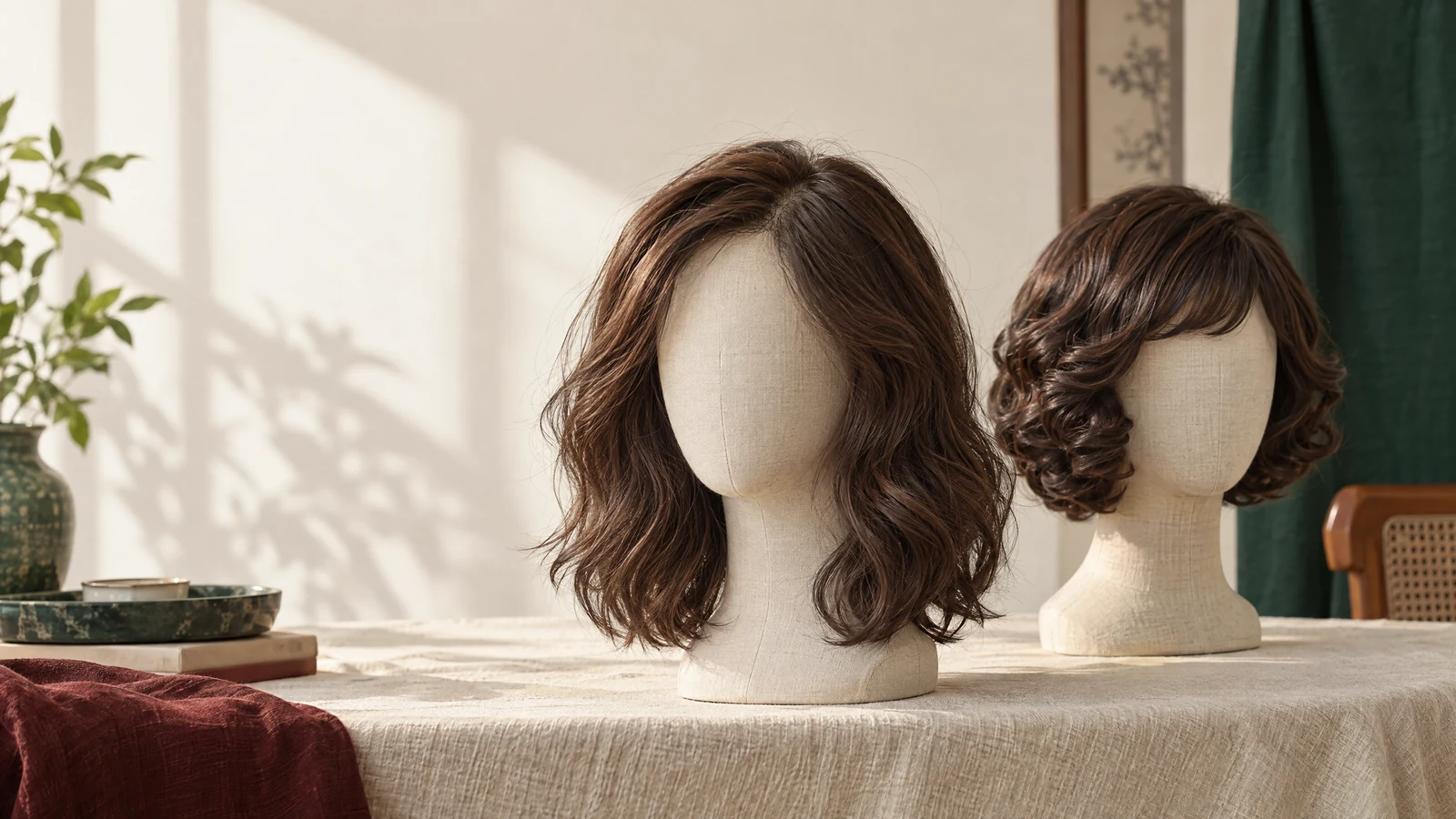
Start Wig Care with the Fibre and Base Details
Read the fibre and cap information before selecting a product or cleaning method. For hairpiece maintenance, include the partial base and its attachment details as well as the hair. If the label is missing or unclear, seek item-specific advice rather than transferring instructions from another piece. Care requirements do not establish whether an outside purchase can be accepted for salon work.
Keep a photograph of the product label and save the care leaflet where you can find it. Look for the exact fibre description: human hair, synthetic, heat-friendly synthetic or a blend. A glossy finish, a soft feel or a curled style cannot identify the material reliably. Note previous colouring or other processing, and record the products already used if the piece came without its original packaging.
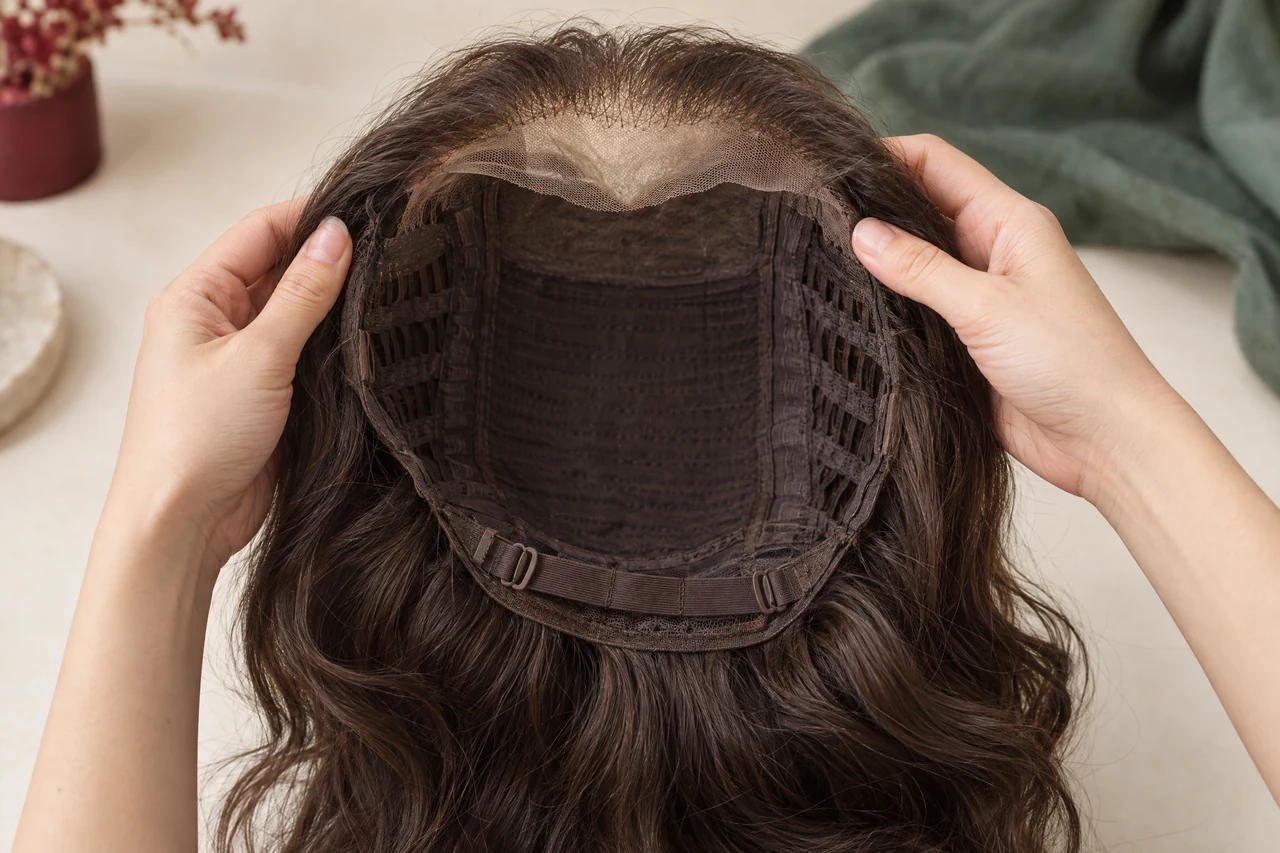
The cap is the structure holding the hair. Its fine lace, sewn rows of hair, elastic and adjustment tabs need attention as well as the lengths. Understanding lace front wig vs full lace wig can help you recognise which areas need particularly careful handling; it does not establish that every lace cap can be washed or attached in the same way.
Continue with human hair vs synthetic wigs for that specific comparison and the preparation questions it raises.
Wig Care Needs More Than a General Hair Label
Before wetting the piece, check for loose clips, torn mesh, an uneven adjustment band or persistent adhesive residue. Photograph a concern rather than pulling it apart to investigate. Set out a clean towel, the recommended cleanser and an appropriate drying support. Decide where the cap will dry before you begin, so a freshly washed piece does not have to be balanced on an unsuitable object.
Wash a Human-hair Wig Without Guessing the Method
To wash a human hair wig, follow the actual piece's instructions for suitable products, handling, rinsing and drying. Previously processed hair and the cap may have different needs from your own hair. Avoid vigorous rubbing and do not assume ordinary hair products are appropriate. Ask for clarification before cleaning if the fibre history or construction is unknown.
Learning how to wash a human hair wig starts with its condition before washing. If the instructions permit brushing, ease out tangles from the ends in small sections, supporting the hair rather than pulling against the cap. Do not force through a dense knot. Macmillan Cancer Support notes that human hair used in wigs is often bleached and dyed. The label therefore does not mean the lengths behave like untreated hair growing from your scalp.
Follow the supplied direction of washing and rinsing, keeping the hair aligned instead of piling it into a tangled bundle. Measure products as instructed rather than adding more because the piece feels dry. The aim is to remove residue while limiting unnecessary handling. A heavy mask or oil should not become a substitute for finding out whether the base can tolerate contact with it.
Processing and Cap Construction Affect the Cleaning Plan
Product placement matters. In its Alternative Hair Care Guide, manufacturer Jon Renau advises keeping conditioner away from the base of its human-hair wigs and hairpieces because it may weaken the knots. This is a useful example of why lengths and cap need separate instructions, not a universal recipe for another brand. After rinsing, use the specified towel-drying and styling method. Confirm any permitted heat setting for that particular piece rather than borrowing a setting from your own hair routine.
Respect the Limits of a Synthetic Piece
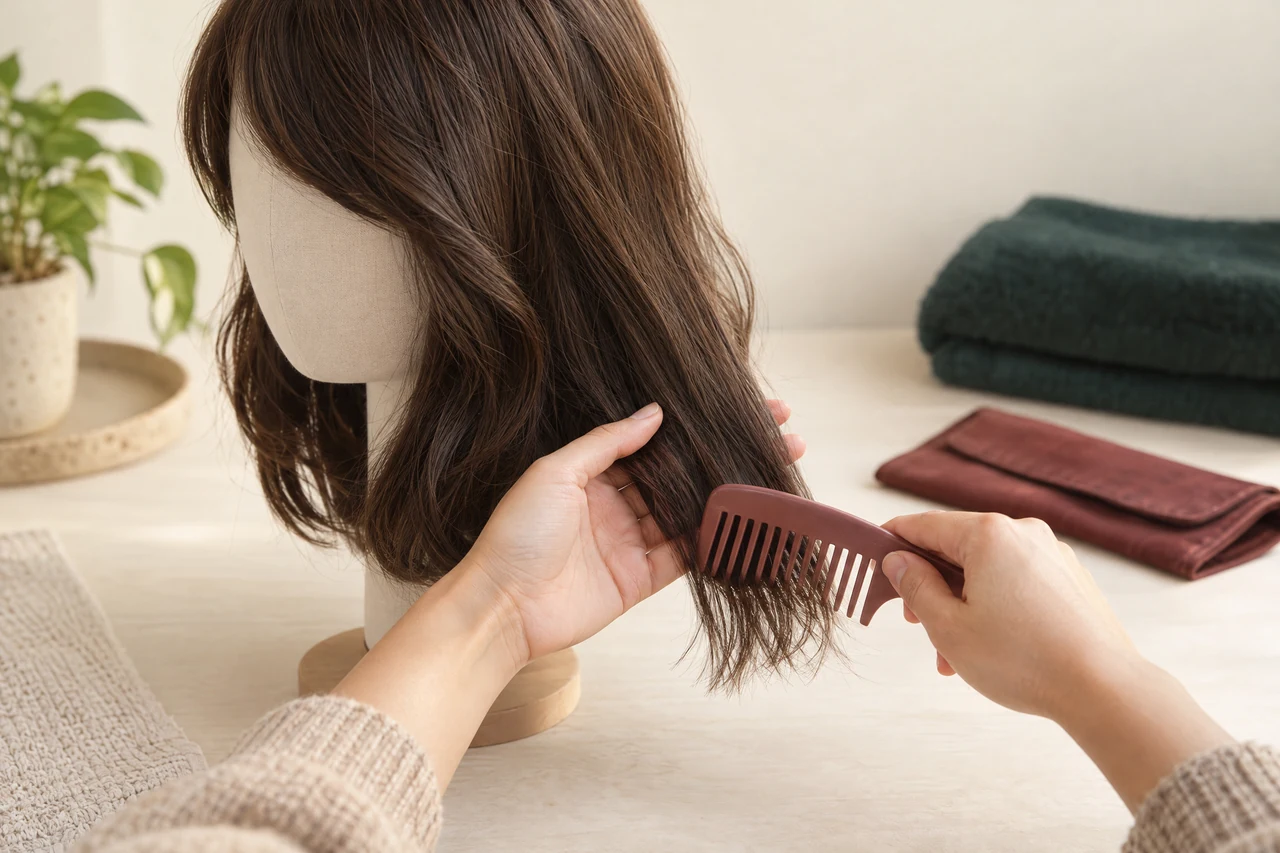
To care for a synthetic wig, use the fibre-specific instructions rather than ordinary heat or colour routines. A pre-styled design may have handling limits, and heat tolerance must be confirmed for the actual item. Do not use a heated dryer or styling tool on an assumption. Keep the cap and attachment requirements in view when planning the cleaning routine.
Understanding how to care for a synthetic wig includes checking when it may be combed. The American Cancer Society's wig care advice describes gentle washing without rubbing, towel patting and room-temperature drying for synthetic wigs, with brushing delayed until thoroughly dry. Follow your own product's directions if they specify a different sequence; manufacturer instructions can distinguish between fibre types and approved tools.
With a curly piece, repeated brushing may change the appearance you wanted to preserve. Ask which comb or finger-styling method is recommended for its curl pattern. Do not try to remove roughness with a household iron or improvised steam treatment. A pre-set style and a claim of heat-friendly fibre are different pieces of information, and neither authorises every heated appliance.
A Supplied Style Does Not Prove Heat Tolerance
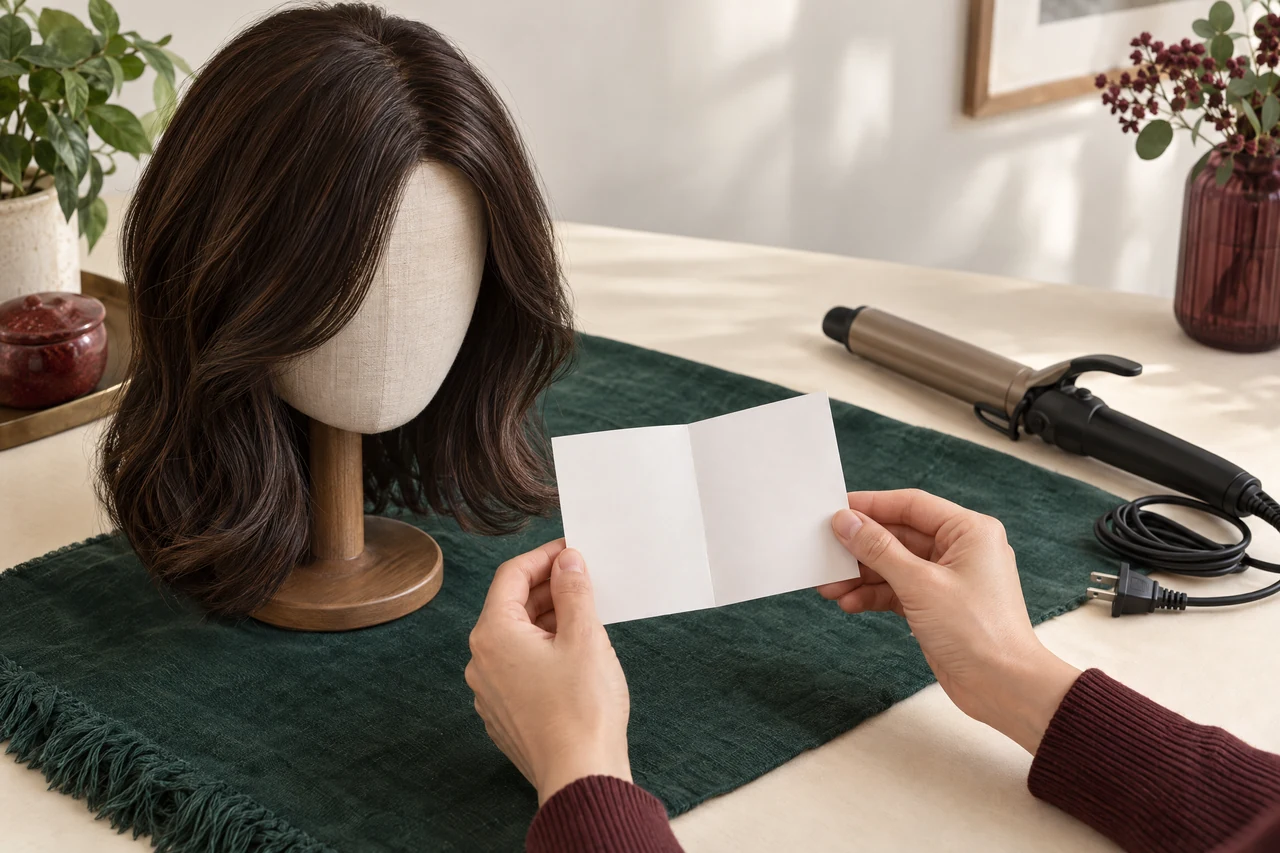
Permission to use a particular styling tool is not permission to speed-dry the cap. Jon Renau's guide recommends air drying even for its heat-friendly synthetic fibre. Check drying and restyling separately. Also consider incidental heat in daily life: the American Cancer Society cautions against heat from stove burners and opening an oven. Keep the piece away from those exposures instead of testing its limits. Blended hair requires its own guidance because its synthetic component still has handling restrictions.
Store the Piece Without Distorting Its Shape
To store a wig, follow its drying instructions first and use the recommended support or storage arrangement so the cap and outline are not compressed. Keep it away from avoidable heat and handling damage. If shape loss, tangling or base damage persists, ask for assessment; do not assume it can be corrected by home restyling or unverified glue.
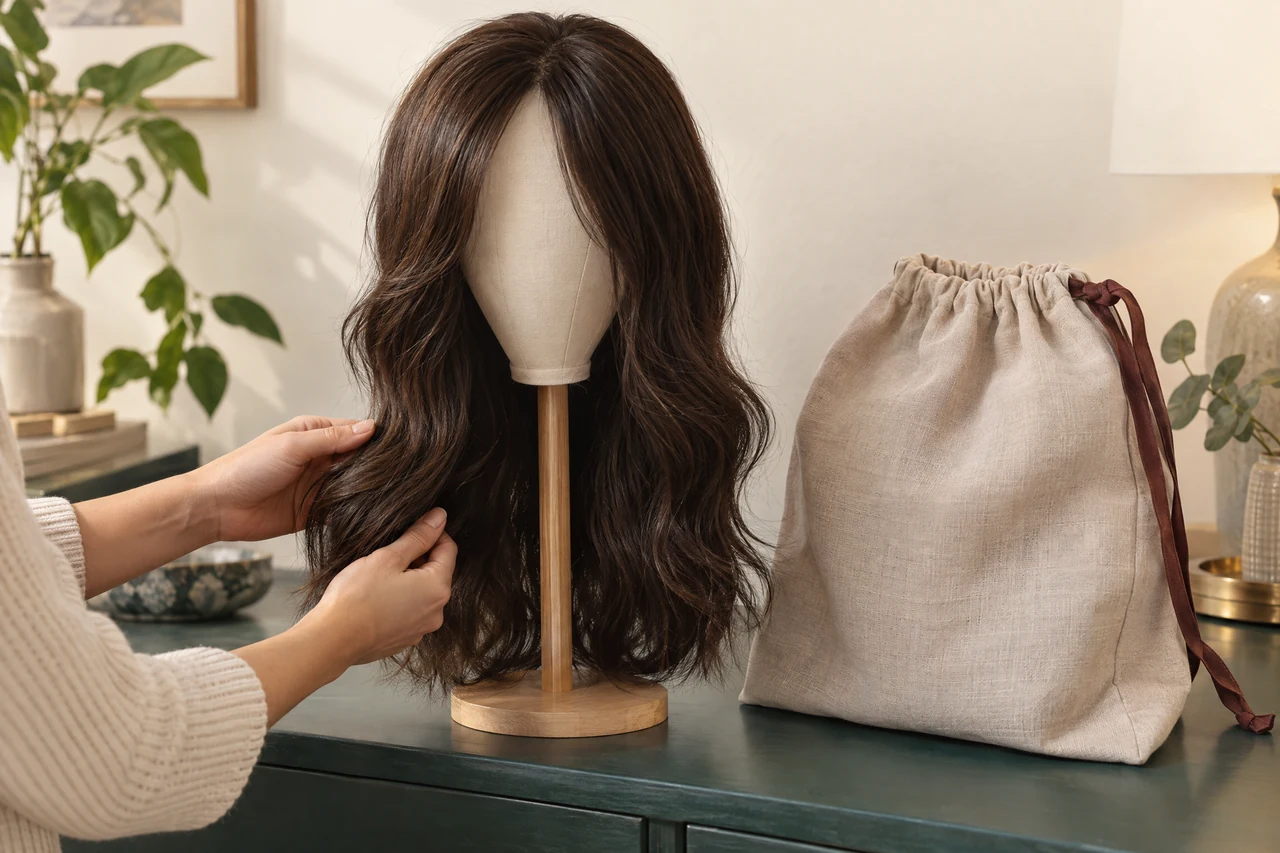
Deciding how to store a wig means checking the inside, not only whether the outer hair looks dry. Inspect the denser areas and adjustment band as directed before packing. Choose a stable support that does not stretch the cap, and allow space around the lengths. The American Cancer Society recommends a wig stand for short-term storage. A display head used for styling is not automatically the right support for drying every construction.
For travel, use the supplier's recommended packing arrangement once the piece is fully dry. Keep clips and accessories from catching fine mesh, and avoid squeezing the hair beneath heavy belongings. Store the care leaflet with your travel supplies. If your accommodation has limited drying space, plan the wash before departure rather than relying on a hot bathroom dryer to finish it quickly.
Drying and Support Come Before Packing Away
After unpacking, assess the outline before adding products or attempting a new style. Separate a temporary change in how the ends sit from stretched mesh or a damaged edge. Our guide to how to make a wig look natural discusses the overall outline, but extra styling cannot fix a structural problem. Keep the storage area away from kitchen heat and places where the piece may be knocked over, trapped under a door or repeatedly handled.
Give a Partial Piece Its Own Base-cleaning Plan
A topper or other partial piece may have less hair than a full wig, but its base can carry several attachment points. First establish whether it is designed to be removed for cleaning or maintained while attached. Do not detach a bonded system by force, or copy a removable clip-in routine onto a piece fitted with adhesive. Obtain the appropriate removal and cleaning instructions from the supplier or fitter.
Ask which cleanser can touch the underside, whether clips need special handling and how any residue should be removed. Do not scrub fine mesh with fingernails or saturate an attachment area with a household solvent. Keep conditioning products on the areas permitted by the instructions. The hair, base and attachment materials may each impose a different limit even when the visible hair resembles another piece you own.
Review hairpiece fitting to check its service scope and the details to share before arranging the related work.
Cleanliness and Attachment Security Are Separate Checks
Before reattachment, inspect the base and fastenings using the supplied instructions. A freshly cleaned piece can still have a loose clip or damaged edge. If it now pulls at your natural hair, do not compensate by fastening it more tightly. Describe exactly where the discomfort occurs and whether it appeared after washing, storage or refitting. Persistent skin irritation needs appropriate healthcare advice rather than increasingly strong cleansers.

Build a Routine You Can Repeat at Home
Use this 6-point checklist before washing or packing your piece. It is a practical preparation aid, not a wash-frequency rule. Let the supplier's directions and your actual use guide the routine. Record sweaty days, styling-product use and changes in tangling so you can explain what happens between washes instead of simply saying the wig feels different.
Before wearing it again, check the cap's position and how the ends fall. Move your head gently within your usual range and notice any new pulling. If a problem persists, take clear photographs of the inside and affected hair, and share the label, care instructions and products used. State whether the concern is residue, tangling, a change in fit or visible base damage; these require different assessments.
Review full head wigs to check its service scope and the details to share before arranging the related work.
Ask a Precise Question Before Arranging a Visit
For an enquiry in Sheung Wan, explain where the piece was purchased and what work you hope to arrange. Ask whether that item and construction can be assessed, what information is needed and whether any proposed care or repair work has a confirmed scope and quote. Do not treat a general haircut or treatment price as a wig-maintenance price. A useful enquiry lets the salon clarify the next step before you carry the piece in.

Wig care decisions by fibre and construction: confirm the actual item's instructions before using a method.
| Piece or feature | What to confirm | Practical care choice |
|---|---|---|
| Human-hair wig | Processing history, cleanser and drying method | Keep lengths aligned and use only the permitted conditioning and styling routine. |
| Ordinary synthetic wig | Approved combing sequence and fibre-specific products | Protect the supplied style; do not assume heat is permitted. |
| Heat-friendly synthetic wig | Separate permissions for styling tools and drying | A heat-friendly label does not authorise every dryer or tool. |
| Human and synthetic blend | Instructions for both fibre components | Do not transfer a pure human-hair routine to the blend. |
| Fine lace or hand-tied base | Product contact limits and handling instructions | Avoid pulling the mesh or treating the base like ordinary hair lengths. |
| Partial piece with attachments | Removal, residue cleaning and reattachment method | Check the base and fastenings separately from the cleanliness of the hair. |
Your preparation checklist
- Identify the exact fibre and cap construction; save the label and supplier's instructions.
- Check for tangles, loose attachments and damaged mesh before starting; photograph concerns without pulling them apart.
- Confirm the cleanser, conditioning-product placement and permitted detangling tools for this piece.
- Prepare the recommended drying support and enough space for the cap and lengths to dry as instructed.
- Check that the entire piece is dry before packing, and choose storage that protects its shape and attachments.
- Recheck fit and condition before wearing; record persistent changes and ask an item-specific question before arranging work.
Frequently asked questions
Can I wash a wig like my own hair?
Not without checking the actual fibre and cap instructions. The hair may be processed and the base has separate handling needs; ordinary products and vigorous rubbing may be unsuitable.
Can I use heat to dry a synthetic piece faster?
Only if the actual item has confirmed compatibility and instructions for that use. No heat tolerance or temperature is assumed for an unknown synthetic fibre.
Can a damaged cap be repaired here?
Structural repair capability and acceptance of the item need specific confirmation. Describe the damage and construction before arranging a visit; do not attempt an unverified glue repair yourself.
Make your wig or hairpiece enquiry easier to assess
Contact Vit So with the product label, photographs of the base and a clear description of your care concern. For a visit to Sheung Wan, ask whether the item and requested work can be accepted, and confirm the scope and quote first. Sending an enquiry is not a confirmed booking or a promise of cleaning or repair.
Start your WhatsApp enquirySources & further reading
- Wigs for cancer treatment — Macmillan Cancer Support
Human hair in wigs is often processed; blended fibres need specific care, and supplier instructions guide maintenance.
- Wigs for Hair Loss — American Cancer Society
Wig-specific products, gentle synthetic-wig washing and drying, incidental heat hazards and short-term storage on a wig stand.
- Alternative Hair Care Guide — Jon Renau
Manufacturer-specific guidance on keeping conditioner away from human-hair cap knots and separating heat-friendly synthetic styling from drying instructions.



