







How Long Do Hair Extensions Last in One Fitting Cycle?
An attachment cycle is not the same as the useful life of the added hair. As your own hair grows and daily wear changes the fit, an attachment may need assessment even if the lengths still look usable. Ask which signs and review arrangements apply to the fitted system rather than relying on a general month count.
Start by identifying what is actually attached to your hair. A flat adhesive connection, a small ring and a pre-bonded strand do not share the same adjustment or removal process. A temporary piece that you remove between uses presents a different question again: its material may remain usable over repeated occasions, but that does not make it suitable for continuous wear.
The Great Lengths hair extensions FAQ gives different wear guidance for its own pre-bonded and tape products and says removal timing depends on natural-hair condition and lifestyle. That is a useful example of why the system matters, not a timetable for another manufacturer's extensions or a Vit So service promise.
If you have not chosen a system yet, learning how to choose a hair extension method helps you compare the ongoing appointment commitment as well as the first-day appearance. Choose a maintenance arrangement you can realistically follow, rather than choosing solely by the longest advertised lifespan.
How Long Do Hair Extensions Last Depends on What Is Being Measured
Ask the provider to explain both the planned end of this fitting and the assessment for using the hair again. Also separate these from how long the finished style stays flattering. A tidy attachment, usable fibre and a pleasing blend are different checks; passing one does not establish the other two. Record the fitting date and exact system name so future advice relates to what you are wearing.
Discuss Review Timing Before the Next Appointment
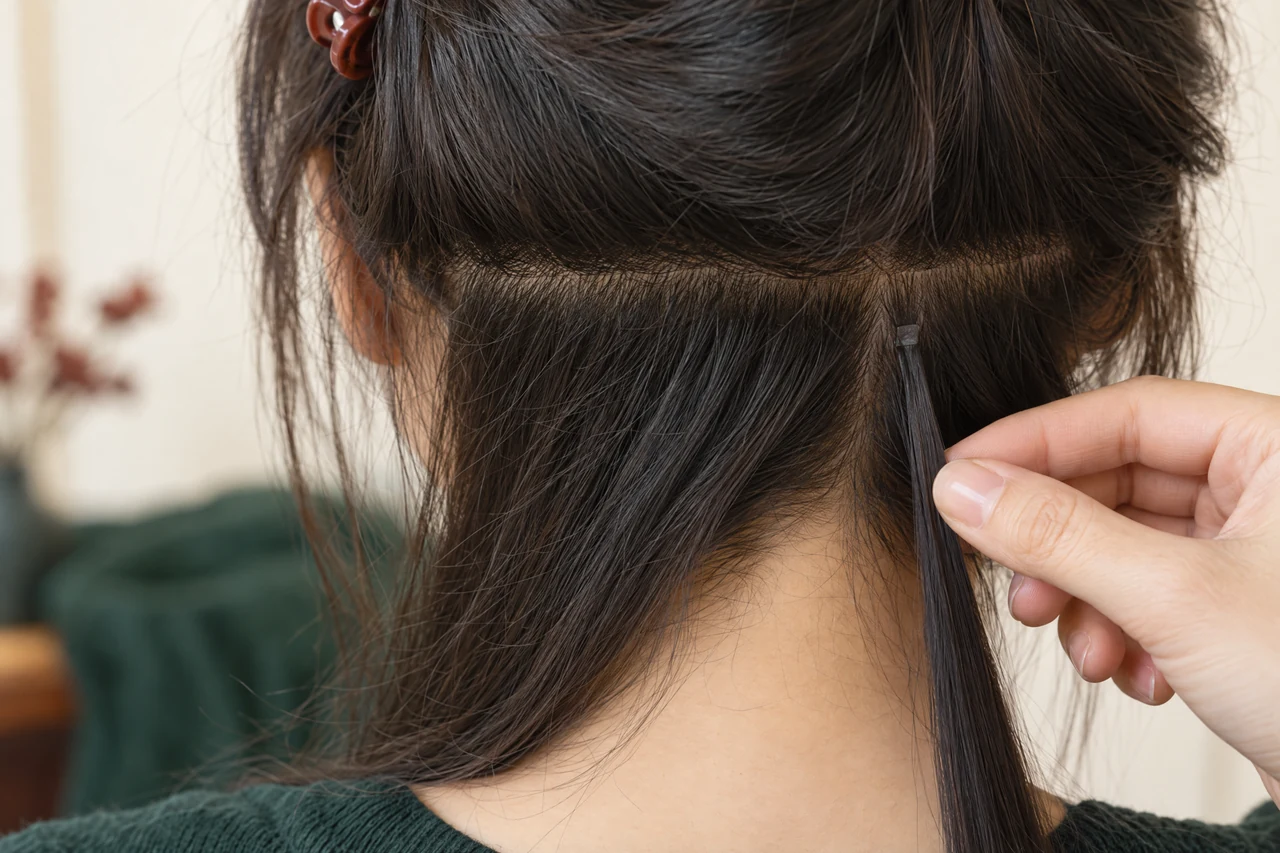
How often extensions need maintenance depends on the attachment, growth, wear and the care you can manage. Ask for a review plan and the changes that should prompt earlier contact. A scheduled check should not mean ignoring looseness, clustered tangles or discomfort until the date arrives; those changes may need attention before routine maintenance.
A useful answer to 'how often do hair extensions need maintenance' includes what the visit will involve. Is it a check of the connections, removal followed by assessment, or a fitting adjustment permitted by that system? Ask whether you should reserve the next visit before leaving and how to make contact if a problem develops earlier.
The American Academy of Dermatology's guidance on weaves and extensions says pain or a headache during fitting indicates that the style is too tight. It also explains that repeated pulling can cause traction alopecia. Do not regard pain as evidence that an attachment is secure or something to tolerate for a longer wear period. Request professional assessment; seek a dermatologist's advice for hair-loss concerns.
Maintenance Frequency Needs System-specific Advice
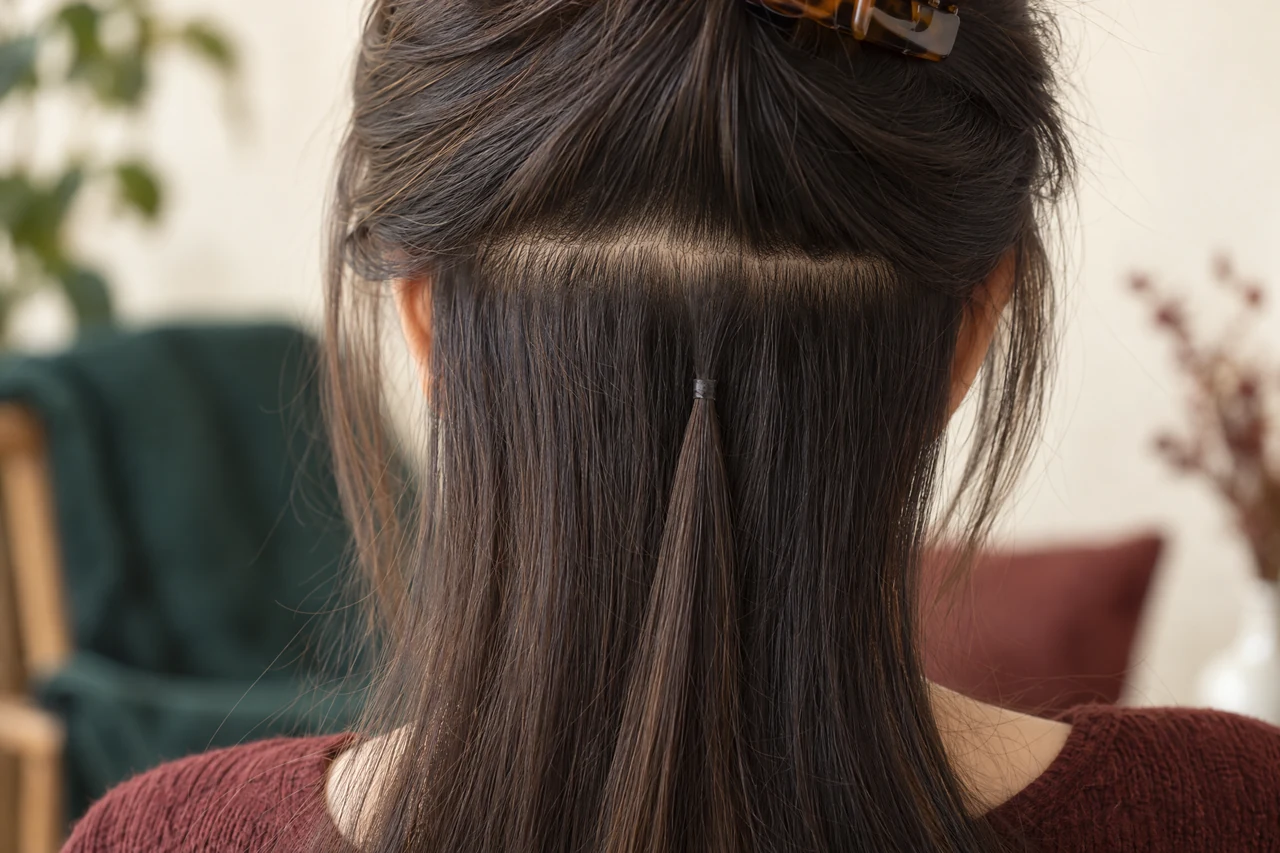
Notice changes relative to the original fit: a connection that slides, catches during ordinary brushing or becomes difficult to separate from neighbouring hair deserves attention. Describe where it occurs and whether it is new. Clear photographs can help an initial conversation, but do not expose a hidden connection by pulling hard. The provider may need an in-person check to decide what work is appropriate.
Assess Reuse Rather Than Assuming It
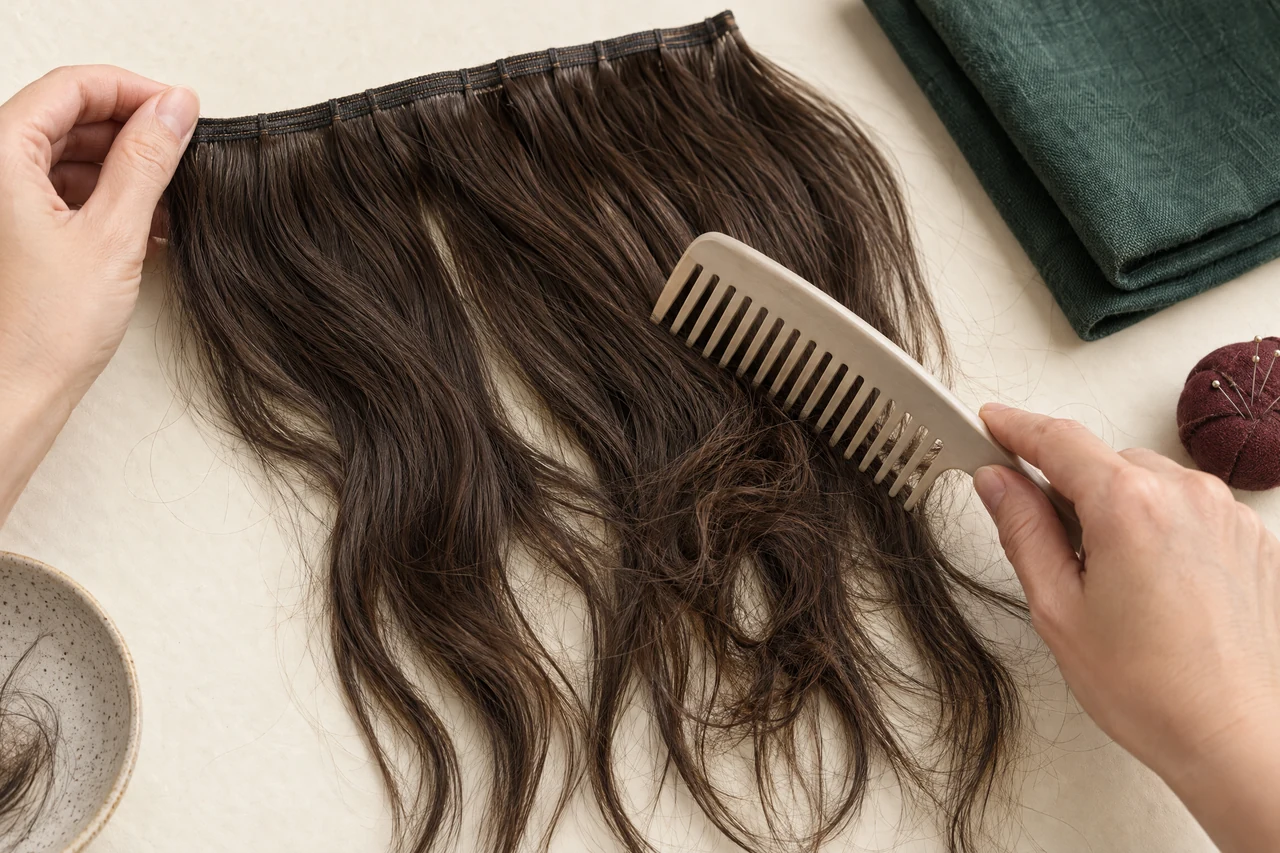
Some tape systems allow suitable hair to be removed, retaped and reapplied, but reuse is not automatic. Fibre condition, previous processing and the attachment's requirements all matter. Ask what will be assessed before a decision, and whether new attachment materials or replacement hair would be needed. Removal without force is important even when reuse is the goal.
When asking 'can hair extensions be reused', look beyond whether a bundle is still long. The assessment should consider tangling, damaged ends, remaining fullness and the condition of the part that connects to your natural hair. Ask whether the hair is still suitable for the intended placement, not just whether it can physically be attached again. A shorter design may be worth discussing if trimming would change your original length goal.
The Great Lengths FAQ explicitly allows reuse of its own tape product. It also describes different removal products for its tape and pre-bonded systems. Reuse of the lengths therefore does not mean reuse of an old adhesive strip, nor does it establish that another system can be handled in the same way. Leave adhesive removal and attachment work to a provider equipped for the identified system.
Tell the provider about colouring, lightening or repeated heat styling since the last fitting. Bring any product information you still have. If some hair is unsuitable, ask whether selective replacement would produce an even colour and fullness, or whether a new set better matches the desired result. Decide after assessment rather than treating full reuse as the only acceptable outcome.
Usable Lengths and Usable Attachments Are Different
Hair that feels soft at the ends can still have an attachment area that requires replacement materials or makes reuse impractical. Conversely, a fresh connection cannot restore damaged lengths. Ask for separate explanations of the hair's condition and the connection's requirements, then agree on what is being retained and what is being replaced before work begins.
Separate Removal, Refit and Move-up Requests
A removal request, a refit and a move-up are not identical appointments. Supply the fitting history and system details, especially if the original work was done elsewhere. Confirm the accepted scope, assessment and quote before making plans. Neither a general service page nor a reusable-hair claim confirms that an existing attachment can be worked on.
Removal means taking the existing extensions out using an appropriate process. Refit usually describes a new fitting after removal and assessment. Move-up is a service label whose actual meaning must be clarified: it should not be assumed to mean that every connection can simply be slid towards the scalp. Ask what must be removed or replaced, and whether a later appointment may be needed.
Review hair extensions to check its service scope and the details to share before arranging the related work.
Use book a hair appointment to send the intended work and possible dates; wait for confirmation before travelling.
The Requested Work Must Match the Existing System
For extensions fitted elsewhere, send the original method or product name, fitting date and any previous maintenance details. Mention missing pieces, suspected residue and areas of tangling. Explain whether your priority is removal only or keeping suitable hair for another fitting. Acceptance of outside work, compatible materials and appointment duration need confirmation; photographs alone do not settle these questions.
Check Whether the Same Length Still Suits the Next Fitting
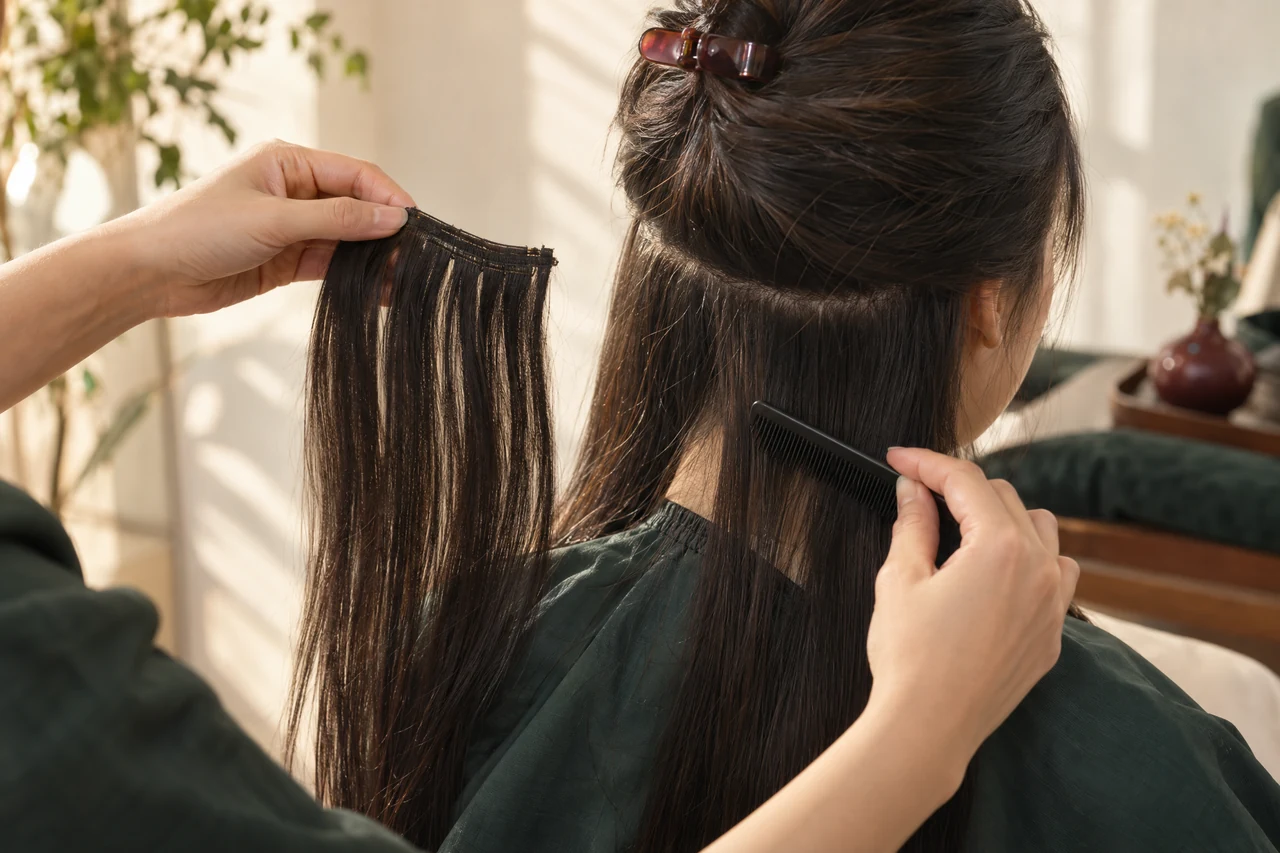
A successful next cycle need not reproduce the previous fitting exactly. Your natural hair may now have a different length or shape, while the added hair may have been trimmed. Compare the current side and back outlines with the result you want. Ask whether retaining the same added length still gives a balanced transition, especially if your natural layers were short at the first fitting.
Daily handling also affects whether keeping the same design feels manageable. If you repeatedly struggle to separate the lengths or need heavy styling to make the blend look right, explain that before choosing another cycle. The discussion may concern length, placement or fullness rather than merely replacing attachment materials. A manageable design is more useful than preserving maximum length at any cost.
Continue with hair extension aftercare for that specific comparison and the preparation questions it raises.
Judge the Blend as Well as the Remaining Fibre
Bring photographs of your ordinary parting and the way you usually tie your hair, not only a freshly styled finish. Agree on any trimming before the refit, including how much usable length you are willing to lose. Care can help maintain the hair, but a smoother-looking finish is not permission to postpone attachment review.

Plan the Next Cycle Around Your Diary and Budget
Before a long trip, an unusually busy work period or an event, tell the provider when you will be available for review. Do not assume an approaching occasion makes it appropriate to leave a changing attachment untouched. It may be better to discuss removal, a different fitting plan or an alternative style than to organise everything around an unassessed wear period.
Use the 6 preparation steps below to organise a return-visit enquiry. Ask for a quote that separates the work required now from possible replacement hair. Understanding does the price of hair extensions include maintenance helps you distinguish the initial fitting cost from future work without assuming those visits are included.
Leave Room for the Assessment to Change the Plan
For a Sheung Wan visit, share your availability alongside the existing system details so the enquiry can be matched to the intended work. If reuse remains uncertain, ask what happens if the removed hair is unsuitable. Knowing whether you would leave with your natural hair, discuss replacement or arrange a later fitting makes the decision easier before travel and work commitments are fixed.
Different extension lifespan questions call for different checks
| Question | What needs checking | Useful decision |
|---|---|---|
| Can this fitting stay in? | Connections, supporting hair and changes since fitting | Follow the review plan; report problems earlier |
| Can the added hair be reused? | Fibre condition, remaining length and attachment requirements | Retain suitable hair only after assessment |
| Is a move-up suitable? | Exact system and meaning of the proposed adjustment | Confirm removal and replacement materials required |
| Will the same style work again? | Current natural layers, added fullness and trimming needs | Agree on the next blend before refitting |
Your preparation checklist
- Record the existing system or product name, fitting date and previous maintenance work.
- Photograph the usual parting and overall shape without pulling connections into view.
- Describe any looseness, catching, clustered tangles or discomfort and where it occurs.
- Share colouring, lightening, heat-styling habits and other changes since the fitting.
- State whether you want removal only, assessment for reuse or a confirmed refitting plan.
- Confirm accepted work, quote, review arrangements and available dates before travelling.
Frequently asked questions
Can hair extensions be reused?
Some systems permit reuse of suitable hair, but it depends on the fibre condition, prior processing and attachment requirements. Assessment is needed; reuse of every removed strand is not promised.
Can I keep extensions in permanently?
Do not treat a fitted attachment as permanent. Follow its review and removal instructions and seek assessment if the fit changes or tangles develop around the connection.
Do healthy-looking ends mean I can delay a check?
No. The visible lengths do not show the condition of every attachment or the supporting hair. Follow the system's review plan and contact the provider about changes.
Make Your Next Extension Visit a Clearer Decision
Send Vit So the existing extension system, fitting history and whether you want removal or assessment for another fitting. Include your preferred dates for a Sheung Wan visit. The service scope, suitability and quote need confirmation; an enquiry is not a confirmed booking.
Start your WhatsApp enquirySources & further reading
- How to prevent hair damage from a weave or extensions
Professional assessment of tightness, pain and repeated pulling; seeking dermatological advice for hair-loss concerns.
- Hair Extensions FAQ
Manufacturer-specific distinction between fitting wear and tape-hair reuse, with natural-hair and lifestyle qualifications and different removal products.



