







Caring for dry permed ends with oily roots starts with separate needs
A shiny parting and rough ends can occur on the same head of hair without calling for the same response. The scalp is the area you need to cleanse; the permed lengths are where you may notice tangling, a coarse feel or difficulty keeping curl bundles together. Adding a rich product everywhere can leave the roots feeling coated. Avoiding washing everywhere can leave the scalp uncomfortable while doing little to resolve knots at the ends.
Describe the two areas before choosing a routine. Does the root area feel oily before washing, or only after a styling cream touches it? Do the ends feel rough while wet, after drying, or mainly when combed? These observations do not diagnose a condition or measure chemical damage. They do make a useful distinction between a cleaning problem, a handling problem and a product-placement problem, which can otherwise look like one general complaint about the perm.
Caring for dry permed ends with oily roots after the first wash
Keep the initial aftercare instructions separate from the ongoing routine. Ask the hairdresser who performed the perm when to wash first and whether there are specific product or styling restrictions for that service. This article cannot replace those directions with a universal waiting period. If you are unsure whether the initial period has ended, clarify it rather than guessing. Once it has ended, the original instruction is not a reason to tolerate dirty or uncomfortable roots indefinitely.
Choose the wash around the scalp, not the driest end
The American Academy of Dermatology's healthy hair guidance recommends washing according to how often hair becomes dirty or oily and placing shampoo on the scalp rather than the full length. That principle is more useful here than borrowing a fixed timetable for a different hair type. A chemically curled outline does not make every scalp behave alike. Your routine should respond to actual root cleanliness and comfort, with a separate plan for the lengths.
Wet the hair and distribute shampoo across the scalp according to its instructions, using gentle fingertip movements rather than scratching with nails. Work around the parting, hairline and back of the head without piling the ends into a tangled mound. Let the rinse carry shampoo through the lengths instead of repeatedly scrubbing them. If the lengths themselves have substantial styling residue, explain that to the hairdresser and check the product directions; scalp-focused washing is not a rule to leave obvious residue untreated.
If a greasy scalp is the main concern, note when the oily feeling returns and which products reach the roots. A root area that feels coated immediately after styling needs a different review from one that becomes oily later. Avoid automatically repeating a stronger wash until the scalp feels stripped. Thorough rinsing and accurate placement are worth checking before increasing cleansing intensity, especially when the ends already feel dry.
Balancing regular scalp washing and retained perm movement on active days
Consider a hypothetical reader whose roots feel oily after a sweaty journey while the ends remain rough. Skipping a needed wash for another day does not address the root concern. A scalp-focused wash, suitable end conditioning and a manageable drying routine offer a clearer starting point. If this happens often, ask for a routine that fits frequent washing rather than one dependent on avoiding water. There is no single wash interval that this article can prescribe for every perm.
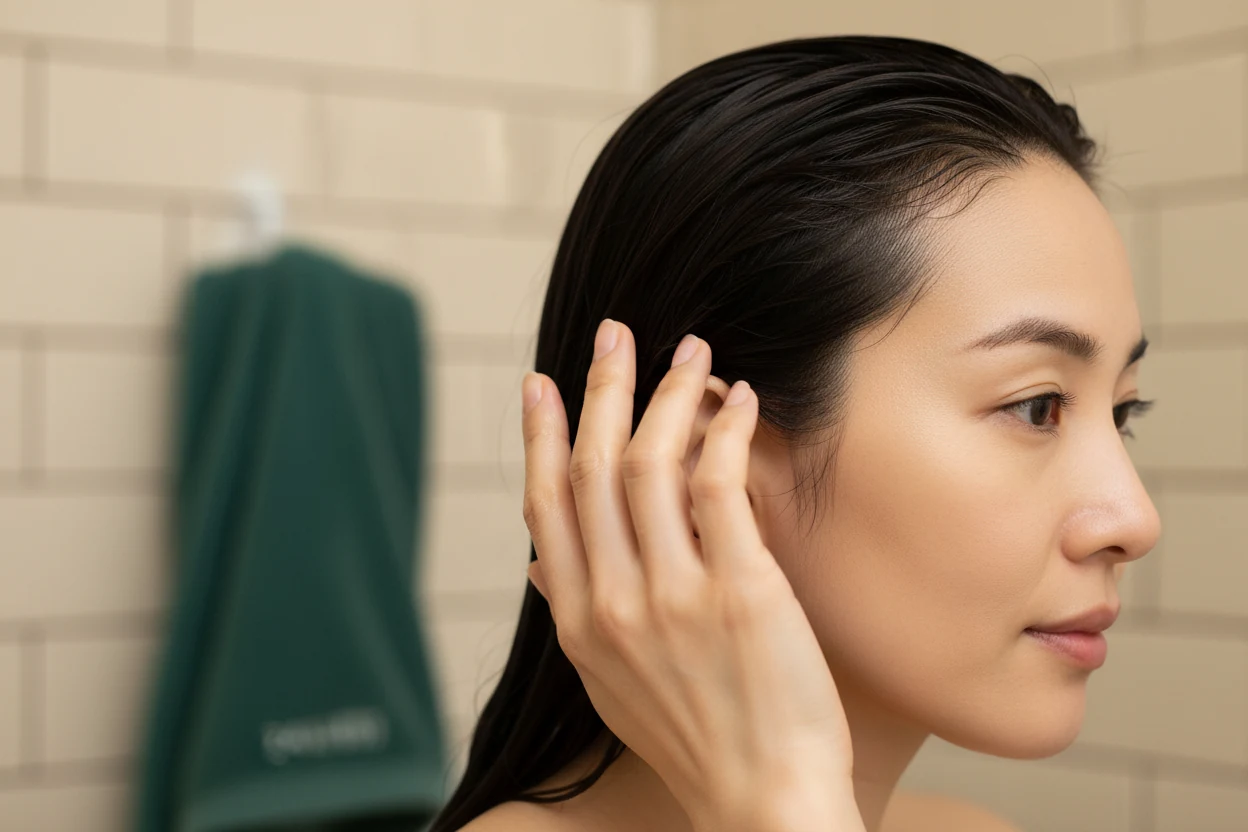
Condition the lengths without coating the roots by default
Choose a conditioner compatible with your hair type and any service instructions, then follow its stated amount, contact time and rinsing directions. For dry permed lengths, distribute it through the area that needs easier detangling and a more comfortable feel. Divide long hair into manageable sections if that makes coverage more even. When roots feel heavy, avoid spreading a lengths-conditioning product over the scalp by habit; check whether its directions actually call for that application.
Do not assume that a mask, conditioner, leave-in and oil must all be used together. Check whether the mask replaces a rinse-out step or is intended to accompany one. A leave-in has a different role because it remains on the hair, so its placement also matters. If a routine leaves the ends coated, review the layers before adding another product. A simpler sequence makes it easier to recognise whether a change improves combing or merely changes the finish.
For a closer look at hair treatment for dry curly hair, keep the desired curl outline in the conversation as well as softness. The question is not simply whether a treatment feels rich. Ask how it is applied, whether it is rinsed out and what styling steps follow. Better slip is a cosmetic care aim; it does not establish that the chemical curl structure has been restored or that the same appearance will last through every wash.
Use the finished feel to review amount and placement
After drying in your usual way, compare the scalp area and ends separately. If roots feel coated but ends comb more comfortably, keep the useful lengths step while reviewing accidental root application. If ends still snag, check coverage and handling rather than assuming more layers are the answer. Follow any rinse-out instructions fully. Do not leave a rinse-out formula on deliberately to make it act like a leave-in unless its manufacturer explicitly allows that use.
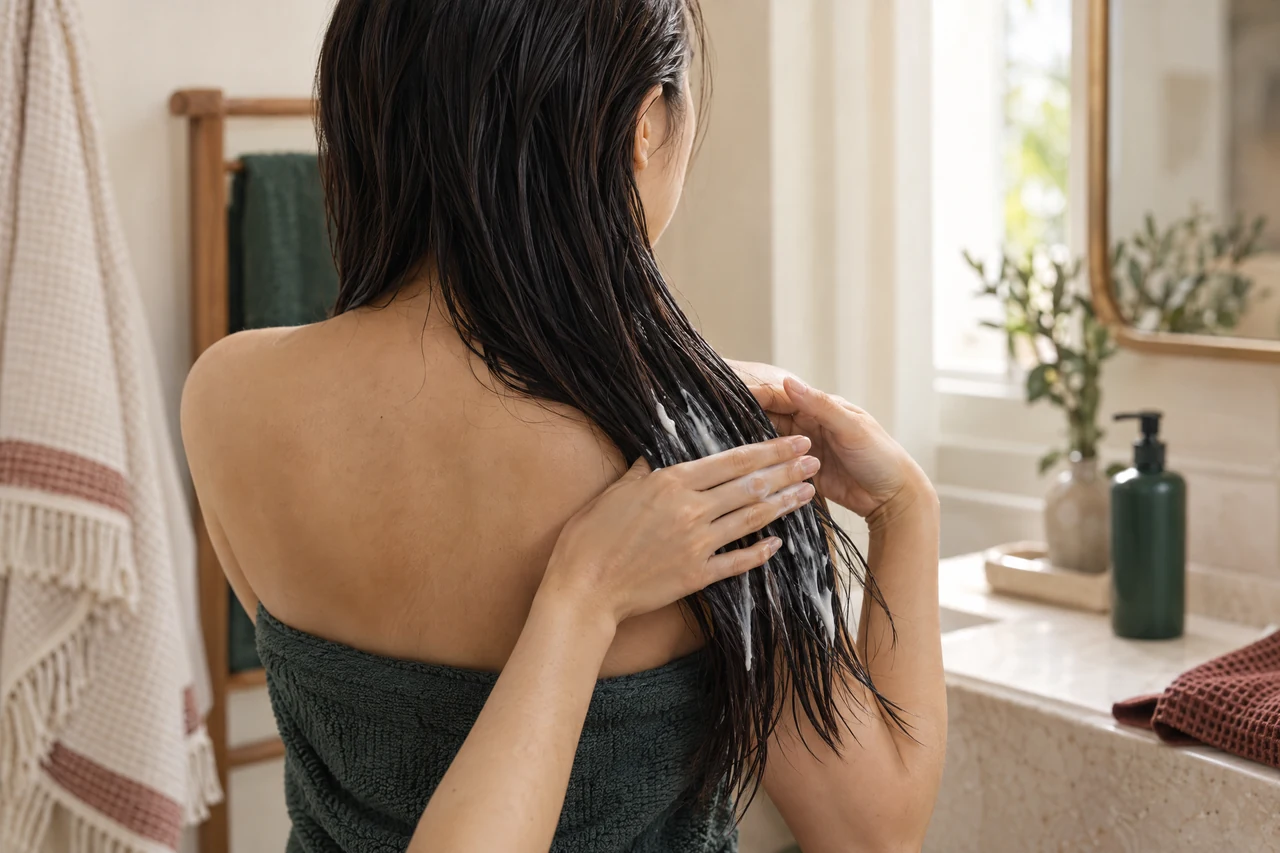
Reduce pulling during detangling and drying
A regular washing routine includes what happens after cleansing, not just which bottle you choose. The American Academy of Dermatology's guidance on avoiding hair-care damage advises gentle wide-tooth combing, avoiding tugging and absorbing water without rough towel rubbing. For permed lengths, follow the handling directions supplied with your service and work through small sections. Support a section while gently loosening a knot instead of dragging a comb from the root through resistance.
Begin at the ends and move higher as each area becomes easier to detangle. Do not repeatedly brush a dry curl bundle apart just because the surface has a few flyaways. If a knot does not loosen gently, pause rather than turning the routine into a strength test. Conditioning can assist manageability, but it is not permission to pull harder. Persistent tangles at the same end section are useful information to bring to a hairdresser, particularly alongside a history of colouring or lightening.
Make drying realistic enough to repeat
Gently absorb excess water, then use a drying approach compatible with the perm instructions and your available time. If you use a dryer, limit excessive heat and avoid repeatedly stretching the curls straight with a brush merely to make the ends look smoother. Air drying is an option where practical, not a requirement to leave roots uncomfortable because drying takes too long. Ask for a workable method if your present routine makes you reluctant to wash when needed.
Distinguish a heavy finish from a changed curl pattern
Flat roots and loose-looking ends are observations, not proof that a perm has disappeared. Product amount, placement, rinsing and the way bundles are separated during drying are sensible things to review before considering another chemical service. A coated feeling that appeared after adding a new leave-in gives you a specific question to investigate. A change in the outline that persists despite your usual routine deserves a different discussion. Neither can be settled from one photograph alone.
Change one controllable detail at a time, staying within product and service directions. For example, if a hypothetical reader started applying a lengths cream near the crown and then noticed a heavy finish, moving it back to the intended lengths is a clearer comparison than simultaneously replacing every product. Keep the washing and drying method reasonably consistent. Record scalp comfort, end tangling and the visible outline separately, so a softer feel is not mistaken for evidence about curl structure.
Know when observation is no longer enough
If the outline remains noticeably different, or the ends seem increasingly fragile, ask the hairdresser to assess the chemical history and current condition before discussing re-perming or straightening. Do not keep testing by pulling wet strands or using extra heat to force a result. Home observations can identify a useful question, but cannot determine whether further chemical work is suitable. The comparison below helps keep the next step tied to the concern rather than the desire for an instant correction.

Prepare an enquiry that covers roots and permed lengths
When asking about a hair treatment, describe both areas: how often the roots need cleaning, where the permed ends feel rough and which movement you want to keep. Ask whether the proposed service is lengths-focused cosmetic conditioning or includes a process intended to change shape. Share the date and type of your perm, any colouring or lightening history, and the first-wash directions you received. Do not request a corrective chemical service simply because the crown looks flat after styling.
These 6 preparation points help you describe both the root routine and the permed lengths before an enquiry. Use the checklist to collect information you already have, rather than delaying a necessary wash for a photograph. An everyday image after your normal drying method can be useful, but it is not a substitute for assessing the hair in person. Ask about suitability and aftercare before agreeing to a service, especially if you want easier combing without changing the curled outline.
Put persistent symptoms ahead of a cosmetic change
If changed care does not help, particularly when there is thinning or hair loss, seek healthcare advice rather than relying on conditioning alone, as the AAD's dermatologist referral guidance recommends. Persistent scalp pain, marked irritation or sores also warrant healthcare advice rather than stronger scrubbing. Defer further chemical work while such concerns remain unresolved. A salon enquiry can discuss cosmetic care and styling choices, but cannot diagnose scalp disease or promise permanent oil control.
Compare the observation with a focused next step, not a diagnosis.
| What you notice | What to review first | What not to assume |
|---|---|---|
| Oily roots before washing; rough ends | Scalp-focused cleansing and separate lengths conditioning | Dry ends mean every area should avoid washing |
| Roots feel coated immediately after styling | Whether lengths products touched the scalp | The scalp needs a stronger shampoo automatically |
| Ends feel coated and bundles look heavy | Product layers, directions and rinsing | The chemical perm has necessarily been lost |
| Persistent outline change or increasing fragility | Chemical history and an in-person suitability assessment | Another perm is a safe immediate correction |
Your preparation checklist
- Record the perm date, service type and initial aftercare directions.
- List colouring, lightening and other chemical work on the lengths.
- Note when the roots become oily and how the scalp feels.
- Photograph product directions and identify which formulas touch the roots.
- Describe end tangling, coated feel and your usual drying method.
- Explain the curl movement you want to retain and confirm consultation language if needed.
Frequently asked questions
Does balancing regular scalp washing and retained perm movement mean washing less?
Not automatically. First follow the initial washing directions from the perm service. Afterwards, respond to actual dirt, oil and scalp comfort rather than a blanket rule to wash less. Keep shampoo focused on the scalp and suitable conditioning on the lengths. If frequent washing is necessary, ask for aftercare and drying steps you can realistically repeat without repeatedly pulling or overheating the ends.
Should I use a mask and conditioner every time because the ends are dry?
Only if the individual product directions support that sequence and it suits the finished feel. A mask may replace a rinse-out conditioning step rather than requiring another layer. Check application area, contact time and rinsing instructions. When roots or lengths feel coated, review placement and the existing layers before adding more. Dryness alone does not establish that every conditioning format should be combined.
Can conditioning bring back a perm that looks looser?
Conditioning may improve slip and manageability, but it cannot be assumed to restore a changed chemical curl structure. Review whether the hair feels coated, whether the drying method changed and whether bundles were repeatedly pulled apart. If the outline remains different or there is fragility, seek a hairdresser's assessment before considering further chemical work. Do not diagnose a failed perm from flat roots alone.
Ask about clean roots and more manageable permed ends
Send a WhatsApp enquiry to +85253057561 with your perm history, current products and the root-versus-end concern you want to address. Vit So is at 252 Hollywood Road, Sheung Wan, Hong Kong. Ask about a suitable care approach, consultation language if needed, availability and the actual charge; an enquiry requires confirmation and is not an instant booking.
Start your WhatsApp enquirySources & further reading
- Tips for healthy hair — American Academy of Dermatology
Practical guidance on washing according to dirt and oil, scalp-focused shampooing, conditioning dry or curly lengths, gentle detangling and limiting excessive heat. It does not give a universal first-wash rule for perms.
- 10 hair care habits that can damage your hair — American Academy of Dermatology
Explains gentler shampooing, rinsing, towel drying and combing, precautions around chemical work, and when persistent concerns, especially thinning or hair loss, need dermatologist advice.



