







Textured crop haircut when the fringe splits naturally: locate the opening
Look at the fringe when it is dry and no longer held in position. Does the same opening return near the centre, beside one temple or between several small sections? Also notice whether the hair moves sideways from the root or only separates near the ends. These observations are useful haircut information, not a diagnosis from a photograph. A gap in a heavily styled reference could come from its finish, while your own repeated opening may remain even with very little product.
Before requesting a specific edge, use the men's haircut page to check the cut service you are enquiring about, then explain the front separately from the sides. Saying that you want a short crop does not tell the hairdresser whether a visible opening bothers you. Describe the part of the forehead you want covered and the amount of arranging you will actually do. That makes the consultation about a workable front, rather than a haircut name alone.
Compare a released fringe, not a held fringe
If you flatten the front with your hand for a photograph, also take one after letting go. A wet fringe pulled straight down can hide the very separation that matters to your decision. Use similar lighting and a similar head position for the comparison, without repeatedly smoothing the opening away. The useful question is whether the dry hair stays near your preferred boundary after release. If not, the proposed solid line needs a realistic discussion about maintenance.
Keep coverage weight separate from cutting texture
A fringe can have a thick-looking section and still leave an obvious space beside it. Coverage concerns where hair lands across the forehead; texture concerns how the pieces and ends look. Removing hair may make a heavy section feel lighter, but it does not add strands to an opening. If the main complaint is a see-through notch, repeatedly asking to thin the front can therefore work against the denser boundary you hoped to keep. Locate unwanted heaviness before deciding what to remove.
The broader men's fringe haircut guide helps connect dry length with retained weight and direction; here the persistent opening makes that connection especially important. Tell the hairdresser which neighbouring sections you want to remain substantial. A thick top behind the fringe is not a reason to make the front equally light. The crown, upper top and forehead edge can need different decisions, even when they all belong to one short haircut.
Ask where the weight would be removed
Sam Villa's professional cutting guide distinguishes textured ends from interior bulk removal and advises locating density when working on a heavy fringe. That supports a more specific question than asking for texture everywhere: which area feels bulky, and which area supplies the coverage? The cutting method remains the hairdresser's decision. Your role is to make clear that lightness is not the priority at the edge if a denser-looking front matters more.

Choosing a crop edge around forward growing cowlicks
There are two honest directions to compare. A denser edge aims for a more continuous visual boundary and protects the front hair needed for it. A deliberately broken edge allows visible forehead between selected pieces, so the natural opening is less at odds with the design. Neither direction has to mean excessive product or an extreme fade. The decisive point is whether you would still like the broken edge if the gap appeared in its usual place rather than exactly where the reference shows it.
Use the textured crop haircut guide to compare the general front-line options, then judge them against your own split rather than copying the photograph. A firm-looking reference can be attractive without being a low-effort match. A softer edge can be practical without being sufficiently covering for you. If forehead exposure is the concern, do not accept a more separated front merely because it has been described as textured. Confirm the visible outcome you prefer.
A textured crop haircut when the fringe splits naturally needs an acceptable fallback
Choose a front that you can accept when its finish relaxes. For example, a person who dislikes one central opening might prefer retaining a fuller front and testing gentle directional drying before any extra thinning. Someone comfortable with forehead exposure might prefer a broken boundary from the outset. These are hypothetical preferences, not promised outcomes. There is also a valid middle position: keep the overall crop short while postponing a very short front until its dry behaviour is clearer.
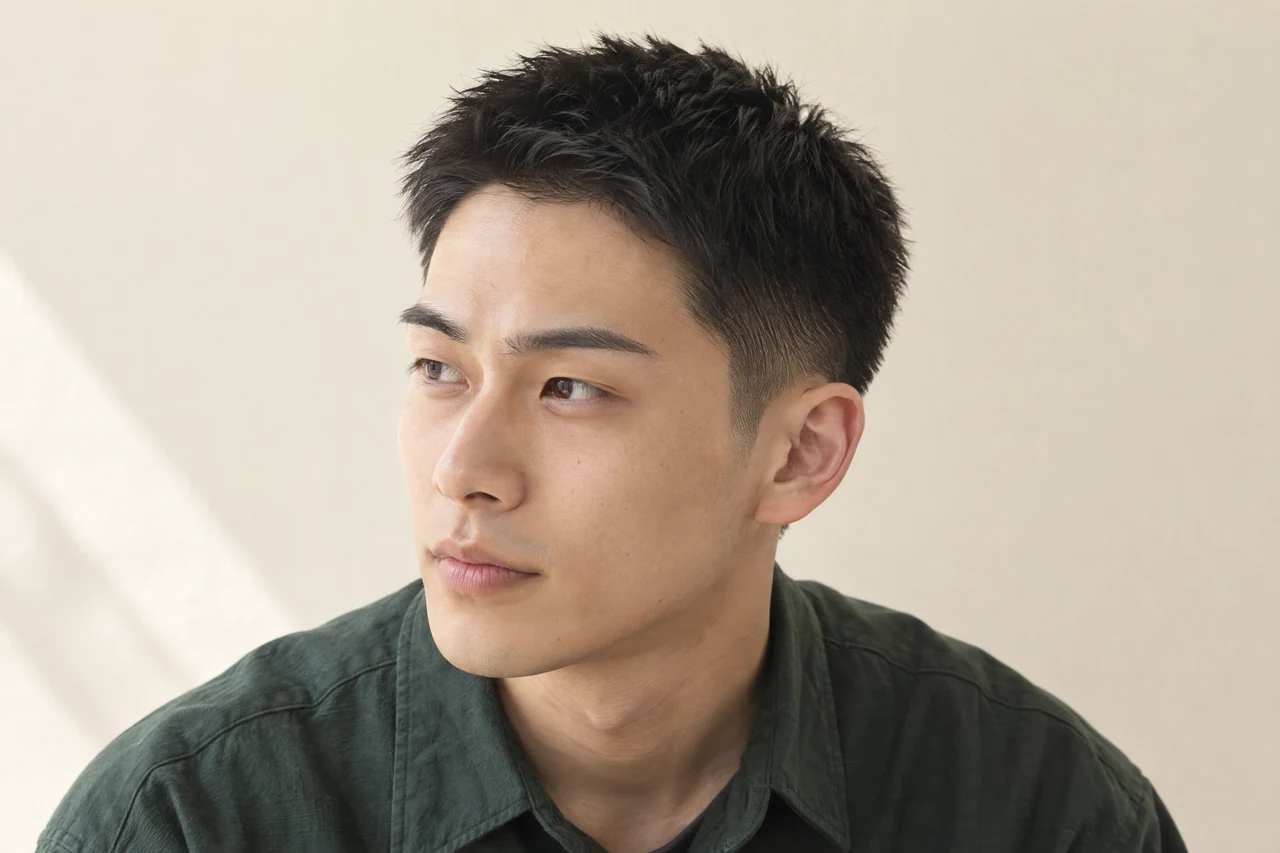
Test the edge with the drying effort you will repeat
Sam Villa's fringe cowlick styling tutorial describes combing across the front in both directions towards the face while following with a dryer. It also notes that cowlicks vary in how manageable they are. This is a directional styling example, not evidence that a haircut permanently removes your growth pattern. Ask the hairdresser to demonstrate an approach suited to your hair and equipment, rather than assuming the polished salon finish will happen without any effort at home.
Compare that demonstrated finish with the way you normally let the front dry. If your routine is simply towel-drying and leaving it alone, that should be the baseline for choosing the edge. If you are willing to use a dryer, show how you hold it and whether you use a comb or fingers. A front that only looks solid after careful root work may still be a reasonable choice, but only if you are happy to repeat that work.
Do not judge coverage by product hold alone
Have the direction and edge explained before a strong finishing product is added. A product can bring pieces together or emphasise their separation, so the finished surface may not reveal how the front behaves with your usual amount. If the gap needs repeated arranging to stay closed, say so during the consultation. Avoid turning the question into which product can force the most coverage. The haircut should also have an acceptable appearance on days when you use less.

Protect the front when adjusting a disappointing crop
If your current crop opens more than you wanted, pause before asking for another round of thinning. Show where the gap appears and explain what has changed since the cut: the dry position, the length of neighbouring pieces or your finishing routine. More removal cannot restore hair already cut away. A review may involve retaining the front while adjusting another area, or allowing useful length to return before reassessing coverage. The appropriate choice depends on the actual hair, not a standard correction.
At the next appointment, separate a tidy-up of the sides from a decision about the fringe. The short outline can look untidy without the front needing to become shorter. Equally, longer front pieces do not automatically make a split disappear; their released position still matters. Bring photographs from ordinary days so the review reflects what you wear, not only the moment after styling. Describe whether the opening bothers you consistently or only with a particular finish.
Review one meaningful change at a time
Where practical, ask to assess the dry front before changing both its length and thickness. If everything becomes shorter and lighter together, it is harder to explain which change made the edge less satisfactory. This does not mean directing the hairdresser's technical process. It means agreeing on what must remain visible in the finished assessment: sufficient coverage around the opening, the amount of separation you accept and a routine that does not depend on constant readjustment.
Bring a brief about the split, coverage and daily routine
Prepare a natural front view, an angled view that shows how the top connects, and a reference with the kind of boundary you like. Explain what each photograph is for. The natural view shows the recurring opening; the reference shows your preference, not proof that the same front is achievable. The checklist below helps keep the discussion focused on those practical differences. You do not need to know a cutting technique, identify an exact cowlick pattern or request the same measurements as someone else.
The confirmed price for men’s wash, cut & blow-dry is HK$380. Use that published service price as your starting point, and confirm the appointment details and any separately proposed work when enquiring. A natural front split is not, by itself, a reason to add another service. If a treatment is suggested, ask what it is intended to change and whether the cut-and-drying option has been assessed first. Keep service scope separate from the choice between a denser and a broken crop edge.
A clear request leaves room for an honest limitation
A useful brief might be: I like a short crop, but my front opens here after normal drying. I would like to retain coverage beside that opening and avoid a finish that needs strong hold. Please show me the dry edge before making the front more separated. This is an example request, not a guarantee of a closed gap. If the natural position conflicts with your preferred boundary, agree on acceptable separation or a different front length rather than expecting an invisible compromise.
Compare the front choices against the same naturally recurring opening, not against different models.
| Front choice | Coverage priority | What to check before cutting |
|---|---|---|
| Denser, more continuous boundary | Retain useful front substance; do not promise a closed split | Does the released dry fringe stay near the intended line? |
| Deliberately broken boundary | Accept visible forehead between defined pieces | Would you like the gap in its natural position? |
| Short outline with more front retained | Keep options while assessing the opening | Can the top connect without shortening the front unnecessarily? |
| Denser edge with directional drying | Seek more coverage through an agreed routine | Will you repeat the demonstrated root work on ordinary mornings? |
Your preparation checklist
- Bring a dry front photograph without holding the split closed.
- Mark the opening that returns after your usual morning routine.
- Choose a reference showing the forehead coverage you actually prefer.
- State whether you will use a dryer, fingers, a comb or product.
- Identify front sections you want to keep substantial rather than thinner.
- Ask to compare the released dry edge before adding more separation.
Frequently asked questions
Will a blunter crop edge make my natural split disappear?
A blunter-looking edge can make the ends appear more continuous where they land, but it cannot guarantee that separated sections will meet. Judge the released dry position as well as the cut line. If coverage depends on directional styling, decide whether that routine is acceptable before choosing a very firm boundary.
Can I keep a crop if I do not want daily blow-drying?
Possibly, provided you like the front in its ordinary dry position. A broken edge may be a better match if visible separation is acceptable, but it is not automatically maintenance-free. Ask for the cut to be assessed against your actual routine rather than a finish that relies on tools you will not use.
Should I book chemical work to deal with the opening?
Do not add chemical work automatically because the fringe splits. First assess the proposed cut, retained weight and achievable drying approach. Defer a treatment decision if its intended effect or suitability is unclear. Any separate service needs its own assessment and confirmed scope; it is not an implied part of choosing a crop.
Enquire about a crop that works with your natural front
Send Vit So a WhatsApp enquiry at +85253057561 with a natural front photograph, a preferred crop reference and a short description of your styling routine. Explain how much forehead separation you accept and whether coverage or lightness matters more. The location is 252 Hollywood Road, Sheung Wan, Hong Kong. Ask to confirm availability, service scope and appointment details; an enquiry is not a confirmed booking.
Start your WhatsApp enquirySources & further reading
- Best Hair Cutting Techniques - The Ultimate Guide — Sam Villa
Professional education distinguishing textured ends from interior weight removal, with a specific discussion of locating density in a heavy fringe. Useful background for asking where weight should remain.
- How To Train Your Bangs - Removing Cowlicks In The Fringe — Sam Villa
A professional directional-drying example that also acknowledges differences in cowlick manageability. Read as styling guidance, not a promise to permanently remove a natural split.



