







Map hair care for bleached nape lengths under shirt collars
The nape is the lower back-of-head area, where underlayers can sit against a collar while longer outer hair hides them. Begin with hair that is manageable without force. Notice whether catching occurs directly above the collar edge, along a seam or lower down where the lengths rest on your shoulders. Look separately at the outer layer. If the front remains easy to handle but the underneath repeatedly catches, describing everything as equally dry loses a useful distinction.
Clothing contact is a practical possibility to investigate, not a diagnosis from the knot's location. Consider a hypothetical office day with a stiff shirt collar, a jacket and long hair worn loose. Turning your head and putting the jacket on may repeatedly move the same underlayer against fabric. On a day with a lower neckline, the pattern could differ. That comparison can guide a change in arrangement, but cannot prove that bleaching or clothing alone explains every tangle.
Fragility matters when deciding how much handling is reasonable. The American Academy of Dermatology's guidance on reducing hair damage describes damaged hair as prone to breakage and recommends gentle combing without tugging. This is general advice rather than a study of shirt collars. Use it to set a handling limit: a rough patch deserves less repeated pulling, even when the rest of the hairstyle looks smooth and the colour still looks attractive.
A location check for hair care for bleached nape lengths under shirt collars
Record the contact area without repeatedly raking your fingers through it. A mirror or a photograph taken without pulling the hair apart can help you show its position later. Note whether the troublesome section is older lightened hair, an underlayer missed during conditioning, or hair caught by a fastening. The colour difference between roots and lengths is useful history, but appearance alone cannot establish strength or explain why a knot formed.
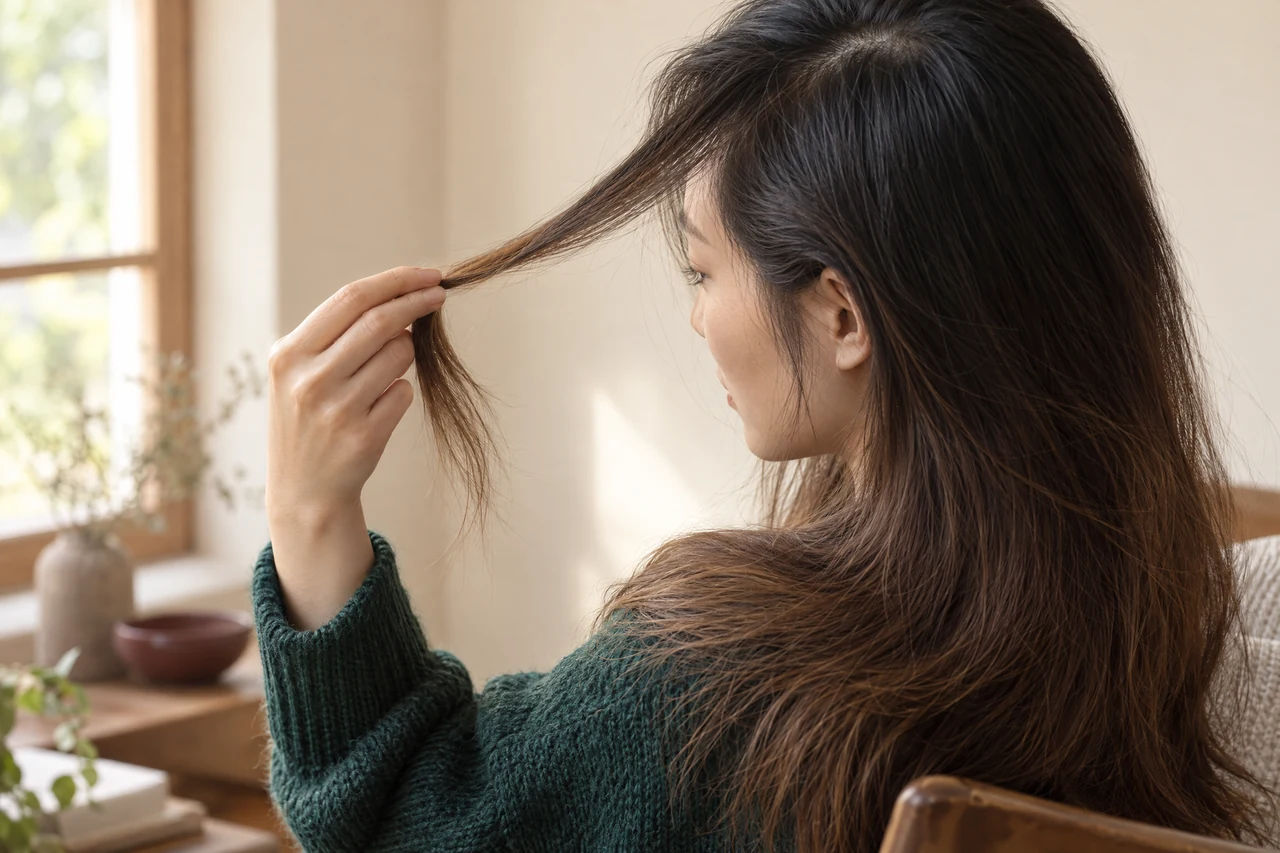
Change where the hair rests without tightening the style
Choose an arrangement by its contact point, not just its name. A low ponytail can leave the underside rubbing against the very collar you want to avoid. A loose braid may reduce free movement, yet its tail may still sweep the fabric. A comfortably secured gathered style that genuinely clears the edge may be more useful. Check the position while wearing the actual shirt and moving normally; an arrangement that works without a jacket may sit differently once the jacket is on.
Clearing the collar is not a reason to pull harder at the roots. The American Academy of Dermatology's advice on hairstyles that pull recommends loosening styles and warns that repeated tight pulling can cause hair loss. It identifies pain, stinging and scalp crusts as reasons to change a style immediately. Keep the gathered arrangement comfortable from the start, rather than waiting until the end of work to release a painful style.
Compare the collar edge with the fastening point
Run through ordinary movements such as looking down at a screen, turning your head and putting on your outer layer. Hair should not be trapped beneath a clip, pinched against a collar button or pulled taut by the style. If it escapes back into the contact zone, reconsider the position rather than repeatedly tightening the same band. When work rules limit hairstyles or clothing, ask about a compliant, comfortable alternative instead of improvising an arrangement that conflicts with workplace safety.
Condition the affected lengths without expecting a permanent shield
Conditioning and contact changes address different parts of the problem. An appropriate conditioner may make lengths easier to handle, but it does not stop hair moving against a collar. Follow the directions for your actual products and any instructions from the bleaching service. Do not assume that applying a mask, rinse-out conditioner and leave-in together is necessary. Introduce a considered change rather than covering an increasingly tangled underlayer with a succession of products whose combined effect you cannot judge.
A salon enquiry about hair treatment can focus on the small area that keeps catching. Explain whether the nape feels rough after washing or only becomes difficult during work, and whether gentle conditioning changes its manageability. Ask what the proposed service is intended to do and whether it suits the existing lightening history. Easier handling is a useful aim; a softer finish should not be presented as proof of restored strength or permission for further bleaching.
Reach the underlayer rather than coating the outer surface
Where the product directions permit application to lengths, separate manageable sections so the intended area is not hidden beneath the outer hair. Use the directed amount, application range and rinse or drying instructions. Avoid turning the collar-contact area into a heavily coated patch simply because it is troublesome. If hair starts feeling sticky, clumped or harder to handle, review the product and method rather than automatically adding another layer. Scalp discomfort needs separate attention from rough lengths.
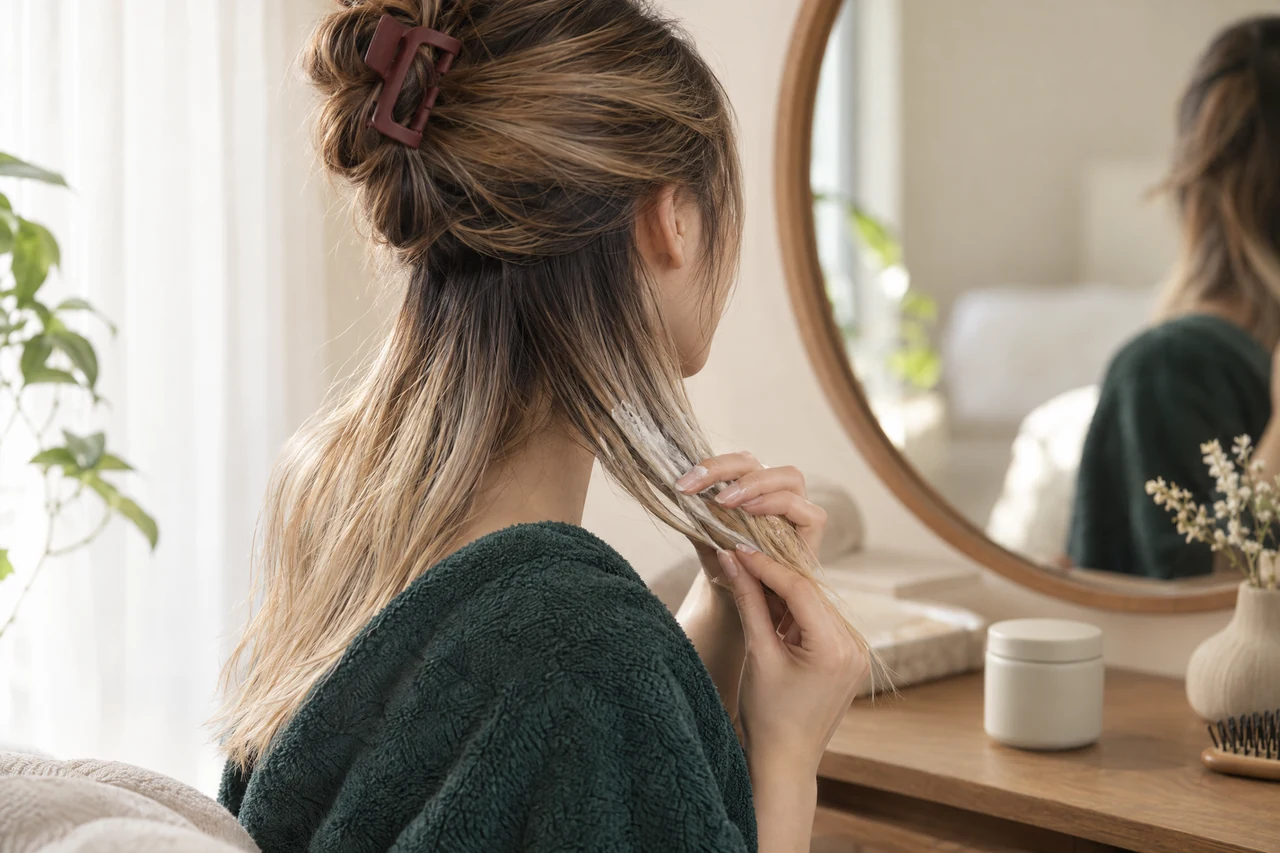
Release loose tangles, but stop at knots that demand force
A small loose tangle that separates gently is different from a compact knot that holds the surrounding hair together. For the former, work with a manageable section and support the lengths so movement is not transmitted into a pull at the roots. Approach the accessible ends instead of dragging a comb from the scalp through resistance. Do not make the ability to finish combing a test of patience or strength. Increasing effort can turn a handling problem into repeated breakage.
For a fuller explanation of gentle handling and its limits, read how to detangle damaged hair. If a nape knot is tight, inaccessible or causing pain, stop rather than working blindly behind your head. Repeated snapping is also a reason to stop. Ask for an assessment before attempting more handling; do not cut into a knot you cannot clearly separate from neighbouring hair. This guide does not provide a method for removing compact mats at home.
Do not make wetness another source of repeated handling
There is no single combing condition for every texture. General dermatology guidance distinguishes straight hair, allowed to dry a little before gentle combing, from textured hair or tight curls handled damp. Match that guidance with the actual product instructions and your hair's needs rather than repeatedly wetting and drying one stubborn patch. Absorb water without rubbing the lengths. If the section still resists gentle handling, changing its wetness repeatedly is not a reason to continue forcing it.

Test managing recurring nape tangles where clothing rubs hair
Make the first comparison about contact, while keeping the rest of your routine reasonably consistent. Wear the same shirt with a comfortable arrangement that clears its edge, if your work permits it. Compare that with what you already know about wearing the hair loose; do not deliberately recreate a severe knot to obtain a comparison. Notice how much loose catching returns during ordinary activity. There is no promised number of days in which this will solve the problem.
These 6 preparation checks help you describe the pattern before changing the routine or making an enquiry. They are an editorial checklist, not a clinical score. Use brief notes rather than trying to measure every strand. A useful observation might be that the underside catches after the jacket goes on, while the visible outer lengths remain manageable. That gives a salon something more specific to consider than a general request to repair dry hair.
Judge the change by comfort and manageable hair, not only by a neat photograph. A style that avoids the collar but creates root soreness has traded one problem for another. A style that looks loose yet traps ends under its fastening also needs adjustment. If the original contact zone improves but a new catching area appears, review where the hair now rests. The aim is less troublesome daily handling, not finding a single arrangement that must work with every shirt.
If the pattern does not change, widen the enquiry
When the same nape section catches despite reduced collar contact, avoid concluding that you need a stronger product. Review whether it already feels rough before work, whether washing leaves that underlayer incompletely handled, and whether a clip or band is now involved. Share the persistent location and processing history with the salon. Hair loss, ongoing scalp soreness or other scalp changes call for healthcare advice rather than being folded into an ordinary conditioning enquiry.
Discuss keeping length with a realistic salon plan
Keeping long hair does not have to mean insisting that every affected strand remains untouched. Equally, a localised nape problem is not an automatic reason for an all-over short cut. Describe the length and outline you want to preserve, then ask what can realistically be managed through contact changes, appropriate conditioning or a carefully discussed trim. Any cutting decision should be explained in relation to the actual affected area. A photograph can start the conversation but cannot establish its condition fully.
Bring the older lightened sections into the discussion using hair care after bleaching as background. Note repeat lightening, other chemical services and any worsening breakage. If the troublesome section keeps snapping, defer further bleaching or other demanding chemical work until its suitability has been assessed. Do not ask a smoother finish to serve as a strength test. The next service should reflect the hair you have now, not simply the colour or length you hope to retain.
Ask for a plan you can follow with your work clothes
Show the shirt or describe its collar height, and explain any requirement to tie hair back. Ask which comfortable arrangement is realistic for your length, what the proposed care can and cannot change, and how to respond if catching returns. Confirm the service, actual charge and appointment arrangements before proceeding. If you need a particular consultation language, confirm that too. An English website does not by itself guarantee an English-speaking consultation or establish that a service is suitable.
Compare the contact pattern, not just how polished the style looks.
| Arrangement | Possible advantage | Check before relying on it |
|---|---|---|
| Loose hair over the collar | No fastening tension | Underlayers may remain against the collar even when outer hair looks smooth. |
| Loose low ponytail | Keeps some lengths together | The underside and tail may still touch the same edge. |
| Comfortable loose braid | Limits loose movement | The braid or its fastening must not rub the affected area or pull at the roots. |
| Comfortable gathered style clearing the collar | Moves lengths away from that contact zone | Check comfort, clip placement and normal head movement while dressed. |
| Lower or smoother neckline, where permitted | Changes the clothing contact | Treat any improvement as an observation, not proof that fabric alone caused the tangles. |
Your preparation checklist
- Record the exact nape area that catches without tugging it apart.
- Note whether the section is already rough before getting dressed.
- Describe the shirt collar, jacket and any fastening touching the lengths.
- List bleaching and other chemical services affecting that underlayer.
- Bring the names and directions of the conditioning products you use.
- State the length you want to keep, work restrictions and any snapping or discomfort.
Frequently asked questions
Will changing my collar solve the tangles without cutting my hair?
It may help if contact is part of the pattern, but it cannot guarantee knot-free hair. Compare a permitted neckline or a comfortable style that clears the collar. If the same section remains difficult, discuss its processing history and condition. A localised assessment is more useful than assuming either no cutting or a major cut is necessary.
Should I add more leave-in when managing recurring nape tangles where clothing rubs hair?
Not automatically. Follow the product's directions and review whether the underlayer is being conditioned appropriately. More product will not move the hair away from clothing, and an unsuitable amount may make handling harder. Change the contact arrangement before treating every recurrence as evidence that the previous application was insufficient.
What if a style that clears my shirt collar hurts my scalp?
Loosen or change it immediately. Pain is not a necessary part of protecting the lengths from contact. Choose an arrangement that avoids both collar rubbing and tight root tension. Persistent soreness, stinging, scalp changes or visible hair loss deserve healthcare advice; they should not be treated as ordinary dry ends or managed simply by adding conditioner.
Ask about the nape area that keeps catching
Send a WhatsApp enquiry to +85253057561 describing the collar-contact area, your bleaching history and the length you want to preserve. Vit So is at 252 Hollywood Road, Sheung Wan, Hong Kong. Ask about an assessment and an appropriate care or cutting discussion, not a guaranteed repair. Service suitability, consultation language if needed, charges and appointment arrangements require confirmation; an enquiry is not an instant booking.
Start your WhatsApp enquirySources & further reading
- How to stop damaging your hair — American Academy of Dermatology
General guidance on conditioning, gentle wide-tooth combing, texture-sensitive wet-hair handling and avoiding rubbing or tugging. It does not identify a particular collar as the cause of tangles.
- Hairstyles that pull can lead to hair loss — American Academy of Dermatology
Explains the risks of repeated tight pulling, the importance of loosening styles, scalp warning signs and seeking dermatologist advice for hair loss. Relevant when gathering hair away from clothing.



