







Grey blending for brunettes: define the dark colour you want to retain
The best hair colour to blend grey hair is not one universal shade. On a brunette base, ask whether preserving the dark overall impression or reducing the contrast with white strands is more important. Compare references in similar lighting and point to the exact darker areas you like, rather than copying an entire finished photograph.
Depth describes how light or dark the hair appears; tone describes its warmer or cooler character. A cool brown is not automatically a pale brown. If you like a deep coffee-coloured outline, say so before discussing silver or ash details. Otherwise, a request to make everything softer might be interpreted as permission to lighten more of the hair than you intended.
Read a reference at normal conversational distance as well as close up. Does it still look brunette across the back and underneath, or do the bright areas dominate? A photograph with dark roots and mostly light lengths may be attractive but does not necessarily meet a keep-it-dark brief. Identify which feature you want to borrow: the dark perimeter, the fine silver lines or the gentle front contrast.
Review grey coverage to check its service scope and the details to share before arranging the related work.
A grey blending for brunettes brief starts with your depth preference
Try a clear description such as: 'I want the back and lower lengths to remain dark brown, and I am comfortable seeing some white at the front.' Then name the boundary that bothers you most. This gives the colour discussion a priority rather than asking for maximum darkness and minimum contrast everywhere at once. Retaining a very dark background inevitably leaves some visible contrast with pale strands.

Map concentrated white areas and scattered strands separately
When discussing how to blend grey hair with dark hair, distinguish a concentrated pale area from a few scattered white strands. One broad colour change may not address both preferences equally. Show your usual parting, the sides and the back, and explain whether the white hair should become less noticeable or remain an intentional feature.
A few white threads through dark lengths create a different pattern from a broad silver area at a temple. With scattered strands, the aim might be to soften their isolation within the brown. With a concentrated area, the aim might instead be to preserve an attractive pale feature while making its boundary feel less abrupt. Neither goal requires every part of the head to have the same mixture.
Show your hair loose, tucked behind the ears and tied back if those are normal styles for you. Pulling the hair away from the face can expose white areas that are hidden when it hangs down. A blend designed only around a salon side part may not address the centre part you wear at work. Share photographs with your usual glasses and everyday styling, rather than relying entirely on polished reference waves.
The parting and temples may need different visual goals
Decide separately whether you want the parting to read as softly mixed and whether a temple streak should stay clearly silver. Point out which side you normally expose. Avoid describing a pale patch as a coverage failure if you actually want to keep it: an intentional accent and an area you want concealed call for different discussions about placement.
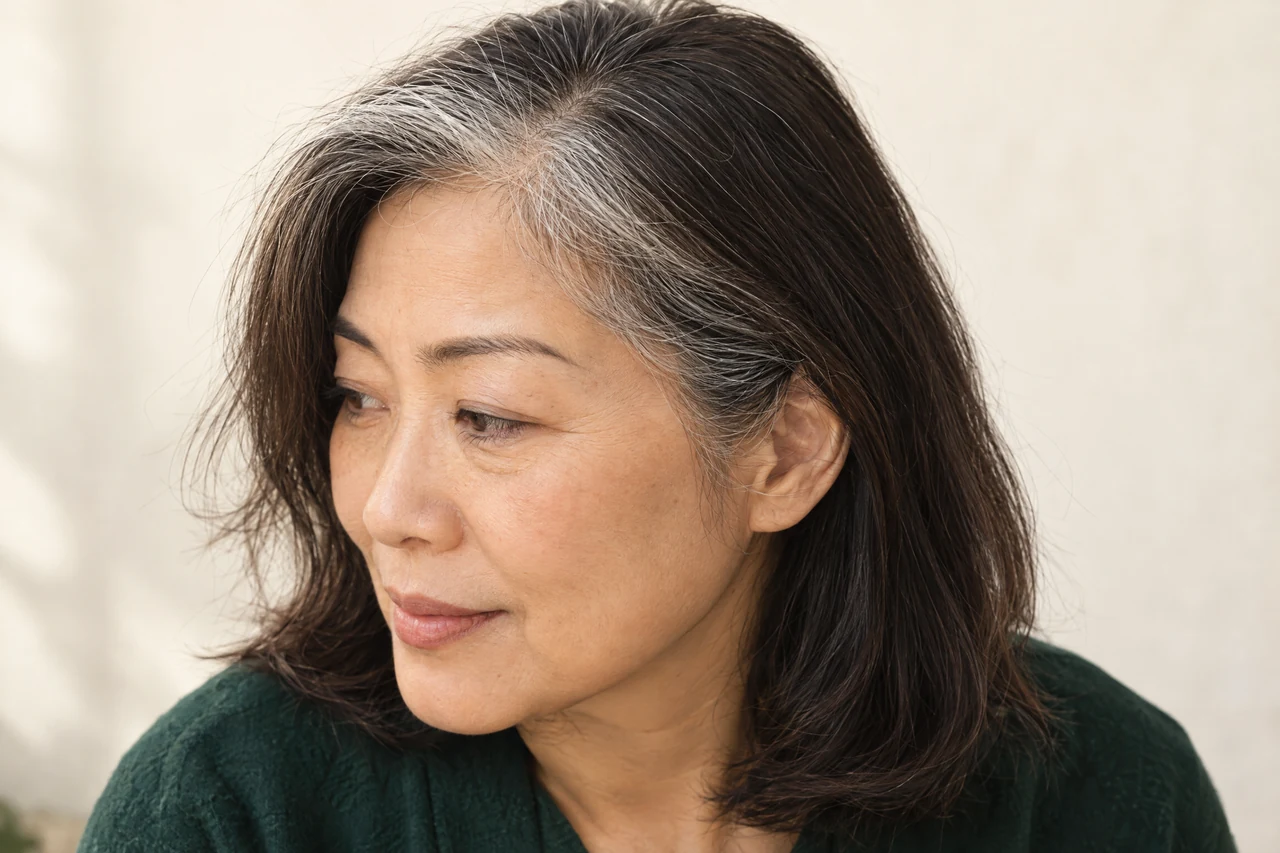
Existing dark dye is not the same as a natural brunette base
A natural dark base and hair repeatedly dyed dark can look alike but present different colour questions. List previous home and salon colour, bleach and other chemical processing by area. A lighter mixed finish should not be assumed to be available without assessment, and a reference does not prove that a no-bleach route will achieve it.
Separate new growth from the mid-lengths and ends when describing your history. Include whether previous root applications were pulled through the whole length, whether darker colour covered old highlights, and whether you have used henna or other colour products. If the name is unknown, bring packaging or an old appointment record. The visible brown today does not reveal every treatment underneath it.
Ask which parts of the reference can be considered while retaining the existing dark lengths. A staged design may be more appropriate than trying to create pale lines throughout old colour immediately. If the lengths feel fragile, discuss whether postponing lightening or changing the design would better protect the hair you want to keep.
If avoiding lightener is a priority, explore no bleach hair colour and explain that preference before agreeing on a pale reference; a no-bleach request is a constraint to assess, not proof that every silver-brown finish is achievable.
Continue with transition from dyed hair to grey for that specific comparison and the preparation questions it raises.
Share the history through the mid-lengths and ends
Ask what a strand assessment would help clarify, particularly where old dark colour overlaps earlier lightening. It can inform the discussion about response and condition without guaranteeing a whole-head result. Also state whether preserving your current length matters more than reaching a lighter pattern quickly. That preference may change which route is worth considering.
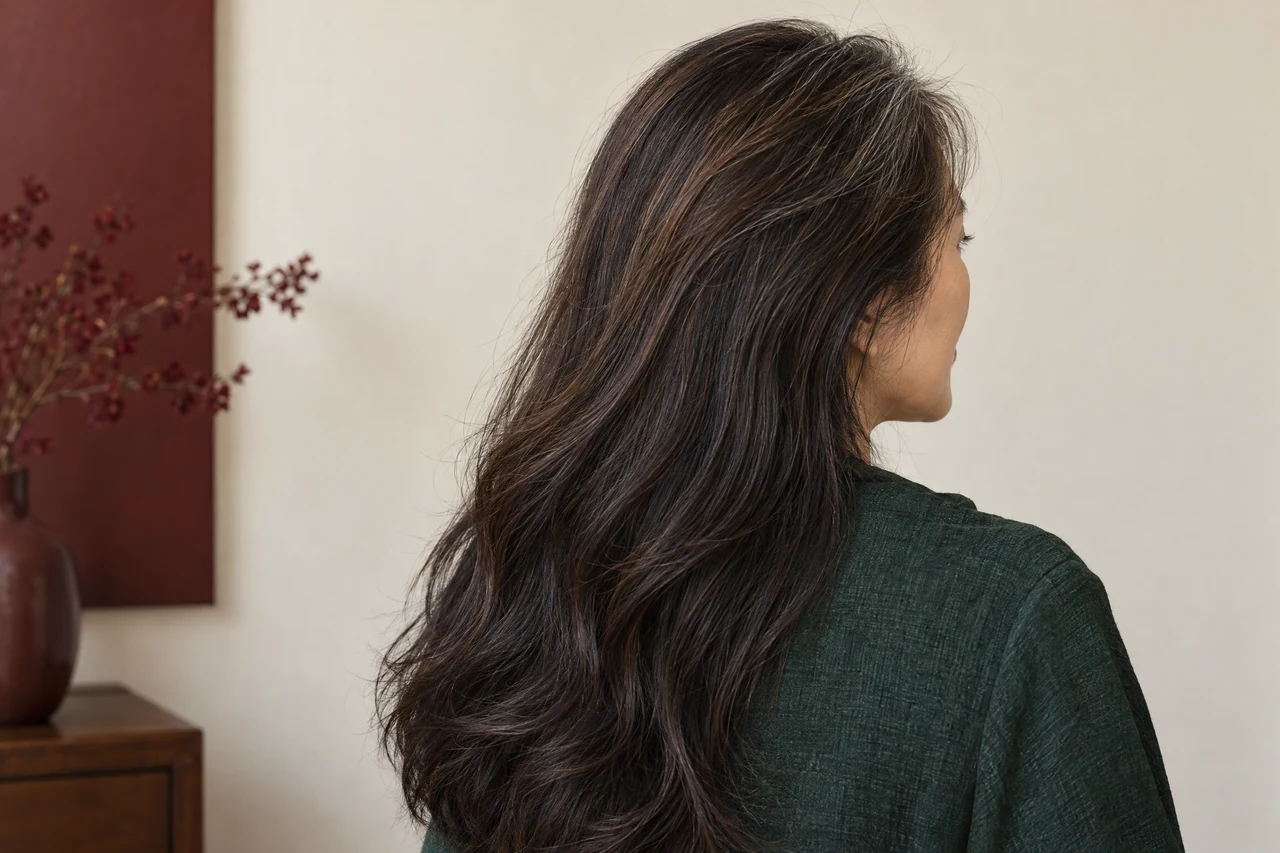
Judge the transition between dark lengths and new white growth
Consider the boundary you see when new white hair appears beside dark lengths. A softer mixed finish may feel easier to live with, but it can still need tone and placement maintenance. Explain your tolerance for visible strands and the time you can spend on upkeep so the design discussion reflects your actual routine.
Think about the appearance you want between appointments, not just on the day of colouring. If white roots remain unacceptable, a design that deliberately leaves pale strands visible may not suit your expectations. If you enjoy silver but dislike a solid pale band above very dark lengths, the discussion can focus on a mixed boundary rather than total concealment.
Keep informal photographs in similar lighting as your hair changes. Record whether the concern is fresh white growth, a warmer cast through coloured lengths or the position of a bright section. Those are different observations and may call for different follow-up work. Reapplying dark colour everywhere because the roots are visible can work against a longer-term goal of retaining lighter strands.
Continue with grey blending vs full coverage for that specific comparison and the preparation questions it raises.
Choose an acceptable contrast for the weeks between visits
Describe maintenance in terms of what you can realistically arrange around work, travel and home care. Ask which elements might need a tone refresh and which might need placement adjusted as they grow. A softer boundary does not stop new white hair appearing; its value depends partly on whether that new growth still looks intentional to you.

Choose a brunette-and-silver pattern, not just a technique name
Highlights add lighter sections, while lowlights introduce darker sections. In its guide to grey hair on a dark base, Wella Professionals describes both selective highlights and lowlights as options for blending greys. It also makes clear that going lighter overall is a choice. These are design possibilities to discuss, not a prescribed combination or a promise about your starting hair.
A depth-led pattern keeps the dark impression dominant while selected pale strands remain visible. A contrast-softening pattern may introduce intermediate lighter lines around white areas, but it can make the overall appearance brighter. A silver-accent pattern allows a concentrated white area to stand out deliberately. The comparison below helps separate these goals before you become attached to a technique label.
Check the width and spacing of the visible lines
Fine, dispersed light lines and a broad pale section give different impressions even against the same brunette depth. Ask how much dark hair would remain between the lighter areas. A bold front accent may look balanced with dark hair behind it, while densely packed highlights can shift the whole appearance towards a lighter result. Judge the pattern in your usual straight, wavy or tied-back style.
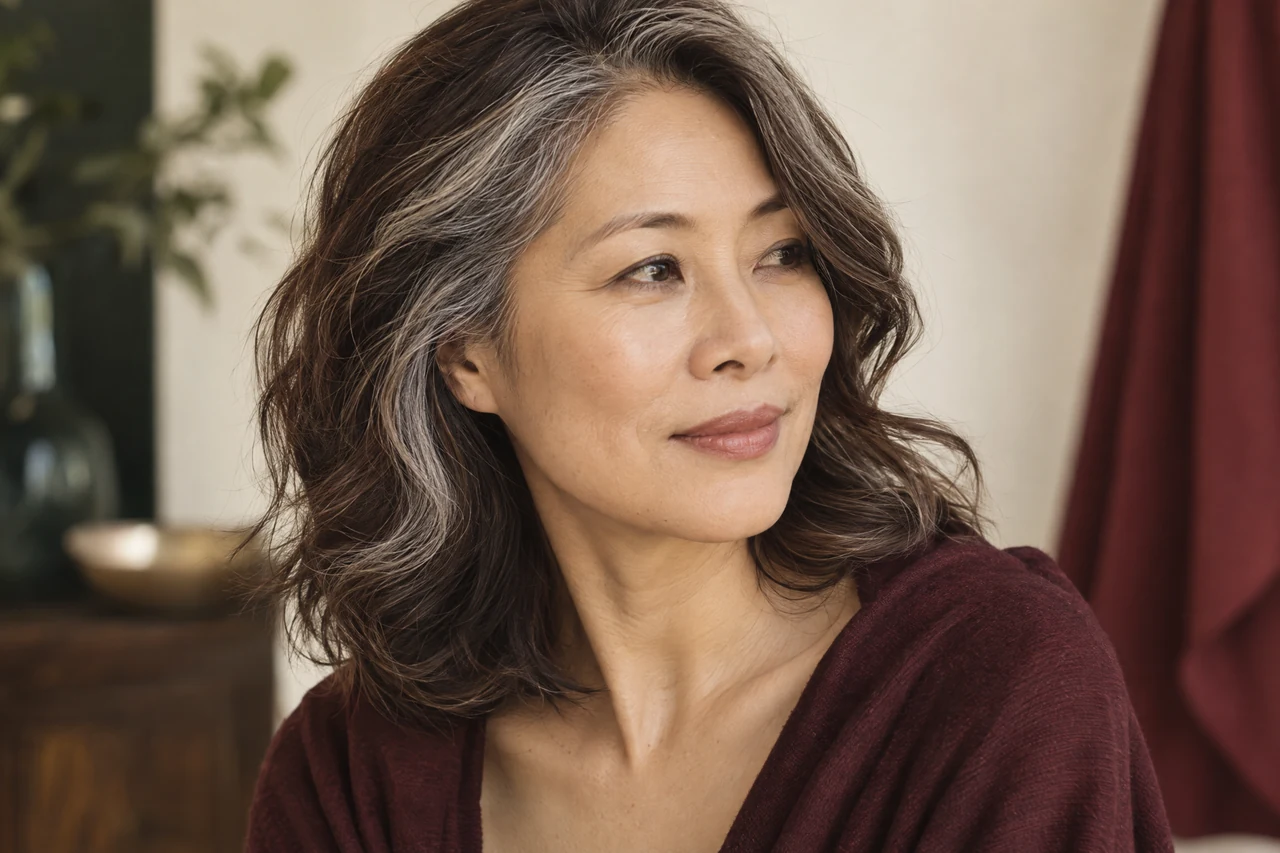
Prepare a workable appointment and care plan
The preparation checklist below has 6 steps. Use it to turn a broad inspiration image into a useful brief for your Sheung Wan enquiry. Share current photographs before asking for a quote, then confirm the proposed areas of work and whether lightening, tone adjustment or follow-up maintenance is included. Grey blending describes a visual goal; it does not establish a fixed package or appointment duration.
Care also belongs in the decision. The American Academy of Dermatology's colouring and perming advice explains that these treatments can leave hair dry and brittle, and that substantial lightening can cause more damage. It recommends protecting treated hair from sun exposure. This supports taking the condition of your lengths seriously, rather than assuming a brighter blend is automatically the gentler choice.
For day-to-day handling, review hair care for colour-treated hair and ask for guidance suited to the work actually performed. Mention any previous dye reaction before colour is arranged, and follow the relevant product testing instructions. If a product causes redness, swelling, burning or itching, the AAD advises not dyeing the hair and consulting a dermatologist.
Compare your colour in familiar lighting
Use a window-lit photograph and a photograph in your ordinary indoor lighting to explain what you notice. Keep filters off and avoid judging only from a bright reflection on a curled strand. Look at the parting, front and darker underside together. A useful finished design should relate to the brunette depth and visible silver you chose, not merely reproduce one unusually bright photograph.

Brunette grey-blending goals: what stays dark and what becomes more visible
| Design priority | Visual direction to discuss | Trade-off to consider |
|---|---|---|
| Keep a dark overall impression | Retain brunette depth with selective darker sections and some visible white strands | Pale strands will still contrast with the darker background |
| Soften scattered white strands | Discuss fine lighter lines among dark hair rather than blanket lightening | More lighter lines can change how brunette the whole head appears |
| Keep a concentrated silver accent | Preserve a chosen temple or front area while balancing the surrounding brown | The accent may become more noticeable when hair is tied back |
| Coordinate previously dyed lengths | Assess old colour separately and consider a staged change | The immediate result may be darker or less silvery than the reference |
| Hide every visible white strand | Discuss a coverage-led goal rather than an exposed silver pattern | New white growth can create a distinct boundary against dark lengths |
Your preparation checklist
- Mark the areas where dark brunette depth must remain, including the back, underside or ends.
- Photograph scattered white strands and concentrated areas separately, using your normal parting and tied-back style.
- List home and salon colour, lightening and other chemical treatments through the roots, mid-lengths and ends.
- Choose references in comparable lighting and identify the specific dark areas or silver lines you like.
- Describe acceptable white regrowth and how much time you can realistically give to maintenance.
- Share previous dye reactions and confirm assessment, product testing requirements, proposed work and the quote before arranging colour.
Frequently asked questions
Do I need to become blonde to blend white hair?
Not automatically. The preferred depth, white-hair distribution and old colour affect the discussion. A lighter finish is one direction to assess, not a requirement or guaranteed option.
Can I keep a dark overall appearance?
That can be a design goal. Specify where you want dark depth retained and how much contrast with white strands you accept. The feasible approach depends on the starting hair.
Why does old dark dye matter?
Previously coloured lengths may respond differently from new growth. Give dates, products if known and the areas treated so the options are not based only on how dark the hair looks today.
Will a cooler brown automatically make the white strands less visible?
No. A cooler tone changes the colour character, but a very dark cool brown still contrasts with white hair. Discuss overall depth and the spacing of light and dark areas separately from whether you prefer warmer or cooler reflections.
Plan a blend that still feels brunette
Send Vit So current photographs of your parting, temples and lengths, together with your colour history and the dark areas you want to retain. Your Sheung Wan enquiry can then focus on a realistic brunette-and-silver direction, the proposed work and its upkeep. Availability, service scope and pricing need confirmation; an enquiry is not a confirmed booking.
Start your WhatsApp enquirySources & further reading
- How to Cover Grays on Dark Hair
Professional colour-brand explanation of selective highlights, lowlights and the choice to retain a darker overall appearance.
- Coloring and perming tips for healthier-looking hair
General dermatological guidance about treatment-related dryness, lightening-related damage, sun protection and responses to dye reactions.



