







Middle Part Perm and the Natural Parting
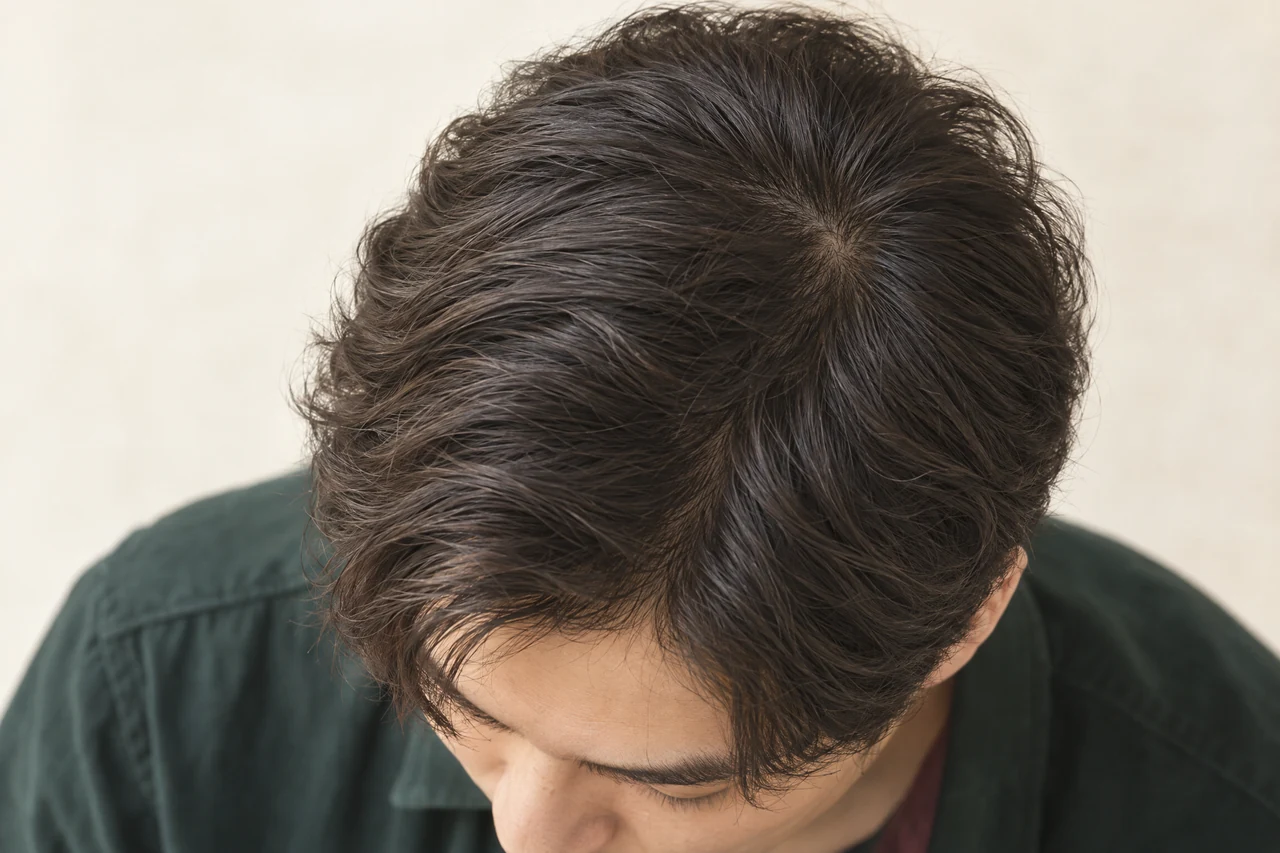
A centre-parted finish is easier to discuss when you show where your hair separates without force. Note whether one side falls forward more strongly and whether the crown changes the parting. Permed bends do not erase every growth pattern; the proposed fringe direction should work with the length and behaviour of the retained hair.
Look at the front after an ordinary wash and dry, without brushing everything firmly backwards. Is there already a small opening near the centre? Does it disappear when you release your hands? Describe that behaviour rather than asking for a perfectly straight line down the scalp. The visible opening at the forehead and the parting behind it need not look equally sharp.
A centre part perm for men can be discussed as a soft central opening rather than a demand for mirror-image halves. If your hair settles slightly off-centre, ask to compare that position with the exact centre. A small shift may be worth considering when it lets the fuller side fall comfortably instead of requiring you to push it away repeatedly.
Review men's haircut to check its service scope and the details to share before arranging the related work.
Placing a Middle Part Perm Around Existing Growth
Show the stylist where the front separates and where the crown turns, because these are different observations. Also explain whether you normally brush left, right or forward. If you are changing that habit, ask to see the proposed direction before chemical work is agreed. The useful question is whether the retained fringe can travel outwards and return towards the temples without an awkward gap or constant pulling.
Comma Perm for Men and Forehead Coverage
The comma shape refers to a visible curved section near the forehead. Describe whether you want a loose opening or a stronger inward bend, and show the area you want covered. A photograph may rely on blow-drying or product for its curve, so the reference does not establish what chemical work is necessary.
Separate the beginning of the curve from its tip. You might like lift above the forehead but want the end to turn towards the eyebrow; alternatively, you may prefer a lower arc that leaves less skin exposed. Indicate the side that should carry the main curve. Saying that the left side should remain open while the right side curves inward is clearer than supplying the name alone.
The wikiHow guide to comma hair describes an inward-curved fringe and shows a styling-led way to create it. That makes it a useful reminder to ask how a reference was finished, not proof that you need the same tools. A temporary demonstration can help you decide whether you like the placement before discussing a longer-lasting change.
If your reference also has waves throughout the top, the soft perm for men comparison helps separate overall bend visibility from the forehead direction discussed here.
Describing a Comma Perm for Men by Its Curve
Use your fingertip to indicate where you want the curve to finish, without stretching the hair into place. Explain whether it should sit beside the eye or stay above the brow, and whether the opposite side should curve too. A comma detail and a central opening can coexist. The distinction is what you want to emphasise: the opening between two sides, or a particular inward-turning section.
Fringe Length and Symmetry
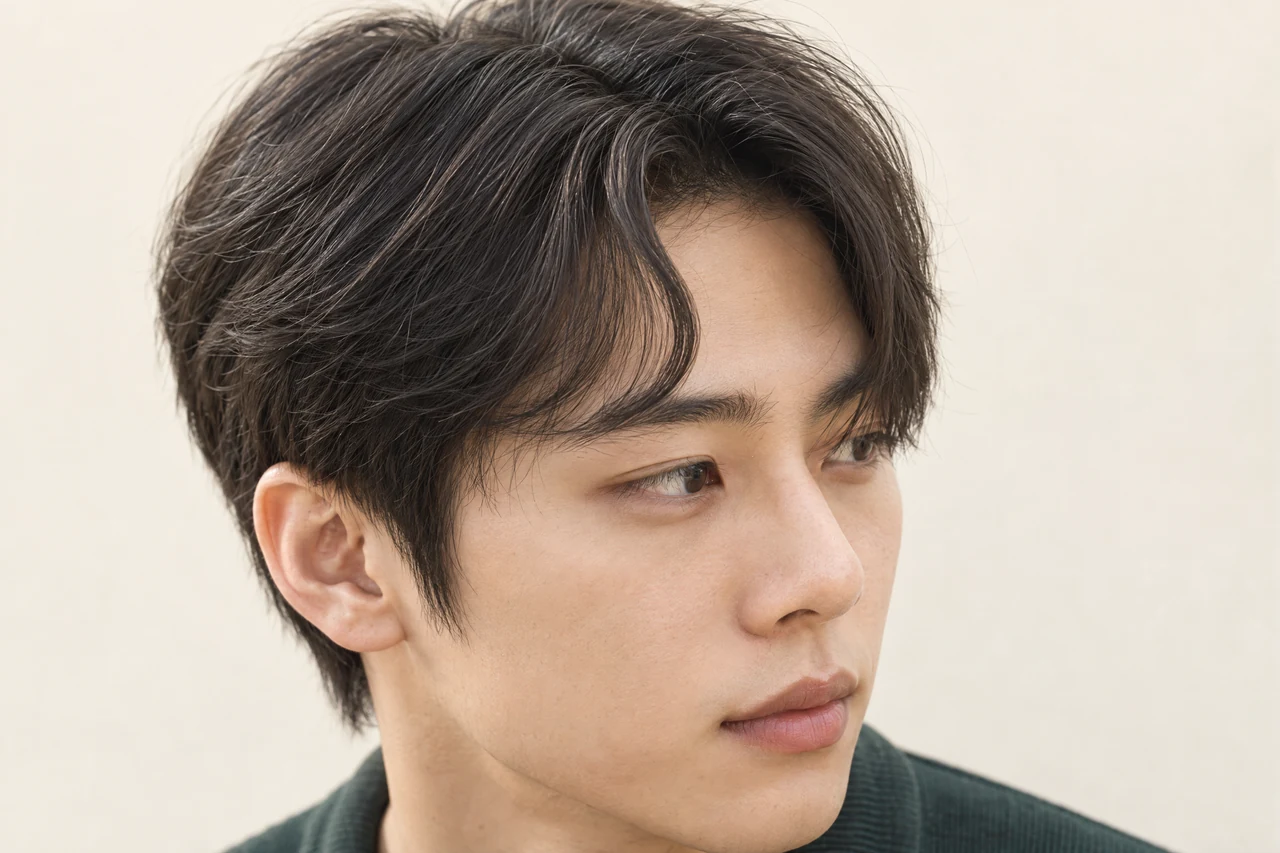
The two sides of a fringe need not behave identically. Length, layer weight and the original growth direction can change how the opening looks. Compare both sides when dry and avoid judging suitability from a front photograph alone. A side view helps explain how much lift or forward fall you want to retain.
Do not decide the shortest front length by pulling a strand straight down and measuring only its stretched position. Ask where it will sit with the intended bend and after your usual drying. Front pieces that look long enough when straight may expose more forehead once shaped. Equally, leaving everything long does not automatically make the opening easier if the ends keep falling into your eyes.
Discuss weight as well as length. A dense section may form a broad curved panel, while a more separated finish shows smaller strands and more skin between them. Tell the stylist whether you like that separation or want a continuous edge. Removing weight indiscriminately can conflict with a request for a fuller comma tip, so agree which visible front pieces should remain substantial.
Choose haircut reference photos that show the front and both side angles, and identify the parting or fringe detail you want from each image.
Allowing for Unequal Left and Right Movement
Judge balance by how the hairstyle sits around your face, not by whether both ends form identical curves. One side may open more widely while the other sits closer to the brow. Ask which difference can be accommodated by the cut and which needs a drying adjustment. If only one side bothers you, point it out specifically rather than requesting a stronger bend everywhere.

Daily Drying for an Open Fringe
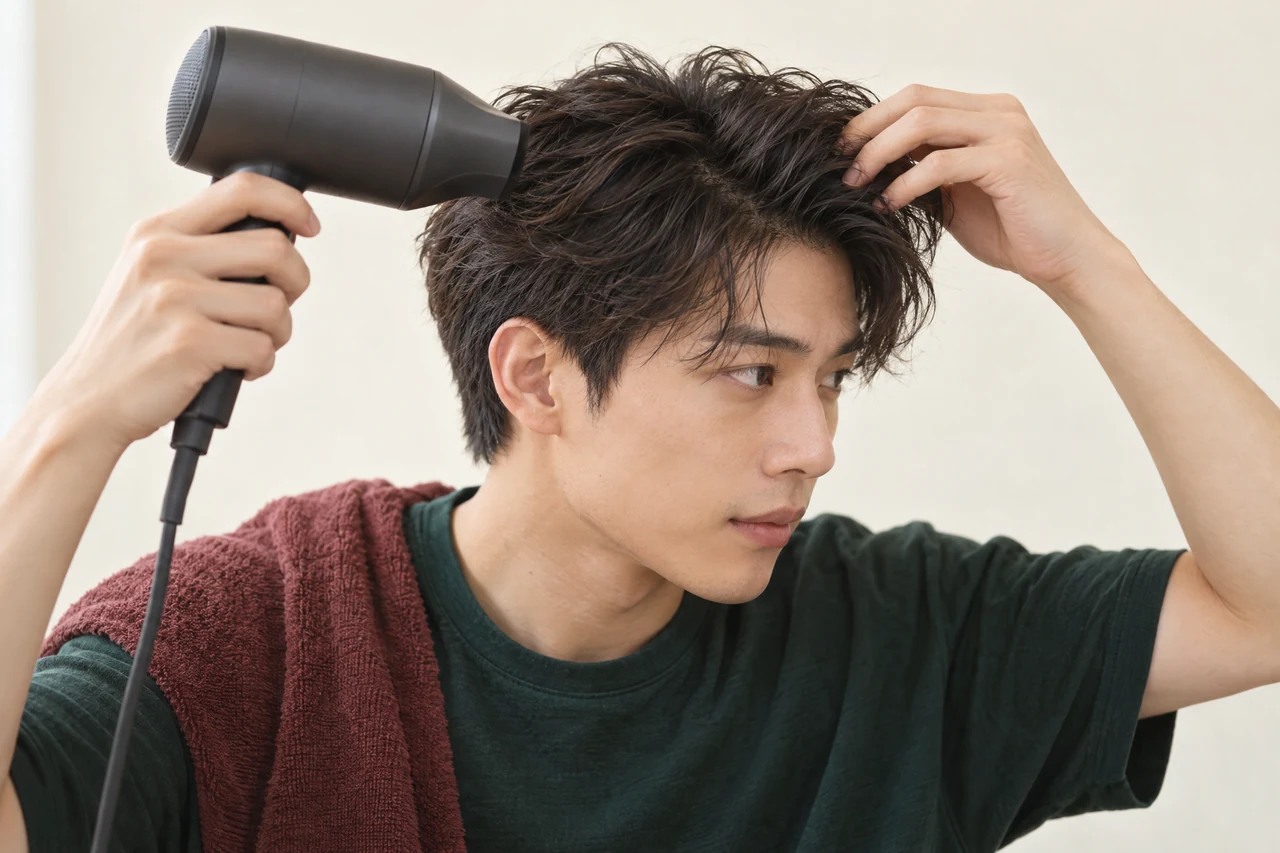
When the hair may be washed and styled according to your individual aftercare instructions, establish the parting gently and guide each side in the intended direction as it dries. Avoid pulling the bends straight or concentrating excessive heat on the fringe. Ask for a routine matched to your finish rather than copying every tool used in a video.
Begin by absorbing excess water gently rather than scrubbing the fringe with a towel. Find the agreed opening, then guide the roots and front pieces without stretching the ends. For the middle-part finish, keep the sides travelling away from the opening; for the comma detail, preserve the intended inward turn. Ask the stylist to demonstrate the hand movement so you can repeat it with your own dryer.
The American Academy of Dermatology's hair-care guidance recommends the lowest heat setting and avoiding pulling or tugging during styling. Apply that advice by reducing unnecessary heat and tension, not by trying to force a photographed arc into place. If your chosen shape needs repeated hot-tool correction, discuss a softer everyday version rather than treating extra heat as the default solution.
Continue with perm aftercare for that specific comparison and the preparation questions it raises.
Following the Agreed Direction Without Forcing It
For anyone asking how to style a middle part perm, the important distinction is between guiding the opening and flattening the whole front. Let the intended bends remain visible while you arrange the roots. Use only the product and application method demonstrated for your hair. Judge the finished dry shape before adding more: a collapsing side is information to discuss, not an instruction to keep increasing hold.
Agreeing on the Treatment and Parting Plan
Bring your current hair history into the discussion, especially bleach, colour, straightening or an earlier perm on the fringe you intend to keep. The small size of the visible comma section does not establish that chemical work is suitable. Ask which hair would be treated, which would remain unchanged and how the proposed cut connects those areas. A style name is not a description of service inclusions.
The listed men's wash, cut and blow-dry price is HK$380. This is the haircut service price, not a quotation for a middle part or comma perm. If the direction can be explored with a cut and styling first, discuss that option. If a perm is proposed, confirm its assessed scope, the separate or combined charge and what finishing instruction is included before agreeing.
Review men's perm to check its service scope and the details to share before arranging the related work.
Keep the Desired Opening in the Consultation
When enquiring at Vit So in Sheung Wan, describe the opening you want to maintain on an ordinary morning. Include a current dry photograph and your chosen reference, then state whether a slightly shifted part would be acceptable. This keeps the consultation centred on an achievable direction rather than assuming that a named perm must deliver an exact copied silhouette.
Choosing an Opening You Can Wear Every Day
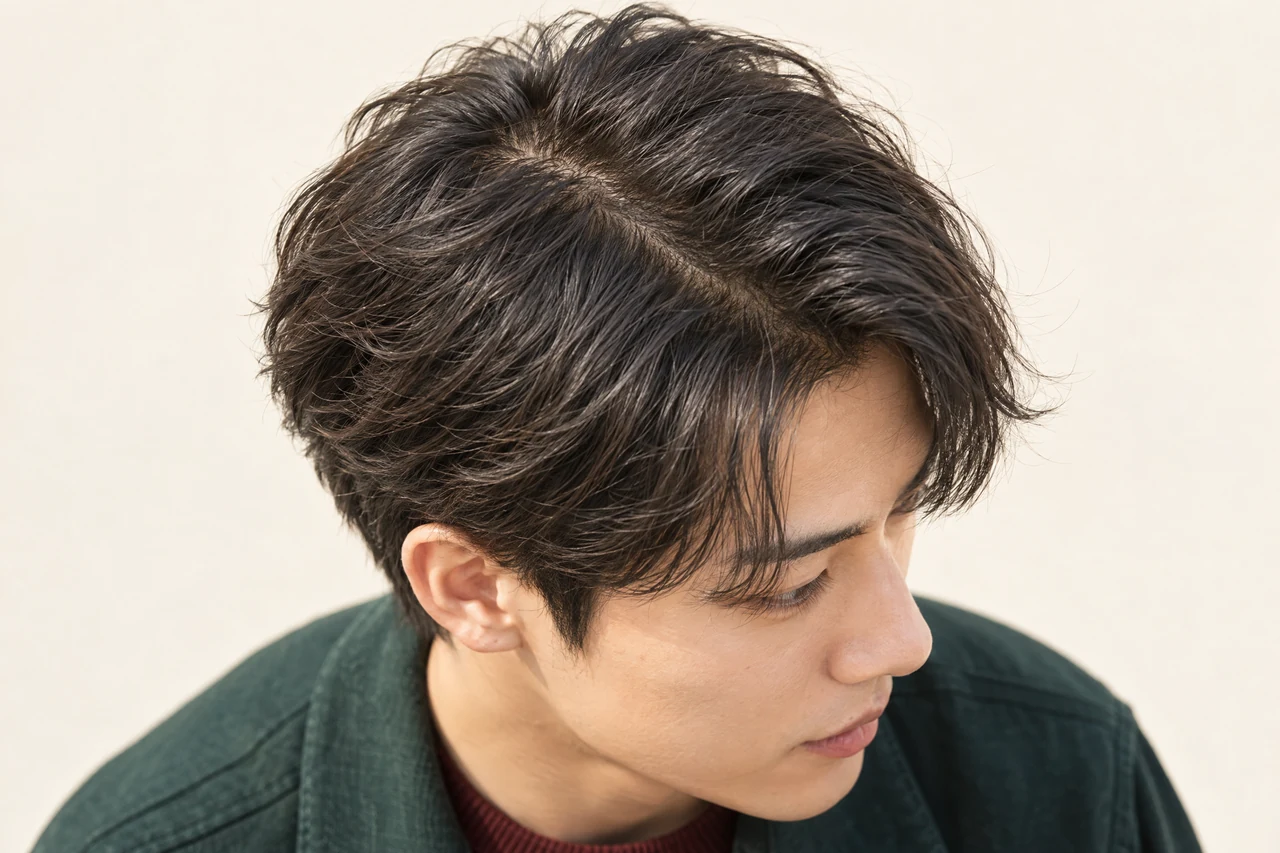
For work, consider whether you need the fringe clear of your eyes when looking down at a screen. If you wear glasses, bring them so the proposed ends can be judged beside the frame. A shape you enjoy in a portrait may feel different when a curved tip rests close to the lens. There is no need to expose the entire forehead to achieve a clear, usable opening.
Mention your commute, exercise and headwear if they regularly disturb the front. Compare how much of the shape you would want to restore afterwards: reopening a soft part, or rebuilding a distinct comma tip. Prefer a finish whose relaxed version you also like. As the fringe grows, ask for a trim plan that preserves the front pieces needed for the agreed direction instead of shortening the whole opening automatically.
Record a Direction Problem Before Changing the Plan
If the opening becomes difficult after normal washing resumes, photograph it dry before and after your usual styling. Note whether the roots cross the part, the ends fall forwards or the comma tip turns the wrong way. These observations give the stylist something specific to assess. Do not assume a one-sided change means the entire perm needs repeating.

Compare the forehead direction you want to maintain, not just the perm name.
| Decision | Middle-part emphasis | Comma-fringe emphasis |
|---|---|---|
| Visible focus | An opening with front hair moving towards both sides | An inward-turning section with a clearly placed tip |
| Forehead coverage | Choose the width of the central opening and temple coverage | Choose the covered area beneath the main curve and the openness of the other side |
| Natural movement to show | Where the front splits and whether the roots cross that split | Which side can carry the curve and where its ends naturally fall |
| Length to protect | Front pieces that can travel outwards without falling into the eyes | Enough retained length for the planned curve and its ending position |
| Drying priority | Guide each side away from the agreed opening without flattening it | Guide the roots while keeping the intended inward turn |
| Before chemical work | Compare a gently styled central or slightly shifted opening | Compare a temporary curve and ask what the perm would change |
Your preparation checklist
- Photograph your ordinary dry parting without forcing the front backwards; include a view of the crown.
- Choose a reference for the opening and mark the fringe detail you want, rather than asking to copy every feature.
- Decide which forehead areas you want exposed and where a comma tip should finish beside the brow or eye.
- Share past chemical treatments on the retained fringe and identify any section that feels fragile or unusually rough.
- Explain your actual drying routine, glasses and headwear, then ask for a demonstration using a manageable method.
- Confirm the retained front length, proposed treatment area, inclusions and quote before agreeing to the work.
Frequently asked questions
How to style a middle part perm without losing the opening?
Once normal washing is allowed, set the parting gently while drying and guide the fringe away from the opening. Use the routine agreed for your hair, avoid forceful pulling and ask for help if one side repeatedly collapses.
Is centre part another service?
No. Centre and middle describe the same parting position in this context. The meaningful decisions are retained length, fringe direction and styling, not the spelling of the name.
Can a comma fringe be achieved with styling alone?
It may be possible for some cuts and growth patterns. Compare a temporary styled shape with the change you want from a perm, then discuss whether chemical treatment is needed at all.
Find a fringe direction that fits your mornings
Send Vit So your current dry front and side views, a reference shape and a brief description of your styling routine. Enquire about the length and treatment scope needed for your preferred opening in Sheung Wan. An enquiry starts the discussion; it is not a confirmed booking.
Start your WhatsApp enquirySources & further reading
- 10 hair care habits that can damage your hair
General guidance on gentle towel drying, low heat and avoiding pulling during styling; not an assessment of hairstyle aesthetics.
- The Ultimate Guide to the Trendy Comma Hairstyle
The inward-curved comma fringe and a styling-led route to its visible shape, including adaptations to an existing haircut.



