







Event hairstyle with hearing aids and statement earrings: put access first
Start with what already works when you wear your hearing aids, not with an idealised empty space behind the ear. Depending on your devices and routine, you may need to reach a control, use a familiar removal route or leave room for glasses. You do not need to disclose your medical history to describe those practical needs. Point out the areas the hairdresser should avoid and agree that styling must not alter device fit or substitute for hearing-care advice.
A photograph can show the earring you want to display, but it cannot show how your fingers approach your hearing aid. An enquiry about event hair styling should therefore explain your access requirements alongside the outfit and departure time. Say whether the devices will be worn throughout the occasion and whether you expect to handle them during it. If you are unsure about an operation or fit issue, resolve that with your provider rather than asking the hairdresser to improvise.
Your event hairstyle with hearing aids and statement earrings needs a clear priority
Treat device access as a requirement and the arrangement of hair as a choice. This does not mean every wearer needs a fully exposed ear, nor that visible hearing aids must become a styling problem. You may want to show them, leave them unobtrusive or simply avoid discussing visibility. State your preference without a concealment promise. Then choose which decorative detail can move if the preferred hair outline leaves too little working space.
Planning gathered hair around shared ear accessory space
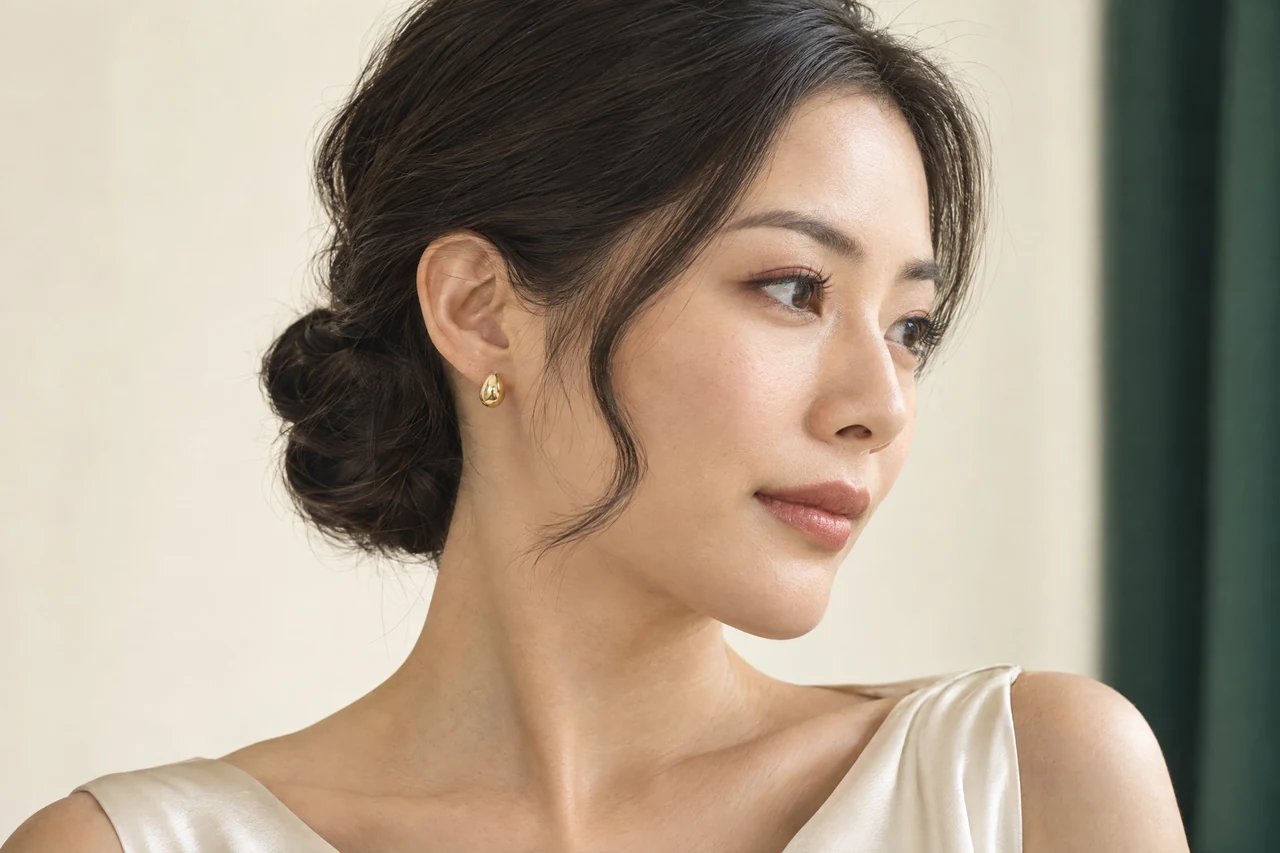
Gathering hair towards the back can reduce the amount falling across an earring and make the ear area easier to inspect. That advantage disappears if the gathering point puts a bulky clip or tight swept section beside your device. Compare a low central bun with a half-up shape or a looser back arrangement, using your current length and layers. The useful question is where the hair travels and where it is supported, not simply whether the finished style is called an updo.
Loose side coverage offers a different visual balance, especially if you prefer movement around the face. It can also leave you repeatedly lifting hair to reach the device or reveal an earring. When comparing hair up with a loose finish, identify the side where you need the clearest access and the strands most likely to cross the jewellery. A softly curved strand in front of the ear may provide the face framing you want without requiring a dense section directly over it.
An exposed earring does not prove usable access
Assess visibility and reach separately. A polished side view may display the whole earring yet leave your usual hand movement obstructed by a twist behind it. Conversely, a loose style may allow easy access when you lift a section, if that is a manageable routine for you. The comparison below offers starting points, not device-specific recommendations. Check both sides, because your devices, hairstyle and jewellery may not interact identically on the left and right.
Check the actual earrings and keep hair fastenings separate
Statement earrings differ in more than length. A broad hoop, a swinging drop and an ornament with projecting edges occupy different spaces when you turn your head. Bring the actual pair, including the backs or closures you intend to use, rather than a similar-looking photograph. While wearing them normally, notice whether loose hair passes through an opening, catches on an edge or settles over the decoration. Do not pull a caught strand through the jewellery while a device is nearby; pause and separate the hair carefully.
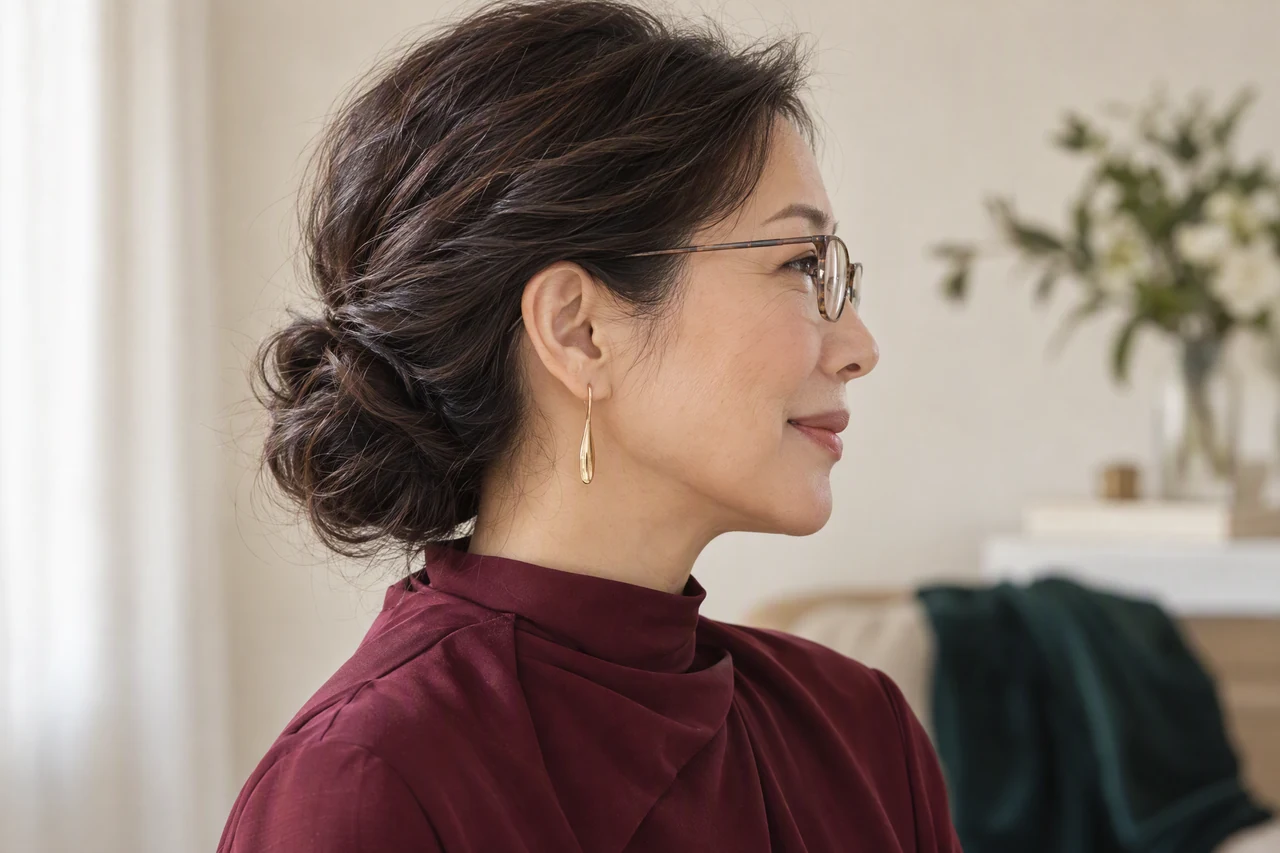
Glasses are another reason to assess the complete set. If you wear them, include them in the conversation even when they appear in only part of the event. The model in the accessory concept image shows glasses and a long earring beside gathered hair; she is not shown wearing a hearing aid. Use that picture to discuss the outline only. Your own accessories establish where space is available, and a hair fastening should not use the hearing aid, its wire or tubing as support.
Choose what can change if the ear area feels crowded
A workable compromise might move a decorative clip towards the back, remove a face-side ornament or change the loose strand that repeatedly meets an earring. In a hypothetical example, someone who wants large hoops and reliable access may prefer a simple gathered back without an additional side comb. That is a styling choice, not a recommendation for a particular device. If the actual earrings still interfere, consider another pair rather than moving the hearing aid to accommodate them.
Agree on device handling and salon communication
Before washing or applying finishing products, explain the care instructions for your own hearing aids. RNID's hearing-aid maintenance guidance says moisture and debris can block devices and advises against getting several common hearing-aid types wet. Do not treat that as permission to remove every device or as proof that a particular spray is suitable. Agree how any washing, product application or device removal will be managed according to your provider's instructions; a hairdresser should not dismantle or service the aids.
If you normally remove your devices yourself, bring the storage case you use and agree who is responsible for it during the appointment. Never assume removal is possible: some hearing aids are handled only by an audiologist. Discuss this beforehand if it applies to you. You can also request that the hairdresser ask before touching the ear area and explain the next step while facing you. Written notes, a mirror or a clearly agreed pause signal may help, according to your communication preferences.
Make the styling plan understandable while you check it
Explain how you prefer to receive questions, especially if your hearing aids will temporarily be out under your normal care routine. Ask for the agreed outline and any access restrictions to be written down if that is useful. The English-language website does not guarantee an English-speaking consultation, so confirm your preferred consultation language when enquiring. A clear instruction such as leaving a particular side fastening out is more useful than assuming the finished picture explains every practical need.
Check movement without changing hearing-aid fit
Once the proposed hair arrangement and actual earrings are together, check the movements you expect to make: turning towards someone, looking down, sitting back and reaching in your usual way. Stop if hair or jewellery catches; do not keep repeating a movement to see whether it becomes tolerable. The discussion of party updo hairstyles provides a broader movement-and-comfort perspective, but your hearing-aid access remains a separate requirement. A brief check helps identify an immediate conflict, not predict the whole evening.
New whistling, altered sound or pressure is not a reason to tighten the hair or shift the hearing aid. RNID's guidance on hearing-aid problems explains that whistling can have several causes, including poor fit or covered microphones, and advises speaking to an audiologist about an uncomfortable fit. Describe what changed and pause the styling check. The hairdresser can reconsider the hair arrangement, but device diagnosis, fit changes and repairs belong with your hearing-care provider.
Discomfort changes the plan, not the device position
Do not rely on a softer-looking hairstyle to resolve a sore ear. The same RNID advice on getting help recommends contacting an audiologist if tubing or an earpiece makes the ear sore, and seeing a doctor for ear pain, earache or discharge. Pause the ear-area styling and seek appropriate care rather than pushing through for photographs. If a simpler hair arrangement still obstructs your routine, reconsider the decorative accessories instead of accepting the obstruction.
Send an enquiry with an access brief and a simpler fallback
Send current front, side and back hair photographs with an outline reference and a picture of the actual earrings. Add a short description of the access you need; share device photographs only if you are comfortable doing so. Include glasses and any proposed hair ornament, and say which pieces are optional. These preparation points help distinguish a visual preference from a practical requirement before the appointment, rather than leaving the hairdresser to infer device handling from an inspiration photograph.
Vit So's published hair-styling range is HK$480–HK$680. Confirm the requested work, actual charge, preparation instructions and appointment availability when enquiring; the range is not a quote for every accessory arrangement. Explain when you need to leave and ask whether the proposed checking and styling scope can be accommodated. Makeup, venue attendance, device servicing and an event-long touch-up service are not automatically included in a salon hair appointment. Keep the enquiry provisional until the arrangements are confirmed.
Choose a fallback that you can manage
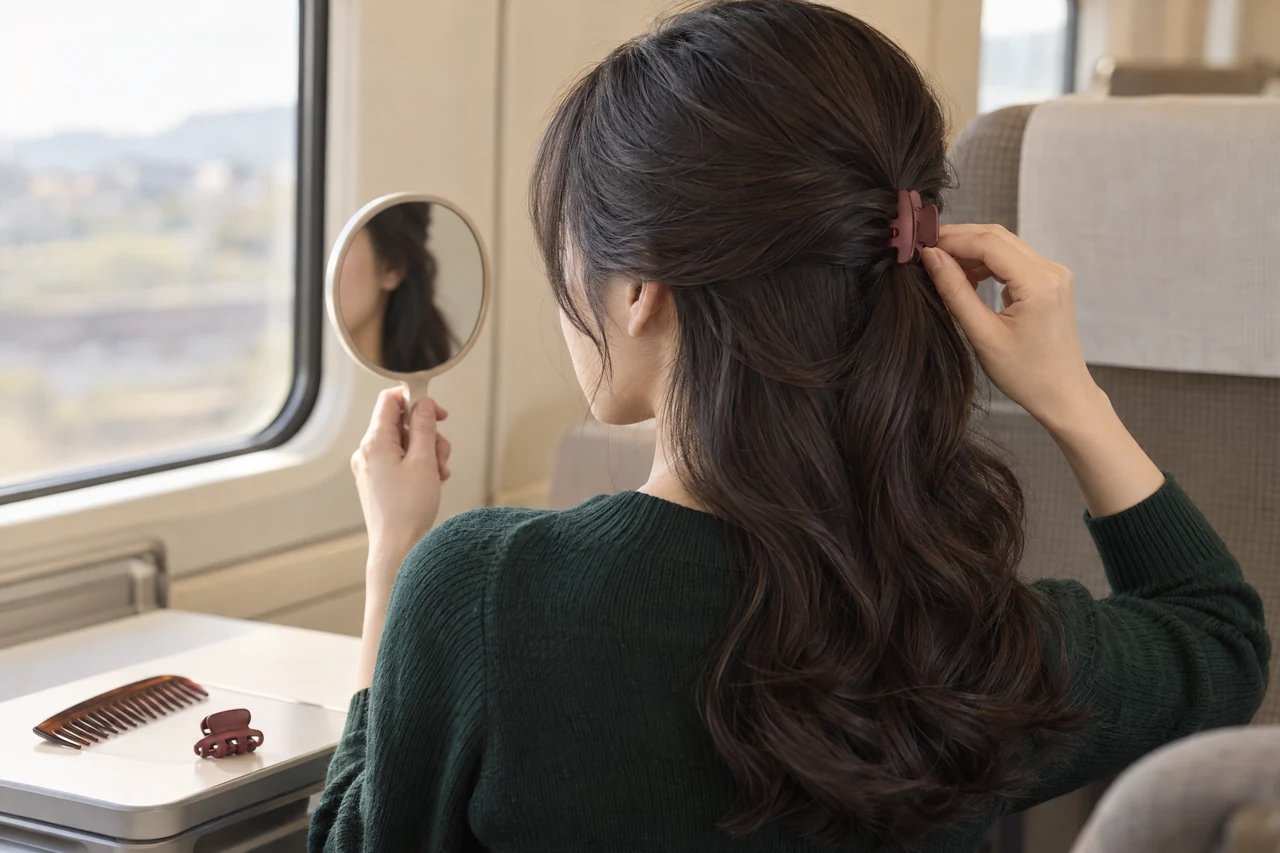
Agree which optional hair ornament can come off without disturbing the main structure, if any, and ask how to leave the support pieces alone. A hand mirror may help you inspect the hair, but the adjustment concept image does not demonstrate hearing-aid handling. Keep your familiar device routine separate. If the event later brings repeated snagging or discomfort, stop and reconsider the accessory combination. No hair arrangement can guarantee unchanged comfort or concealment throughout the occasion.
Compare the hair outline with your normal device position and the actual jewellery, not with a promise of compatibility.
| Hair outline | Possible visual advantage | Access and contact question |
|---|---|---|
| Central low gathered shape | Shows earrings and leaves a clear side outline. | Does the swept-back section or support point crowd your usual reach? |
| Half-up with loose lengths | Keeps visible length while gathering some side hair. | Do loose strands cross the earring when you turn or look down? |
| Loose side coverage | Retains a softer, more covered outline. | Can you lift the hair comfortably without snagging jewellery or obstructing device access? |
| Gathered back with a cheek-side strand | Adds face framing while showing more of the ear. | Does the strand stay clear of the earring during ordinary movement? |
Your preparation checklist
- Bring the actual earrings with the backs or closures you plan to wear.
- Include your usual glasses and identify any optional hair ornaments.
- Describe where you need access without requesting a change to device fit.
- Bring your normal storage case if device removal is part of your authorised care routine.
- Share current hair photographs and references showing the side outline you prefer.
- Confirm consultation language, departure time, preparation, styling scope and the actual quotation.
Frequently asked questions
Will an updo hide my hearing aids while showing statement earrings?
Not necessarily. Gathering the sides often reveals more of the ear area, while adding coverage may make access less straightforward. Tell the hairdresser whether visibility matters to you, but do not accept a concealment guarantee. Compare the outline with your own devices in their usual position and keep your handling routine workable.
What matters most when planning gathered hair around shared ear accessory space?
Start with the position and access that already work for your hearing aids. Then assess the actual earrings, glasses and hair fastenings together. Change the optional decorative element or hair arrangement if they compete. A small-looking clip can still be inconveniently placed, so judging the accessories only by size is not enough.
Should I remove my hearing aids for the hair appointment?
Follow the instructions for your devices and discuss the appointment steps beforehand. Do not assume all hearing aids can be removed by their wearer, or ask a hairdresser to remove or adjust unfamiliar devices. If temporary removal is part of your normal care routine, agree storage and communication arrangements before any washing or product application.
Enquire about an event hair outline that respects your access needs
Contact Vit So on WhatsApp +85253057561 with current hair photographs, your actual earrings and the access requirements you want the styling to respect. Explain your departure time and preferred consultation language. The salon is at 252 Hollywood Road, Sheung Wan, Hong Kong. Ask to confirm availability, the proposed scope and quotation; an enquiry is not a confirmed booking or a guarantee of device compatibility.
Start your WhatsApp enquirySources & further reading
- Solving common hearing aid problems
RNID explains possible causes of whistling, when uncomfortable fit needs audiology advice, and when ear pain or discharge needs medical attention. Useful for keeping hearing-care decisions separate from the hairstyle.
- Cleaning and maintaining your hearing aids
RNID gives device-specific care guidance, including moisture precautions and differences in handling. Use alongside the instructions and advice for your own hearing aids when discussing salon preparation.



