







Set the shortest point of a layered haircut
A layered haircut for long hair can preserve a long perimeter while changing the lengths above it. If you want a layered haircut without losing length, explain whether that means keeping the back edge, the front pieces or both. Some shortening is involved in making layers; agree on each zone rather than expecting every strand to remain unchanged.
Start with the back edge while your hair hangs in its normal dry position. Point to where it should finish against your clothing, and explain whether you are growing towards that point or already happy there. Then ask to see where the shortest internal pieces would fall when released. The position of the fingers during cutting is not the same as the final resting position of the hair.
Preserving length and preserving a substantial-looking bottom edge are related, but different, priorities. Hair can still reach your preferred back length while fewer strands reach that edge. If you like a full ponytail or a continuous outline when your hair lies over a dark top, say so before agreeing to more noticeable layering. A modest first change can leave room to reassess the shape after wearing it at home.
A layered haircut for long hair with clear limits
Turn 'keep it long' into an order of priorities. You might protect the back perimeter first, keep the side pieces long enough to gather second, and accept some shortening above those areas for movement. Alternatively, you may care most about the front reaching below your collarbone. Neither preference is automatically implied by long layers. Tell the stylist which boundary takes precedence if the proposed shape cannot satisfy every preference equally.
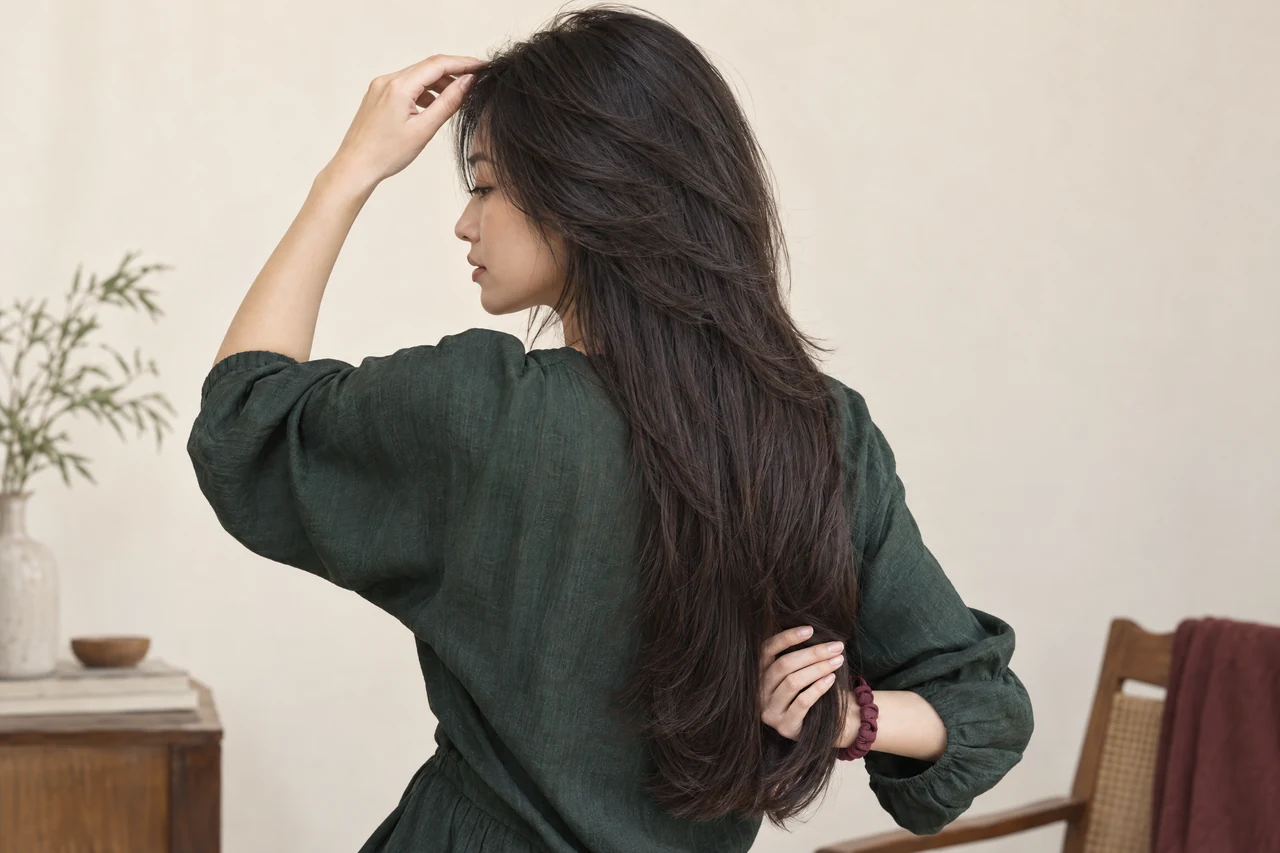
Long layers and the front outline
Face framing layers for long hair need a clear front starting point. Face framing layers can begin near the cheek, jaw or lower, with different effects on tucking and tying back. A butterfly haircut often suggests shorter face pieces against retained back length; use the idea to discuss those separate boundaries rather than assuming a standard result.
The L’Oréal Paris butterfly haircut guide describes shorter face-framing layers combined with longer layers through the rest of the hair. That description is useful for recognising a silhouette, not for prescribing your shortest point. If you enjoy the sweeping front in a reference image but need those pieces gathered for work, show both preferences. You may prefer a longer front interpretation rather than copying the pictured cut literally.
Check the width of the front section as well as its length. A narrow set of shorter pieces creates a different front outline from a broader area extending towards the ears. Ask how the shortest piece will connect into the side lengths when your hair is down. If you often alternate between wearing it over your shoulders and behind them, consider both positions before settling on the transition.
Long layers that respect tying-back needs
Demonstrate your usual low ponytail, higher ponytail or clip arrangement without pulling harder than normal. Pieces that gather comfortably in one position may fall out in another. Decide whether a few loose face pieces are welcome or whether you need a clear face without extra pins. The American Academy of Dermatology's hair-damage prevention guidance recommends loosely pulled-back hair and covered hair bands. Retaining useful length is preferable to relying on a tighter tie to force short pieces into place.

Compare shorter and longer internal lengths
Short layers vs long layers is not the same question as short hair versus long hair. A long outline can contain short upper layers, while a shorter perimeter can retain relatively long internal lengths. Choppy layers emphasise separated pieces; a feathered layered cut suggests a softer, tapered movement. Discuss the finish and the amount of end weight you want to keep.
Look at where the shorter pieces end, not only where the hair looks lifted. A blow-dried curve can make a layer appear more prominent, while straight styling can make the same transition look quieter. Ask which parts of a reference are produced by the length pattern and which depend on styling. This keeps a request for movement from becoming an accidental request for much shorter upper pieces.
Continue with layering vs thinning out hair for that specific comparison and the preparation questions it raises.
Movement without an undefined shortest layer
If the lower lengths already look sparse to you, explain that observation before requesting a more separated finish. If the hair feels heavy mainly behind the ears, identify that area rather than asking for layers everywhere. Layer placement changes relative lengths; local weight reduction is a separate discussion. You can ask for movement while still setting a lower limit for the shortest pieces and preserving support at the ends. Avoid choosing a tool in advance: describe the outline and feel you want the cutting approach to serve.

Adjust layers to shoulder-level hair
A layered haircut for shoulder length hair must account for where the ends meet the shoulders and how shorter pieces sit above them. Long haircuts for women may offer more room to connect front layers, but extra length alone does not guarantee an easy finish. Compare your normal dry fall and the positions that must stay long enough to tie.
At this length, notice whether the outer ends sit on your shoulders, clear them or rest around the collarbone. Turn your head and let the hair settle again. If you dislike an outward turn, explain when it appears: after air-drying, over a jacket collar or after being tucked behind the ears. The consultation can then distinguish the landing point from the internal layer pattern instead of treating every turned end as a reason to cut more layers.
Continue with medium length haircuts for women for that specific comparison and the preparation questions it raises.
Landing points and the shoulder line
For naturally wavy or curly hair, show the dry shape you normally wear as well as any stretched or straightened reference. L’Oréal Paris notes that curls can shrink as they dry, so the intended resting point needs attention rather than being judged only on wet length. If you are moving towards longer hair, a haircut consultation for growing out hair can help you identify which front and side lengths need protecting while the perimeter progresses beyond the shoulders.

Explain the front shape in specific words
When deciding how to ask for face framing layers, point to the lowest acceptable front length and show whether you wear a centre or side part. Explain if you need those pieces behind your ears or in a ponytail. Discuss the transition into the side lengths, not just the shortest point, so the front outline has a clear purpose.
Try wording such as: 'I like the front sweep in this picture, but I need the ear-side pieces to tuck away. Please show me the shortest proposed front length before we start.' If you change your part regularly, demonstrate both sides. The request is more useful when it describes how the hair should behave than when it relies on a style name alone.
Continue with haircut reference photos for that specific comparison and the preparation questions it raises.
Cheek, jaw and the pieces you want to retain
Use a front view to explain the shortest face piece and a side or back view to show the longer outline. Identify anything you do not want to copy, such as the fringe, the degree of curl or the lightness of the ends. Pictures of your own hair on an ordinary day are helpful alongside inspiration images. They show the existing part and the areas you already tuck or gather, allowing the conversation to focus on the change rather than an assumed starting point.

Check the layers against your everyday routine
Before agreeing to the cut, describe whether you simply dry your hair, use a brush to shape the front or regularly style the ends. Long layers do not automatically create the rounded, outward-sweeping finish seen in a styled photograph. Ask how the proposed front pieces will sit with your usual routine, and whether you are comfortable giving them extra attention after washing.
If a layered reference depends on frequent hot-tool styling, weigh that commitment before choosing it. The American Academy of Dermatology recommends air-drying when possible, using the lowest heat setting and using heat tools less frequently. A shape that you enjoy with gentler, simpler handling may be a better everyday choice than a dramatic finish you feel obliged to recreate each morning.
For a women's haircut, bring your length boundaries and styling preferences into the service enquiry. The listed women's wash, cut and blow dry price is HK$480. The price notes also list a HK$200 supplement for hair below the chest; confirm whether it applies to your requested service and confirm the total before proceeding.
Review the dry outline and the next trim
Once the hair is dry, check the front with your normal part and look at the back edge before focusing on the styled finish. Ask which pieces will need attention if you maintain the shape, and which should be left to grow if length remains the priority. At home, notice whether the front stays manageable and whether your usual tie still works. Describe a specific problem at the next discussion rather than asking to make all the layers shorter.

Compare layer boundaries by the long-hair function you want to keep
| Your priority | Boundary to discuss | Practical trade-off |
|---|---|---|
| Keep the long back outline | Agree on the longest dry perimeter separately from internal lengths. | The back can remain long while selected pieces become shorter. |
| Gather the front without pins | Test the shortest front and ear-side pieces in your normal tie. | A longer face frame may be more useful than a dramatic short sweep. |
| Keep fuller-looking ends | Discuss how much hair should continue to reach the outer edge. | Strongly separated layers may conflict with a substantial-looking bottom line. |
| Add movement near the face | Set the front starting point and its connection into the sides. | The front may need deliberate styling even when the back stays long. |
| Wear shoulder-level hair naturally | Check dry landing points against shoulders and your usual collar. | Changing internal lengths alone may not resolve an outward turn at the perimeter. |
Your preparation checklist
- Point out the longest back edge you want to retain while your hair hangs normally.
- Ask to see the shortest proposed internal layer and front piece as separate decisions.
- Demonstrate your normal part, ear tuck and ponytail or clip arrangement without extra tension.
- Explain whether fuller-looking ends or stronger separation matter more if they conflict.
- Bring a useful front and back reference, plus a photograph of your own everyday dry hair.
- Describe the styling steps you will actually use and confirm the service scope and total price.
Frequently asked questions
Can layers keep the overall back length?
That can be a design priority, but layers still shorten selected pieces. Make clear which perimeter and front lengths matter most, then discuss the possible scope.
Does a butterfly style mean the same cut for everyone?
No. It is a reference for contrasting front layers with longer lengths, not a fixed package. Density, root direction and tying-back needs change the practical choice.
Are layers the same as removing bulk?
Layers change relative lengths and shape. Removing weight is a separate aim that can affect the surface and ends differently; discuss where the weight feels excessive before choosing an approach.
Plan long layers around the lengths you need
Send Vit So your current hair length, a clear reference and the pieces you need to tuck or tie back. Discuss the possible layered shape and service details for a visit in Sheung Wan. An enquiry starts the conversation; your appointment is confirmed only after the arrangements are agreed.
Start your WhatsApp enquirySources & further reading
- How To Make the Butterfly Cut Work for Your Hair Type and Texture — L’Oréal Paris
Butterfly-style shorter face-framing pieces combined with longer lengths, consultation references and dry curl shrinkage.
- How to stop damaging your hair — American Academy of Dermatology
Gentler tying-back practices and reducing avoidable heat exposure while caring for retained hair lengths.



