






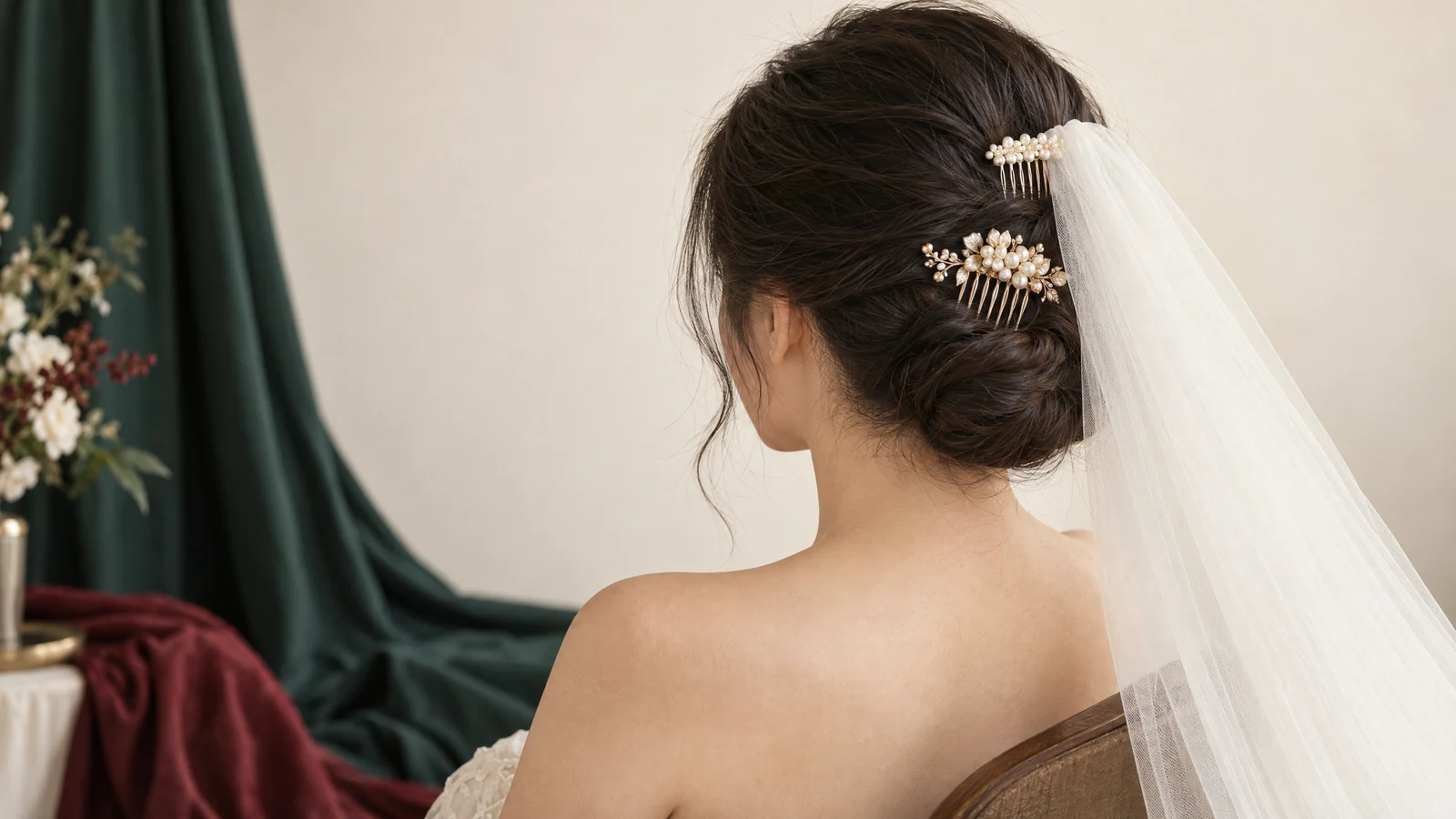
Braided bridal hair can frame or support the outline
Decide whether the braid should be seen across the crown, along one side or within a gathered back section. A small decorative detail has a different visual role from a large braid carrying most of the length. Show where you want the emphasis and check it against the neckline, earrings and veil position.
Begin with the view you most want to recognise in your wedding photographs. A braid above the ear may read clearly in a side portrait but disappear in a straight-on image. A braided low gathering can give the back a textured focal point while leaving the front comparatively simple. Neither is automatically better: the useful question is whether the pattern sits where you actually want attention.
Separate the braid from the rest of the hairstyle in your description. You might like the slim side detail in a reference but not its high bun, or the open neckline but not the loose fringe. Say what should remain visible, then identify what can change. This helps avoid committing to an entire arrangement when only a small feature attracted you.
Continue with updo or hair down for wedding for that specific comparison and the preparation questions it raises.
Choose the visible role of braided bridal hair
Describe the braid as a front border, a side accent or a back feature. Also decide whether its end should remain visible or disappear into the gathering. An exposed tail makes the pattern easier to follow; a tucked end directs attention towards the overall shape. Check both against the dress rather than judging the braid in isolation.
A fishtail reference needs enough visible length
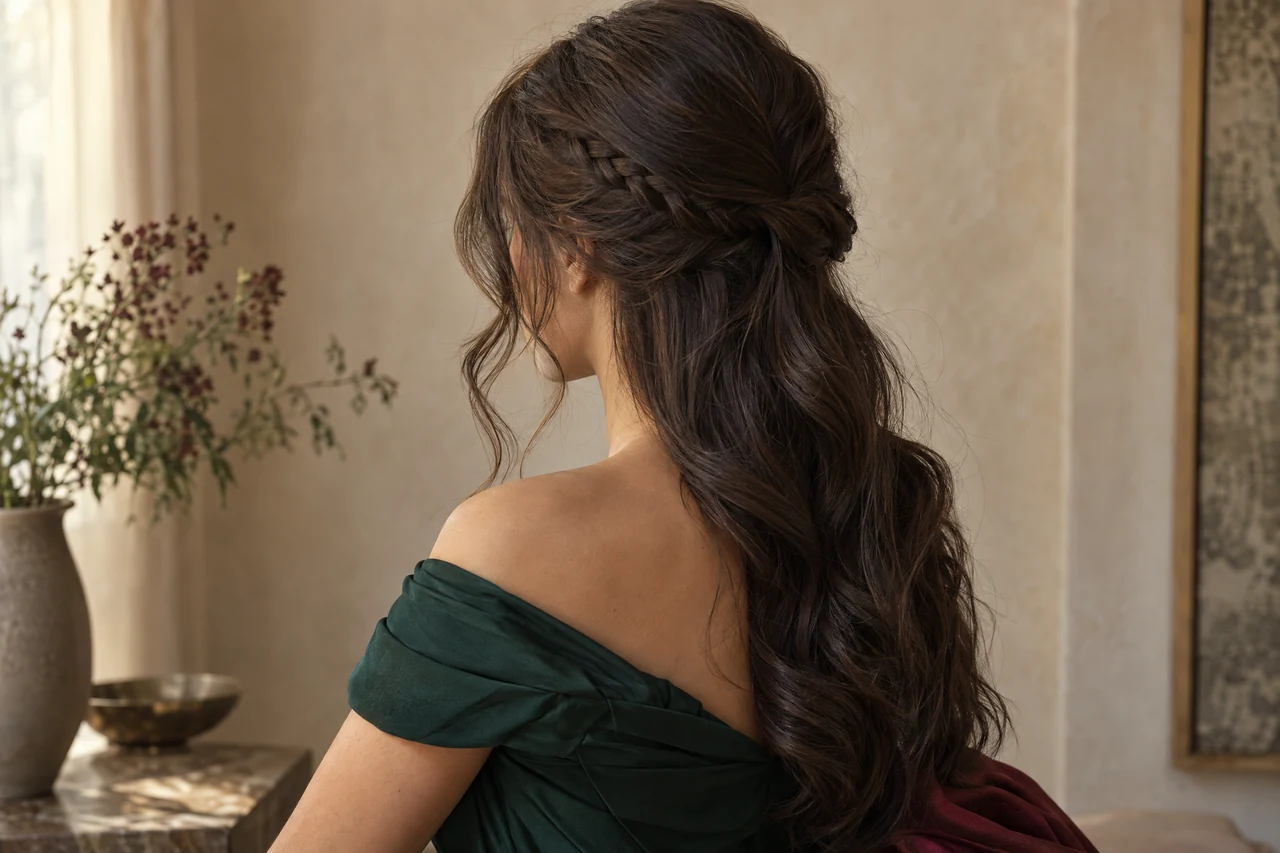
Fishtail braid wedding hair references often emphasise the narrow repeated pattern and the shape of the ends. Short layers can change how much of that pattern remains visible and how tidy it looks. Discuss the gathering point, the desired fullness and whether a simpler detail would communicate the same idea without forcing your hair into the photograph's structure.
For fishtail braid wedding hair, compare the start of the woven area with the point where the hair tapers. The same overall hair length can produce different visible results when the braid starts near the crown or much lower down. Hair used to travel towards a side gathering is not all available as a long hanging tail. Ask to see where the finished end is likely to fall, not simply whether your hair is considered long.
Show the shortest layers around the face and through the back. Explain whether you want those sections left out or incorporated, and whether a softly textured edge is acceptable. A wispy finish and a sharply defined pattern are different targets. If fullness is the main concern, wedding hairstyles for fine hair explores the balance between visible volume, weight and decorative detail.
Look beyond the pattern to the finished ends
Compare the tail against your shoulder line and the back of the dress. A side braid may lie over fabric or jewellery when you turn, while a back braid may conceal a feature you wanted to show. Request a shorter visible detail or a tucked finish if that better preserves your priority. The pattern should serve the outfit, not force every other element to move around it.
Crown shapes interact with veils and headwear
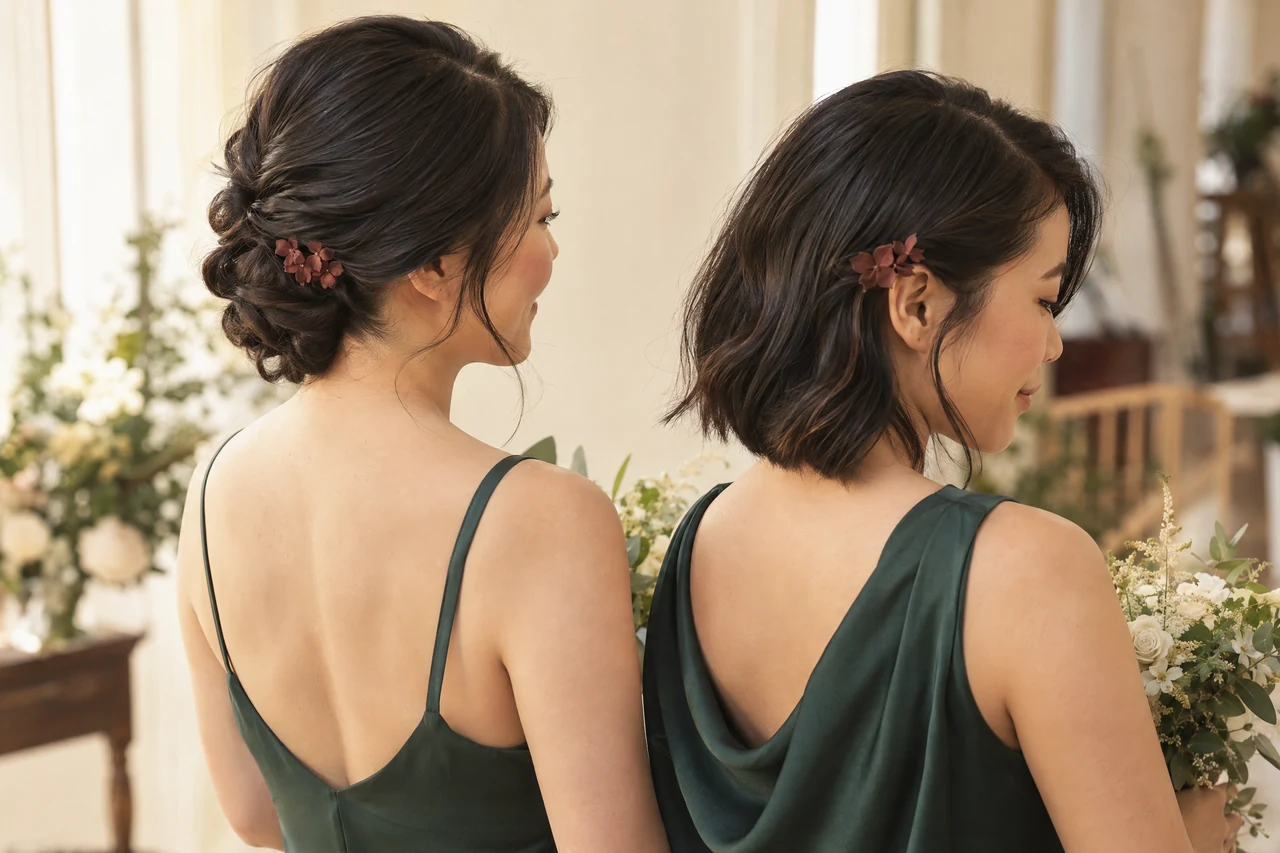
Crown braid wedding hair puts the braided outline around the head rather than mainly down the back. This can overlap with the position of a veil comb or another accessory. Compare the front and side views, then ask how the structure and accessory would fit together without uncomfortable pulling or crowding the same area.
A crown outline can sit close to the hairline or farther back, with noticeably different front views. Identify whether you want your usual parting visible and whether the braid should pass above or behind the ears. A photograph taken from overhead can make a braid look prominent even when it is barely seen at eye level. Ask for an ordinary front view before deciding how much emphasis you want.
Bring the actual comb or headpiece when a fitting has been agreed. Its width, teeth and intended direction matter more than a picture of a similar accessory. Ask where the veil would attach and what would happen when it is removed. Decorative braid loops are not proof that the same area can accommodate every comb without disturbing the outline.
Continue with wedding hair with veil for that specific comparison and the preparation questions it raises.
Check the front view and contact points
For crown braid wedding hair, check the temples, the area above each ear and the planned accessory position together. If you wear glasses, include them in the assessment. A preferred front border may need to move if it crowds the arms of your frames or competes with the headpiece. Choose which feature has priority before adding further decoration.
Keep comfort and technique questions explicit
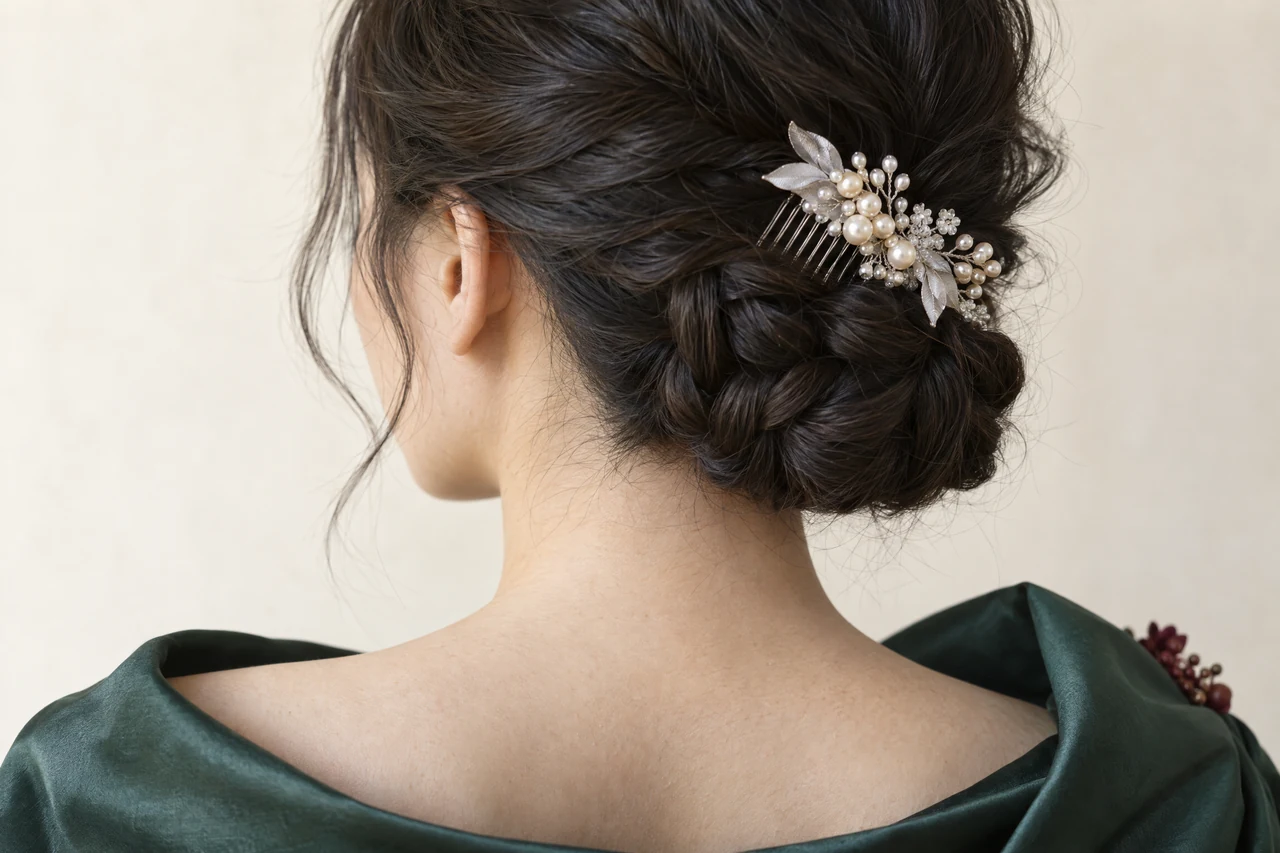
Tell the stylist if tightly gathered hair usually feels uncomfortable and describe any shorter sections that escape when you tie it up. Ask whether the specific braid can be arranged and what alternatives would work. Do not assume added hair, a particular braiding method or accessory stock is included simply because it appears in your reference.
The American Academy of Dermatology's guidance on hairstyles that pull explains that repeated pulling from overly tight styles can cause traction alopecia, a form of hair loss. It also identifies a painful hairstyle as too tight. This supports taking tension seriously; it does not predict the risk of a particular wedding arrangement or establish how a braid should look.
Speak up while the structure is being arranged, rather than waiting until accessories hide the contact points. Describe the location of pulling or pin pressure precisely. With the stylist's guidance, sit down and turn your head gently to check ordinary movement. A shape that looks satisfactory when you face forward still needs to feel comfortable when you greet people or look over your shoulder.
Review bridal hair to check its service scope and the details to share before arranging the related work.
Agree on a feasible version rather than a technique label
Ask what can be achieved with your current hair and which substitute would preserve the same placement if the exact pattern is unsuitable. Keep the conversation specific: a smaller side detail, a lower gathering or a less continuous crown outline. Confirm any added materials and their removal separately. A clear alternative is more useful than accepting a braid name without discussing the result.
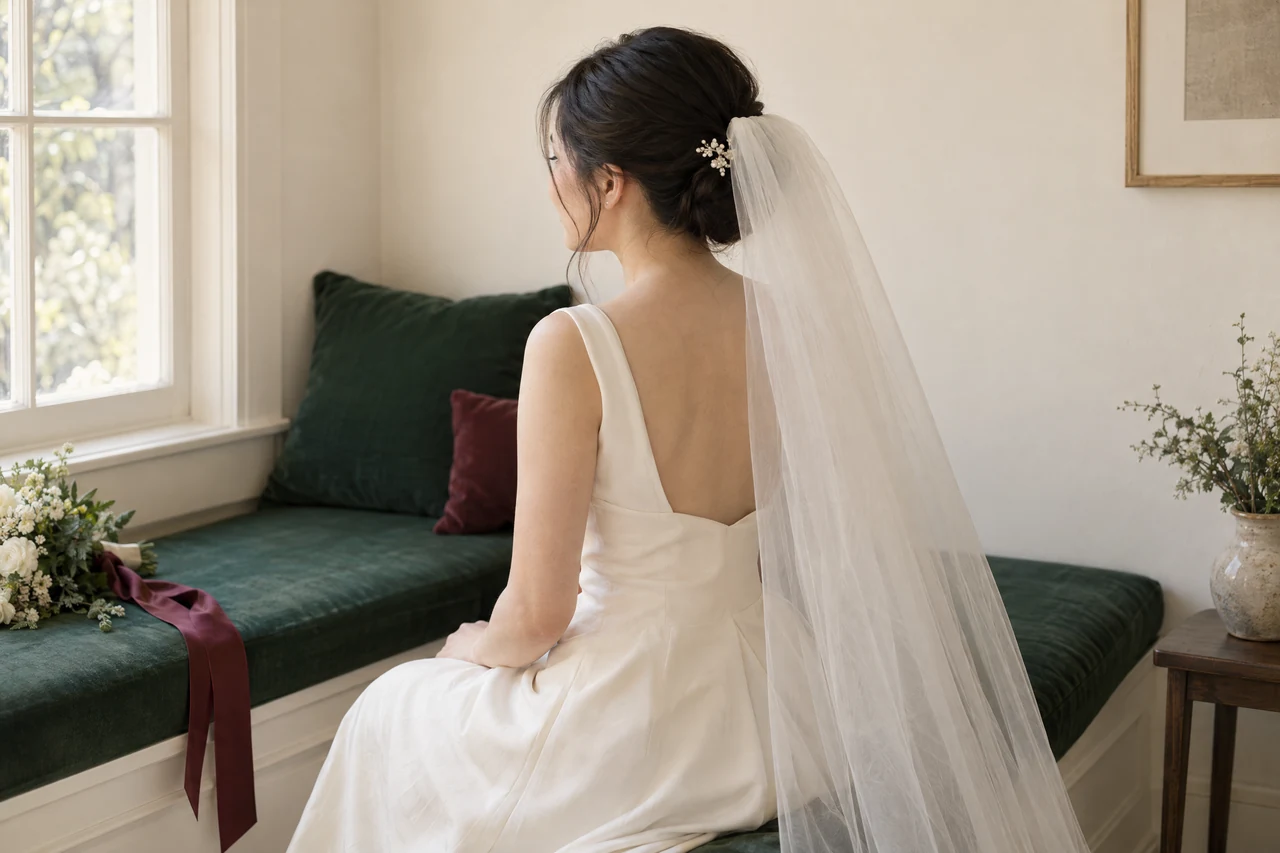
Compare braid fullness without adding unnecessary weight
Visible fullness is not the same as how much hair feels gathered at the scalp. A compact braid shows a narrow, defined pattern; a more open outline draws attention to its edges. Compare the width beside the ear or against the nape, not only in a cropped close-up. Ask how much expansion your layers can accommodate while keeping the finish you prefer.
Look at the reference under ordinary lighting. Highlights may make individual woven sections easier to distinguish, while dark hair can read as a subtler texture. That does not mean a colour change is needed. A different position or simpler surrounding shape may make the detail more visible without adding another service. Decide whether you want a recognisable braid from across the room or a detail mainly noticed in close portraits.
Keep the surrounding shape proportionate
If the braid becomes wider, reassess the bun, headpiece and earrings together. Enlarging every feature can leave the arrangement crowded. Conversely, a small braid may be exactly right beside a statement accessory. The comparison below is a decision aid, not a promise of technique availability; use it to identify the outline and contact questions worth discussing.
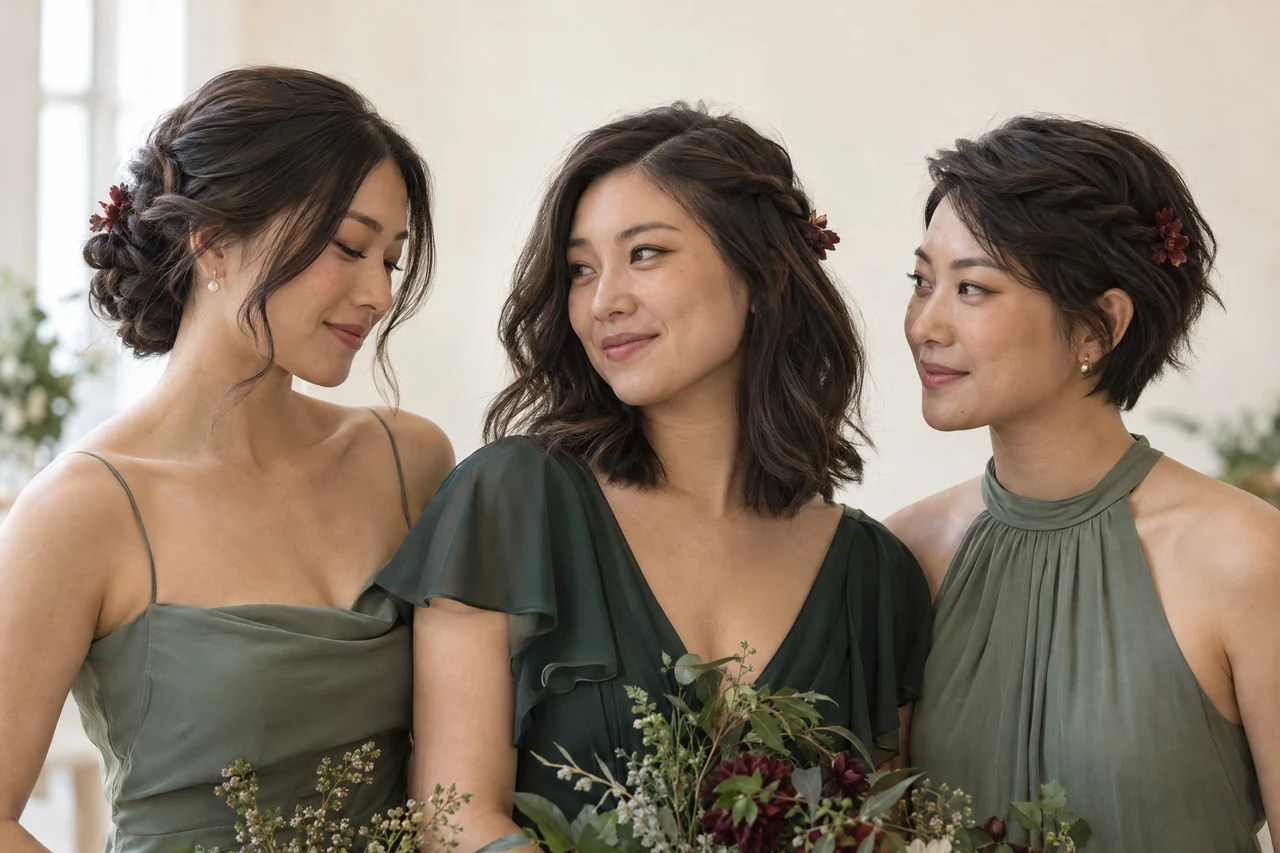
Turn your braid references into a trial plan
In its wedding hair trial preparation guide, Brides recommends bringing planned hair accessories and taking photographs from different angles. For braids, make those photographs answer distinct questions: the front shows the parting and border, the side shows ear clearance, and the back shows where the pattern ends and meets the gathering.
Use these 6 preparation checks to organise your enquiry. Include a recent picture of your own loose hair as well as the inspiration, so the discussion starts with your actual length and layers. If you are arranging a wedding hair trial, confirm what can be assessed, the preparation required and whether your accessories should be brought along.
Record the choice that makes the braid workable
After an assessment, note the agreed braid position, acceptable loose sections and gathering point. Record any accessory placement or comfort issue that changed the original idea. Explain changes to the wedding outfit or schedule before the next appointment. Keeping these details together helps you discuss the same feasible version rather than returning to a photograph that no longer represents the plan.
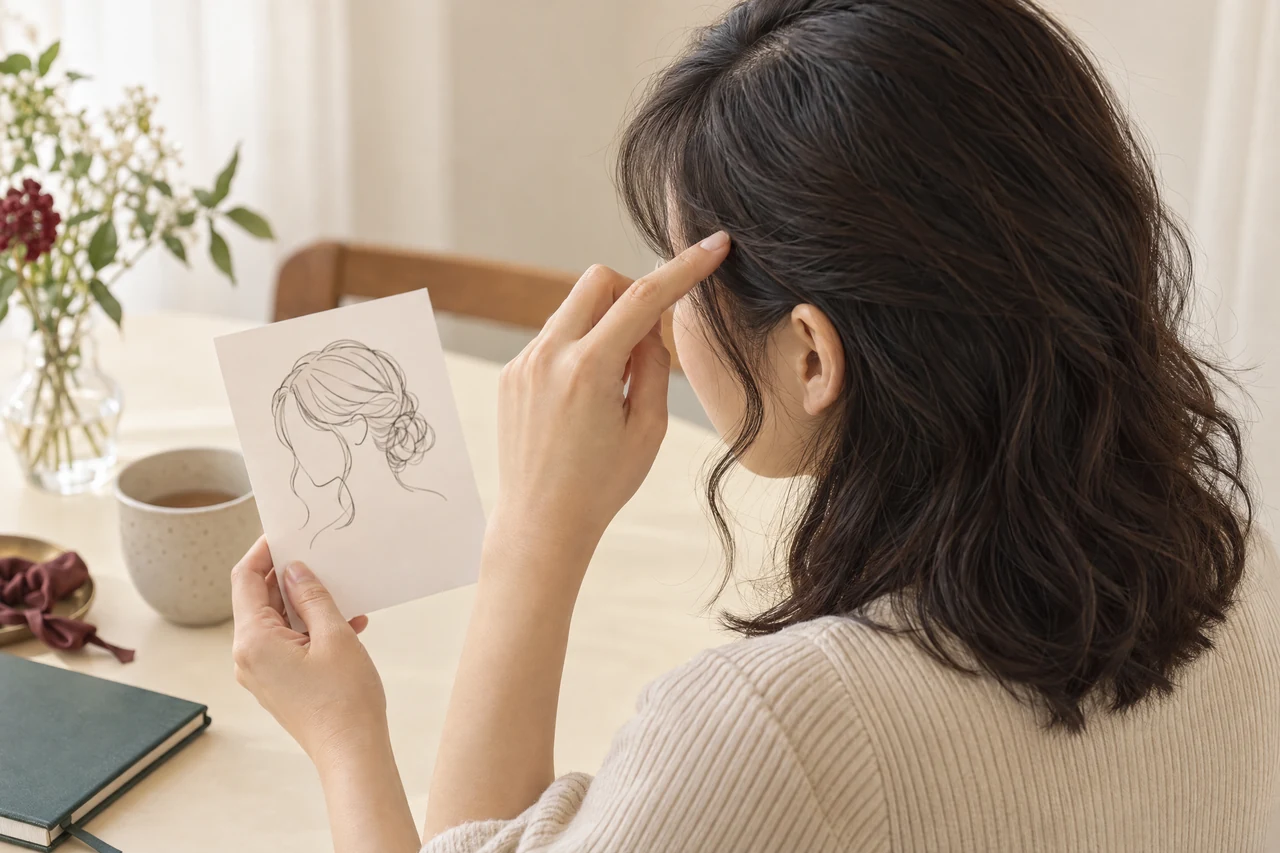
Compare bridal braid arrangements by visible role and fitting questions
| Arrangement | Visible emphasis | Main trade-off | Question to bring |
|---|---|---|---|
| Small side braid | Texture beside the face or ear | May be subtle in front-facing photographs | Should the end stay visible or join the back gathering? |
| Braid within a low gathering | Back texture with an open neckline | A veil or comb may cover the detail | Which part should still show with the veil on? |
| Hanging fishtail reference | Repeated pattern through the length | Layers and taper affect the finished tail | Where can the woven section start and end? |
| Crown outline | A border around the head | Hairline and headwear contact need checking | Where should the braid sit relative to the ears and comb? |
| Braided half-up detail | Side texture with loose hair below | Lower lengths remain separate from the braid | How much loose hair should fall over the dress? |
Your preparation checklist
- Mark the front, side or back view in which the braid should be most visible, and identify the detail you like in each reference.
- Share current loose-hair photographs showing the overall length, shortest layers and usual parting rather than relying only on inspiration images.
- Decide whether the finished braid should hang, sit around the head or disappear into a gathering; state whether textured edges are acceptable.
- Prepare the actual veil, headpiece and earrings for an agreed fitting, with dress photographs that show the neckline and back.
- Explain previous discomfort with gathered hair, and check pulling or accessory pressure during ordinary seated movement with the stylist's guidance.
- Confirm the feasible braid version, preparation, materials, service scope and quotation before treating an enquiry as an appointment.
Frequently asked questions
Can every hair length make a full crown braid?
Length and layers affect the available structure. Ask for an assessment and a simpler option if the full outline in your reference is not practical.
Should a braid feel very tight to stay secure?
Persistent pulling is not a feature to accept as proof of hold. Explain discomfort promptly and discuss a different structure or position with the stylist.
Does a braid photograph confirm this technique is available?
No. Use it to explain your preferred shape, then confirm the method, preparation and service scope before making an appointment.
Can a small braid still be the right choice for wedding hair?
Yes. A narrow side detail can give the outline texture without making the whole hairstyle about the braid. Compare it with your earrings and headpiece, and check whether it is visible from your preferred portrait angle.
Discuss a bridal braid that fits your outline and comfort
Send Vit So your wedding date, current hair photographs and braid references for a Sheung Wan salon enquiry. Include your veil or headpiece details and any concern about pulling. Ask about a feasible version, preparation and the relevant quotation; your enquiry is not a confirmed booking.
Start your WhatsApp enquirySources & further reading
- Hairstyles that pull can lead to hair loss
Repeated tension from overly tight styles, painful hairstyles and the importance of reducing pulling.
- Wedding Hair Trial: 10 Tips for Acing Your Appointment
Bringing actual planned hair accessories and recording wedding hairstyles from different angles during a trial.



