






Brand relationship disclosure: OWNSTRAND and Vit So are brands under the same owner. This is a commissioned selection guide, not an independent review or product test. Confirm styles, supply and visit arrangements directly with OWNSTRAND.
Long wig choice for two loose plaits starts with retained length
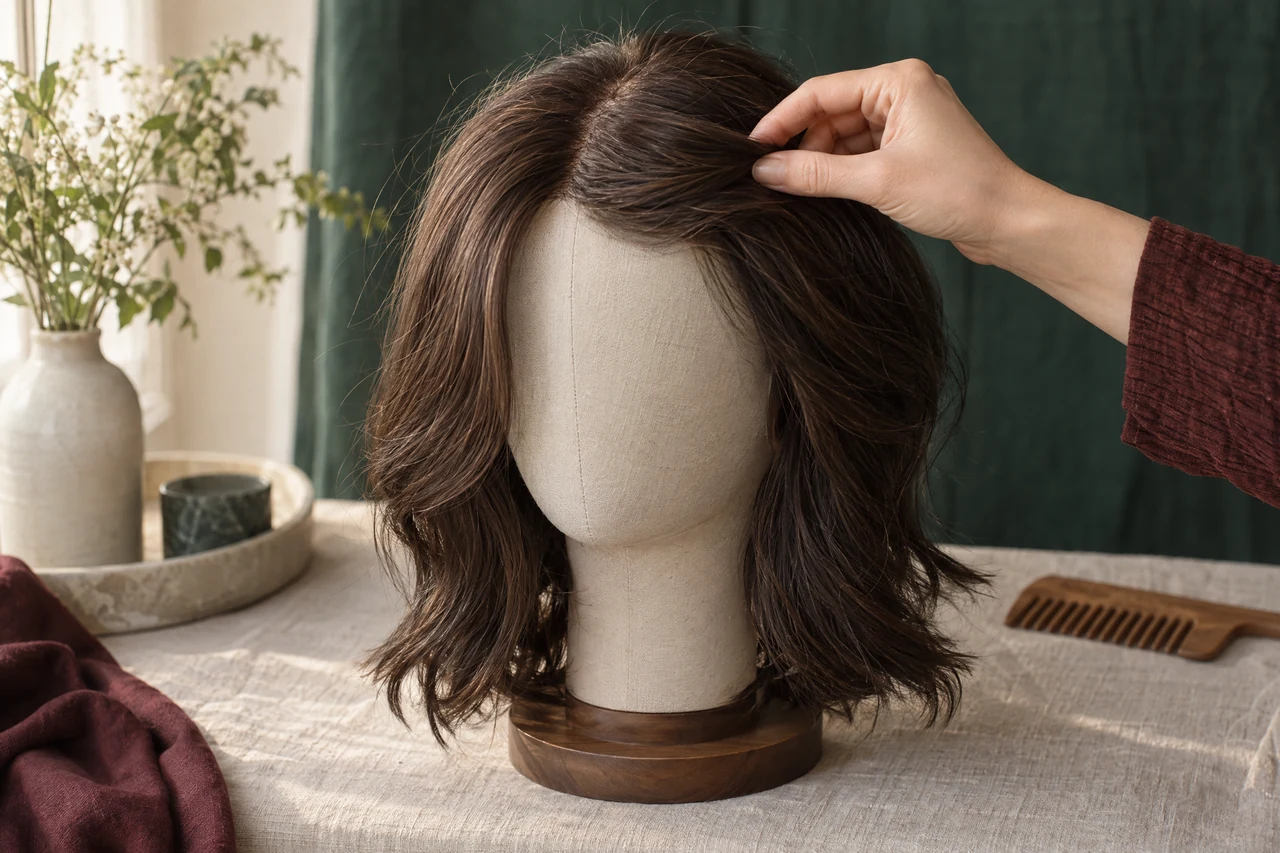
Decide where you want the ties and finished tails to fall when the wig is dry and worn normally. OWNSTRAND's long wigs guide asks readers to compare visible fall and how measurements are taken. For plaits, ask about the shortest side sections as well as crown and nape lengths. A long back section cannot tell you whether the hair beside each ear will reach a low plait without being drawn backwards under tension.
Plaiting changes the route the hair follows, so a loose plait may finish higher than the same hair hanging freely. There is no useful universal minimum in inches for this decision. The starting point, layers, texture and amount left loose below the tie all change the result. Ask to see the permitted finished arrangement on the exact style, if such a demonstration is available. Do not straighten curls solely to make a length measurement appear more favourable.
Use the idea of retained length from a layered haircut that still works in two plaits to describe your preference, not to transfer natural-hair cutting rules to a wig. Notice whether short front pieces can remain loose by design and whether both sides retain enough hair for the intended outline. A few face-framing strands may be acceptable; continuously dragging them into the plait is a different requirement and should not be assumed workable.
Describe a finish, not a single length number
Bring a reference showing the position of each plait's first crossing, tie and loose tail. Say whether you want the tails in front of your shoulders or behind them. Those details make an enquiry more useful than requesting the longest available wig and discovering later that its layers do not stay in the arrangement.
Check the cap perimeter before drawing the sides together
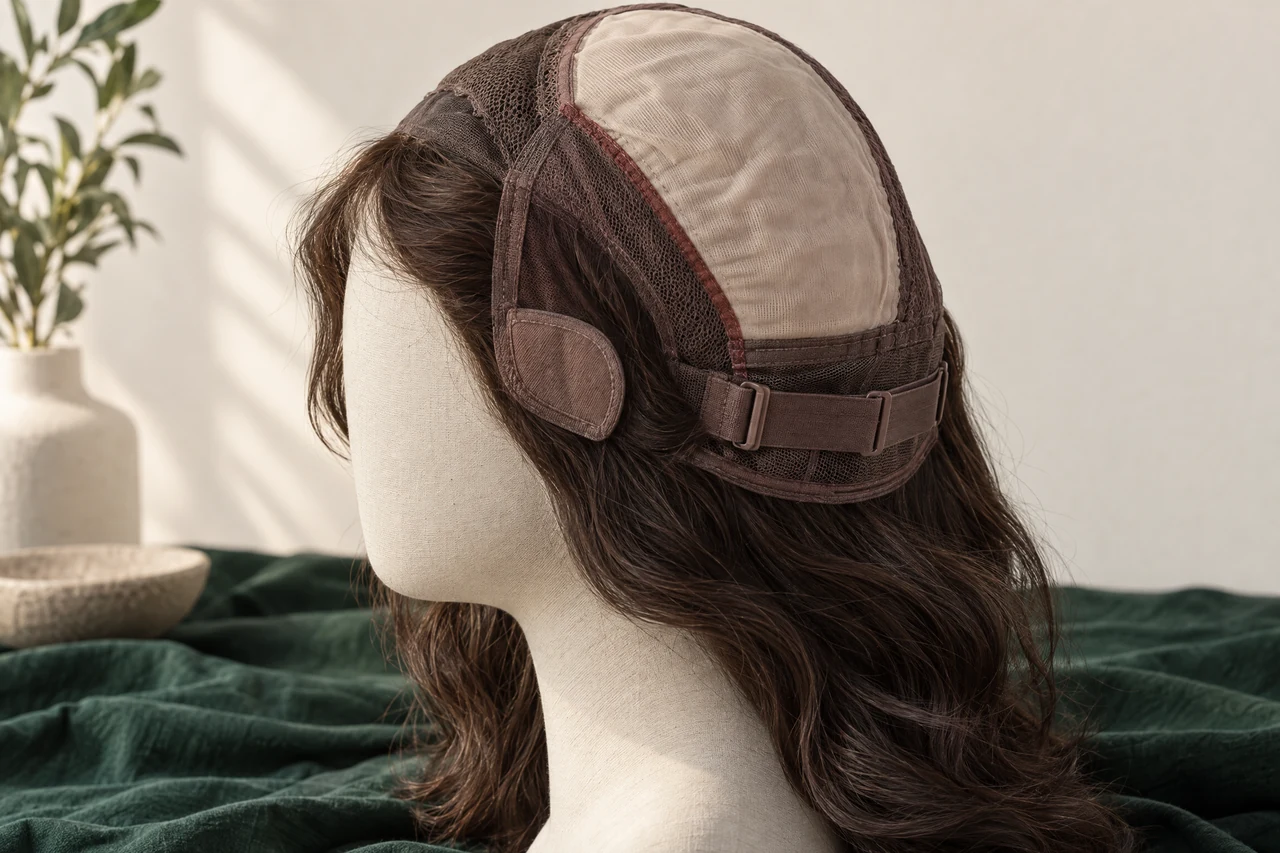
Ask about the cap's actual flexibility and coverage when comparing a hand tied wig. OWNSTRAND explains that hand-tying may cover specified sections while other areas use wefts or different materials. That construction description is not permission to plait. Confirm how the part, sides and back are made, whether your proposed division is allowed, and what must remain covered. Do not infer an all-around natural-looking hairline from a hand-tied top or lace front.
Two plaits can direct side hair away from the ears and divide the back into separate bundles. During an approved fitting, look at the temple, ear tabs, nape and any visible line between the bundles. A cap that looks discreet with the hair down may present differently in this arrangement. If the division exposes a seam or attachment area, ask whether a lower starting point or retained loose covering hair is acceptable; do not pull harder to disguise it.
The starting coverage question also matters. Read about full head wigs if you are distinguishing full-cap coverage from a partial piece. A topper should not be treated as a complete wig simply because it has long lengths. For this decision, identify the exact piece and which hair forms the two plaits. A neat centre part at the crown does not establish that a continuous scalp-like part can extend all the way down the back.
Resolve wig plaiting permission and length for the exact fibre
When considering human hair wigs, use the fibre category to begin questions, not to authorize a natural-hair routine. OWNSTRAND's guide separates hair description from cap construction, fit and styling limits. Ask whether repeated low, loose plaiting is permitted, which ties and tools are suitable, and how the hair should be released afterwards. Human hair does not automatically approve heat, colouring or chemical processing, nor does it prove that a particular cap tolerates your planned styling.
For a synthetic option, do not use heat to force short pieces into position or to flatten a wave before asking about the material. Cancer Research UK warns that direct heat can melt synthetic fibres or cause frizz and recommends checking manufacturer information first.[1] A heat-friendly label still needs its exact conditions confirmed. More importantly, permission for heat does not answer whether the cap and fibre may be gathered into plaits; these are separate styling questions.
Request instructions that identify the actual style and fibre rather than accepting advice for an unspecified wig. Explain the frequency you have in mind: an occasional appearance and daily plaiting are different routines to discuss. Ask whether releasing the plaits may leave a shape that needs approved restyling and whether that would fit your time and tools. If permission remains unclear, treat wig plaiting permission and length as unresolved and keep the purchase decision open.
Ask what happens after the plaits come out
A fitting should answer more than whether the hair can be gathered once. Ask how to return it to its intended loose style, whether accessories can catch the fibre and what signs mean you should stop. Do not use steam, extra heat or stronger products to correct an unwanted shape unless the item's instructions expressly allow them.
Compare four dimensions during a permitted fitting
Use four comparison dimensions after permission is confirmed: retained dry length, perimeter visibility, cap movement and fibre handling. They are an editorial way to organize observations, not a certified test or a score that predicts long-term wear. Have the fitter agree the arrangement before touching a sample. Keep the hair in its normal dry texture and the cap in its usual position. A successful-looking plait on a display head cannot establish how that cap will sit on you.
Assess fit with the exact maker's sizing guidance. The American Cancer Society notes that wig size charts can vary by brand, so a familiar size label is not enough.[2] With the approved low plaits in place, gently turn your head and lower your chin as you ordinarily would. Ask whether the ear tabs, front edge or nape move from the fitted position. Stop if it slips, pinches or pulls; tightening the plaits is not a substitute for resolving fit.
Check the left and right sides separately, because their short pieces or starting positions may differ. Observe the front, side and back in a mirror, with help if needed and permission before taking photographs. Record one concrete result for each dimension, such as a short front layer falling free or a back seam appearing when the hair divides. If a demonstration cannot be offered, leave those results unconfirmed instead of treating a photograph as equivalent evidence.
Choose a handling routine you can repeat gently
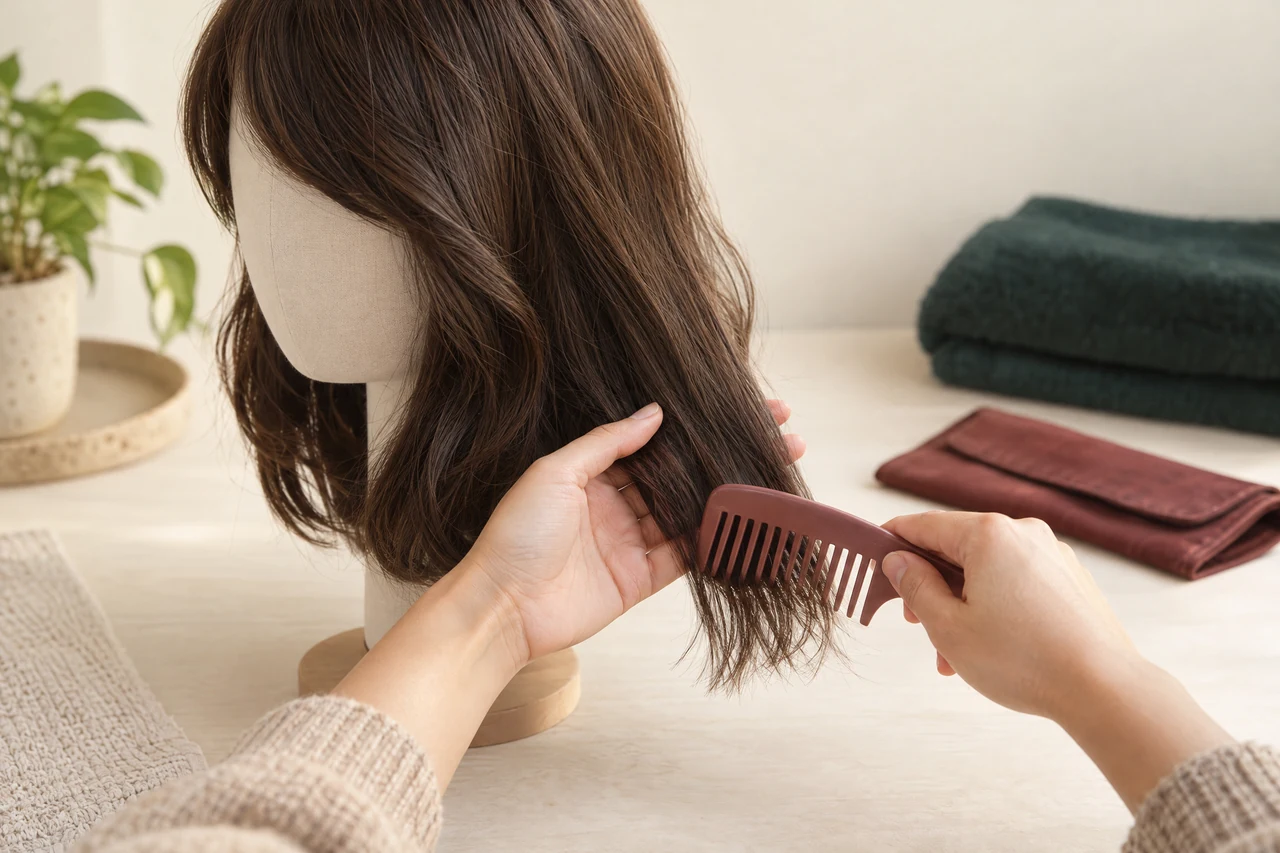
Detangling should not become a way of pulling the cap into position. The American Cancer Society's general advice for long straight wigs starts brushing at the ends.[2] Use the tool and products approved for your particular fibre, support the section as instructed and stop at a snag rather than dragging through it. A wide-tooth comb in a concept picture illustrates gentle handling; it is not proof that every straight, curly or synthetic wig should be combed the same way.
If plaiting is approved, gather the hanging lengths without sweeping every short strand tightly away from the edge. Use only suitable accessories, and release them without yanking the ends. Ask the supplier whether the wig should be unplaited for storage and how to restore its supplied shape. The American Cancer Society recommends a wig stand for short-term storage,[2] but the exact cap and texture still need their own support and drying instructions. Do not assume overnight plaits are permitted.
Use the existing wig care guide as background for handling and storage, then obtain the exact item's instructions. Cancer Research UK advises following the supplier's wearing and care directions carefully.[1] Before buying, consider the effort of undoing accessories, checking for snags and arranging the wig after each wear. If the required routine is more than you want to manage, a wearable loose style may be a better choice than buying length mainly for plaits.
Make a conditional shortlist, then confirm the enquiry details
Separate a confirmed requirement from an attractive possibility. A style belongs on your shortlist only when the proposed plaits are permitted and its length, perimeter, fit and handling look compatible with your needs. Where a question has not been answered, label it pending. You can accept loose face-framing pieces or shorter tails if you genuinely prefer that finish. You should not quietly replace the requirement with tighter pulling simply because the catalogue style is appealing.
Prepare your enquiry with the style name, desired finished tail position and a reference for two low loose plaits. Ask about the exact cap, fibre, size, colour, current supply, quotation and any available fitting or styling demonstration. Catalogue presence is not stock confirmation, and an enquiry is not an order. OWNSTRAND has one store in Kwun Tong; its product and visit arrangements are separate from Vit So's Sheung Wan salon. Confirm availability and appointment details before travelling.
A decision to wait is useful when manufacturer permission is absent, the back division exposes an unwanted cap area or the wig shifts during ordinary movement. You can compare another style or choose to wear the wig down without claiming that either solves every concern. This article addresses cosmetic selection only. Persistent discomfort, scalp symptoms or treatment-related wearing needs should be discussed with a qualified care professional rather than managed by adding tension, adhesives or accessories.
Four dimensions to compare after the exact wig's plaiting permission is confirmed
| Dimension | Useful observation | Reason to pause |
|---|---|---|
| Retained dry length | Both sides reach the desired ties with acceptable loose tails. | Short side layers need continuous pulling to stay included. |
| Perimeter visibility | Temple, ear and nape coverage remain acceptable in the approved arrangement. | The back division exposes a seam or an unwanted cap area. |
| Cap movement | The fitted position remains acceptable during gentle ordinary head movement. | The cap slips, pinches or pulls once the lengths are gathered. |
| Fibre handling | Approved tools and release methods suit the routine you can maintain. | Instructions are missing, or the finish depends on unapproved heat. |
Your preparation checklist
- Obtain permission for two low loose plaits on the named style and fibre.
- Describe the first crossing, tie position and desired loose tails.
- Check front, side and nape lengths in the normal dry texture.
- Confirm the permitted division and inspect visible cap edges.
- Observe ordinary head movement without increasing tension.
- Confirm suitable accessories, detangling, release and storage instructions.
- Ask separately about size, colour, quotation, supply and fitting availability.
Frequently asked questions
Is a 20-inch wig automatically long enough for two plaits?
No. Ask what that measurement describes and compare the shorter side and front sections too. The starting position and loose tail length matter. Confirm the dry finished arrangement rather than converting a single length label into a promise.
Does a fully hand-tied cap allow a centre part down the back?
Not automatically. Attachment method, parting coverage and perimeter construction are separate details. Ask the maker whether the proposed back division and loose plaits are permitted, then assess their appearance on the exact style.
Should I tighten the plaits if the cap moves?
No. Release the tension and ask the fitter to assess the cap's size, position and approved securing method. A style that depends on pulling the hair tighter has not met the loose-plait requirement. Do not conceal movement by forcing the arrangement.
Can I buy now and have the layers cut for plaits later?
Do not assume cutting will fix the problem: it removes length rather than restoring short sections. Ask before purchase whether any alteration is permitted, who can provide it and how it affects the desired finish and return terms. Availability of that service needs confirmation.
Bring the finished-plait reference to your style discussion
Ask Vit So about face framing and how the intended silhouette fits your wider hairstyle preferences. For product permission, exact construction, quotation, supply or a Kwun Tong visit, use the OWNSTRAND guides already linked above. Confirm whether any fitting or styling service is available for the specific item before making plans.
Start your WhatsApp enquirySources & further reading
- Wigs, hats and scarves — Cancer Research UK
Manufacturer checks before direct heat on synthetic fibre and following supplier wearing/care instructions; not permission to plait a particular product.
- Wigs for Hair Loss — American Cancer Society
Brand-specific size charts, ends-first handling for long straight wigs and short-term wig-stand storage; exact product instructions still control.



