






Brand relationship: OWNSTRAND and Vit So are brands under the same owner. This commissioned guide offers selection considerations, not an independent review or product test. Confirm styles, supply and visit arrangements directly with OWNSTRAND.
Map the men's crown hairpiece with a strong swirl before choosing coverage
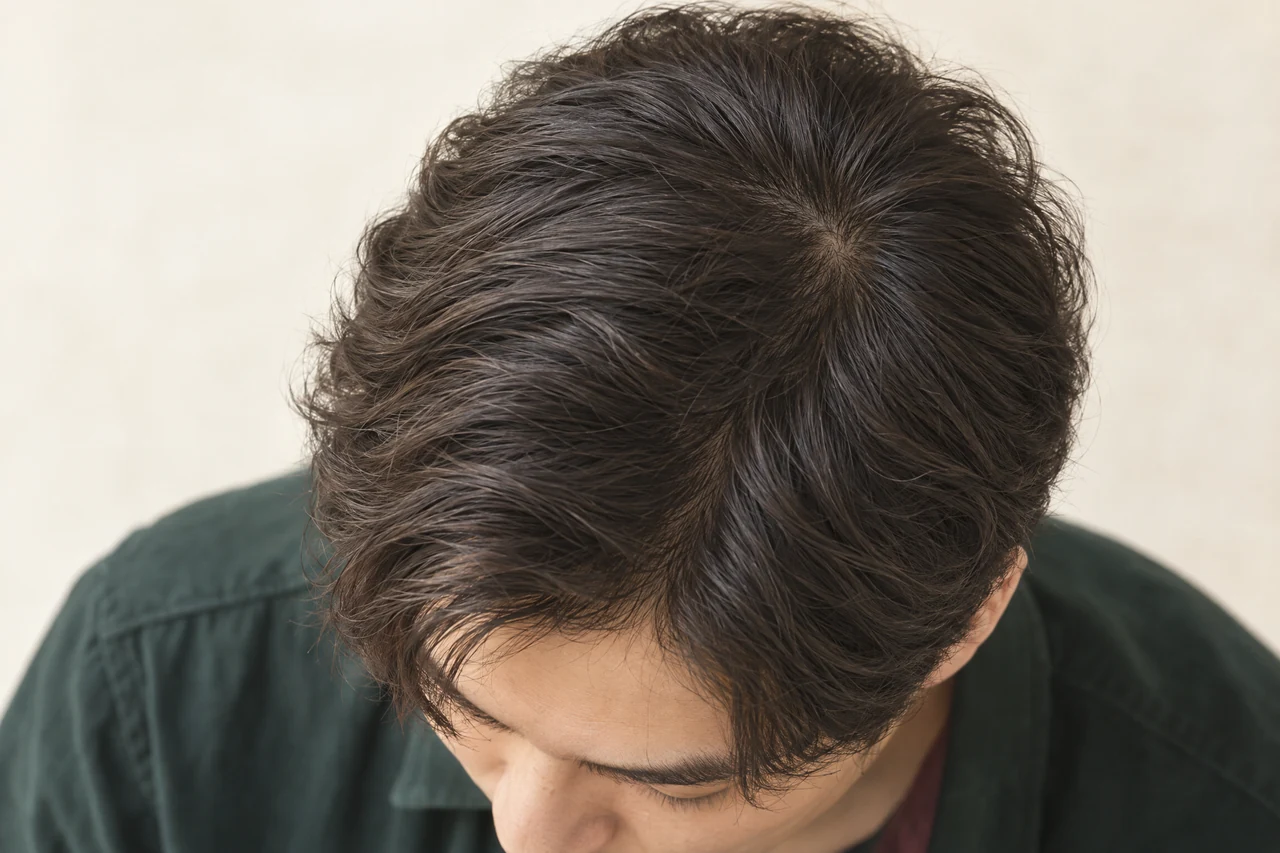
A hair whorl is a circular distribution of hairs around an axis, determined by the follicles' growing direction; this basic definition explains why a crown is not simply a flat patch to fill. [1] Look for the visible centre and follow how your hair leaves it. Some strands may head towards the front while others travel towards a side or down the back. Record what you actually see rather than choosing a standard left or right part from memory.
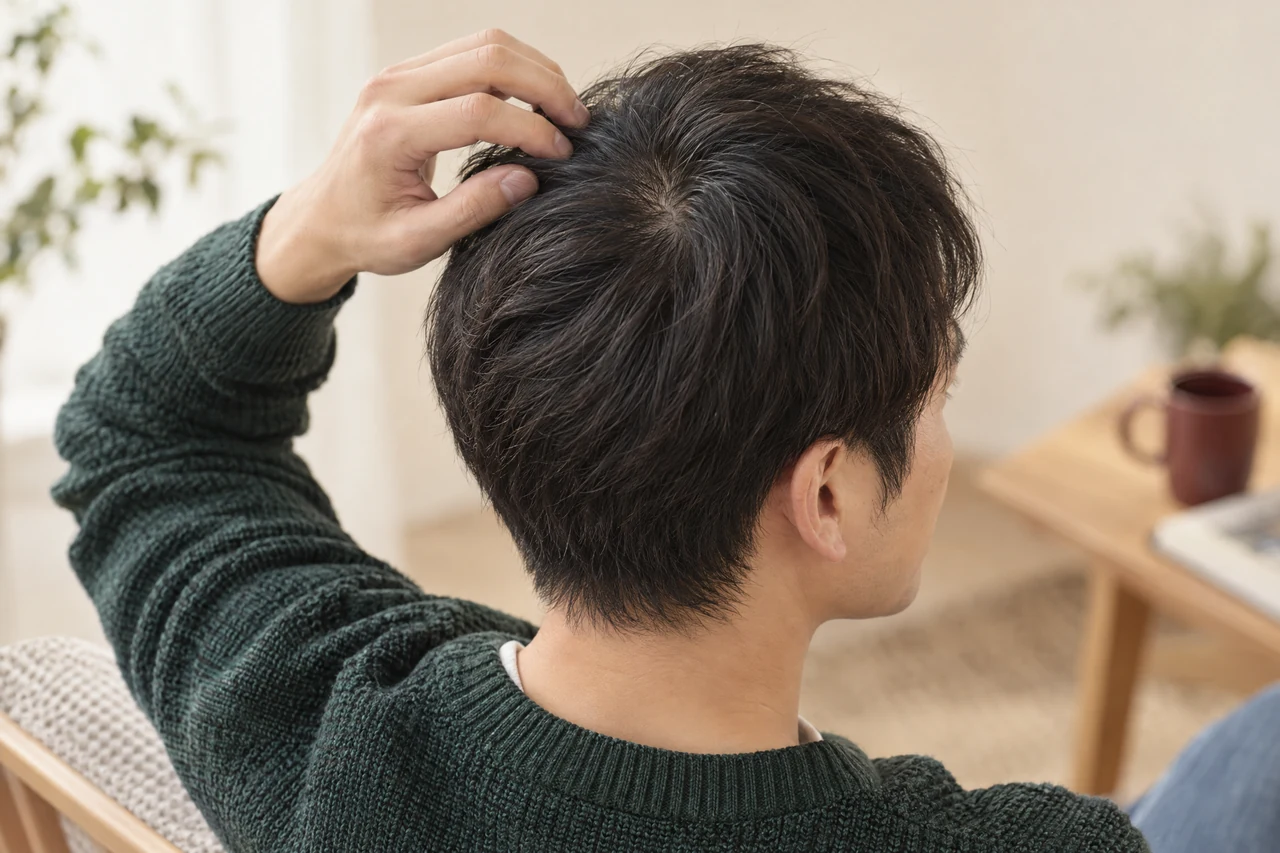
Let clean, dry hair settle in its usual style before taking a top view and a rear view. Avoid flattening it with your hand throughout the photograph: that can hide the very direction you want to explain. Note whether the centre sits off to one side and where hair separates around it. If a phone's selfie image is mirrored, tell the person advising you so that a left-right description does not become reversed during the enquiry.
OWNSTRAND's men's hairpiece for thinning crown guide discusses the sparse area together with the direction and density of surrounding hair. Use it to describe where your swirl remains visible and where a proposed piece would meet natural hair. The aim is not to buy the smallest possible base: it is to identify a placement whose exiting strands can continue into the hair outside it. Exact dimensions and suitability still need confirmation for the option discussed.
Use four checks, without turning them into a score
This guide uses four practical checks: the natural swirl's location and flow, the piece's direction at the join, the transition in length and density, and appearance with comfort during movement. They are an enquiry aid, not a tested fitting formula. Keep separate notes for each. For example, a piece may cover the visible area yet send its rear strands sideways into hair that falls downwards; that is a direction question, not evidence that more hair is needed.
Hairpiece crown direction matching: inspect the actual hair flow
Ask to see how the actual piece falls at the crown and along its rear and side edges, not only its front-facing hairstyle. Locate any manufactured parting or swirl and compare it with your map. Ask whether that direction is fixed, can be adjusted within the maker's instructions, or would require a different construction. Words such as hand-tied, monofilament or human hair are not an answer to whether this exact piece can reproduce your intended flow.
The OWNSTRAND toupee guide treats partial coverage as an item-specific question involving footprint, base and fit. When discussing a piece, explain which edge needs to turn with your swirl and ask what styling is actually permitted there. A category name does not establish movable parting, a particular attachment method or safe heat use. If a photograph looks suitable but the direction cannot be demonstrated, leave that point unresolved rather than assuming a cut will fix it.
Vit So's guide to hairpiece fitting offers a related way to think about coverage and blending. Here, make the discussion more specific: ask whether the proposed placement allows strands on both sides of the join to follow compatible paths. A haircut may help lengths meet, but it does not prove that hair rooted in conflicting directions will settle together. Discuss changes before cutting either your own hair or the piece, especially if returning an altered item may be restricted.
Do not rotate a fitted piece just to align its swirl
Moving a piece around may seem like a quick way to match the crown, but its shape and securing points also need to sit as intended. Ask the fitter to assess positioning rather than turning an attached piece yourself. A better crown direction is not a useful trade if the base lifts elsewhere or pulls on surrounding hair. If the intended orientation cannot satisfy both placement and flow, compare another design instead of forcing the existing one into position.
Separate extra volume from a smoother directional join
Compare the two sides of the join at ordinary viewing distance. Does the piece's hair arrive in a similar direction, but look too heavy? Or does a fairly light piece still cross the surrounding hair at an awkward angle? Those are different problems. Ask about density and length only after locating the direction mismatch. Adding hair may obscure a gap in one still photograph while creating a bulky crown outline from the rear; the whole transition needs to remain part of the comparison.
If your main concern is natural hair lying flat rather than an area needing coverage, the discussion changes. Vit So's root perm for men with flat hair guide addresses natural-hair support, not a method for making a manufactured crown match. Root lift and cosmetic coverage are separate decisions. Neither extra lift nor a partial piece should be treated as a treatment for hair loss, and a strong swirl alone does not establish that you need either option.
Avoid repeatedly dragging natural hair across its usual flow to hide an unsatisfactory join. The American Academy of Dermatology advises gentle brushing and warns that tugging can contribute to hair loss. [2] This does not assess the safety of any specific hairpiece, but it supports a sensible limit: a cosmetic blend should not depend on persistent pulling. Tell the fitter if the proposed arrangement feels strained, and pause rather than tightening or combing harder to make the photograph look better.

Compare above, behind and after ordinary movement
A top view answers whether the visible centre and surrounding strands form a believable flow. A rear view answers a different question: whether hair leaving the piece continues into the hair below it without an abrupt change of angle or weight. Use both before deciding that the crown is resolved. Keep lighting and head angle reasonably consistent when comparing options, because a bright overhead light and a sharply bowed head can exaggerate a separation that a softer front view conceals.
Then, during an agreed fitting, turn your head gently and look down as you would to read a phone. Allow the hair to settle without immediately brushing it back into the posed arrangement. Check whether a directional split reopens, whether a rear edge becomes apparent, and whether you feel movement or pulling. These observations identify questions for the fitter; they are not a durability test or evidence that a particular construction will work throughout a full working day.
Vit So's guide on how to make a wig look natural broadens the comparison to the whole outline. Apply that perspective to a crown piece too: side bulk, the transition above the ears and the nape can reveal a mismatch that a top photograph misses. If your own hairstyle has short sides, ask how the crown's longer strands will taper towards them. Do not judge successful direction matching by the disappearance of scalp alone.
When a full wig is the more useful comparison
A local crown piece is worth exploring when you want to retain surrounding natural hair and the proposed join can follow its direction. A full wig is worth comparing when matching that join remains difficult or when you also want a different overall outline. This is not a rule that a strong swirl requires full coverage. It is a way to avoid repeatedly adding density to a partial piece when the unresolved issue is how its hair meets yours.
OWNSTRAND's men's wigs guide focuses on full coverage and asks readers to compare silhouette, fit, fibre and care. A full wig changes the problem: the crown becomes part of a whole-head design rather than a local hair-to-hair transition. It still needs an appropriate crown appearance and cap fit. Confirm the exact option and viewing arrangements; a full wig is not automatically more natural, easier to maintain or more comfortable than a partial piece.
Consider how much of your familiar hairstyle you want to keep. If the natural side and back hair are important to you, a workable partial join may justify further enquiry. If you prefer to assess a complete new shape, compare full coverage without trying to reproduce every detail of the original swirl. Either route has limits. Different fibre and base choices bring different care requirements, and catalogue styling does not establish how an item will sit on your head.
Prepare a direction-focused enquiry and set comfort limits
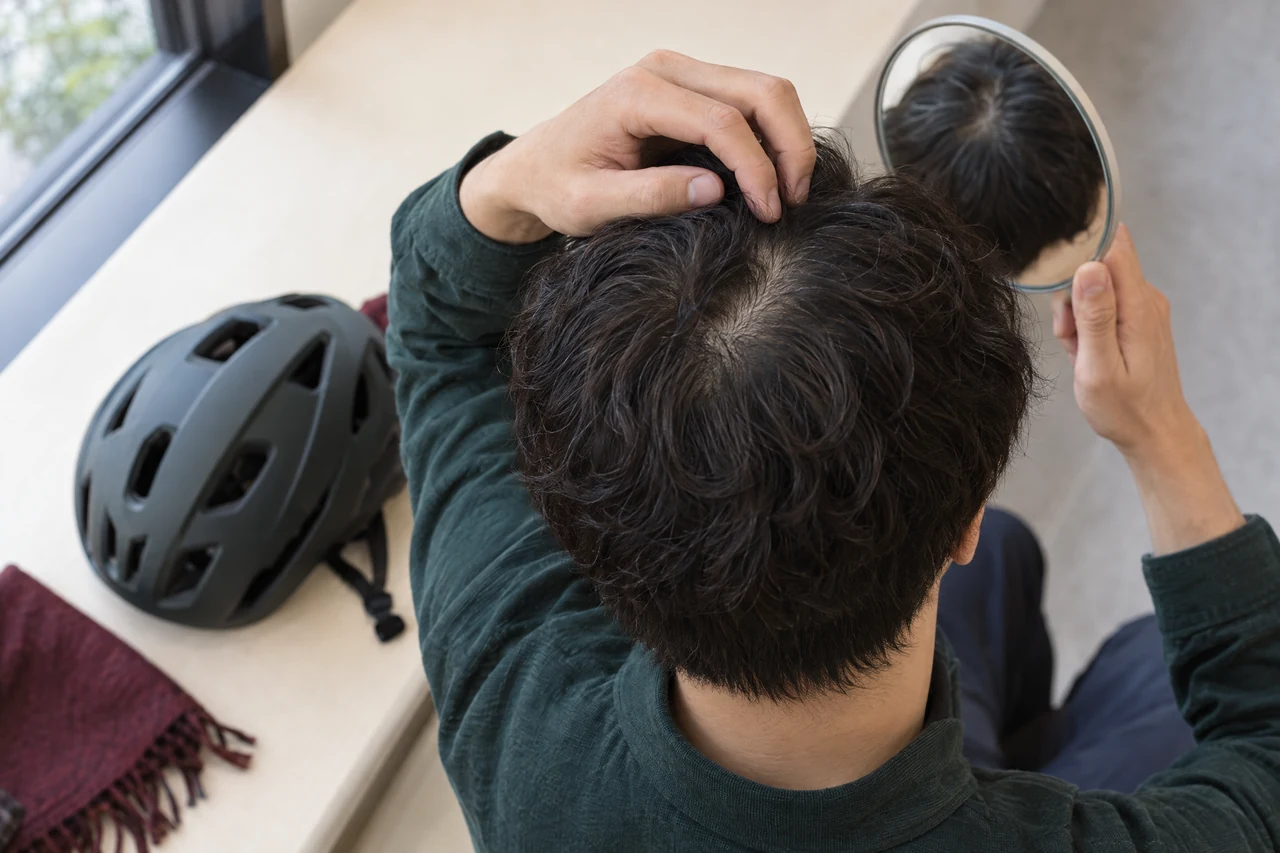
Bring your top and rear photographs, the direction notes and a short description of your normal routine. If you wear a helmet, mention it and ask what the specific piece permits; do not assume that a good static fit establishes helmet compatibility. Ask which sample or item can be viewed, whether its crown flow can be shown, and what measurement or fitting applies. Separate a ready-made product enquiry from custom work so that you understand which changes are actually available.
Request a quotation that identifies the item, fibre, base, dimensions, permitted styling and any fitting or cutting included. Confirm current supply and timing rather than treating a displayed style as stock. OWNSTRAND's only confirmed shop is in Kwun Tong; Vit So's Sheung Wan salon is not another OWNSTRAND branch. Ask about the visit arrangement before travelling. A useful enquiry ends with specific answers or clearly stated unknowns, not a promise that any strong swirl can be matched.
If you have pain, persistent irritation, unexpected shedding or treatment-related wearing needs, seek advice from an appropriate healthcare professional. The American Academy of Dermatology recommends consulting a dermatologist about hair loss because its causes vary. [2] Appearance notes and photographs cannot diagnose those causes. This guide addresses cosmetic selection, not regrowth or medical treatment; do not press ahead with a tighter or more forceful arrangement just because coverage looks reassuring from one angle.
Compare the unresolved crown question before choosing a coverage route
| What you observe | Useful comparison | What to verify |
|---|---|---|
| Local crown gap; surrounding flow remains usable | Crown-focused partial piece | Direction at each join, actual footprint and securing method |
| Piece and natural hair cross at conflicting angles | A different direction or construction | Demonstrated permitted adjustment, not extra density alone |
| Compatible direction but an overly heavy transition | Length and density discussion | Whether authorised cutting can soften the join |
| Partial joins remain difficult; whole outline also matters | Full wig alongside partial coverage | Crown design, cap fit, side and rear silhouette, care |
Your preparation checklist
- Record the swirl centre and actual flow in unmirrored top and rear views.
- Ask to see the proposed piece's crown and edge directions, not only its front.
- Confirm which direction changes the maker permits for that exact fibre and base.
- Compare the join in length and density after checking direction.
- Observe gentle turns and looking down during an agreed fitting; note pulling or lifting.
- Confirm item-specific supply, quotation, fitting scope and visit arrangements.
Frequently asked questions
Does a clockwise swirl mean I must buy a clockwise crown piece?
The description helps explain your natural flow, but it is not enough to choose an item. The centre's location and the strands reaching the boundary matter too. Ask how the actual piece falls at the joins and what adjustment is permitted. A nominally matching swirl can still sit in the wrong place, while an adjustable design needs demonstration rather than assumption.
Can cutting or blow-drying reverse a mismatched manufactured direction?
Do not assume either will solve it. Cutting changes length, while permitted styling depends on the exact fibre and construction. Ask the seller or fitter to demonstrate the intended adjustment and explain care limits before altering the piece. Human hair is not blanket permission for heat or chemical treatment, and a flatter photograph does not establish a stable directional match.
Should the hairpiece hide the swirl centre completely?
Not necessarily; agree on the appearance you want rather than using complete concealment as the only target. Look at how strands flow around the visible or manufactured centre and continue towards the edges. Some visible separation may be acceptable to you. Photos help describe that preference, but they cannot establish whether the area is thinning or diagnose hair loss.
What if the top looks right but the back still separates?
Treat the rear join as unresolved. Show where the separation returns after ordinary movement and ask whether direction, placement or length is responsible. Do not immediately request a denser piece or pull surrounding hair across it. If the permitted adjustments cannot create a satisfactory transition, compare a different partial design or full coverage before making a commitment.
Ask about a crown that joins your everyday hairstyle
Invite Vit So to discuss your natural hair's direction and the blending questions you want to resolve. Use the OWNSTRAND guides already linked above for product and visit enquiries. Bring top and rear views, explain your routine, and ask for confirmed item details before choosing a coverage route.
Start your WhatsApp enquirySources & further reading
- Sechi et al. — Scalp hair whorl patterns in patients affected by Neurofibromatosis Type 1: A case-control study, International Journal of Trichology, 2020
Used only for the introductory definition of a hair whorl and its relationship to follicle growth direction, not for clinical findings or hairpiece performance.
- American Academy of Dermatology — Hair loss: Tips for managing
Supports gentle brushing without tugging and seeking a dermatologist for hair loss; not an endorsement or safety assessment of an OWNSTRAND item.



