







Growing a pixie into a bob without a mullet starts at the sides
The unwanted long-back appearance is a relationship between sections, not simply a question of total length. A pixie can leave the ear exposed while keeping more hair behind it. As that outline grows, the back may hang onto the neck while the side still stops above the ear. The difference can look more pronounced even without evidence that the back is biologically growing faster. Here, avoiding a mullet means reducing that visible contrast, not criticising a deliberately chosen style.
Look at your hair dry before deciding what needs cutting. Keep your head level and release anything usually tucked behind the ear. Compare where the side pieces end with the lowest visible back edge. Then tuck the hair as you normally would and check again. A tuck can make the side appear shorter, while a turned head can hide the nape. These are different views of the same hair, so bring both rather than judging from one flattering photograph.
The priority when growing a pixie into a bob without a mullet
Your next useful milestone is side coverage that contributes to a bob outline, not a back section reaching an arbitrary landmark. Point out the pieces above and in front of each ear that still need to lengthen. Also identify which upper pieces can eventually fall over them. If those sections are repeatedly shortened during tidy-ups, a neat neckline alone will not move the cut towards the side shape you want.
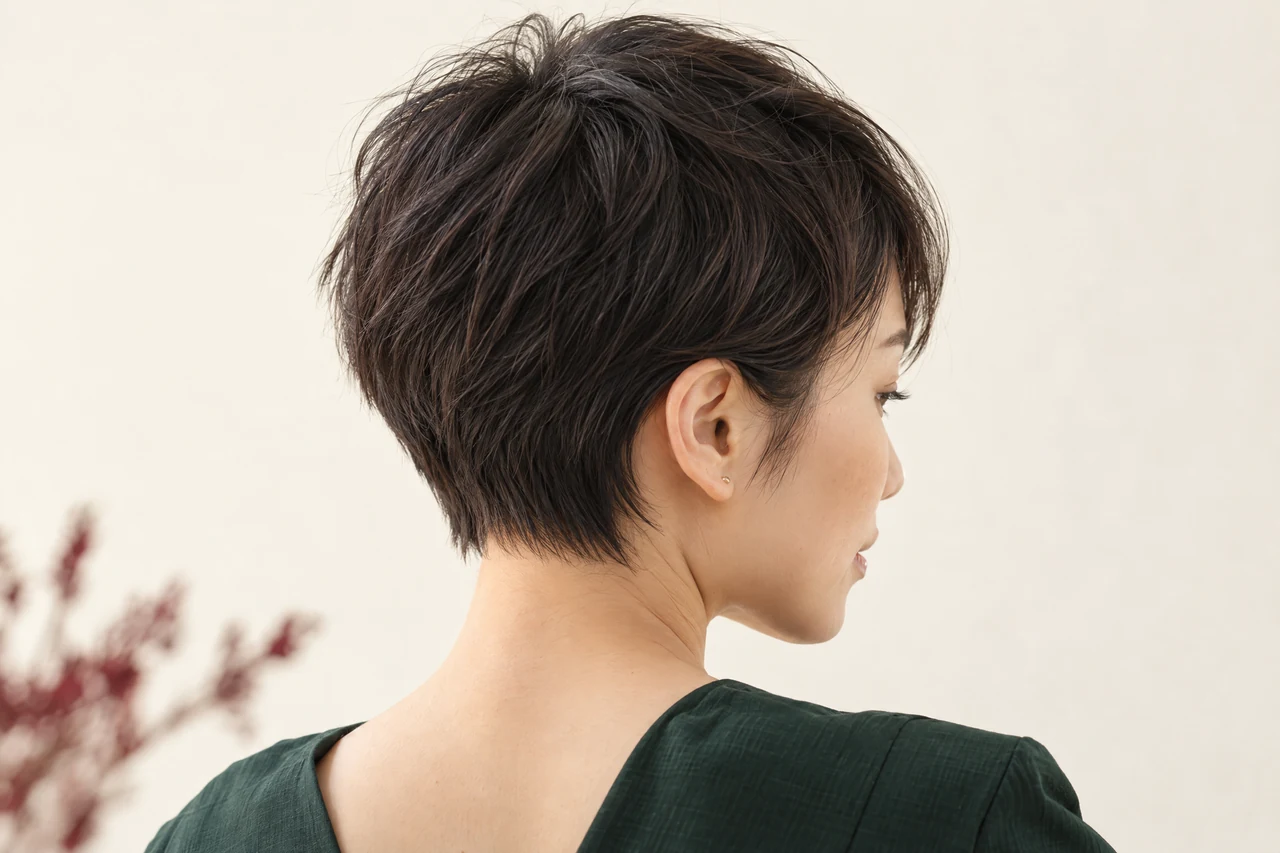
Mark the ear-side and upper lengths that must stay
A bob reference gives you a destination, but it cannot supply length that is missing today. Separate the fringe, upper side, short ear-side pieces and nape when discussing it. A long fringe may reach the cheek while the hair directly above the ear remains much shorter. Pulling the fringe across that gap can disguise it temporarily, but it does not mean a continuous side perimeter is ready to be cut. Ask which pieces currently support the outline and which are still catching up.
A bixie cut can be a useful intermediate reference because it compares retained side and crown length with a shorter back. Use the comparison to explain what you want to keep, not as an instruction to recreate a fresh short haircut. A softly rounded interim shape may suit your current lengths better than a strict bob line. The key question is whether its shorter sections can be left progressing towards your destination.
Protect length without declaring every end untouchable
Keeping the sides does not mean ignoring an individual damaged end or an obstruction around the eyes. Ask for any proposed exception to be shown before it is cut. The hairdresser can explain whether the change affects one small area or the length that gives the side its coverage. Avoid a broad request to blend everything: connecting every short piece to its neighbour may require removing useful length elsewhere. Agree on the protected sections first.
Compare a local nape adjustment with keeping the back
A local nape adjustment is worth discussing when the lowest back edge is the main reason the cut feels too long behind. Its purpose is to reduce the downward extension while leaving the ear-side and upper lengths available for growth. It need not mean shaving a high neckline or shortening the entire back. Ask to see the proposed boundary in the mirror. Taking the nape very short can create a different contrast with the upper hair, so the smallest acceptable change deserves consideration.
Retaining the back is another legitimate choice if you can live with the outline. It keeps length that may contribute to a later shape and avoids cutting solely because one section has reached the neck first. A broader restyle becomes a separate decision if the whole haircut is difficult to wear, not just the nape. Before arranging a women's haircut, explain whether you are enquiring about a staged adjustment or a new overall outline.
The confirmed price for women’s wash, cut & blow-dry is HK$480. That listed service does not establish a separate nape-only rate. Confirm the proposed service scope and actual charge when enquiring rather than assuming a smaller cutting area automatically means a different price. Equally, a request to preserve length should be part of the haircut discussion, not a promise that no section will need assessment. Make the planned boundaries clear before agreeing to proceed.
Give each trim a job rather than a deadline
In Hair.com’s professional pixie grow-out advice, consulting stylist Matt Fugate recommends a plan personalised to your goals and discussing trim frequency with your hairdresser. Apply that principle by naming the current problem, such as a low back edge that overwhelms the sides. It does not establish a universal trimming schedule. A future appointment can reassess the same protected sections without automatically repeating the previous cut.

Use the existing parting to test a wearable interim outline
Before changing the cut, let the longer top settle in the parting you already use. Those upper pieces may soften the space above the ear or make the side look more connected. Check whether that effect remains when you move your head, rather than arranging it for a still photograph. If the back still looks disproportionately long after the side is released, a nape discussion remains useful. Styling can change how lengths sit, but it cannot add the missing side length.
Compare both sides because a side parting usually distributes the upper hair unevenly. The fuller side may look ready for a bob while the lighter side still exposes the short pieces. You do not have to cut the fuller side down to match it. Decide whether the temporary difference is acceptable, perhaps with a relaxed tuck on one side. If your goal requires even ear coverage, explain that the shorter side needs to catch up before a balanced final perimeter can be assessed.
A hypothetical test for deciding whether to trim
Suppose the nape touches a shirt collar but the sides still sit above the bottom of the ears. With the usual parting and the sides untucked, the back may remain the dominant feature. That makes a local nape adjustment a reasonable option to discuss. If releasing a habitual tuck already gives an acceptable outline, retaining the back may be preferable. This is a comparison to try, not evidence that either approach will suit every head of hair.
Style gently while the short sections catch up
Aim for a routine that makes the transition tolerable without repeatedly forcing each short piece flat. Start by letting the hair settle, then guide the side in the direction you usually wear it. Use the mirror to judge the whole outline rather than chasing every small flick. If a clip helps, place it so it feels comfortable and releases easily. If the only acceptable finish needs prolonged heat work every morning, discuss that limitation before deciding to leave the shape unchanged.
The American Academy of Dermatology’s styling guidance recommends partial air-drying before styling and less frequent blow-drying to help limit damage. It also distinguishes most wet-hair handling from the needs of tightly curled or textured hair, which may benefit from brushing while wet. Keep those differences in mind rather than applying a straight-hair routine to every texture. Gentler handling supports care of the length you have; it is not a promise of faster growth.
Know what a silhouette adjustment cannot solve
A naturally lifting nape or springing side section may still move after a haircut. Assess its everyday dry position instead of asking for a line that only works when stretched straight. Do not add chemical straightening solely as a quick response to an uneven grow-out; ask whether a simpler adjustment or styling change is sufficient first. If the concern is unusual shedding, persistent scalp discomfort or another hair-care worry rather than the outline, seek healthcare advice instead of treating a trim as the solution.

Take a protected-length brief to your next enquiry
Prepare a short explanation that separates the annoyance from the destination: the back looks too long, the sides must continue growing, and the eventual aim is a bob with your chosen ear coverage. Include a destination photo and everyday views of your own hair. The haircut consultation for growing out hair guide can help you record those boundaries before a trim. For this particular stage, make the ear-side pieces explicit rather than referring only to total length.
Use these six preparation points to make the next discussion specific. You can then compare keeping the back with an agreed local change and ask which option best respects your side-length priority. Reassess when the side coverage, nape outline or daily styling becomes meaningfully different, rather than expecting a promised completion date. The useful outcome of the enquiry is a clear next-step decision, including what remains untouched and what needs confirmation before an appointment.
Check the protected sections before and after the plan is agreed
Ask to see where the shortest side pieces sit in your normal parting before cutting begins. Confirm that a nape adjustment will not become an unplanned all-over reset. After the finish, look at both side profiles with the hair released and in your usual tuck. If achieving the displayed outline requires a different daily routine, ask for that to be explained. A wearable interim shape must make sense outside the salon mirror too.
Compare the next adjustment by the length it preserves, not only how tidy it looks today.
| Option | Useful when | Main trade-off |
|---|---|---|
| Local nape adjustment | The low back edge dominates the dry side profile. | Reduces back extension but removes some nape length; agree the boundary. |
| Retain the back | The interim outline is acceptable without extensive styling. | Preserves back length but leaves the visible difference while sides grow. |
| Use the existing parting | Longer upper pieces can soften the short ear-side area. | Changes the visible arrangement, not the actual missing length. |
| Broader transition restyle | Several sections make the haircut difficult to wear. | May improve the overall outline but can cost useful length; assess separately. |
Your preparation checklist
- Bring front, both side and back photographs with your head level and hair dry.
- Show the ear-side pieces and upper lengths you want protected from routine shortening.
- Choose a bob reference that clearly shows your preferred ear coverage and side perimeter.
- Explain whether the main problem is the nape edge, side exposure or everyday styling effort.
- Describe your usual parting, ear tuck, glasses and the drying routine you will realistically use.
- Ask for the proposed cutting boundary, service scope and actual charge before confirming an appointment.
Frequently asked questions
How should I manage a pixie grow out when the nape outpaces sides?
Protect the ear-side and upper pieces that will contribute to the bob, then compare the dry back edge with them. If that edge creates the unwanted long-back appearance, discuss a local nape adjustment. If the outline is already wearable with your usual parting, keeping the back remains a valid option.
Will cutting the nape make the sides grow faster?
Do not treat a nape trim as a way to speed up the sides. Its purpose here is to change the visible balance while the shorter sections continue growing. Ask what length will be removed and how the remaining back will sit; a tidier outline is different from a growth-rate promise.
Can I ask for a bob now if my sides still expose the ears?
You can show a bob as your destination, but the available side length limits the perimeter possible today. Longer top pieces may soften the gap without producing the same coverage as the reference. Agree on an interim outline and protected areas rather than shortening everything in an attempt to create length that is not there.
Enquire about a pixie-to-bob plan that keeps the sides growing
Contact Vit So on WhatsApp at +85253057561 with your dry side and back photos, bob reference and the sections you want to keep. Ask whether a local nape adjustment or retaining the back is appropriate to discuss. The address is 252 Hollywood Road, Sheung Wan, Hong Kong. Confirm service scope, charge, appointment availability and your preferred consultation language; an enquiry is not a confirmed booking.
Start your WhatsApp enquirySources & further reading
- This Celeb Stylist Has The Best Tips About Growing Out A Pixie Haircut
Hair.com’s interview with consulting stylist Matt Fugate supports a grow-out plan personalised to your goals and a discussion of trim frequency. Its product recommendations are not recommendations from Vit So.
- Hair styling without damage
The American Academy of Dermatology explains gentler styling, including partial air-drying, reduced blow-drying frequency and texture-specific wet-hair handling. This is care guidance, not a timetable for reaching a bob.



