







Start a student haircut plan with real school rules
For a student haircut, share any rule about fringe length, hair touching a collar or tying it back. Do not assume that a popular style is permitted. School haircuts for girls may need enough length for a secure tie, while other students may prefer a shorter outline; the actual school rule and personal preference should guide the discussion.
Use the current handbook or a recent school notice rather than a friend's recollection. Separate an explicit requirement from wording that needs clarification. A rule that hair must stay clear of the eyes is different from a rule about the eyebrows. Likewise, requiring long hair to be tied back does not necessarily require it to be cut short. If the wording is unclear, ask the school before deciding on a major change.
Look at the proposed cut with the hair resting normally, not only swept aside for a photograph. Mention glasses and the uniform collar if they affect where the fringe or ends sit. Reference images can show a preferred shape, but the written requirements should remain available during the discussion. Leave room to talk about how the outline will change as it grows.
Your student haircut limits in plain words
Translate each requirement into something you can point to: the fringe must stay clear of this area, the ear needs this amount of exposure, or the back must sit above this collar. Then identify your own boundary, such as keeping enough front length to tuck behind an ear. Where the two conflict, resolve the choice before cutting rather than relying on a style name.

Match the cut to morning routines
Low maintenance haircuts for students are relative to the routine they can sustain. A short fringe may need frequent attention, while longer front pieces may require tying or clipping. Explain whether you air-dry, use a dryer or avoid styling products. A simpler routine is a design aim, not a promise of hair that never needs arranging.
Describe a normal school morning, including whether you wash your hair the night before and whether a dryer is available. A haircut that looks simple after careful brush styling may not suit someone who only combs their hair before catching transport. Ask which parts of the reference depend on added lift or shaped ends, and which parts come from the cut itself.
Keep the care routine realistic as well. The American Academy of Dermatology's hair styling guidance recommends letting hair partially air-dry before styling and reducing blow-drying frequency to help limit damage. It also notes that excessive heat can damage hair. This supports discussing less reliance on heated styling; it does not establish that a particular haircut will dry into the reference shape.
Drying time and styles you will actually use
Notice where your own hair becomes awkward after an ordinary wash: a fringe that separates, a crown that lifts or ends that turn at the shoulders. Bring that observation into the consultation. Ask for an explanation of the simplest suitable finishing method, and say if a suggested brush, product or repeated restyling step is not something you will use on school days.

Include sport and personal preferences
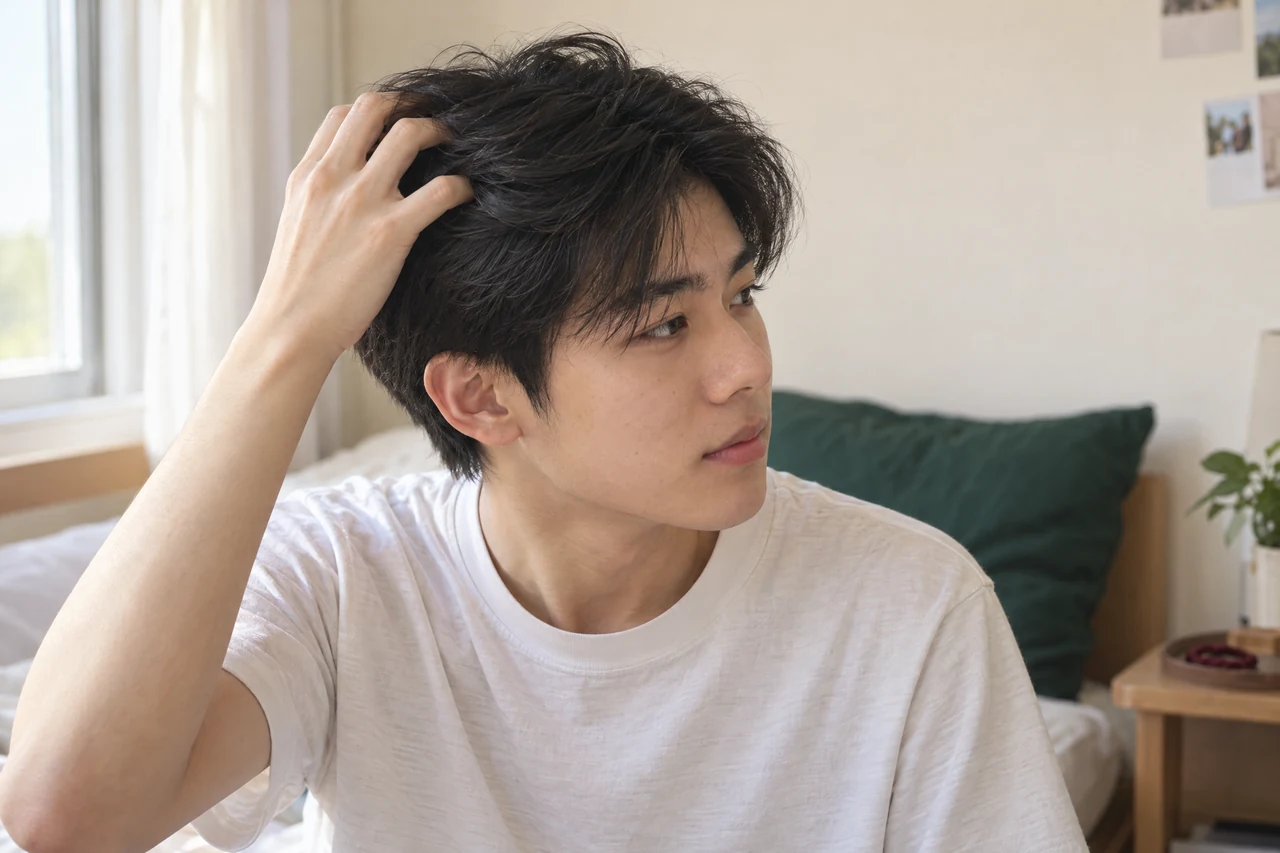
A teen haircut can balance school requirements with the teenager's preferred outline and daily activities. Mention swimming, helmets or frequent tying back when these affect comfort and length. The teenager's preferences and any parent or guardian requirements should be discussed together, without assuming a particular consent procedure or a fixed style for their age.
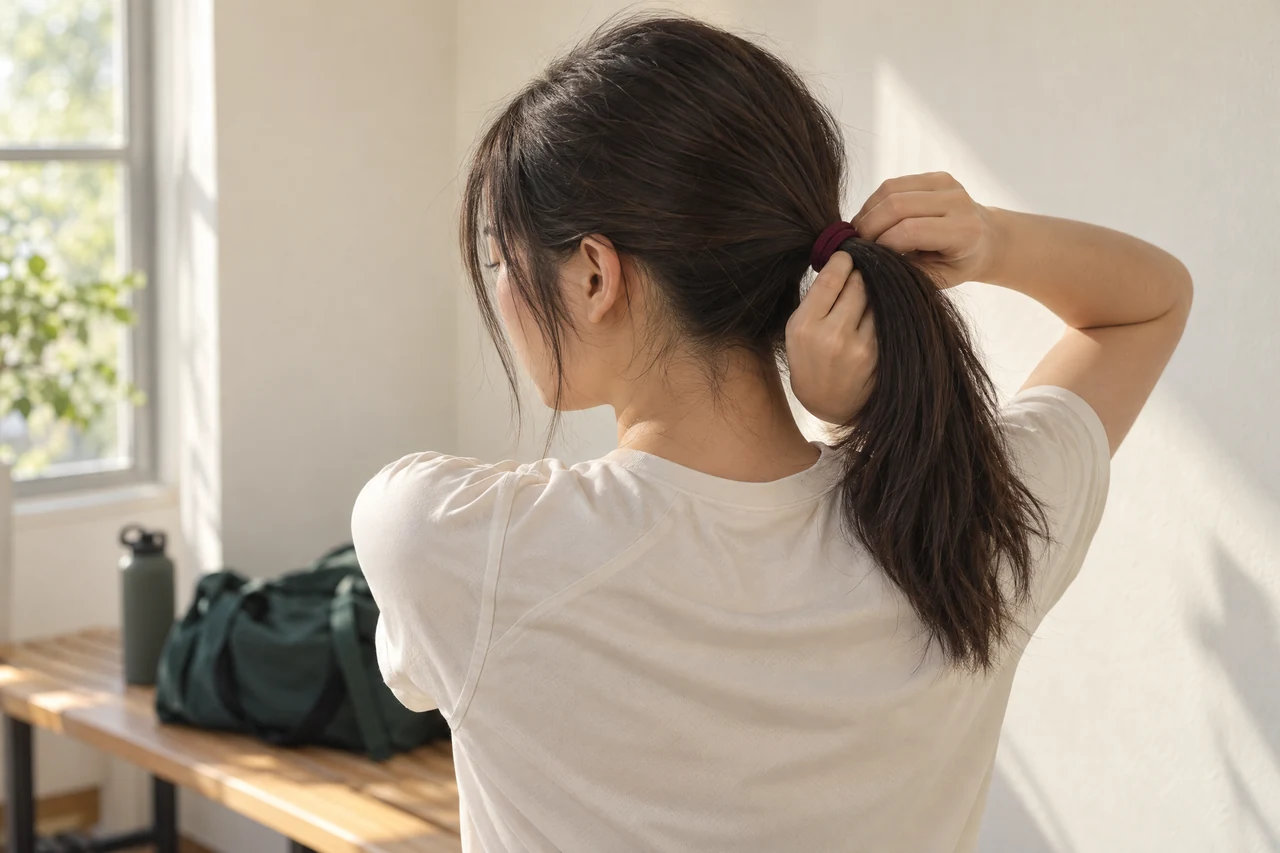
For PE or team practice, demonstrate the tie you normally use. Check whether the front pieces and nape reach it, rather than judging only the longest ends. Shorter face-framing pieces may look appealing when hair is loose but need clips during activity. If clips are restricted or inconvenient, preserving those pieces longer can be more useful than shortening the whole cut.
A secure tie should not mean pulling harder. The American Academy of Dermatology's advice on hairstyles that pull explains that frequent tight hairstyles can cause traction alopecia, including in children. It advises loosening styles and changing a style immediately if it causes pain, stinging or scalp crusts. Persistent scalp symptoms or hair loss need a dermatologist's assessment, not a tighter ponytail or a promised haircut remedy.
A teen's own priorities belong in the conversation
Ask the student what they most want to keep before discussing what adults would change. It may be a familiar fringe, coverage around the ears or a side part that feels like their own. For swimming, explain how you put the hair under a cap; for helmet sports, describe where a tie or bulky section interferes with equipment. The haircut discussion should accommodate the required equipment, not suggest altering its fit to preserve a hairstyle.
Check budget without assuming a student offer
Use the current price list as a starting point: men's wash, cut and blow-dry is HK$380, women's is HK$480, and the children's haircut category is HK$230 for under-12s. Being a student does not establish eligibility for that child rate or a discount. Ask which service, charge and any length condition apply to the proposed appointment.
Check the hair salon price list for published entries, then confirm the amount for your agreed scope.
When asking about the cost, give the student's age and describe the intended work. Confirm the applicable service category instead of treating a school uniform or student card as proof of eligibility. The published length note adds HK$200 for hair below the chest; ask which services the condition applies to before agreeing to the total.
Review kids haircut to check its service scope and the details to share before arranging the related work.
Budget also includes maintaining the chosen outline. Ask what changes are likely to make the fringe or edges harder to manage and whether a future tidy-up would be a separate service. A sharply defined short outline may need attention sooner than you would like, while a longer cut can still need work when tying becomes awkward. No fixed return schedule suits every student.
Ask which listed service applies
Keep your enquiry specific: state whether you want a general trim, a shorter shape or a fringe change, then ask what is included in the quoted service. If an extra treatment or styling service is suggested, decide whether it is necessary for your goal and request its charge separately. A clear budget can guide the discussion without assuming that student status changes the published prices.
Choose how much to change before the next school day
If this is the student's first substantial change, separate the overall length from the fringe, ear area and nape. You may want to retain a familiar front while reducing weight at the back. Alternatively, a fringe adjustment may address the main problem without changing the entire silhouette. Explain the result you want rather than asking for everything to be made shorter.
Review men's haircut to check its service scope and the details to share before arranging the related work.
For longer outlines, the women's haircut guide helps you prepare a discussion about retained length and daily styling. The service discussion should reflect the student's preferred shape and the applicable category, not an assumption that every student wants the same look.
Set a boundary before trying a shorter outline
Point out the shortest length you would feel comfortable with and explain any need to tie or tuck the hair. For waves or curls, discuss where the hair sits when dry instead of relying on its stretched length. Before school photos or a new term, allow yourself an opportunity to try the ordinary routine rather than making an unfamiliar change at the last possible moment.

Prepare a clear student appointment enquiry
Keep the written enquiry short enough to follow but detailed enough to answer. Include age, present length, the intended change and the important school requirement. Attach a reference photo with a note about the part you like; a picture without explanation may leave the retained length uncertain. Tell the salon if the student has concerns about tool sounds or head contact so you can ask what arrangements are possible.
Before you book a hair appointment, ask about parent or guardian involvement and how the proposed time and service will be confirmed. Mention any deadline caused by school or sport. An enquiry starts the discussion; it does not reserve a slot or establish the consent arrangements.
Agree on the plan before cutting begins
At the visit, restate the school restriction and the length you wish to keep. Make sure the student has an opportunity to explain their preference directly. If the proposed shape has changed since the original enquiry, clarify the work and charge again. Before leaving, ask how to reproduce the practical school-day finish and what to observe as the haircut grows.
Student haircut choices to compare against school mornings and PE
| Choice to discuss | Potential everyday benefit | Trade-off to check |
|---|---|---|
| Short outline with a tidy ear area | Less hair to gather during school-day activity | Check school wording about close sides and the effort needed to maintain the fringe. |
| Longer outline that reaches a usual tie | Keeps a familiar loose shape and a practical PE option | Preserve front and nape reach; the longest ends alone do not make every section tieable. |
| Shorter fringe with retained back length | Addresses front visibility without removing the whole length | Check the dry fall and whether the student accepts arranging the fringe in the morning. |
| Conservative trim before a school event | Retains a familiar routine while tidying selected areas | A trim may not resolve a shape that already conflicts with the school's requirements. |
Your preparation checklist
- Bring the current school wording and clarify any ambiguous requirement with the school before the appointment.
- Identify the length you must retain, including the front and nape sections needed for your normal sports tie.
- Describe your actual wash, drying and morning routine, including tools or products you will not use.
- Select a reference image and explain which feature you like and which feature you do not want copied.
- Share age and proposed work, then confirm the applicable service, inclusions and any length-related charge.
- Ask about parent or guardian involvement and wait for explicit appointment confirmation before travelling.
Frequently asked questions
Is there a confirmed student haircut discount?
No student discount is confirmed in the published input. Ask which current service and charge apply rather than treating student status as an offer.
Can a haircut be guaranteed to meet my school rules?
Bring the school's actual wording and discuss it before cutting. A style photograph alone cannot establish compliance, and this guide does not speak on behalf of any school.
What should a student under 18 ask before booking?
Ask about any parent or guardian involvement, the applicable charge and the appointment confirmation process. An age or student label does not establish the consent arrangements.
Does a student who plays sport always need short hair?
Not necessarily. The useful choice depends on the activity, equipment, school requirements and whether the necessary sections reach a comfortable tie. Demonstrate your usual sports hairstyle so the discussion considers loose front pieces and the nape, not just the total length.
What if I want a new look but cannot spend time styling before school?
Explain your ordinary routine before choosing the reference. Ask which features require brush styling or products and which changes can work with your natural dry pattern. Consider changing one area first while retaining the lengths that already work for school and sport.
Bring your school-day needs into the haircut discussion
Enquire with Vit So in Sheung Wan with the student's age, school requirements, desired length and usual routine. Ask for the applicable service and charge, and clarify any parent or guardian arrangements. Wait for confirmation of the appointment rather than treating the enquiry as a booking.
Start your WhatsApp enquirySources & further reading
- Hair styling without damage
American Academy of Dermatology guidance on partial air-drying, reducing blow-drying frequency and avoiding excessive heat in an everyday routine.
- Hairstyles that pull can lead to hair loss
American Academy of Dermatology guidance on repeated tight hairstyles, children's susceptibility and loosening or changing painful styles.



