







Highlights for short hair: proportion matters
A broad ribbon can occupy much of a short hairstyle, whereas a fine strand may create a smaller accent. Look at how much of the outline would appear lighter, not only at the individual strand size. Confirm the areas to retain deeper colour so the design relates to the cut rather than overwhelming it.
Start by identifying what you like about your present shape. If a blunt bob feels polished because its edge is dark and continuous, ask whether that edge should remain predominantly dark. If you enjoy the separation of shorter layers, a few lighter strands may help distinguish them. These are different goals even when the reference images share the same warm brown tone.
Width, spacing and contrast need to be discussed together. Closely spaced fine strands can create an overall lighter impression, while a wider strand surrounded by plenty of dark hair can read as a distinct accent. Instead of equating fine highlights with subtle colour, describe whether you want the whole bob to look brighter or only selected areas to catch attention.
Review hair highlights to check its service scope and the details to share before arranging the related work.
Highlights for short hair along the visible outline
Look at the front, profile and back rather than judging the crown alone. A short nape may have little visible length for a flowing line, whereas the longer side of an angled bob can display more colour. Ask which areas will remain dark between the brighter strands. If the underlying shape is still undecided, compare a bob haircut by its front length and end line before choosing how colour should follow it.

Balayage on short hair: room for a transition
A shorter length leaves less distance between the root area and the ends. A long, gradual reference may therefore need a different interpretation on your cut. Mark where you want brightness to start and how much darker length you want to retain, then assess whether that transition is realistic on the hair you plan to keep.
A shoulder-skimming bob and an ear-length crop do not offer the same working length. On the bob, there may be room to see a darker upper area, a softened change and brighter ends. On the crop, those areas may sit very close together. The useful question is not whether short hair is allowed to have balayage, but whether your preferred distribution remains legible at your chosen length.
In Grazia's discussion of the balayage bob, colour expert Christel Lundqvist advises deciding on the haircut before placing colour and explaining the hair's natural fall. She also notes that very short crops may suit a different freehand approach from longer bobs. This supports adapting a reference, rather than assuming one long gradient can be reproduced on every short cut.
Review balayage hair colour to check its service scope and the details to share before arranging the related work.
Balayage on short hair with a limited length to work across
Separate the reference into tone and placement. You might like its soft beige colour without wanting all of your bob ends lightened. Alternatively, you may want brighter ends but prefer a warmer shade. Ask the colourist to point out the proposed start of brightness on your dry hair. If the remaining distance is too short for the transition you imagine, discuss a smaller contrast or selected lighter strands rather than insisting on the same picture.

Face-framing colour on a bob
Face framing highlights on a bob can place brightness close to the cut edge, where even a small section may stand out. Compare both sides with your everyday parting and look at where the front strands end. A planned trim or tucked-behind-the-ear style can change the apparent width and reveal of those areas.
Decide whether you want a fine line beside the face or a more obvious front panel. On a compact bob, a light section running to the chin can become a prominent part of the front outline. Keeping neighbouring hair darker can preserve its separation; adding more brightness beside it changes the impression towards a generally lighter front. Neither is automatically better, but they should not be confused in the enquiry.
Bring your glasses if you wear them daily. The arm of the frame and your usual ear tuck can move or conceal front strands. Also explain whether the fringe stays forward, sweeps sideways or is regularly clipped away. The front colour should be assessed in those positions, not only with every strand arranged neatly for a reference photo.
Check the ends and the usual parting together
A side part does not show identical amounts of hair on each side. Ask for a balanced visible effect with your normal parting rather than assuming equal section widths will always look equal. Check where the front ends land when loose and when tucked. If you change your parting often, say so before placement is agreed, because a section that is exposed on one side can sit beneath darker hair when moved across.

Plan around trims and layered ends
Describe your next intended haircut before deciding on the light areas. Trimming may remove a brighter end or expose a section concealed by longer layers. This does not make short-hair colour impossible, but it changes the design discussion. Confirm achievable contrast and suitable processing rather than treating every short haircut as the same canvas.
An ends-focused design is especially dependent on the trim plan. If most of the brightness sits in the length you intend to remove, colouring those ends first may not serve your goal. Conversely, a highlight extending further up a retained strand may remain visible after its tip is cut. Ask which bright areas would still be present after the proposed haircut, not simply how much colour the current hair can hold.
Layers add another decision. Shortening a dark covering layer can reveal lighter hair underneath; shortening the lighter layer itself can reduce the accent. Discuss any change to the back shape, graduation or front length along with the colour. The sequence of cutting and colouring should be agreed for the actual work, rather than chosen from a universal rule.
Review women's haircut to check its service scope and the details to share before arranging the related work.
Colour placement should survive the length you choose
For a bob you intend to maintain, map the colour against the next end line as well as today's length. For a bob you intend to grow, consider how the darker root area and retained lighter lengths will relate as the shape lengthens. The guide to growing out highlights can help you distinguish keeping existing brightness from repeatedly adding new light areas.

Preview the colour in your everyday short-hair routine
Check the proposed pattern with the finish you normally wear. If you usually let your bob settle naturally, do not rely only on a curled reference that separates every light strand. If you normally smooth the ends under, examine how that turn affects the visible edge. Colour remains on the strands, but styling changes which surfaces face the viewer.
Use comparable lighting when looking at your current colour and your inspiration. A bright reflection can make one section appear lighter without showing its underlying depth clearly. Save a reference for its placement and another for its tone if that explains your preferences more accurately. Include an example of a contrast you would find too strong, so the limit is clear.
Use the 6-step preparation checklist below to turn the reference into a practical short-hair enquiry. These are editorial preparation steps, not a measurement of how much colour your hair needs.
Compare loose hair with the ear tuck
Show the colourist the quick movements you actually make: sweeping a side back, pushing the fringe away or lifting the crown with your fingers. An ear-area accent can be nearly hidden when the hair falls forward yet visible when tucked. Decide whether that change is the attraction or whether you want brightness visible without moving the hair.

Match upkeep and processing to the short cut
Short length does not make a lightening plan automatically gentle. Tell the colourist about previous bleach, permanent colour, home colour, straightening and perms, including treatments on the ends you intend to keep. The American Academy of Dermatology's colouring guidance explains that larger lightening changes require stronger peroxide and can cause more damage. Use this as a reason to assess your existing hair and target, not as a formula for choosing a hairstyle.
After colouring, keep the haircut schedule and colour schedule separate. A trim may be needed to maintain the bob outline without requiring fresh lightening. A change in tone may need discussion even when the placement still looks right. For ongoing care of the retained lengths, balayage aftercare offers a related starting point; ask for instructions suited to the products and processing actually used.
For budgeting, ask what the quote includes: the haircut, lightening, tonal work and any agreed preparation or care. A small visible accent is not enough information to establish the total work. Share the desired outline and trim plan first, then confirm the scope, price and appointment time. An enquiry about the design is not confirmation that a particular technique or result has been booked.
Keep the darker areas intentional as the cut changes
At a follow-up, describe what has changed: the end line is shorter, the front accent is less visible, or the retained light strands look warmer. These observations lead to a more useful discussion than simply asking for more highlights. The next step might be preserving the current placement, adjusting tone or redesigning a selected area after the haircut.
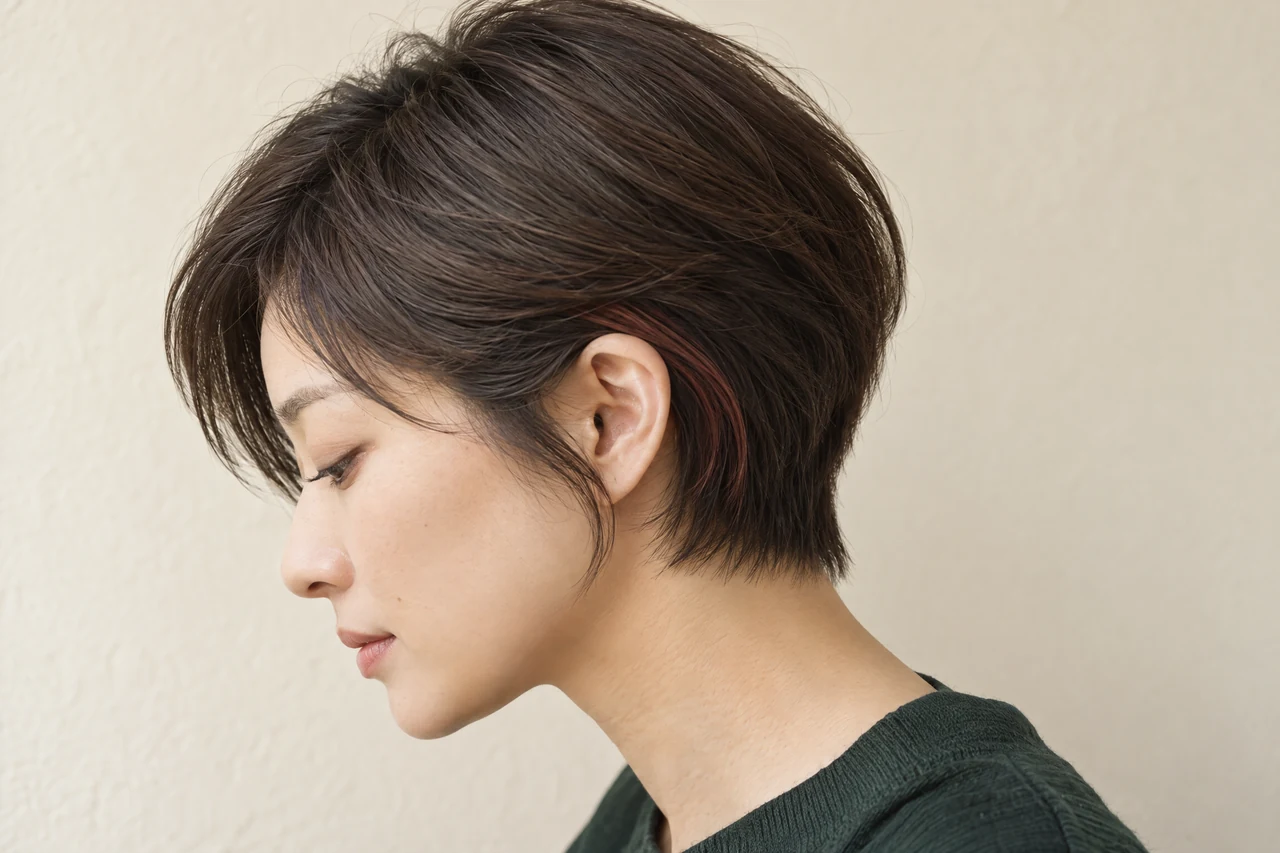
Short-hair placement choices to compare against the retained haircut
| Design direction | What to inspect on your cut | Main trade-off |
|---|---|---|
| Fine spaced highlights | Light strands against the bob edge and the dark hair between them | Can create smaller accents, but dense spacing may still make the whole cut look lighter |
| Broader front accent | Front end length, fringe position and everyday parting | Gives a distinct focal area but may occupy much of the short front outline |
| Short balayage transition | Distance from the intended darker area to the retained ends | Offers a softened change where length permits, but cannot simply duplicate a long gradient |
| Ear-area accent | Visibility with hair loose and tucked behind the ear | Allows a changing reveal, but may be concealed in the loose style |
| Ends-focused brightness | Which lighter tips will remain after the next trim | Emphasises the edge but can lose much of its visible area when shortened |
Your preparation checklist
- Bring current front, side and back photographs showing the bob or crop in its normal dry shape.
- Mark the front length and end line you want to retain, including the next intended trim or grow-out goal.
- Separate the reference's tone from its placement, and identify a contrast or width you do not want.
- Show your usual parting, fringe position and ear tuck; bring glasses if they affect how you wear the sides.
- List previous colour, bleach, straightening and perms on the hair that will remain after cutting, plus any past product reactions.
- Confirm the proposed lighter and darker areas, the included work, quote, appointment time and aftercare before agreeing to proceed.
Frequently asked questions
Can I use a long-haired balayage photo as a reference?
Yes, to show tone or the type of transition you like. The placement needs interpretation for your actual length rather than a promise of the same gradient.
Do short highlights always look bold?
No. Strand width, spacing and contrast affect emphasis. Use the cut outline to describe how much brightness you want to see.
Will a haircut remove all the colour?
It depends on where the light areas sit and how much length is removed. Share the trim plan so remaining colour can be considered before processing.
Plan brightness around the short haircut you want to keep
Send Vit So your current bob or crop photos, a colour reference and your next trim goal when enquiring in Sheung Wan. Explain whether the priority is a darker end line, a visible front accent or a softer transition. The enquiry can help clarify feasible placement and the work to quote; availability and the appointment still need confirmation.
Start your WhatsApp enquirySources & further reading
- Coloring and perming tips for healthier-looking hair
General hair-care guidance about the damage associated with larger lightening changes; not evidence of aesthetic suitability or an endorsement of a salon.
- How To Master The Ultimate Balayage Bob À La Lily James, Kaia Gerber & Co
Colour expert advice to decide the haircut before placement and explain natural hair fall, with a distinction between very short crops and longer bobs.



