






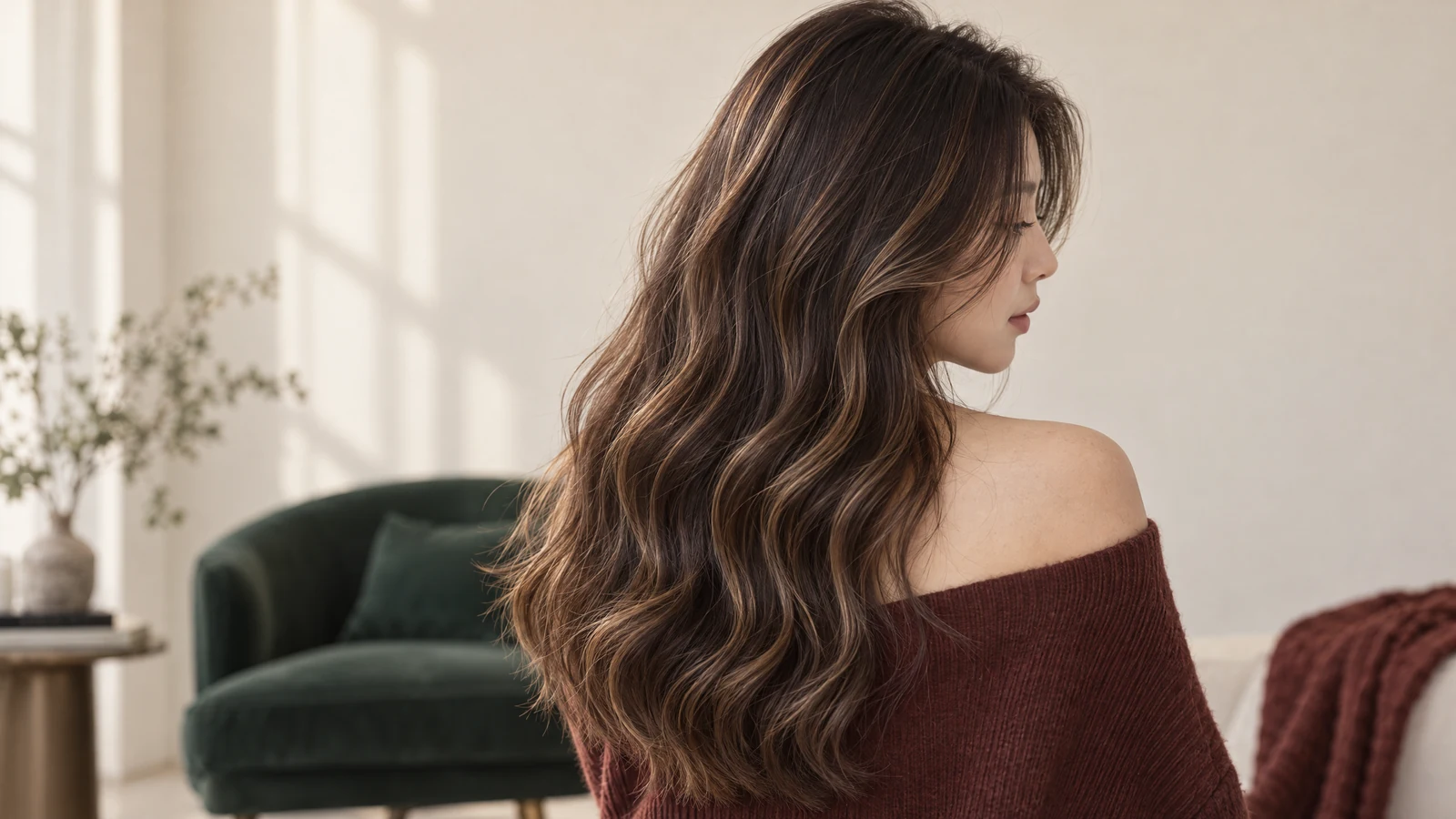
Partial vs full highlights with hair worn loose
Look at the parting, crown and sides with your hair in its everyday position. Partial highlights may concentrate brightness in selected visible areas, while fuller coverage considers additional sections. Neither term specifies exact strand density. Mark areas that matter to you and ask where the plan would leave the original base visible.
Start with the hairstyle you actually wear to work or on a normal weekend. Long hair resting behind the shoulders presents a different view from hair brought forward over a jacket. If your main aim is a lighter outline beside your face, adding brightness deep in the back may contribute less to that particular view. If you want colour visible across the whole loose shape, a front-only reference is not enough to describe the goal.
Coverage describes where strands are selected. Density describes how closely those lighter strands sit together. Contrast describes how different they look from the darker base. A concentrated, high-contrast partial design can look more striking from the front than a widely distributed, low-contrast full design. Keeping these choices separate helps you avoid asking for extra coverage when what you really want is a different spacing or shade.
Review hair highlights to check its service scope and the details to share before arranging the related work.
Partial vs full highlights at your usual parting
Show your usual parting without creating a special salon finish first. Then move it to the other side if you sometimes switch. A section that sits underneath today may become a visible surface with a different parting. Ask whether the proposed brightness follows only your current line or accommodates that change. You can prefer a darker alternative view; the important point is to choose it knowingly rather than discover it afterwards.

Half-head language and the back of the hair
Half head vs full head highlights often concerns whether the underneath and back areas are included. A half-head label does not define identical boundaries across salons. Take a back and side photograph, then confirm the proposed sections, especially if your haircut has layers that expose different areas as the hair moves.
Instead of treating half head as an exact division, ask the colourist to identify the lower edge of the proposed work. Does placement stop above the ears, continue into selected back sections, or include strands close to the nape? Those are consultation questions, not standard boundaries you can infer from a menu. A section map is more informative than the label alone when you are comparing different proposals.
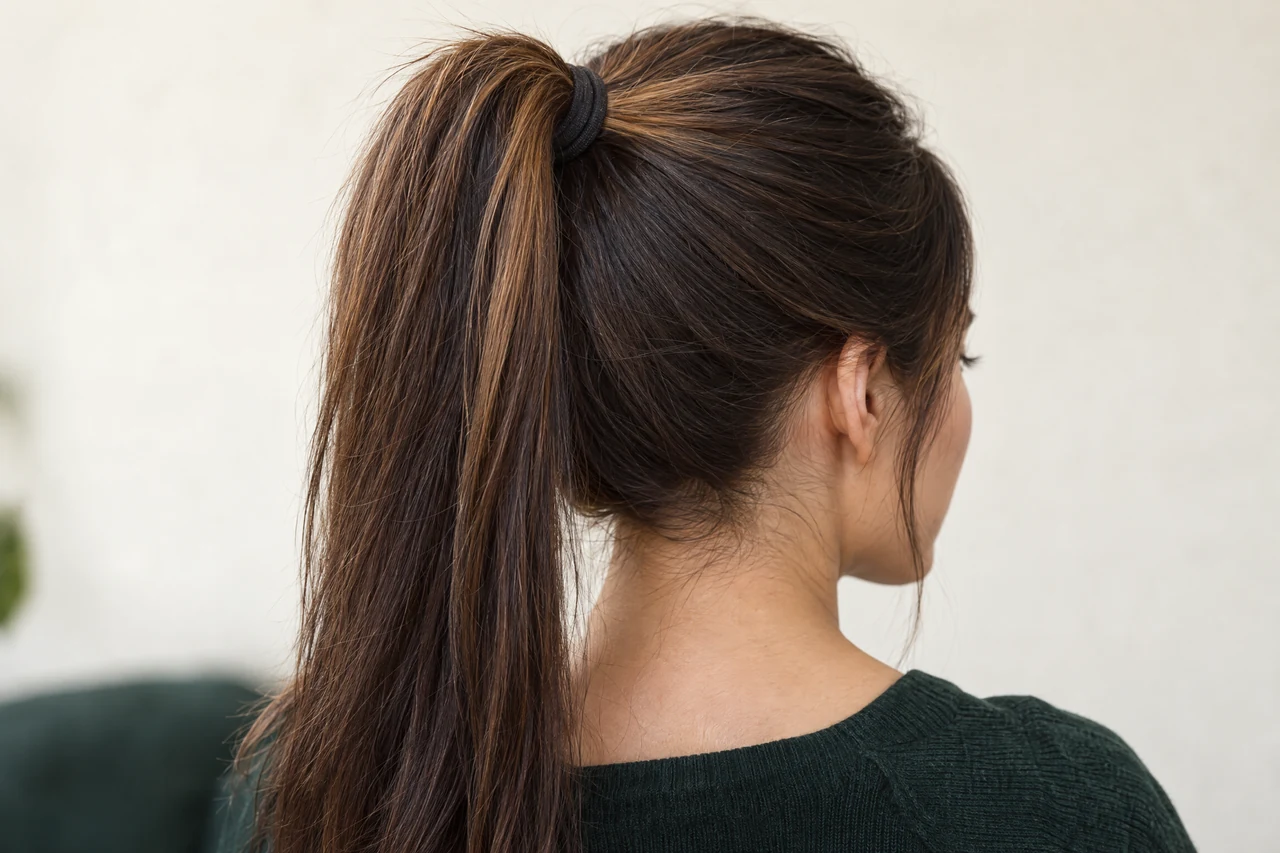
Tie your hair as you normally do, whether that is a low ponytail, high ponytail or a loose bun. Notice the hair pulled upward from the nape, the sides above the ears and the hanging lengths. Wanting brightness in the ponytail does not necessarily mean wanting a bright hairline all around. Explain which view matters most, and whether you like the darker underside as part of the design.
Continue with highlights that show in a ponytail for that specific comparison and the preparation questions it raises.
Check the coverage boundary from more than one angle
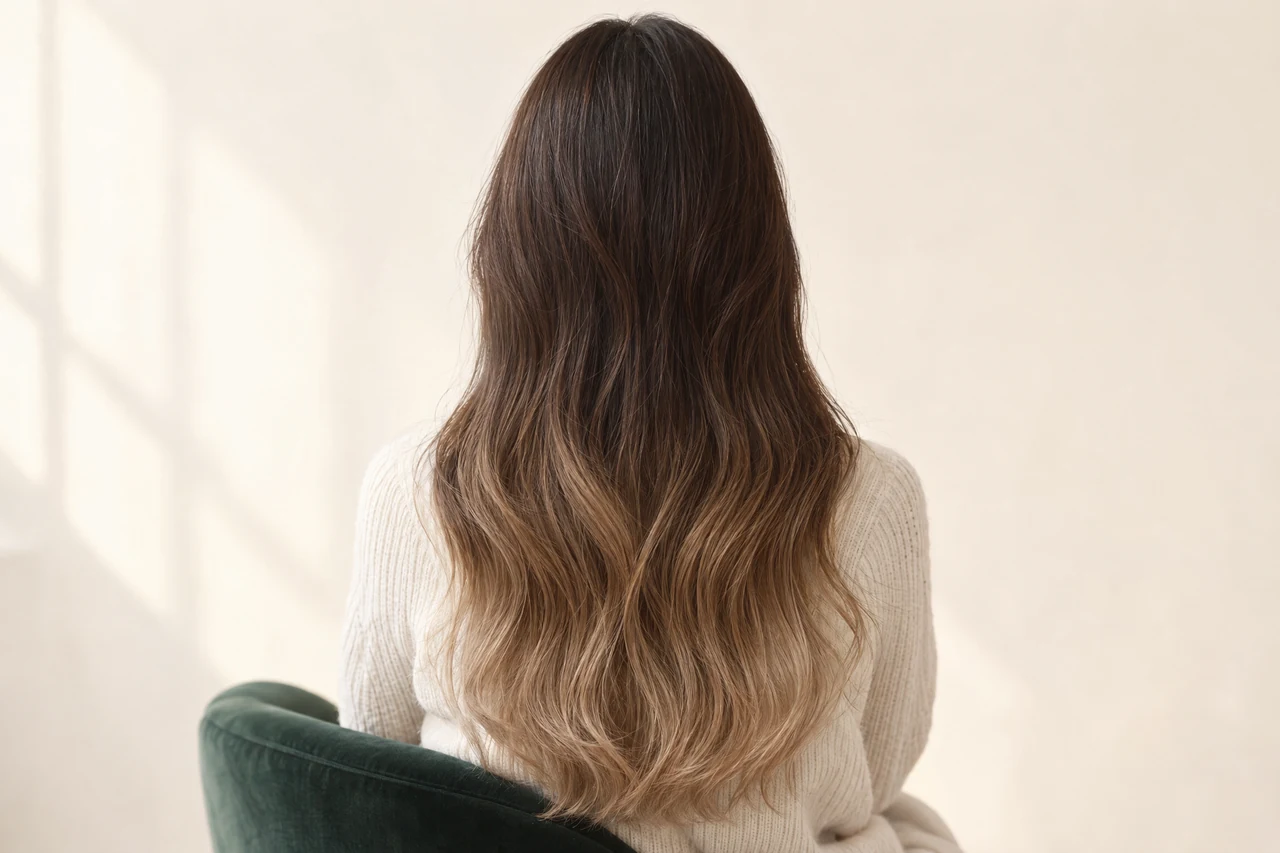
Check the back with your hair resting naturally before lifting a surface layer to inspect underneath. On layered hair, the boundary can appear in the moving ends as well as near the head. Straight hair may show a different arrangement from a curled reference photograph. Use both views to discuss whether you want a soft change between light and dark areas or a deliberately visible contrast. Neither preference automatically requires every section to be lightened.
The same scope question for balayage
Full vs partial balayage compares the areas receiving painted brightness, not a compulsory amount of lift. A selected-area design might address a front or surface goal; more extensive placement might be relevant to the back and lengths. Ask how the plan looks with your usual styling and which darker areas would remain.
In its full and partial balayage guide, Wella Professionals describes partial placement as concentrating on top and front sections, while full placement spreads brightness more widely through the mid-lengths and ends. This is a useful starting point for discussing distribution. Your own proposal should still identify the selected areas rather than rely on the terminology alone.
Also decide where the brighter colour should begin along each selected strand. Wider coverage does not have to mean lightness close to every root. Conversely, a small selected area can contain a prominent light piece extending high beside the face. Discuss the root area and the lengths separately so that a request for more back coverage does not accidentally become a request for a lighter root appearance.
Review balayage hair colour to check its service scope and the details to share before arranging the related work.
Surface brightness versus lightness through more sections
If your reference is a curled back view, ask what its light and dark pattern might look like with your hair straight or air-dried. Turning strands and lifted layers can reveal colour that a smooth surface conceals. A useful request names the darker areas you want to keep, such as the root zone or underneath, as clearly as the areas you want brighter. This gives the colourist a practical brief for discussing partial or wider placement.
Compare quotations on the same basis
Scope is only one quotation variable. Existing colour, required lightening and separate tone work can affect the proposed service. The published full-head highlight prices are HK$1,600 and HK$2,200, with the applicable option to be confirmed. Do not assume an unlisted partial or half-head price by dividing either figure.
Describe the desired coverage before asking which quoted option applies. Keep the same target lightness and retained base in both proposals; otherwise you may be comparing a subtle surface refresh with a much larger colour change. Ask what the quotation includes, including whether tone work, a haircut or a finish forms part of that proposal. Do not assume an inclusion simply because it appears in a separate package.
If budget is the main reason you are considering less coverage, name the areas you would be comfortable leaving darker. This gives the discussion a realistic priority: perhaps the front view matters most, while the back can remain close to the base. Reducing scope is only useful if the retained darker areas still suit your daily hairstyle. Ask for the revised total before deciding that a selected-area plan offers better value.
For a clearer breakdown of included work, use how to compare hair colour quotes alongside your agreed coverage notes.
A smaller area does not automatically mean a lower total
A small area with old artificial colour or a demanding lightness goal may need a different approach from fresh, modestly brightened strands. Share your previous colouring and lightening history, including home products, rather than describing all darker hair as natural. The quotation should follow an assessment of the proposed work. A menu name alone cannot establish how much preparation or separate colour adjustment your selected areas need.

Refresh the areas that have actually changed
When returning to an existing highlighted design, first identify what now bothers you. Is the parting darker because of new growth, are the lengths warmer than you prefer, or does the back no longer match the front? These observations point to different discussions. Repeating full highlights just because that was the original service may not express the current goal.
For a maintenance-focused decision, read growing out highlights and decide which existing light areas you would like to preserve. Bring a recent photograph as well as your original inspiration. The comparison helps separate a new placement request from a wish to keep the design while changing only its tone or visible regrowth.
Consider the condition of selected strands, not just the area size
The American Academy of Dermatology's colouring and perming advice notes that cosmetic hair treatments can cause dryness and brittleness. A smaller coverage area therefore should not be treated as proof that the selected strands can tolerate further lightening. Tell the colourist about roughness or breakage and show the previously lightened lengths. The same guidance notes that sun exposure can weaken and fade treated hair and recommends a wide-brimmed hat outdoors; care still matters whether the brighter sections are partial or extensive.
Turn your coverage preference into a clear enquiry
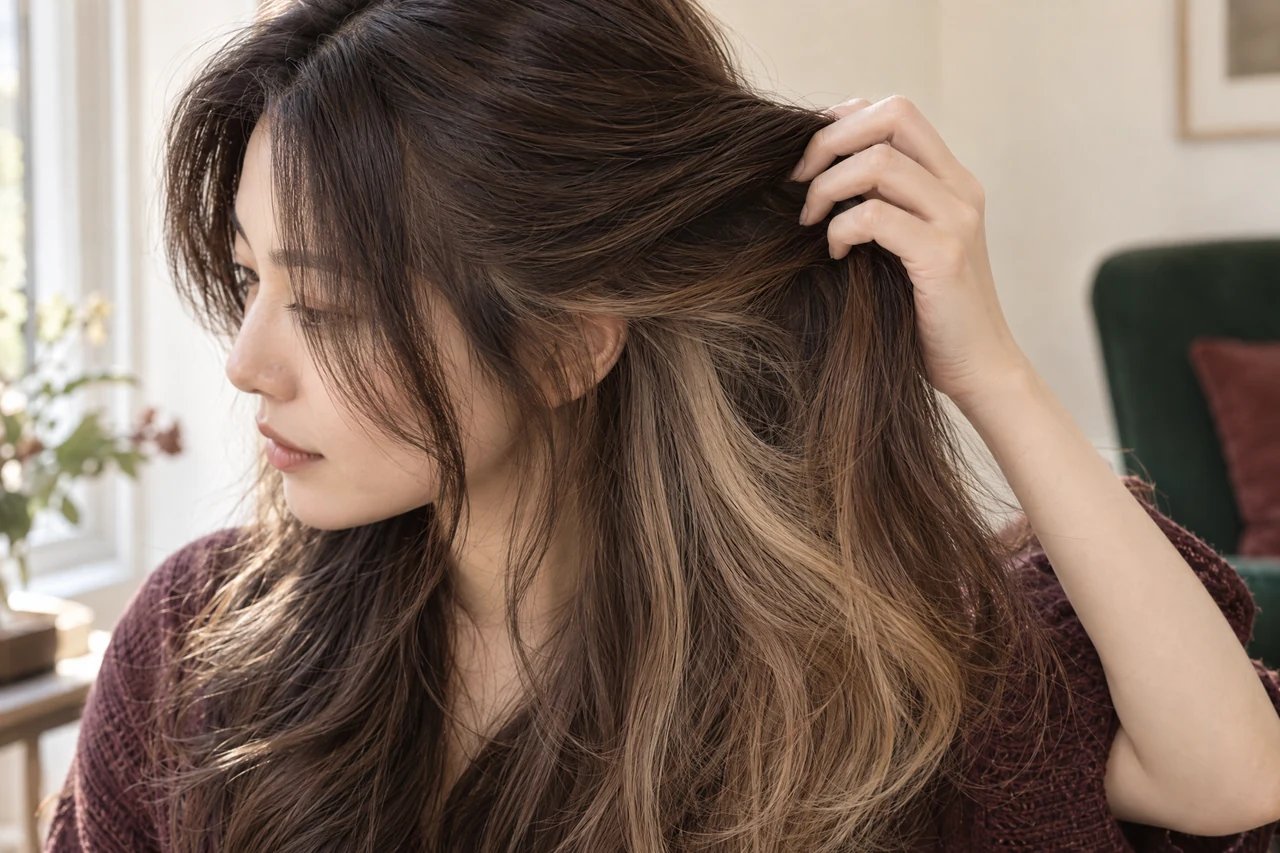
Prepare photographs that show your current hair rather than relying entirely on inspiration images. Use similar lighting for the front, side and back views, and include your ordinary tied-back style. Keep the photographs unfiltered so the darker base and existing light areas remain visible. A beautifully styled reference can explain a preference, but your own photographs explain where that preference would need to work.
A clear enquiry can say: I want brightness beside my face and across the top when my hair is loose, but I want to keep a darker underneath. If your priority is different, describe the back or ponytail first. You do not need to diagnose a technique or select a service name in advance. Naming the view, desired contrast and areas to retain gives the consultation a useful starting point.
Agree on what will remain dark before adding more light
Before accepting the proposal, check it against the hairstyle you wear most often. Ask where untreated base will remain visible and whether a planned haircut would expose a new boundary. Confirm the coverage and quotation together, then ask what follow-up care the proposed colour would need. The best scope is the one that addresses your important views without adding areas you do not actually want changed.
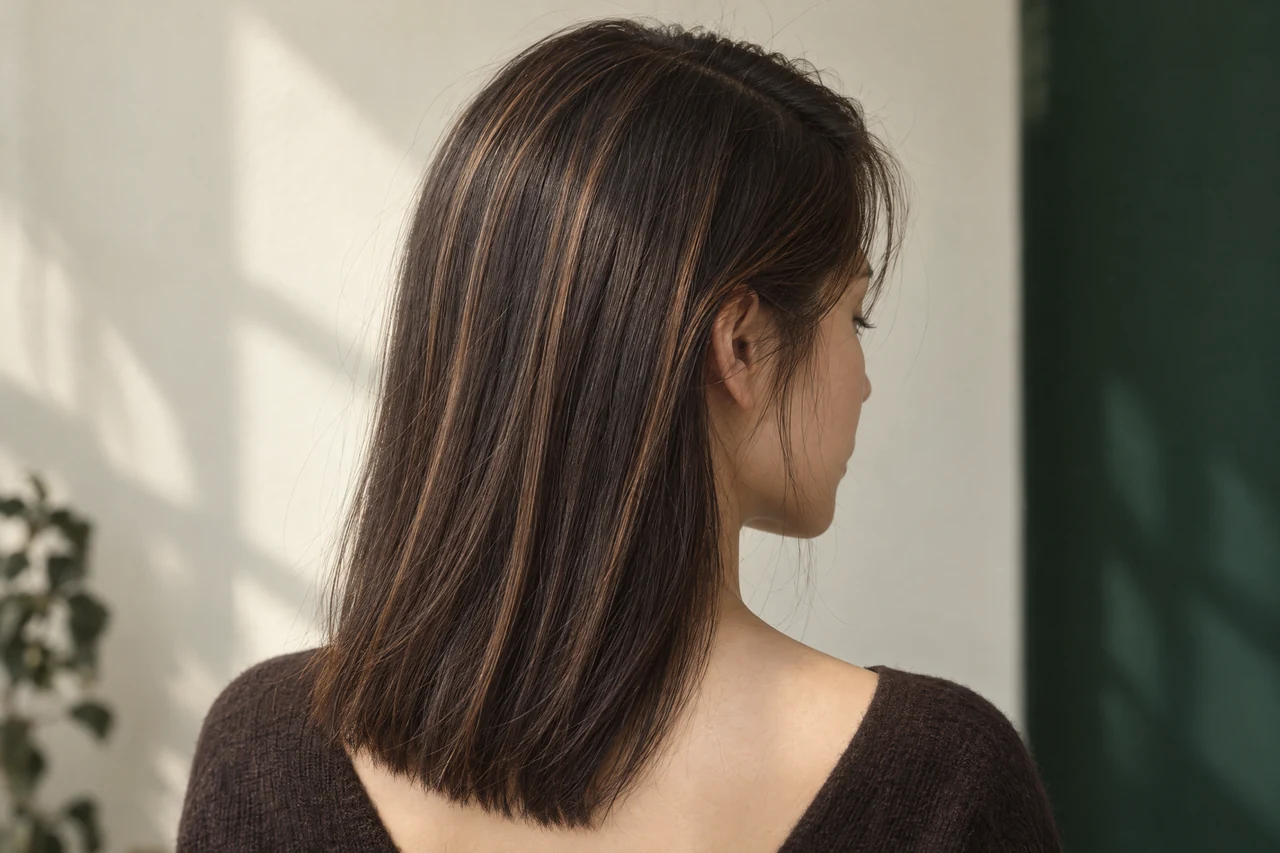
Compare proposed highlight areas against the views you wear every day
| Coverage description | What to discuss | View to check |
|---|---|---|
| Selected partial highlights | Which front, parting or surface areas receive brightness, and which remain dark | Loose hair at the usual and alternative parting |
| Half-head highlights | The actual lower boundary; the name alone does not specify it | Side and back views, then hair lifted or tied |
| Full-head highlights | How broadly strands are distributed, with density and contrast agreed separately | Loose back view and the visible underside of a ponytail |
| Partial balayage | Selected painted sections and where brightness begins along the lengths | Surface movement and the face-framing view |
| Full balayage | Wider placement through the back and lengths, with darker areas deliberately retained | Back, side and everyday dry texture |
Your preparation checklist
- Photograph your current hair from the front, side and back in similar light, including your usual parting.
- Show your normal ponytail or bun and identify whether the hairline, underneath or hanging lengths should look brighter.
- Mark the areas you want to keep darker; distinguish them from areas you want lightened.
- Share previous tinting, bleaching and home-colour details, plus any roughness or breakage you have noticed.
- Ask for the proposed coverage boundary, strand density and target contrast to be explained separately.
- Confirm the applicable quotation, included work and aftercare before treating an enquiry as an agreed appointment.
Frequently asked questions
Should I choose full coverage if I wear a ponytail?
Not automatically. Show your usual ponytail and the areas you want visible; selected placement may address the goal, but the scope needs assessment.
Will a partial service leave an obvious boundary?
That depends on strand placement, haircut and contrast. Ask to discuss the boundary in both your usual parting and tied-back style.
Can I use partial work to refresh an existing design?
Possibly, but new growth and previously lightened strands should be considered separately. Confirm which areas need attention rather than repeating the original service name.
Discuss coverage that works loose and tied back
Send Vit So your current front, side and back photographs, your usual tied-back style and the areas you want brighter. For an enquiry in Sheung Wan, include your colour history and budget so the proposed scope and quotation can be discussed. Availability and the appointment still need confirmation.
Start your WhatsApp enquirySources & further reading
- Full vs Partial Balayage: What’s the Difference and Which Is Best for You?
Professional colour-brand explanation of selected top/front placement compared with wider mid-length and end placement.
- Coloring and perming tips for healthier-looking hair
Hair-treatment dryness and brittleness, and sun protection advice for dyed, bleached or permed hair.



