






Brand relationship: OWNSTRAND and Vit So are brands under the same owner. This article provides selection guidance, not an independent review or product test. Confirm styles, supply and visiting arrangements directly with OWNSTRAND.
Start a treatment wig choice with a liner with wearing needs
Wearing a wig during treatment is an optional appearance choice. Ask your care team about any restrictions that apply to your scalp, planned appointments or treatment routine before arranging a fitting. OWNSTRAND's chemotherapy wigs page takes an appearance-focused approach and directs medical questions to healthcare professionals. As a sister brand under the same owner as Vit So, it is a route for product enquiries here, not an independent recommendation or a medical provider.
Be specific about what you need to do while wearing the wig. You might want coverage for a short journey, an office conversation or a family meal, rather than continuous wear. Ask whether removal will be needed at appointments and whether anything should avoid contact with your scalp. You need not explain your diagnosis to a shop to describe a practical limitation. Clinical instructions belong with your care team; a fitter can discuss construction within those limits.
Macmillan notes that wig lining can irritate the scalp and that a thin cotton liner may help, but also warns that a liner can sometimes make the wig move more. [1] That trade-off is the reason to compare a complete wearing combination rather than assume an extra layer improves everything. If wearing is unsuitable at present, postponing the fitting or discussing alternative headwear is a valid decision, not a failure to find the right wig.

Make wig liner and cap contact questions specific
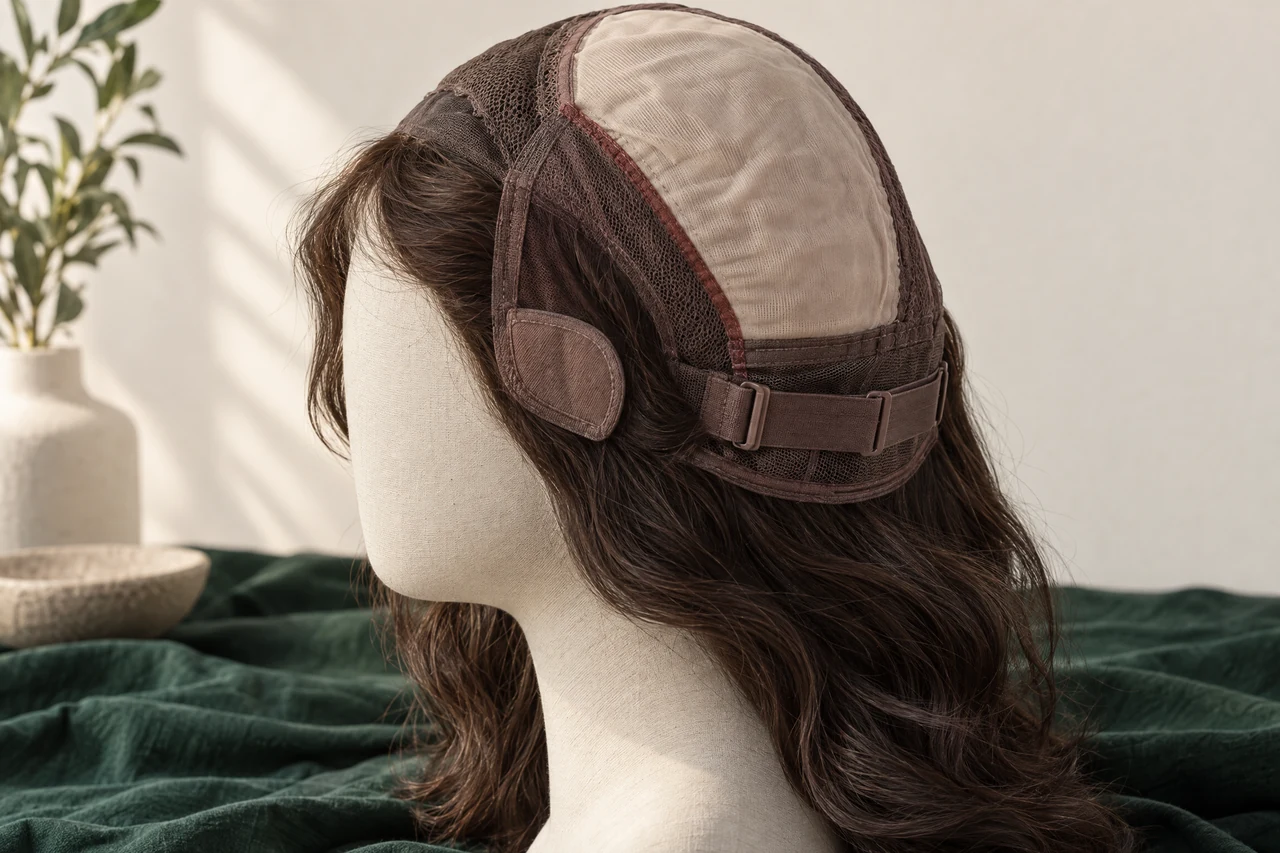
Ask to see the inside of the exact cap being considered, alongside the proposed removable liner. OWNSTRAND's women's wigs page separates full-head coverage from toppers and presents different constructions and sizes for individual designs. Use it to identify alternatives, then ask which inner surfaces, seams and edges would sit against you with the liner in place. A construction label or hairstyle photograph cannot show whether that particular combination will feel acceptable.
A cap is the base that carries the hair; a separate liner is an additional piece worn underneath it. Built-in lining is not necessarily a removable liner. Ask the fitter to identify all three when relevant, including the front edge, ear tabs and rear adjustment area. Establish where the added liner ends, because it may leave some cap edges exposed. A smooth crown panel does not answer a question about an uncomfortable edge near the ear.
For full coverage, Vit So's guide to full head wigs can help you frame the coverage decision before narrowing the cap details. Once the coverage is settled, explain contact in ordinary location-based terms: left temple, front edge or nape, for example. Keep questions tied to the item shown. Do not assume that every hand-tied cap, mesh panel or human-hair style has the same inner finish or works with the same accessory.
Trace the contact path before adjusting anything
If a fitting is appropriate, ask the fitter to show where the liner seam and edge will lie before putting the wig over it. Then check whether the cap's own edge lands on the liner or directly on the scalp. Describe a fold or pressure point rather than asking for general extra softness. This makes a cap-contact conversation useful without asking a shop to diagnose why your scalp feels different.
Compare fit with the intended liner in place
Do not choose a size from the category name alone. The American Cancer Society advises checking the manufacturer's size chart because sizes can vary between brands, and it highlights adjustment as hair is lost. [2] Tell the fitter whether a liner is part of your intended routine and ask how the maker wants the head measured. A liner adds another layer, so the useful assessment is of the planned combination, not a borrowed size label.
If your care team permits it, begin with the liner sitting as its instructions describe and have the cap positioned according to its own directions. Note the front, both ear areas and the nape while sitting normally. Then, if appropriate for you, make a gentle everyday head turn and look down as you might when reading. These are observations, not a stress test. Stop rather than repeatedly adjusting through discomfort or trying to prove the wig cannot move.
When the cap feels different after adding a liner, ask what changed before tightening the straps. Is the liner folded, is an edge displaced, or does the cap need a different size or adjustment? More tension is not a reliable substitute for an appropriate fit. If standard choices leave unanswered fit requirements, use the custom made wigs guide to organise those requirements, then confirm which adjustments a particular supplier can actually provide.
Change one element and keep the observation
Record the exact cap and liner first. If the fitter proposes an alternative liner or setting, compare one change at a time so you can describe the difference. Only compare wearing without a liner if that is appropriate for your scalp and consistent with clinical advice. A note such as 'the rear edge shifted when I looked down' is more actionable than 'this size was wrong' and does not claim a lasting result.

Check warmth and removal, not just initial softness
Initial touch is only one part of the decision. Macmillan discusses moisture absorption with a cotton liner, removing the wig when possible to allow air to reach the scalp, and washing the wig and liner as advised by a wig specialist. [1] Those are general considerations, not proof that a named fabric will keep you cool. Ask how the proposed layers should be cared for and whether you can manage changing or removing them during your intended outing.
During an appropriate fitting, notice warmth as well as texture and movement. Describe whether the combination feels different after you have sat for a while, without setting a universal trial duration. A calm fitting room cannot reproduce a humid commute or every day of treatment. If your routine includes glasses or a mask, ask whether their usual positions interfere with the edges. A combination that needs repeated repositioning may warrant another option even if the hairstyle looks right.
Ask for a removal demonstration using the maker's intended handling points. Make sure you understand how the wig and liner come off without pulling at an awkward edge or your remaining hair. Do not add adhesive as a quick answer to slipping. Macmillan specifically advises checking tape choice and removal with a doctor or nurse during cancer treatment. [1] Any proposed fastening should be confirmed separately; a liner does not make adhesive suitable or prove that removal will be comfortable.
Use four checks to decide what deserves another look
Use four comparison dimensions: contact, fit, warmth and removal. This is an editorial checklist for organising an enquiry, not a clinical test or a scoring system. For each dimension, write what you observed, what remains unknown and who can answer the question. A seam position belongs in a construction discussion; new soreness or a change in your scalp belongs with your care team. Keeping those separate helps you decide whether to continue, change the proposal or pause.
An example makes the distinction clearer. You may find the proposed liner pleasant to touch, but notice that its rear edge folds when the cap is put on. You do not yet know whether a different liner shape would help. That is a reason to ask for another combination, not to buy the cap and hope tighter straps solve it. Conversely, an initially manageable fitting still leaves questions about home handling and your treatment-related wearing needs.
Before committing, ask for separate care directions for the wig and the liner. Vit So's wig care guide can help you organise material-specific handling questions, but the actual maker's instructions take priority. The American Cancer Society warns against hairdryers or curling irons unless heat resistance is confirmed. [2] Do not use a styling tool to speed up liner drying or assume that human hair means every base, accessory and fibre blend tolerates the same heat.
Confirm the sample and viewing arrangement before travelling
Ask whether the specific cap you want to discuss can be viewed and whether bringing your proposed liner is possible. The wig shop Kwun Tong page identifies OWNSTRAND's only store at Unit 2103, 50 Hoi Yuen Road, Kwun Tong, Hong Kong, and asks visitors to confirm arrangements before travelling. Its sample-viewing and custom measurement descriptions do not confirm that a particular cap or liner is present, or that every fitting request can be accommodated.
A useful enquiry describes the style or product reference, the liner you intend to use and the contact question you need answered. For example: 'Can you show the inside of this cap and discuss where my liner edge would sit? I also need to understand removal and the adjustment range.' Ask which details can be answered remotely and which require a visit. Confirm the quotation, supply and any adjustment arrangements rather than treating a catalogue image as a reserved item.
Keep your next step proportionate to what you know. If construction details remain unclear, request those details first. If a combination is worth exploring and a suitable viewing arrangement is confirmed, bring the care instructions and fit notes you already have. If symptoms or treatment instructions have changed, check with your care team before proceeding. The aim is a better-informed appearance decision, with room to reconsider, not a promise of comfort or a medical benefit from a liner.
Four checks for the proposed liner and cap together
| Check | What to compare | Question before proceeding |
|---|---|---|
| Contact | Where liner seams, cap edges and ear tabs sit; which areas remain uncovered | Can you show the exact inner surfaces and explain this contact point? |
| Fit | Cap position and liner folds during ordinary, medically appropriate movement | Is this size and adjustment suitable for the intended liner, without extra tension? |
| Warmth | Your initial experience of both layers and whether a removal break is practical | What care and changing routine applies to this particular combination? |
| Removal | The instructed handling points and whether help is needed | Can you demonstrate removal, and is any proposed fastening separately appropriate? |
Your preparation checklist
- Ask your care team about treatment-related wearing restrictions before arranging a trial.
- Identify the exact cap, removable liner and any built-in lining rather than relying on a category name.
- Record front, ear and nape contact points, including liner edges or folds.
- Confirm maker-specific sizing and observe the planned combination without compensating through overtightening.
- Ask for separate care and removal instructions for both pieces.
- Confirm sample availability, viewing arrangements, quotation and supply before travelling or committing.
Frequently asked questions
Should everyone having treatment wear a wig liner?
No universal requirement follows from the guidance. Macmillan says a thin cotton liner may help with irritating wig lining, but may also increase movement. [1] Ask your care team about your wearing needs and assess the actual pairing if a fitting is appropriate.
Does a liner mean I should order a larger cap?
Not automatically. Ask how the exact maker specifies sizing and assess the intended liner with the cap. Brand sizing varies. [2] A fold, displaced edge or inappropriate adjustment can feel different from a genuine size issue, so describe the location before deciding to change sizes.
What if the cap slips more after I add the liner?
Pause and ask the fitter to check the liner position and cap fit rather than immediately tightening or adding tape. Increased movement is a possibility noted by Macmillan. [1] Any adhesive proposed during treatment needs separate advice about suitability and removal from your doctor or nurse.
Can I assume OWNSTRAND has the liner and sample I need?
No. The assigned pages describe product enquiries, samples and Kwun Tong arrangements, not guaranteed liner stock or every displayed cap on hand. Name the item and proposed liner when enquiring, and confirm what can be viewed and discussed before travelling.
Bring a contact question, not just a hairstyle photo
Ask Vit So about the face-framing outline and style blending you want to discuss. For the actual wig, liner compatibility, samples and Kwun Tong visit arrangements, enquire with OWNSTRAND through the guides already linked above. Keep medical wearing questions with your care team, and leave room to choose another combination or postpone.
Start your WhatsApp enquirySources & further reading
- Macmillan Cancer Support — Wigs for cancer treatment
Thin cotton liners may help with irritating cap lining but can increase movement; care and tape-removal guidance are general considerations, not individual guarantees.
- American Cancer Society — Wigs for Hair Loss
Check the exact brand's sizing and fitting instructions, consider adjustment as hair changes, and use heat tools only when resistance is confirmed.



