







Brand relationship: OWNSTRAND and Vit So are sister brands under the same owner. This commissioned guide provides selection information, not an independent review or product test. Confirm styles, supply and visit arrangements directly with OWNSTRAND.
Locate the boundary for a men's front hairpiece with long side hair
Begin by separating the area you want covered from the hair you want to keep visible. OWNSTRAND's men's hair system for receding hairline guide starts with this boundary rather than assuming every receding front needs a full wig. For your enquiry, identify the central front, left temple and right temple separately. Ask where the proposed base would finish beside each retained side section, and whether its actual shape covers the area you described.
Look at your hair when it is dry and arranged as you normally wear it. A long section swept across a temple can make the front appear covered while leaving a gap underneath when you move it. Photograph the front and both three-quarter views without stretching the hair across an opening. These pictures describe your starting point; they cannot establish fit or replace measurement against a particular piece. Keep the unstyled view as well as your preferred finished outline.
Do not choose the smallest piece simply because you want to preserve the most hair. A footprint that ends before the area you want covered may leave you relying on the side hair to complete the coverage. Equally, a wider base may cover hair you hoped to retain in the visible style. Write down what must stay visible, what may sit beneath a base, and what you would accept changing before comparing candidate dimensions.
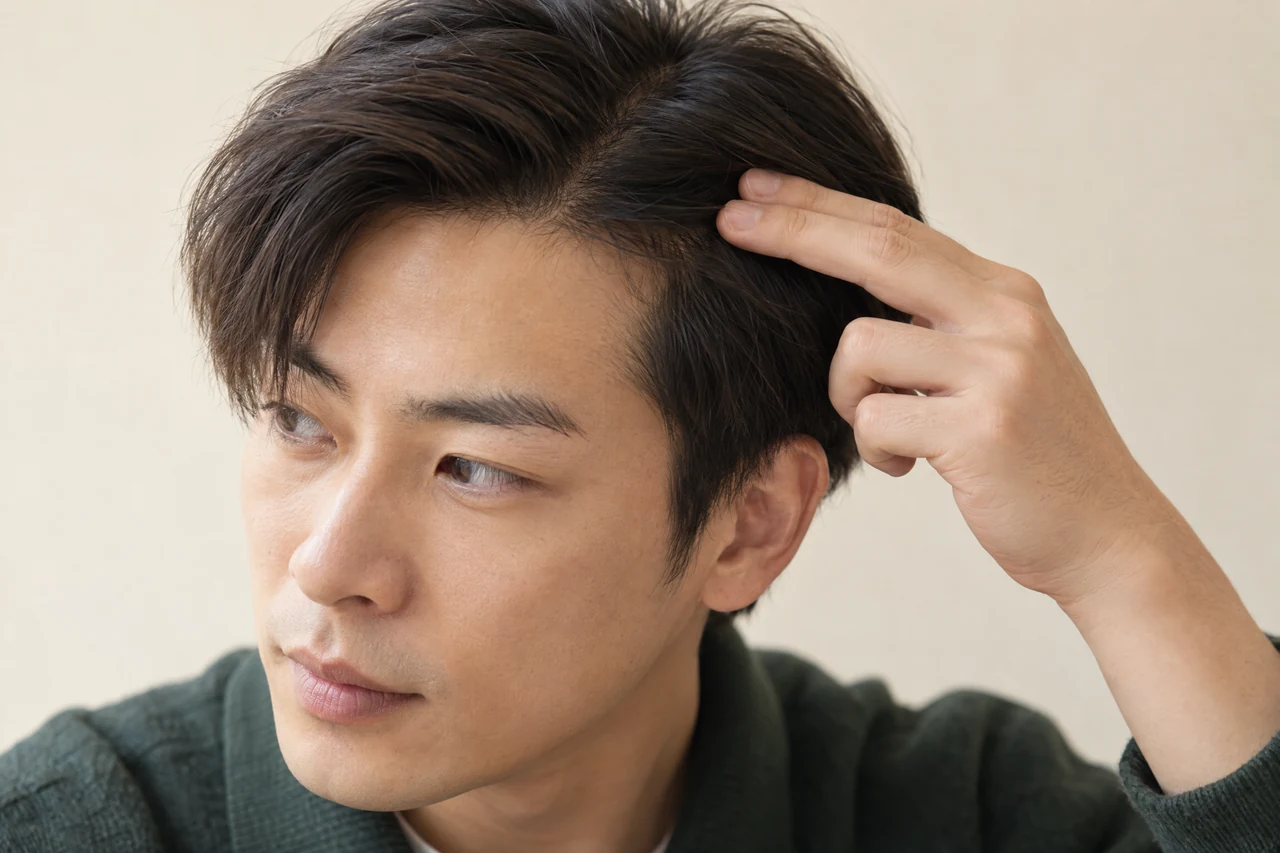
Follow the temple transition in men's hairpieces on both sides
The temple join is the area where the piece's hair meets your own hair beside the front edge. OWNSTRAND's men's hairpiece page asks shoppers to compare the base footprint and its relationship to existing hair. Describe whether your side hair falls towards the face, down towards the ear or back away from the forehead. Ask whether the candidate's hair can follow that direction within its confirmed styling limits, rather than assuming any piece can be redirected.
Inspect left and right independently. You may have a strong part on one side and a softer forward fall on the other, so a symmetrical front does not necessarily complete both joins. Look for a sudden change in root lift or a section that points across the neighbouring hair. A useful enquiry names the mismatch precisely: the front sweeps back while the temple falls forward, for example. That gives a fitter something more concrete than a request to make everything natural.
Use familiar fringe language to explain your preference. Vit So's men's fringe haircut guide can help you distinguish a forward fall from a side sweep and describe how much forehead you normally show. Bring that preference into the coverage discussion instead of adopting a heavily closed fringe solely to hide the join. If your preferred direction is not possible for the actual item, compare another candidate before deciding whether to change your own haircut.
Direction matters before the ends are trimmed
Matching the ends does not answer what happens near the roots. Ask to see how the piece sits at its intended position before planning a blending cut. If the temple section only lies alongside your own hair when it is pulled firmly into place, flag that limitation. A haircut can change length and outline, but should not be treated as proof that an unsuitable footprint or fixed styling direction can be corrected.
Compare fuller coverage without assuming it solves every join
Consider fuller coverage if you want a consistent new outline rather than retaining the side hair as a visible part of the style. OWNSTRAND's men's wigs guide focuses on whole-head options, unlike a front-only piece. This changes the comparison: instead of blending a new front into visible sides, you assess the complete silhouette and how your existing hair is accommodated underneath. It is an alternative to discuss, not an automatic upgrade in fit or appearance.
There is also a distinction between a larger partial piece and a full wig. A larger partial design still has an edge that meets retained hair somewhere, even if that edge is farther from the front. Ask which area the specific candidate covers and where its boundaries would sit. If your concern is limited to the front, a broader piece needs a practical reason, such as coverage that the smaller footprint cannot provide, rather than a vague promise of greater realism.
A full wig introduces its own fitting questions when you have long side hair. Ask how that hair would be placed beneath the cap without a bulky outline or uncomfortable tension. The American Cancer Society notes that sizing can vary between brands and advises checking the relevant size chart. [1] That supports checking the actual candidate rather than relying on an average label. It does not provide measurements for a frontal hairpiece or establish your personal fit.
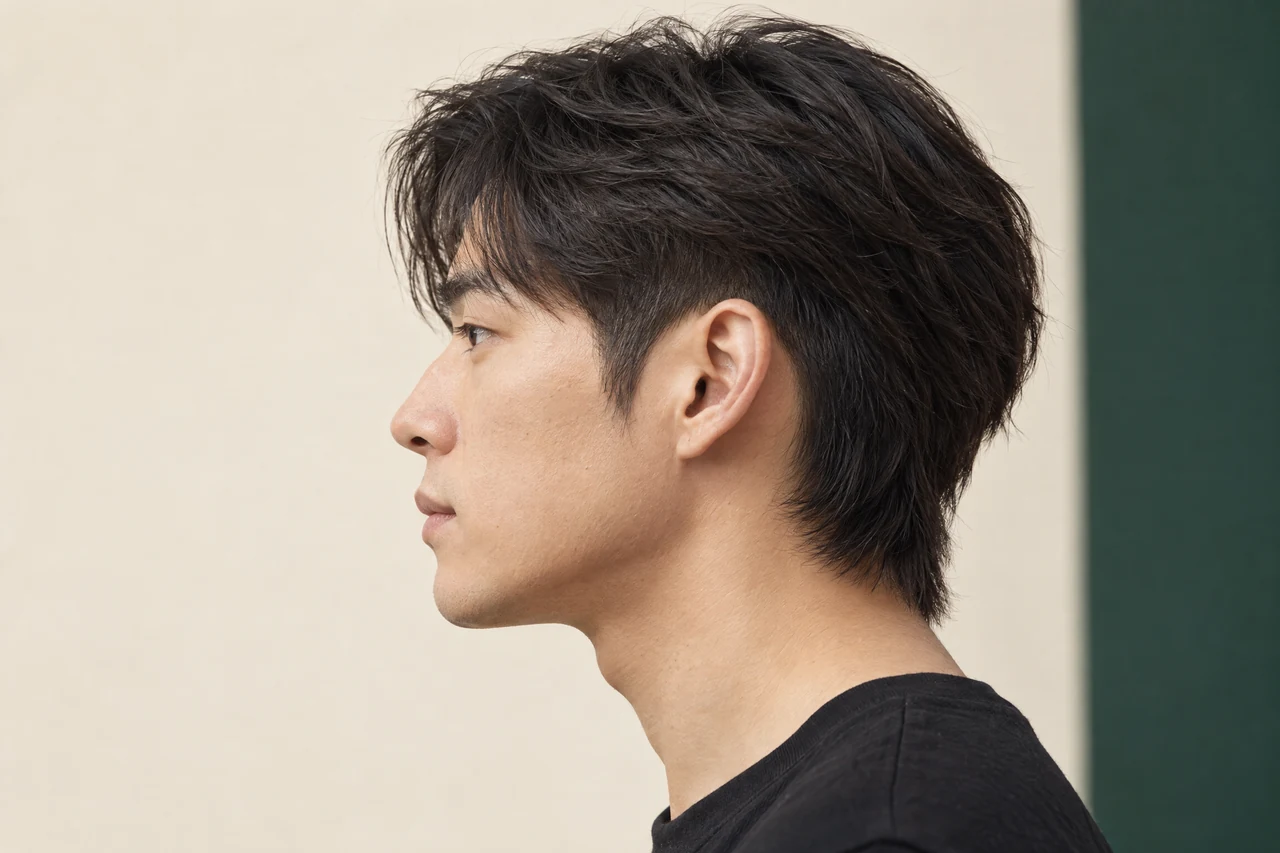
Match the side length, density and colour you actually keep
Long sides are not one uniform length. The short hair near the temple may sit differently from the longer section above the ear, while the back may extend farther again. Discuss the shortest visible section that must meet the piece as well as the longest ends. Ask which hair would be trimmed and which would remain untouched. Avoid cutting your sides in advance to match a photograph, because the candidate's fitted position may change where a blending adjustment is needed.
Compare the apparent amount of hair at the boundary as well as its length. A full-looking front next to flatter retained sides may read as two separate sections even when the ends align. Look for that contrast from a three-quarter angle, not just straight ahead. Vit So's hairpiece fitting page provides a related coverage-and-blending discussion. Use it to prepare your styling questions, while confirming who would handle the actual product fitting and any permitted alteration.
Check colour beside the hair that will remain visible, including any grey at the temples. The American Cancer Society recommends comparing hair and wig swatches in natural light. [1] Ask to see the candidate under comparable light rather than trusting a screen image alone. Also distinguish a colour mismatch from a difference in shine or texture: a similar dark tone can still look separate if one section is smooth and the other is wavy. Confirm what matching options exist for that item.
Open the fringe and assess the outline during ordinary movement
Assess the join with the amount of forehead you intend to show. A forward fringe, loose side sweep and brushed-back front expose different parts of the boundary. First view the everyday style, then gently move the fringe as you normally would, following the fitting instructions. Note whether the temple join remains acceptable or whether you must close the fringe immediately. This is especially relevant if you habitually lift the front with your hand during conversation or when putting on glasses.
Step back to compare the whole outline rather than inspecting only a tiny patch beside the hairline. A front that looks convincing close up may still seem too raised or heavy beside the long sides. The guide to how to make a wig look natural offers a broader outline comparison. Here, use that perspective to check whether the front, temples and side lengths belong to the same intended hairstyle, without treating a pleasing mirror view as a guarantee of wear performance.
Ask about the fibre before using styling tools to force a match. The American Cancer Society explains that synthetic wigs generally have less styling flexibility, while human-hair wigs require more maintenance; it also cautions against heat tools unless the wig is heat resistant. [1] Those are general material considerations, not specifications for an OWNSTRAND item. Confirm the maker's instructions, including any permitted heat and products, before assuming you can reproduce your side hair's texture on the piece.
Use ordinary movements, not a forceful security test
If a fitting is available, turn your head, look down and return the fringe to its usual position with the fitter's guidance. Observe whether the side sections separate or need repeated rearranging. Put on your everyday glasses if relevant. Do not tug the piece or attempt an unfamiliar attachment yourself. Record which movement changes the join so the next discussion concerns an observable limitation rather than a general feeling that something looks wrong.
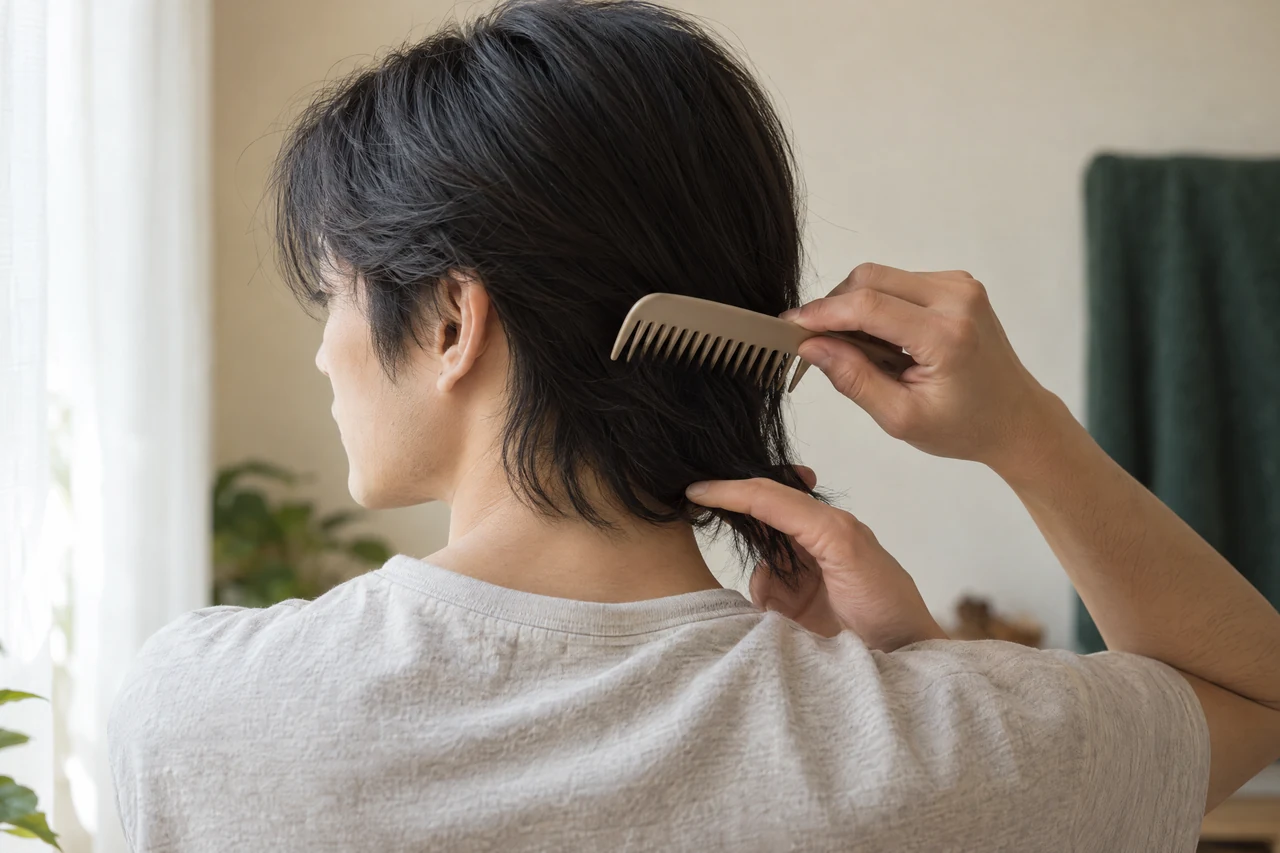
Verify attachment and take a precise brief to the enquiry
Ask what holds the exact piece in place, where that attachment sits, and what preparation, removal and upkeep it requires. Do not infer clips, tape, adhesive or installation services from a category name. If retaining long sides is important, ask whether the proposed arrangement affects those sections and which hair, if any, would need changing. Get the home-care instructions and responsibilities explained before comparing quotations, so a lower initial figure is not mistaken for the same wearing arrangement.
Do not accept painful pulling as a necessary compromise for a tidy join. The American Academy of Dermatology says repeated tension can cause hair loss and that a painful hairstyle is too tight; it also advises keeping hair loose beneath a covering. [2] This guidance does not assess a particular hairpiece attachment. Stop a painful or irritating wearing arrangement and seek advice rather than tightening it further. New scalp symptoms or treatment-related wearing needs belong with an appropriately qualified healthcare professional.
Use an original four-dimension comparison: coverage boundary, temple direction, length and density, and fringe opening. Mark each as acceptable, unresolved or incompatible for the candidate under discussion. Leave unresolved details open instead of treating them as a pass. OWNSTRAND's only confirmed shop is in Kwun Tong; request the exact style or custom route, availability, quoted inclusions and viewing arrangements before travelling. Keep that product enquiry separate from a Vit So discussion about your retained hair's cut and outline.
Which coverage option deserves a closer look with retained long sides?
| Your observation | Option to compare | Detail to verify |
|---|---|---|
| Only the front needs coverage; temple direction appears compatible | A front-focused partial piece | Its exact footprint, edge position and attachment |
| The requested coverage extends farther across the top | A larger partial piece | Where its new boundary would meet retained hair |
| You want to replace the entire visible hairstyle | A full wig | Cap fit and comfortable placement of existing hair |
| The join works only beneath a firmly closed fringe | A different candidate or a revised style brief | Appearance with your usual fringe opening and movement |
Your preparation checklist
- Show dry front and three-quarter photographs with your usual part and fringe opening.
- Identify each temple separately and state which side sections you want to keep visible.
- Request the candidate's base dimensions, fibre, hair direction and attachment details.
- Compare length, density, texture and colour beside your retained hair in natural light.
- Ask about a guided movement check and the exact home-care and styling instructions.
- Confirm supply, quoted inclusions and viewing arrangements before changing your haircut or visiting.
Frequently asked questions
Does long side hair mean a front-only piece will blend?
No. Length is only part of the comparison. The base boundary, hair direction, density and your preferred fringe opening also matter. Ask how the specific candidate meets both temples before deciding that your sides provide enough visible continuity.
Should I shorten my sides before asking about a frontal piece?
Avoid committing to a new side length solely to match a reference image. Show the hair you have and discuss the candidate's intended fitted position first. Then establish which sections might need trimming, who would do it and what you are willing to change.
Is a brushed-back front ruled out with a partial piece?
Not automatically, but it exposes more of the front and temple boundary than a closed fringe. Confirm the exact item's construction and styling permissions, and assess it in the position you intend to wear. A category photograph cannot establish that this look is suitable for your join.
Can a full wig preserve the appearance of my long sides?
A full wig creates its own visible side outline rather than blending a new front into your exposed sides. Ask whether an available style provides the length you want and how your existing hair would sit beneath it. Fuller coverage does not remove the need to check fit and comfort.
Bring the join into your styling conversation
Invite Vit So to discuss the direction, side length and fringe opening you want to retain. For product specifications or a visit enquiry, use the OWNSTRAND guides already linked above and request confirmation for the exact option. Keep unresolved attachment or fit questions open before committing to a cut or purchase.
Start your WhatsApp enquirySources & further reading
- American Cancer Society — Wigs for Hair Loss
General guidance on brand-specific sizing, natural-light colour comparison, fibre maintenance and heat precautions; not an endorsement or specification for a frontal hairpiece.
- American Academy of Dermatology — Hairstyles that pull can lead to hair loss
Repeated tension and painful tight styles are reasons to change an arrangement; retained hair beneath coverings should not be pulled tightly. Does not evaluate any brand's attachment product.



