






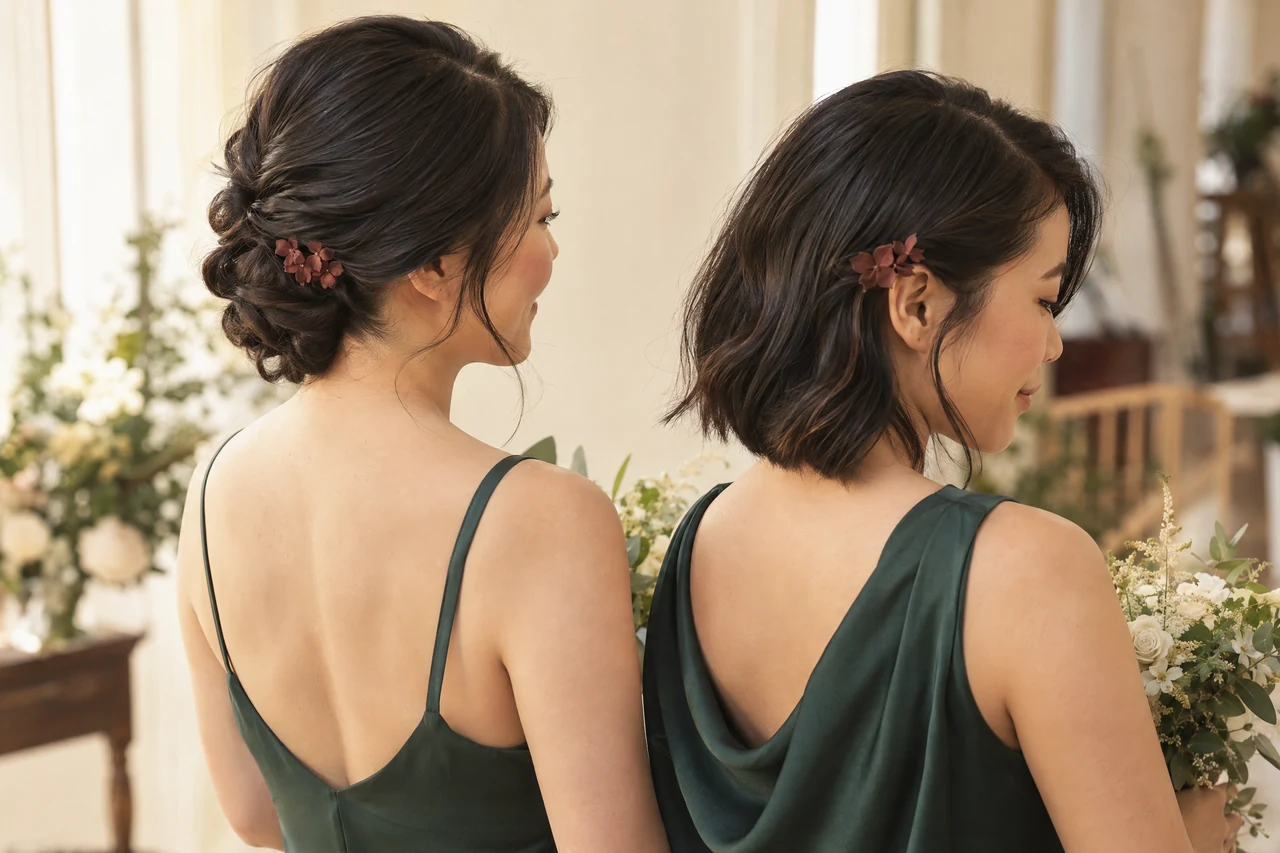
Wedding hairstyles for short hair start with the cut
Look at the fringe, ear area and nape as separate parts of the outline. A cropped style, a bob and a layered short cut do not offer the same gathering points. Select photographs with a comparable length and identify the detail you want to change, rather than measuring your hair against a full bun.
With a close crop, the wedding detail might be a polished fringe direction and an exposed ear rather than a gathered back. A pixie with a longer top may allow a sweep across the forehead while the short nape remains visible. A chin-length bob can retain its end line with a side tuck or gentle bends. Treat these as different finished looks, not steps towards the same updo.
Before a maintenance cut, explain which lengths matter for the wedding. Shortening the hair above an ear may remove the section intended to cover a clip. Removing nape length may change a planned partial gathering. If you want to keep a pixie cut, agree which parts should remain cropped and which front sections should stay long enough for your preferred sweep.
Review bridal hair to check its service scope and the details to share before arranging the related work.
Read wedding hairstyles for short hair against your layers
Check the shortest layers as well as the longest ends. A bob that touches the jaw at the front may have much shorter sections behind the ears. In your reference, identify whether you like the visible wave, the cleared cheek or the gathered back. Keeping only the first detail may give you a realistic option without forcing short layers into a structure they cannot comfortably reach.
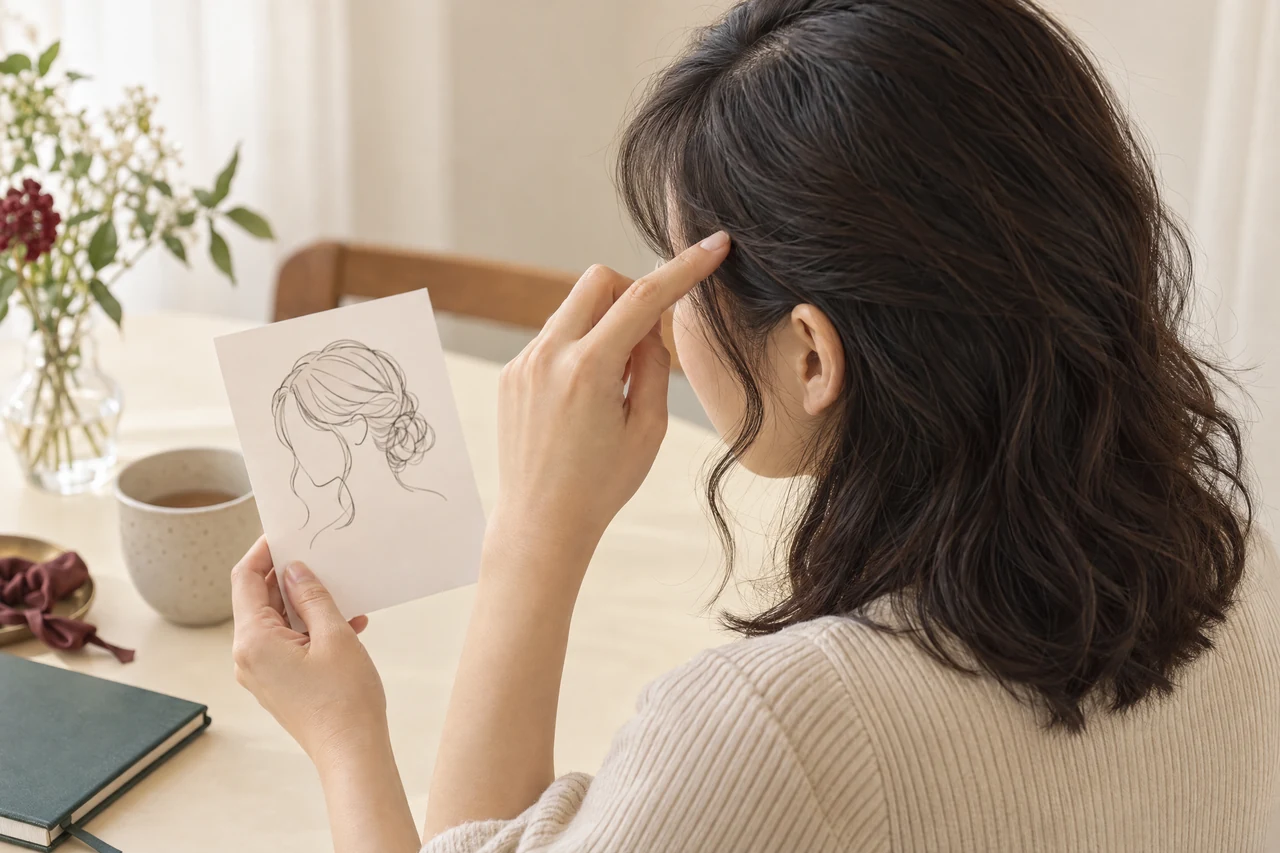
Parting and texture can change the emphasis
A different parting or a smoother side can make a short style feel more intentional without adding length. A softer finish can keep more movement visible. Discuss how your hair naturally falls and which sections resist a change, then compare a manageable adjustment with a more elaborate reference before agreeing on the finish.
A side part can create an asymmetrical front, with a fuller sweep opposite an exposed ear. A centre part can keep a bob balanced without making both sides identical in every detail. If your fringe naturally separates or your crown has a strong growth direction, show that behaviour in an ordinary dry-hair photograph. The question is whether the proposed parting feels comfortable and stays where you want it during normal movement.
For a sleek bob, decide whether the ends should turn under, sit straight or retain their usual slight flick. For a softly waved bob, decide where the first bend should appear: beside the cheek, below the ear or mainly through the ends. A cropped curly style can keep its natural curl outline while changing the placement of a few front curls. You do not need to straighten every texture to make it look deliberate.
Choose a deliberate front and side outline
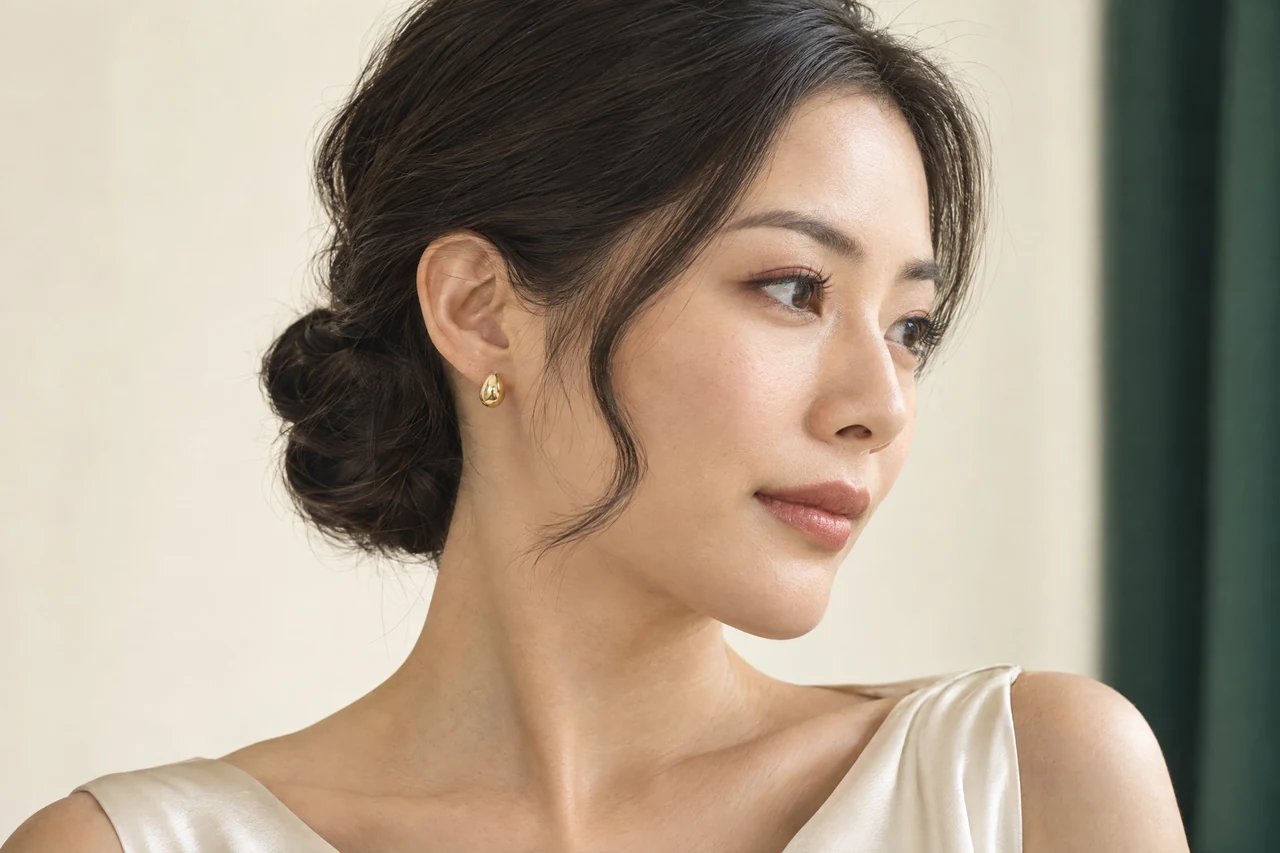
Put on your earrings and view the style from the front before choosing a tuck. Clearing an ear may reveal the jewellery beautifully but also change a familiar face frame. Keeping a small temple section can soften that change. Say where you want the strand to land and whether it must stay away from your eyes or lips. Compare the outline while smiling and turning your head, not only while holding a still pose.
Accessories need a suitable place to sit
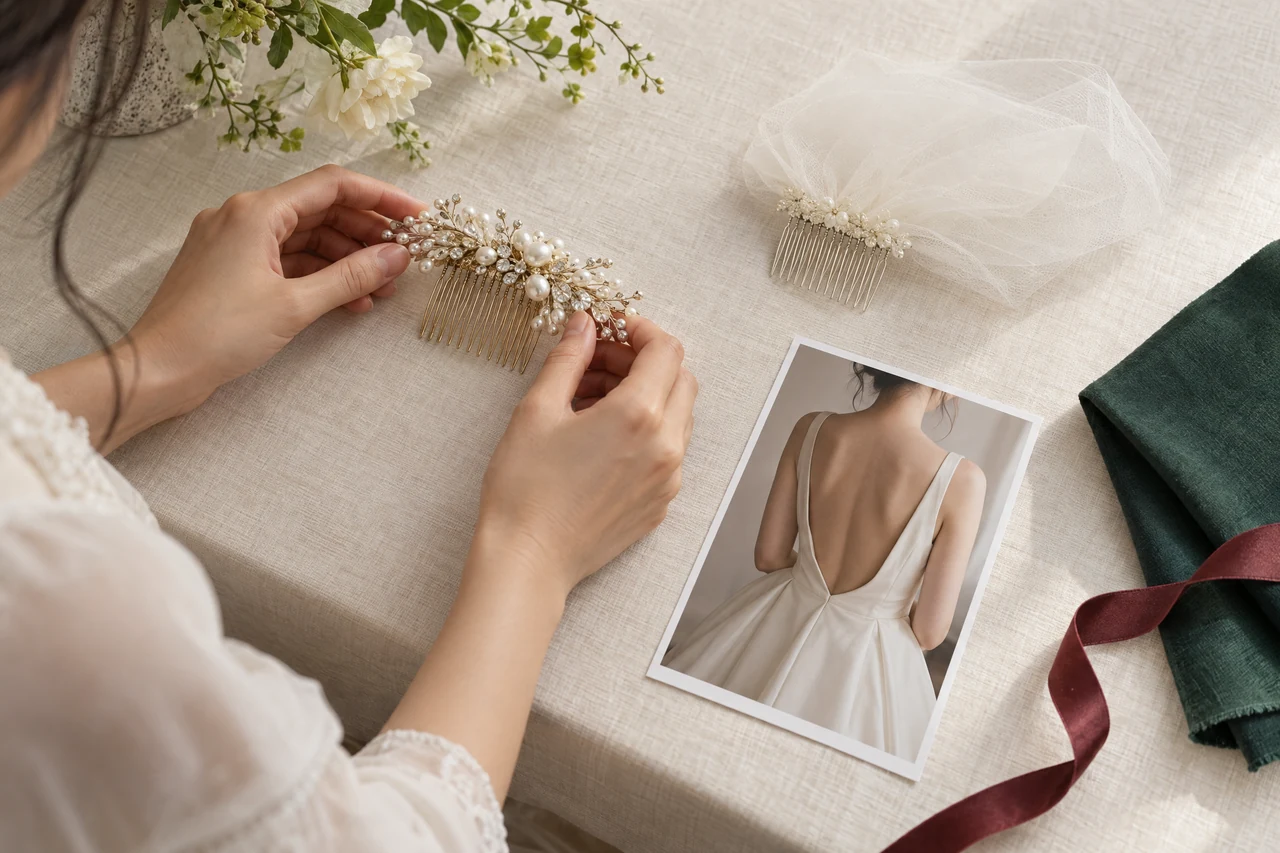
A veil or hair ornament needs to work with the available hair and the chosen outline. Show its fastening and weight, not just a photograph of the decoration. Ask how it might sit and what would happen when it is removed; do not assume that every comb or clip can attach securely to every short style.
The construction can matter more than the decorative motif. In Debbie Carlisle's guide to short-hair wedding accessories, the bridal accessory designer discusses headbands across short lengths and explains that comb teeth and pronged pins need enough hair to conceal them. A band-supported piece is therefore a useful alternative to discuss when an inserted comb has little suitable hair around it. It still needs a comfort check with your own head shape.
Try a side ornament at the point where a tuck already opens the ear, then check whether it competes with the earring. A veil and ornament do not necessarily need to share a fastening. Ask which part supports the veil and which part is decorative. For a very short crop, a band or a differently constructed veil may be worth comparing before committing to an accessory that requires a gathered back.
Continue with wedding hair with veil for that specific comparison and the preparation questions it raises.
Check the contact point rather than the accessory size alone
Bring the actual accessory, including its comb, clasp or band. A small ornament can still have long teeth that show through a cropped side. Test it with the intended finish, then turn your head and sit down. If the veil comes off after the ceremony, practise that removal and inspect the remaining hair for displaced sections or exposed fastenings.
Keep added length as a separate decision
Begin with a version that uses your own length. If the desired shape depends on more hair, ask what alternatives could preserve the visual idea without it. Extensions or a hairpiece involve separate suitability, matching and service questions; they are not automatically necessary or included in a short-hair wedding appointment.
Translate a long-haired reference into the detail that attracts you. If it is the exposed neckline, a smooth short back might satisfy the brief. If it is the curved front, retain that sweep without copying the large bun. If you specifically want the size and position of a substantial gathered shape, added hair becomes a different proposal rather than an invisible assumption about what your cut can do.
When comparing an addition, ask how your shortest layers would blend, where attachments would sit and what remains visible from the side. Include removal and any ongoing care in the discussion. Request confirmation of the work and quote before deciding. Choosing an existing-hair option is equally valid if you prefer less equipment, a familiar outline or an easier return to your usual haircut afterwards.
Review hair extensions to check its service scope and the details to share before arranging the related work.
Compare the existing-hair option before discussing additions
Ask to see a complete alternative, not an unfinished version described as missing hair. Agree the front shape, the ear detail and the back outline using your current cut. Compare that proposal with the added-hair version against your dress and accessories. The deciding factor should be which result you want to wear, rather than whether short hair looks sufficiently like a traditional updo.
Test the short style beyond a still photograph
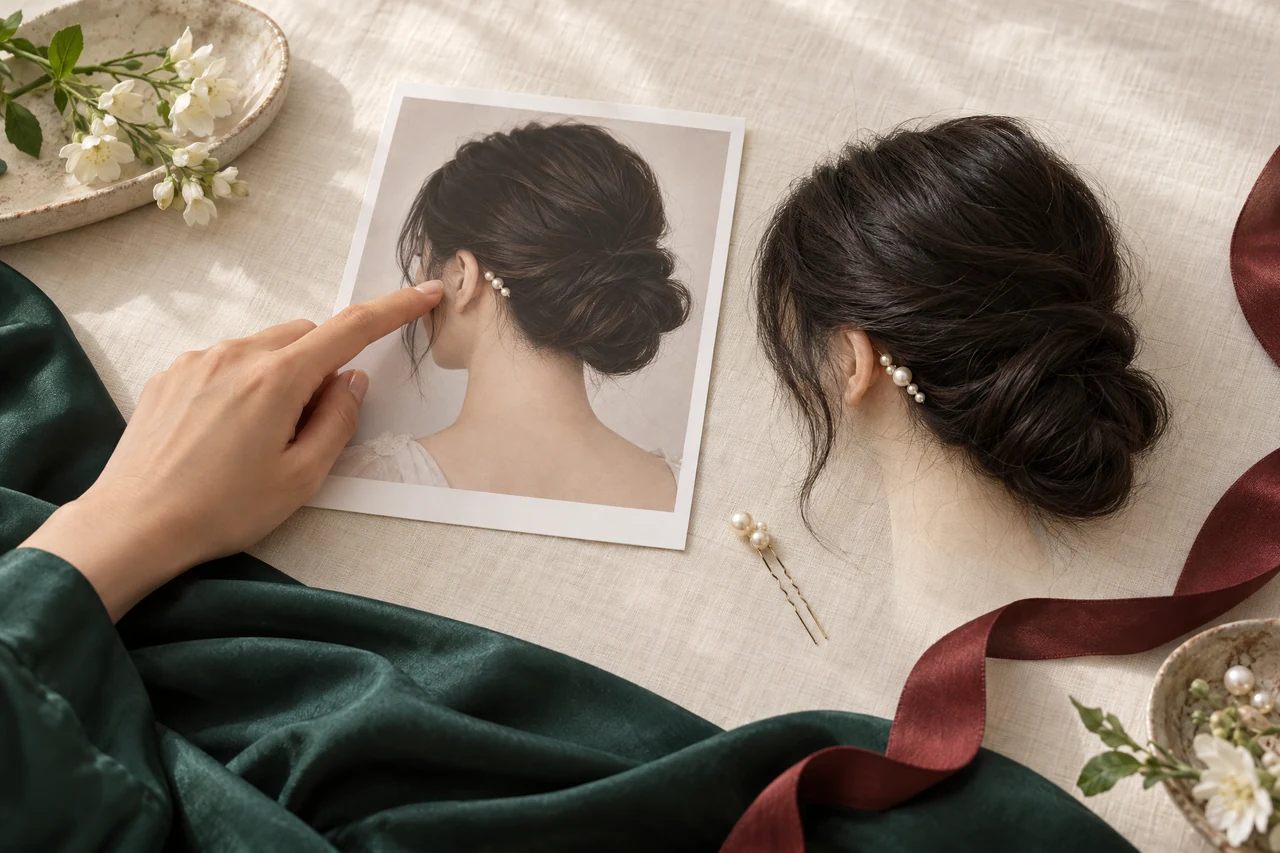
A wedding hair trial can help you compare the proposed shape with the actual accessory and your usual movements. Ask about trial availability and scope rather than assuming it is included. Wear a neckline that resembles the wedding outfit and bring photographs of the dress back. If you wear glasses, check the temples beside any ear tuck or decorative band.
Photograph the front, both sides and the back. A short style may have a beautiful front sweep but an accessory clasp visible from behind. Inspect the nape when looking down and the fringe when looking across a shoulder. Then identify the detail that needs adjustment; there is no need to abandon the whole style because a single clip position is wrong.
Comfort matters when short sections are being gathered. The American Academy of Dermatology's guidance on hairstyles that pull explains that repeated tension can cause hair loss and advises changing a style if tightly pulled hair causes pain or scalp stinging. Do not treat discomfort as proof that an accessory is secure. Tell the stylist where it pulls so the arrangement can be reconsidered.
Keep a record of the detail you choose
Save the agreed parting and accessory position in clear photographs. Note which side stays open and which front section remains loose. After testing veil removal, photograph the second outline too. These records make it easier to discuss a later trim or a change of earrings without relying on a vague request to repeat the same look.
Prepare a brief that fits your wedding day
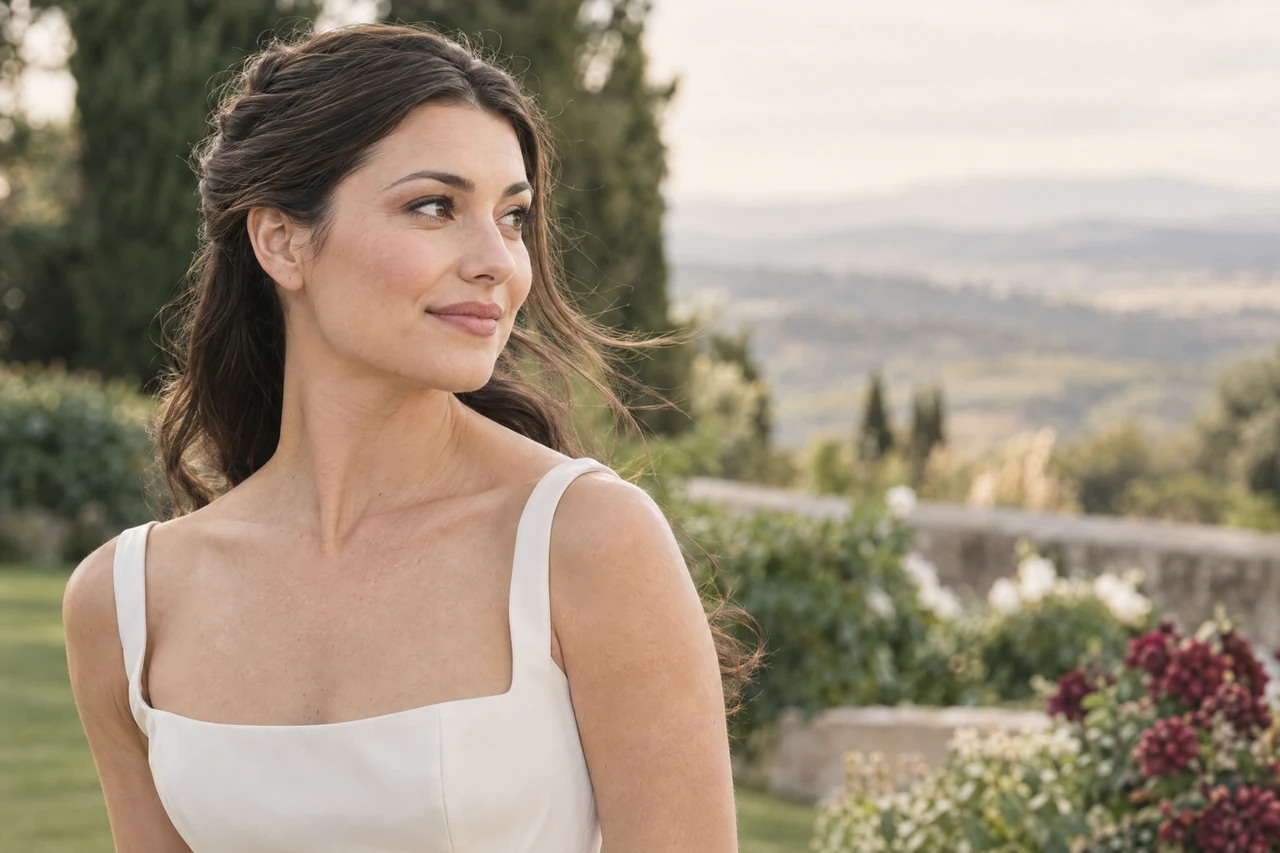
For an enquiry in Sheung Wan, send current dry-hair photographs alongside the wedding date, the desired finish and accessory photographs showing their fastenings. Explain whether your schedule includes outdoor portraits, a high-collared ceremony outfit or a change into evening wear. Those details help frame the styling questions; they do not establish availability or confirm a booking.
Use this 6-point checklist to prepare your short-hair wedding brief. It covers the existing cut, reference details, accessories, clothing, movement and service confirmation. Keep the information together so a later decision about cutting or purchasing an ornament can be checked against the same plan.
Plan a small, realistic touch-up
Ask which adjustments you or a helper can make after the veil comes off. With short hair, smoothing a displaced fringe or resetting a familiar tuck may be more appropriate than brushing through the whole finish. Agree what should remain untouched, especially hidden fastenings. If a change requires professional help, confirm that arrangement separately rather than expecting a guest to rebuild the style.
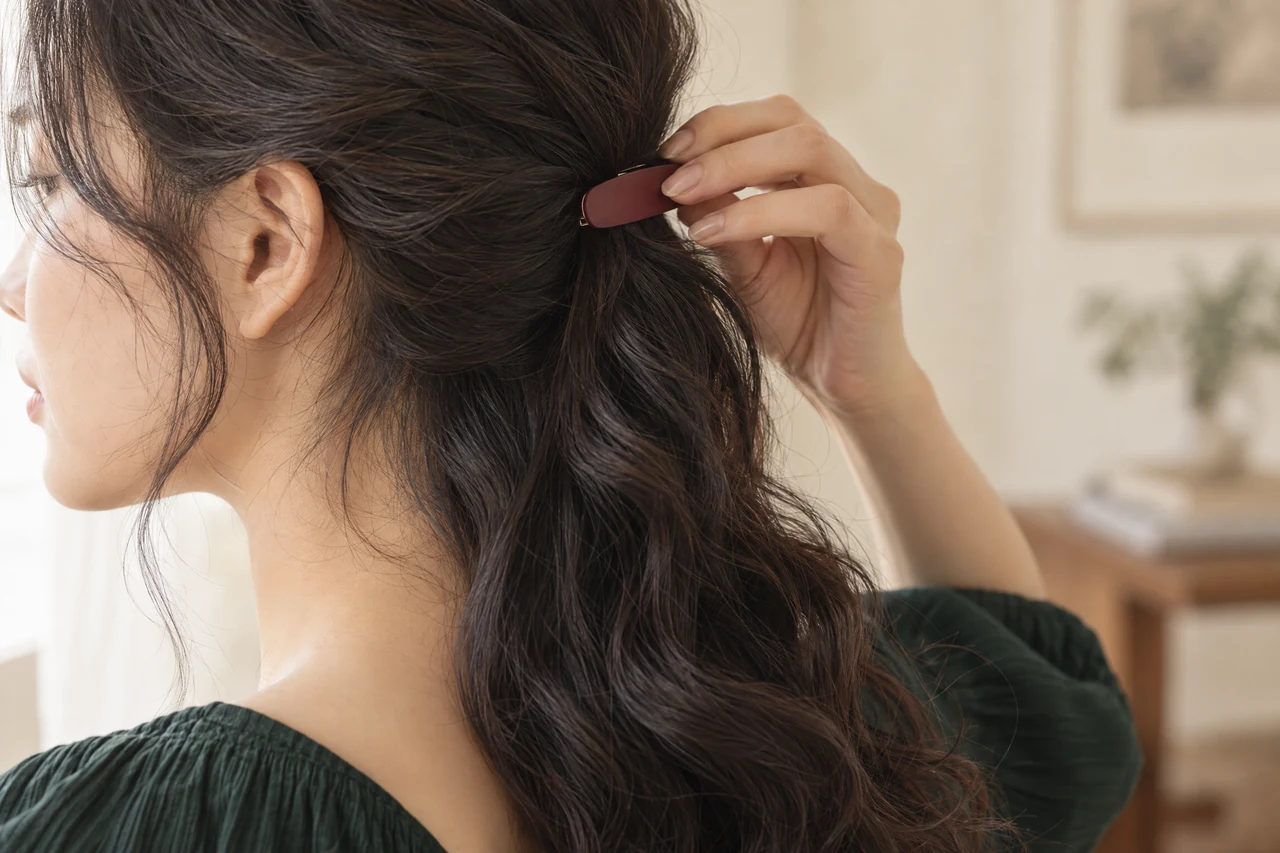
Compare short-hair wedding outlines by the lengths they use, not by how closely they resemble a full bun.
| Starting cut or choice | Possible emphasis to discuss | What to check before deciding |
|---|---|---|
| Close crop | Fringe direction, visible ears and a band-supported ornament | Band comfort and whether decoration overwhelms the outline |
| Pixie with a longer top | A front sweep with a deliberately cropped nape | Natural growth direction and coverage over any fastening |
| Chin-length bob | Defined end line, side tuck or soft bends | Which layers actually reach the intended gathering point |
| Layered short curls | Natural curl shape with a controlled front section | Dry outline and comfortable accessory placement |
| Partial gathering on suitable length | Open neckline while some ends remain loose | Short nape sections, exposed pins and movement |
| Added-hair proposal | A specific larger gathered shape | Blending, attachment, removal and a separately confirmed quote |
Your preparation checklist
- Send clear front, side and back photographs of your current dry cut; identify the shortest layers and any trim you are considering.
- Choose references with comparable length and state the specific detail you like, such as a front sweep or exposed ear.
- Bring the real veil and ornament, or photographs showing their fastenings; test placement and removal with the proposed style.
- Share the dress neckline and back, earrings and any glasses so the face and ear areas can be considered together.
- Test turning, sitting and looking down; record discomfort or displaced sections and agree a manageable touch-up.
- Confirm availability, preparation instructions, service scope and the quote, including any trial or additions, before treating the enquiry as a booking.
Frequently asked questions
Do I need extensions for a short-hair wedding style?
Not necessarily. Compare an outline using your current cut first. Added hair is a separate option requiring assessment and confirmation, not a default requirement.
Can a bob be gathered into a full updo?
That depends on length and layers. Ask what can be gathered comfortably and consider a partial or loose outline if a full structure is impractical.
Should I change my cut just before the wedding?
Discuss your intended shape before changing the length. A new cut can alter accessory placement and styling options, so allow room to reassess the plan.
Build your wedding look around the short cut you want to keep
Share your current hair photographs, wedding date and favourite outline with Vit So, together with your veil or accessory details. Ask about a suitable existing-hair proposal and confirm availability, scope and the quote before arranging the appointment. An enquiry is not a confirmed booking.
Start your WhatsApp enquirySources & further reading
- Hairstyles that pull can lead to hair loss
Repeated tension from tight hairstyles and the importance of changing a style that causes pain or scalp stinging.
- The Best Wedding Hair Accessories For Short Hair
Accessory construction for short cuts, including bands, combs and pins, and trialling the actual fastening with the hairstyle.



