






Vit So and DT HUB have the same owner. The DT HUB course links are same-owner promotional links, not independent recommendations. This article helps readers prepare questions; current course arrangements must be confirmed with Canvas Academy.
Start your hair training practice space checklist with a learning goal
Choose a task you want to learn before choosing a course category. Understanding sectioning for a basic cut calls for different resources from learning clipper blending, matching foundation or working with colour products. Write your goal in plain language and include your starting experience. A hobby learner who wants supervised foundations may need a different route from a salon assistant adding a specialist skill.
The hairdressing course hong kong overview lists separate learning routes, including basic haircutting, barbering, makeup and colour and perm. Use that separation to ask which course fits your goal rather than assuming a general academy enquiry covers everything. The overview directs course enquiries to Canvas Academy; ask about the current syllabus and entry expectations, not an assumed intake or qualification.
Make your comparison of beginner beauty course practice resources concrete. Ask what you will practise, on what material, with whose feedback, and what you must supply yourself. An attractive list of techniques does not tell you whether your home setup or available evenings can support them. If the reply leaves the practice arrangements uncertain, resolve that uncertainty before comparing fees.
Turn a reference image into a practice question
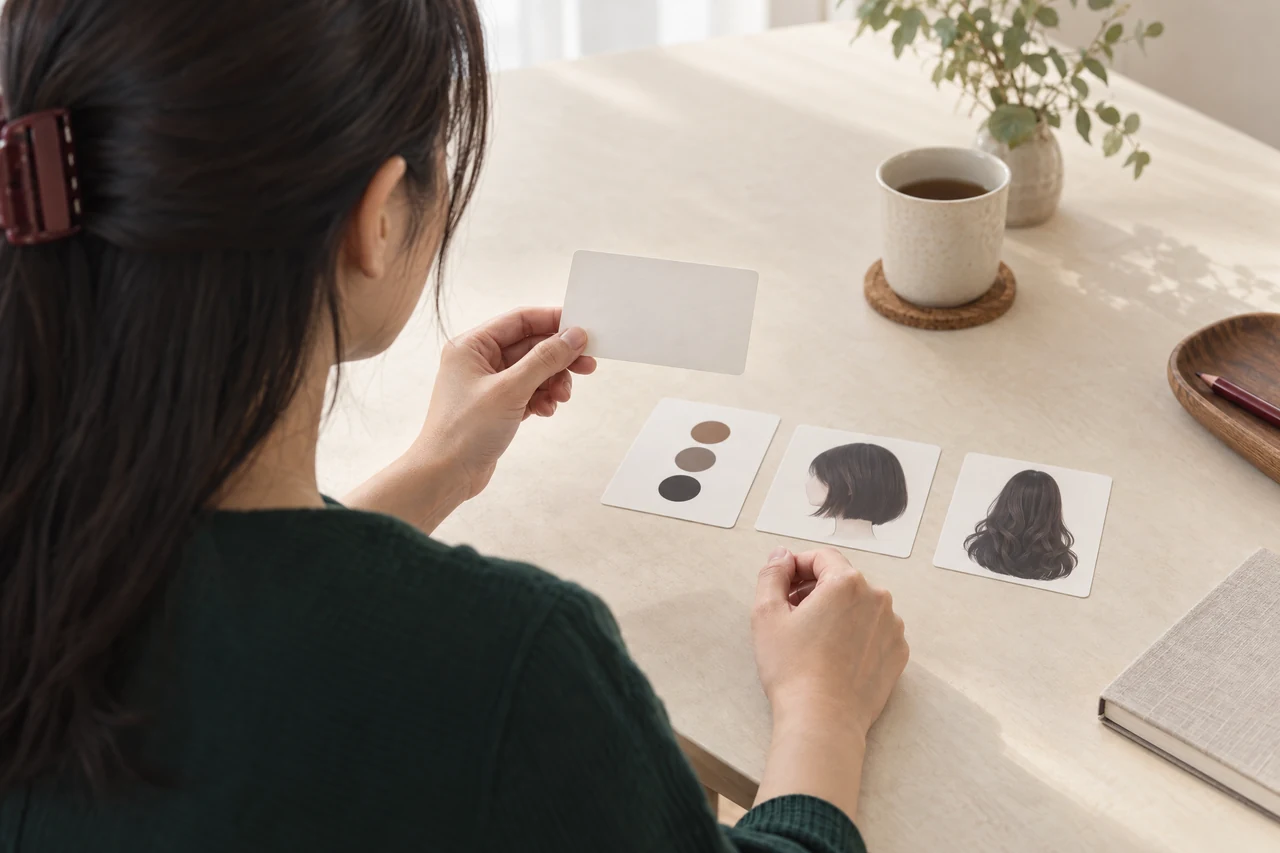
Instead of asking only whether you will learn a pictured style, identify the part that interests you: the outline, top length or placement of colour. Vit So's guide to how to explain a haircut to a hairdresser in english can help you practise describing visible details. It is a communication resource, not a substitute for tool instruction or a training assessment.
Check a stable cutting space before buying scissors
For mannequin cutting practice, start with the support and working area, not the scissors. Ask which head and clamp the course requires, whether they suit your table, and how you should position yourself. A clamp that shifts or a chair that leaves you working awkwardly can interrupt the exercise. Keep the route around the station clear and separate tool storage from household items.
The basic haircut course hong kong page describes mannequin work followed by instructor-guided model practice. Its FAQ says teaching tools are available in class and personal requirements are explained during enrolment. That distinction matters: ask for a current kit list and clarify whether a mannequin, clamp, cape and combs must be purchased, borrowed or left at the classroom. Do not treat in-class provision as a promise of take-home equipment.
A cutting-only exercise and a washing or product-handling exercise need different facilities. The UK's Health and Safety Executive highlights ventilation and disposable non-latex gloves for shampooing, colouring and bleaching. [1] These are useful questions to bring to the organiser, not a complete local compliance checklist. If your home area cannot support the assigned task, ask whether the exercise can stay on approved dry practice material or take place in a supervised facility.
Confirm tool care as part of the kit
Ask how the course teaches cleaning, storage and maintenance for each supplied tool. Check whether consumables and replacement practice materials are included, and what happens if your equipment is unsuitable. Buying a large kit before receiving the current specification can leave you with duplicates or tools you are not yet taught to use.
Treat barber tools and neckline work as a separate requirement
A short haircut can look like a small practice task, but clipper work introduces equipment and close-to-skin decisions that a basic scissor exercise may not cover. Confirm the required clipper and guard system, the cleaning method and the permitted practice surface. A mannequin can support some handling exercises, but it cannot supply all the movement, comfort feedback or boundaries of a person sitting in the chair.
The barber course hong kong page includes clipper fundamentals, fades, scissor-over-comb and beard grooming. It says clippers are provided for in-class use and describes supervised model practice. Ask which activities are appropriate between lessons and which require an instructor present. A razor appearing in a module list is not permission to experiment on a friend's neckline or beard without the relevant instruction and safety arrangements.
Choose the barber route when close outlines and short-hair transitions are your actual learning priority; choose broader cutting foundations if you mainly need sectioning and general shape work. Vit So's men's haircut service page can help frame the client-facing brief, including how the top and sides work together. A salon service description is useful context for that conversation, but it is neither a student kit list nor evidence that you can perform the service.
Before a model session, confirm who checks the brief, who approves starting the task and who takes over if you need help. Also ask how the school handles damaged equipment, any nick or discomfort, and disposable blades if those are used. These answers are more useful to a beginner than buying the most powerful device or choosing a course solely because it lists advanced-looking styles.

Plan makeup hygiene and model consent before the first session
Makeup practice needs a usable surface and lighting, but product handling is just as important. Ask how clean equipment is kept separate from used items, where hands and brushes can be cleaned, and which consumables each learner needs. The FDA advises washing hands before using cosmetics, not sharing makeup, and keeping containers clean and tightly closed. [2] Do not assume a shared classroom kit makes casual product sharing acceptable.
The makeup course hong kong page lists foundation, eye and lip techniques alongside bridal and event work. It says products are provided in class and a personal product list can be recommended. Before budgeting, ask what that provision means in practice: are brushes personal, which hygiene supplies are included, and what is required for independent exercises? Request the school's demonstrated hygiene protocol rather than improvising one from a product list.
For model practice, confirm the organiser's suitability and consent process. A person agreeing to attend has not necessarily agreed to every product, eye-area technique or photograph. Ask whether you must bring a model, how cancellations are handled and what information the organiser needs beforehand. Respect a model's decision to decline an activity; an assignment deadline does not outweigh that choice.
Keep portfolio consent separate from participation consent. If photographs are part of the task, clarify who may take them, where they may be stored and whether any public use is optional. If you prefer personal makeup learning to working on others, ask whether the current course accommodates that goal. Do not assume self-practice can replace every model exercise or assessment.
Keep colour records and chemical practice within an approved scope
Colour learning can involve theory, placement exercises and chemical work, but those are not interchangeable practice assignments. Ask whether the task uses swatches, mannequin hair or a live model, and whether any products may be used outside class. A spare corner suitable for dry sectioning is not automatically suitable for mixing, storage, washing and disposal. Choose supervised facilities when your own setup cannot meet the course's requirements.
The hair colour course hong kong page is labelled intermediate to advanced and includes both colour and perm topics. Its FAQ says basic cutting ability is helpful but not strictly required. Discuss your actual experience with Canvas Academy instead of treating that wording as a blanket beginner recommendation. Ask whether theory or placement practice is the right starting point and whether focused colour study is available in the current intake.
Keep the actual product name, packaging, ingredient information and manufacturer directions accessible for any approved product exercise. Ask where safety data is available and who checks the materials and protective equipment before work begins. FDA guidance stresses reading the entire label and following directions and warnings; it also cautions that 'natural' does not automatically mean safer. [2] Unlabelled leftovers or a formula copied from a video are not an adequate practice plan.
Vit So's hair colour page provides client-facing context for discussing shade and coverage. Use it to practise separating a desired visual effect from the starting hair condition and service scope, not to extract a chemical recipe. If a cosmetic causes an unexpected reaction, stop using it and contact a healthcare provider. [2] A learner should not diagnose the reaction or try another product to complete the exercise.

Test the timetable, feedback access and full participation cost
Put the course into a realistic week before paying. Include travel, preparation, setup, the assigned task, cleaning and review, as well as class attendance. An exercise that fits on paper may become impractical if you must clear a shared dining table or coordinate a model's availability. If you can attend lessons but cannot complete the expected outside-class work, ask about alternatives before committing.
Ask how you receive feedback between sessions. Can an instructor review the particular detail you are practising, what format is accepted, and when can you expect a response? Do not assume immediate messaging support or unlimited extra practice. For an English-speaking learner, confirm the language of demonstrations, written safety instructions and correction during hands-on work. English communication on an enquiry page does not establish an English-taught intake.
Compare a written participation breakdown rather than an isolated fee. Ask about personal tools, mannequin replacement, products, hygiene consumables and any model-related charges. Clarify missed-class arrangements and whether additional practice has separate terms. There is no reliable universal beginner kit price: the useful figure is the current total for the actual course and the equipment you still need.
Use the comparison and checklist below to decide whether to proceed, ask for a narrower starting task or delay enrolment. A missing mannequin clamp may be easy to resolve; missing supervision for chemical or close-to-skin work is a different problem. Choose a route only after its practice boundaries and attendance requirements are clear, and keep the organiser's written answers for reference.

Compare practice arrangements by learning route; these are enquiry priorities, not confirmed course inclusions.
| Learning route | Resources to confirm | When to pause and ask |
|---|---|---|
| Basic haircutting | Approved mannequin, stable clamp, specified tools and cutting feedback | Your station moves or home-practice tasks are undefined |
| Barbering | Clipper and guard requirements, cleaning and supervised model boundaries | Close-to-skin or razor work lacks clear supervision |
| Makeup | Personal equipment, hygiene consumables and model consent | Shared products or photo permission have no clear protocol |
| Colour and perm | Starting level, labelled materials, protective equipment and approved facilities | Chemical work is proposed without clear scope or facilities |
Your preparation checklist
- State your starting experience and the task you want to learn.
- Get the current syllabus, teaching language and attendance requirements.
- Separate classroom provision from personal and take-home equipment.
- Check that the proposed practice space suits the approved task.
- Confirm model arrangements, consent and cancellation handling.
- Identify which activities require an instructor present.
- Allow time for setup, cleaning, review and travel.
- Request written fees, extra costs and missed-class terms before paying.
Frequently asked questions
Can I enrol without a home salon setup?
Possibly, but confirm the actual assignments first. If practice can remain in an approved classroom or on suitable dry materials, a full home salon may not be necessary. Do not assume that the same arrangement applies to model work or chemical exercises.
Should I buy a complete kit before asking about a course?
Wait for the current specification and inclusion list. Tools provided during lessons may differ from what you need personally. Ask which items are required from the start, which can wait, and what replacement materials or consumables you must budget for.
Can a friend be my practice model?
Only if the organiser approves the arrangement and the friend gives informed consent to the particular task. Ask about suitability, supervision and cancellations. Consent to attend does not automatically include every technique or public portfolio photography.
Does English communication mean the lessons are in English?
Not necessarily. Confirm how demonstrations, technical instructions and safety guidance are delivered in the current intake. Ask specifically how correction works during practice rather than relying on the availability of English enquiry messages.
Ask Canvas Academy for a practice plan you can actually follow
Send your learning goal, experience, language needs and available times to Canvas Academy at WhatsApp 5443 7168, the course-enquiry contact named on the DT HUB academy pages. Request the current kit list, model arrangements, practice rules and written fee breakdown. Confirm the teaching location separately; Vit So's Sheung Wan salon should not be assumed to be the classroom.
Start your WhatsApp enquirySources & further reading
- COSHH and hairdressers - key messages — Health and Safety Executive
HSE identifies ventilation and disposable non-latex gloves for shampooing, colouring and bleaching as hairdressing precautions. The article uses these to frame questions about the practice environment and provided protective equipment, not as a complete Hong Kong compliance standard.
- Using Cosmetics Safely — U.S. Food and Drug Administration
FDA supports reading cosmetic directions and warnings, washing hands, not sharing makeup, and keeping containers clean and closed. Its advice to stop using a product and call a healthcare provider after an unexpected reaction supports the article's stop-and-seek-help boundary. No medical diagnosis or efficacy claim is made.



