






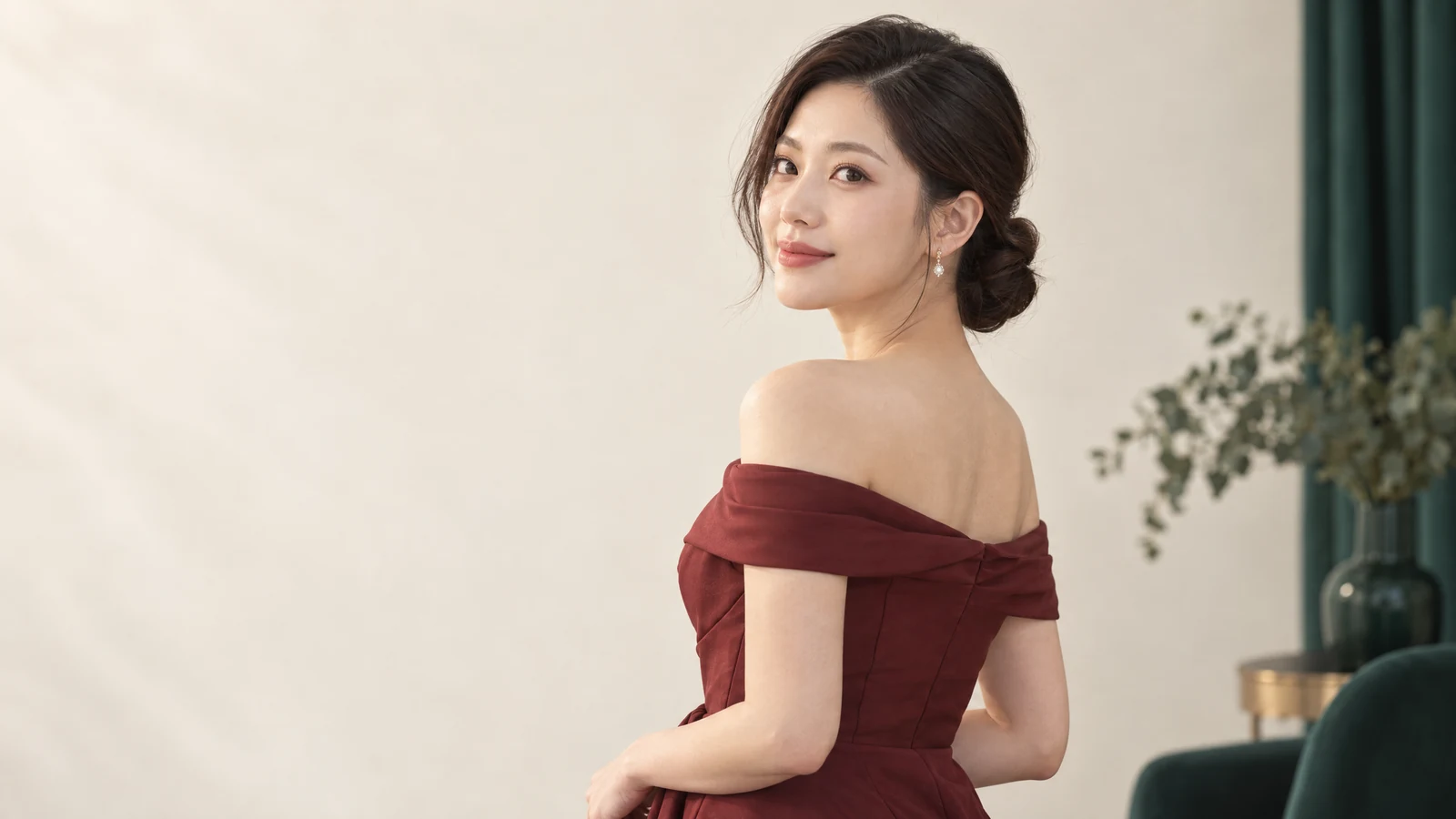
Party updo hairstyles need a clear movement brief
Tell the stylist whether the event is mainly seated or involves active dancing and walking between areas. Explain if you often tuck hair behind your ears or dislike loose pieces near your face. The planned movement helps identify which details to keep compact and which can remain soft, without treating any structure as an all-night guarantee.
Start with the movements that are easy to overlook: turning towards friends at dinner, leaning forward for a photograph, lifting your arms on the dance floor and putting a bag over your shoulder. A low bun may sit neatly below the back of the head, but its size and position still need checking against a raised collar or wrap. A higher gathering point clears more of the nape, yet changes the silhouette and may feel unfamiliar if you normally wear your hair down.
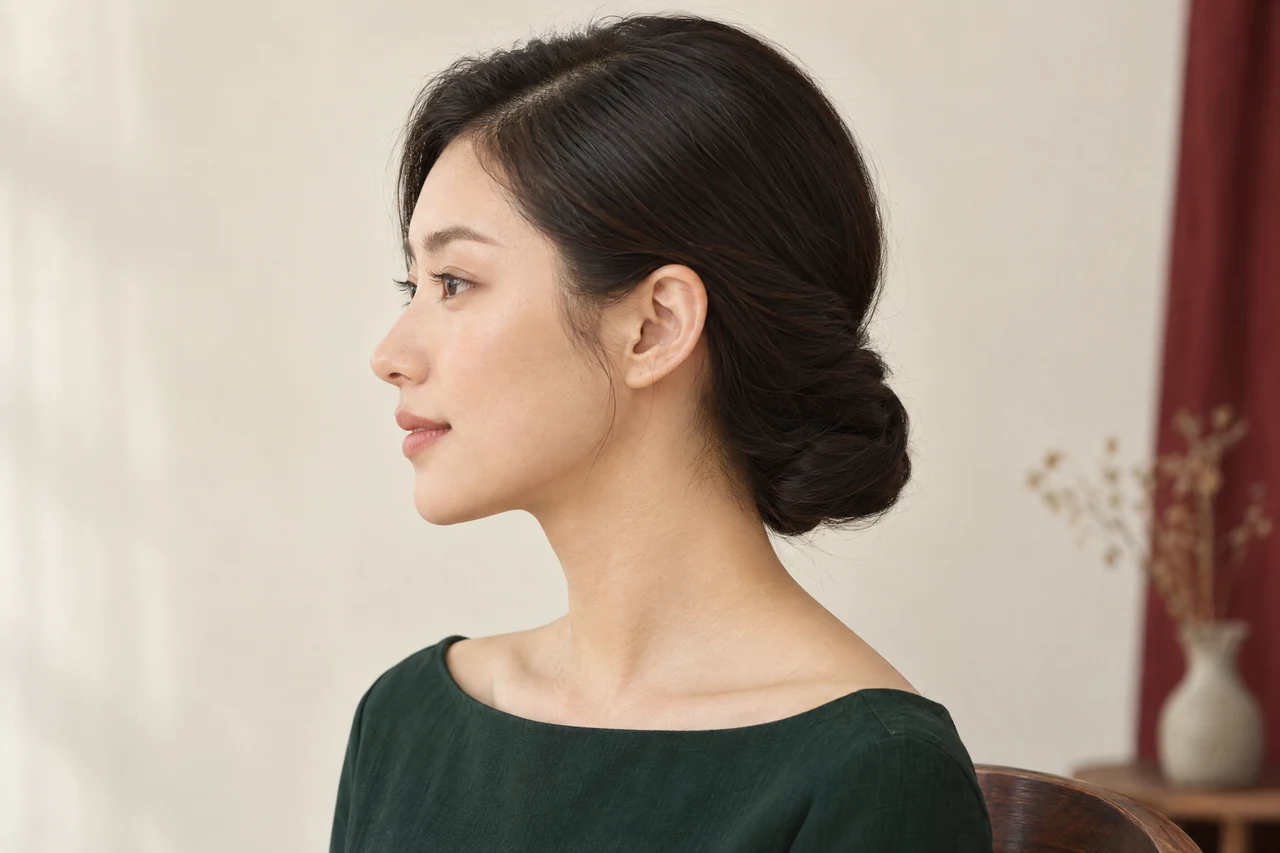
Separate the main gathered shape from the strands left outside it. A textured bun can have a compact outline while retaining visible twists; it does not have to look completely smooth. Conversely, a sleek surface tells you little about comfort or how the supports are arranged. For active dancing, discuss bringing the front sections away from the eyes while leaving softness at the temples, rather than requesting a tighter version of every detail.
Review event hair styling to check its service scope and the details to share before arranging the related work.
Plan party updo hairstyles around dancing and walking
Describe what you want to stop doing with your hands. If you constantly tuck a fringe away, ask which shorter pieces can be included in the gathered shape and which will remain loose. If you love the movement of a tendril, choose its side and landing point deliberately. Before leaving, turn your head naturally and sit down to check contact with clothing. This is a practical comfort check, not a prediction of how the finish will behave through the whole party.
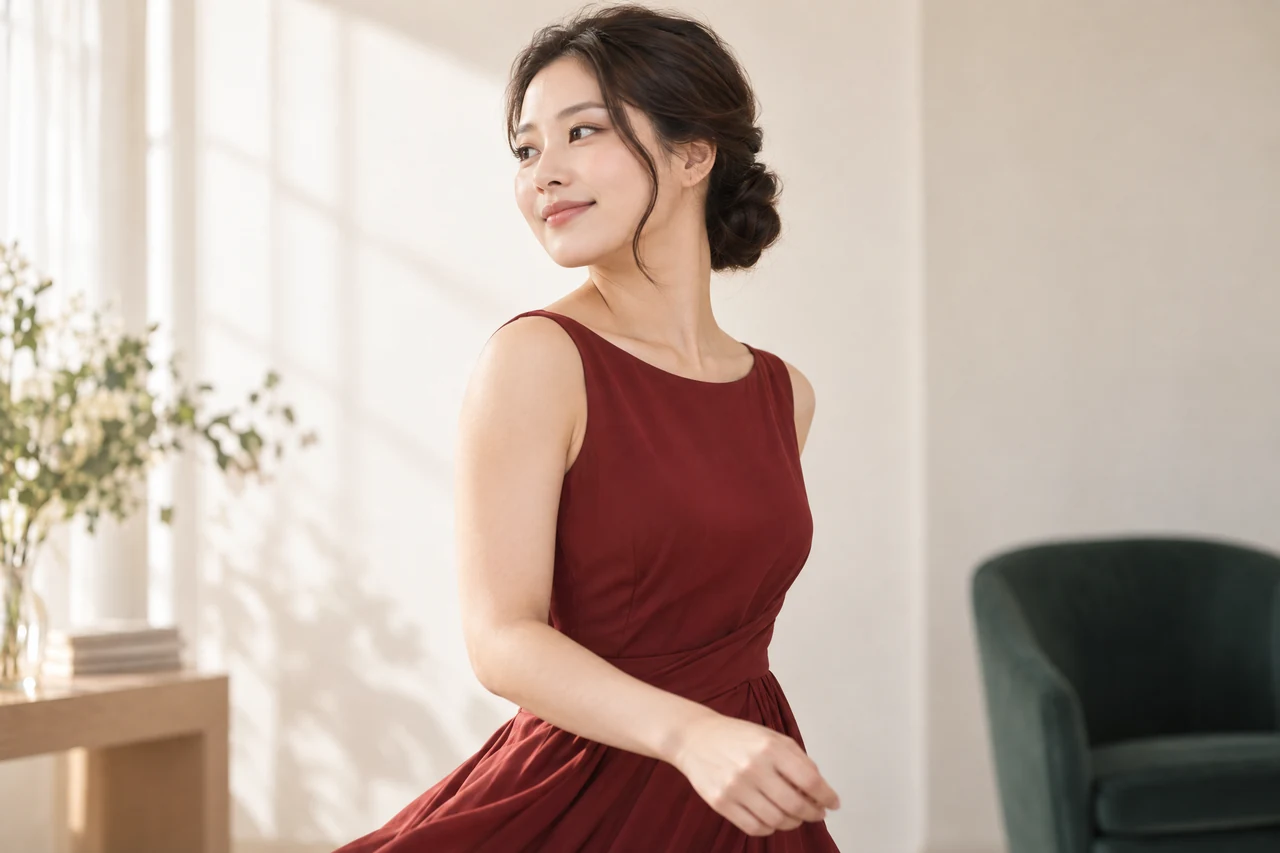
Formal photographs change what matters in a reference
Prom updo hairstyles are often chosen with a formal neckline and planned portraits in mind. Compare the front, side and back rather than selecting a bun from one angle. A high gathering point, a lower shape or face-framing pieces can change the proportions; your length and layers determine which version is practical.
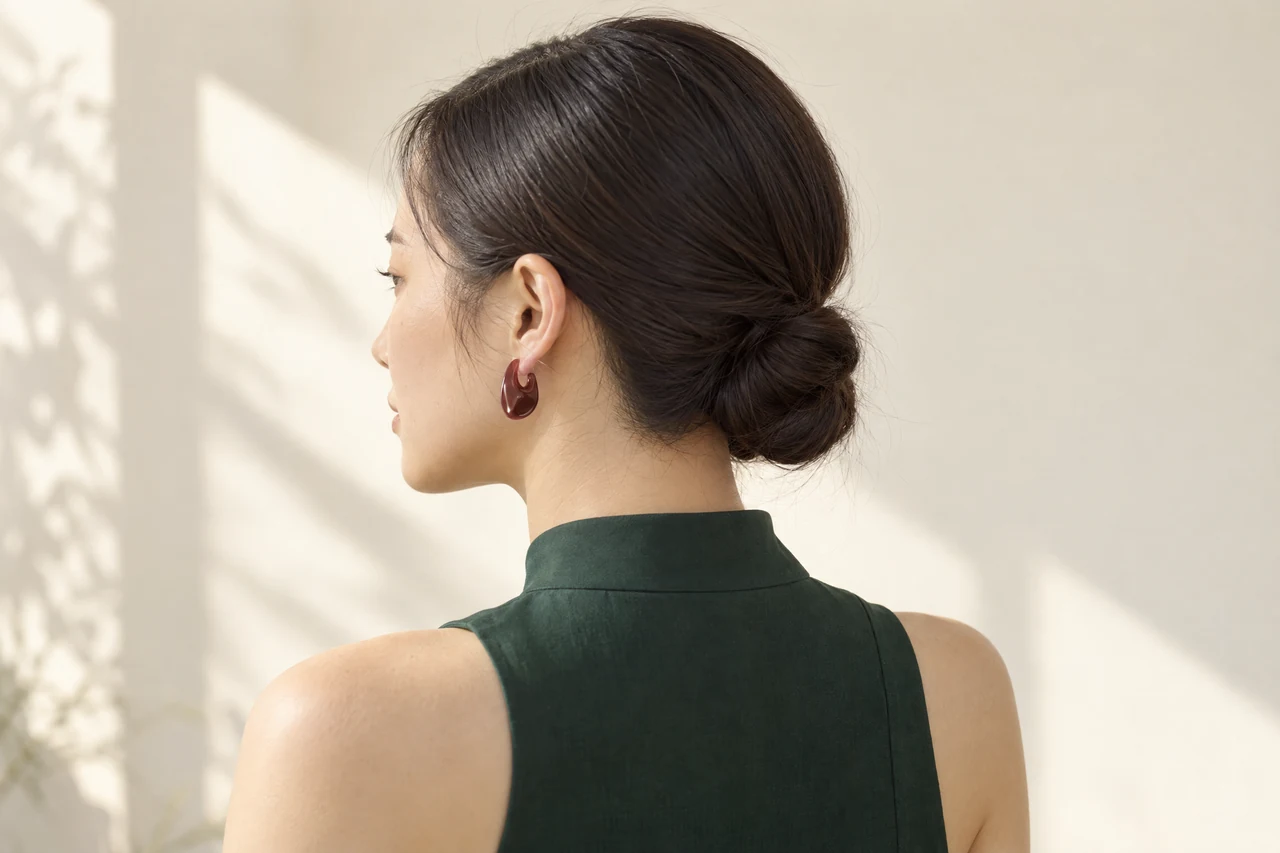
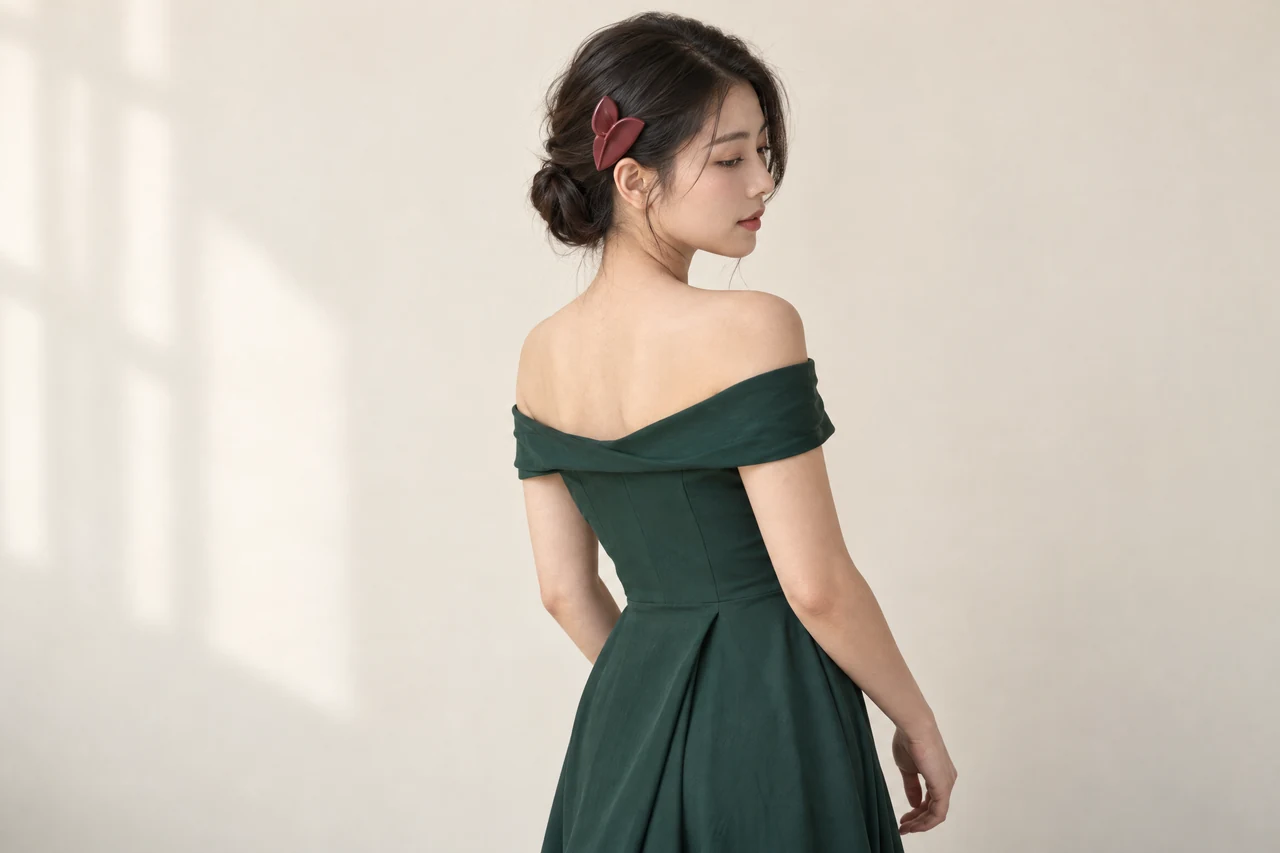
Look at the hairstyle with the upper part of the outfit visible. An off-shoulder dress lets you compare an exposed shoulder line with the width of a low chignon. A high neckline makes clearance around the collar worth checking, especially at the back. Neither outfit automatically requires a particular bun height. The useful question is whether the hair covers a detail you want to show or creates a shape that feels too large beside the clothing.
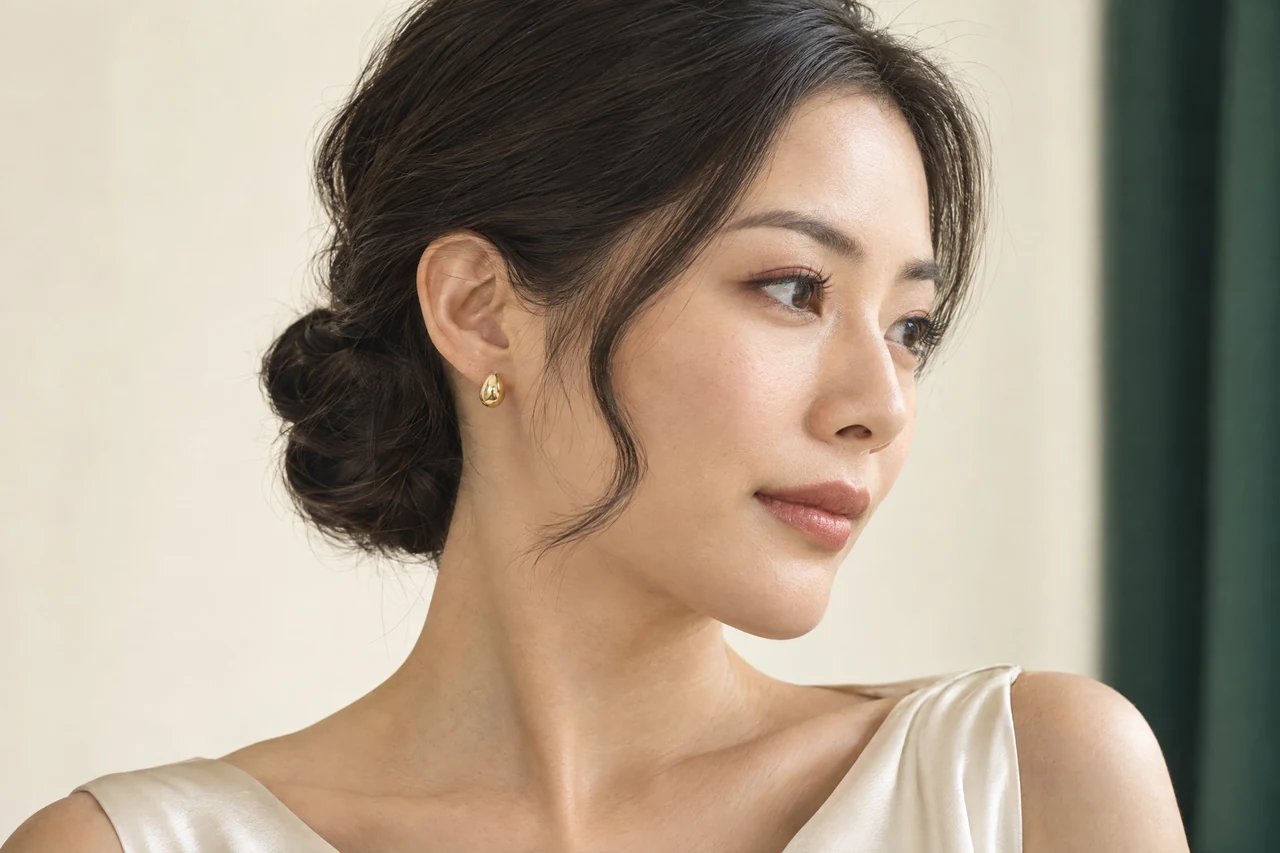
Choose the focal point before adding more detail. Long earrings may be easier to see with the sides gathered away, while a decorative back neckline may benefit from keeping the ends off the shoulders. If the dress, earrings and hair ornament are all elaborate, try a simpler arrangement in your references. This is a visual preference rather than a rule: the aim is to make the details you care about readable together.
If portraits are a major part of the occasion, hair styling for photo shoot helps you prepare the camera angles and outfit information that a close-up bun reference leaves out.
Check the gathering point against the dress
Read each reference in parts. From the front, note the parting and how much hair sits beside the cheeks. From the side, look at crown height and how far the bun projects. From the back, compare the gathered width with the collar and shoulders. A photograph with different lighting or much longer hair may show a texture that will not translate directly. Explain which feature you want to borrow, rather than treating the whole image as a specification.
Comfort belongs in the style discussion
A style that looks impressive but feels uncomfortable may distract from the occasion. Explain how you usually wear your hair and whether tight gathering or heavy accessories bother you. Show any ornament you intend to use and ask about its suitability; the style name does not establish which materials or supports will be supplied.
The American Academy of Dermatology's advice on hairstyles that pull states that a painful hairstyle is too tight. It also explains that repeated pulling from tight styles can lead to traction alopecia over time. For your party appointment, the practical point is to speak up about pulling or scalp pain rather than accepting discomfort as evidence of a secure finish. This care guidance does not rank updo shapes or measure their appearance.
Bring the actual hair accessory where possible, not just its product photograph. A comb, clip and pin ornament attach differently, and a broad decoration may need more space than expected. Show where you would like it to sit and ask whether that placement works with the gathered structure. Consider your earrings at the same time: a face-framing strand may catch on a detailed earring when you turn, even if it looks attractive in a still portrait.
Describe pulling, weight and unfamiliar accessories
Be specific about the feeling and location: pressure behind an ear, pulling at the hairline or an ornament that shifts when you tilt your head. Ask for the affected area to be checked before the finish is completed. If you wear glasses, try them with the side arrangement rather than leaving that check until you arrive at the venue. A comfortable compromise might involve changing the accessory position or simplifying the shape, not simply adding more pins or product.
Prepare for travel and the end of the evening
Allow for transport, weather and changing clothes after the appointment. Ask for care and removal advice for the actual style, particularly if you are unfamiliar with its supports. Avoid pulling at hidden fastenings or repeatedly reshaping the hair. Any later salon visit or venue touch-up would be a separate arrangement, not an assumed part of the finish.
Plan the outfit change before the appointment. Clothing that opens at the front can be easier to remove without passing a narrow neck opening over the finished shape. Think about wraps, coat collars and car headrests too; pressure at the back can be relevant to a projecting bun. For travel from Sheung Wan to your venue, leave room for the actual journey and getting dressed rather than choosing an appointment finish time that coincides with the first portrait.
The American Academy of Dermatology's hair styling guidance warns that combing hair after applying long-lasting-hold products can cause breakage. Avoid assuming that a quick brush-through is a harmless way to repair a set surface. Ask what you can safely adjust yourself and how to deal with a loose strand. When removing the style, follow the advice for its actual pins and ornaments; stop if you meet resistance instead of pulling through it.
Continue with day to night event hairstyles for that specific comparison and the preparation questions it raises.
Use the checklist of 6 preparation steps below to collect your movement, outfit and care questions before sending an enquiry. It is a planning tool, not a requirement to buy extra products or arrange several appointments.
Know the agreed care and removal advice
Ask which accessory can be removed independently and which fastening belongs to the main structure. Check whether any small item suggested for your evening bag is something you can use confidently. If a pin feels painful during the event, seek help rather than pushing it deeper without knowing its direction. At home, give yourself enough time and light to remove supports carefully. Do not sleep in an elaborate arrangement simply because dismantling it seems inconvenient.
Adapt the shape to your current length and face framing
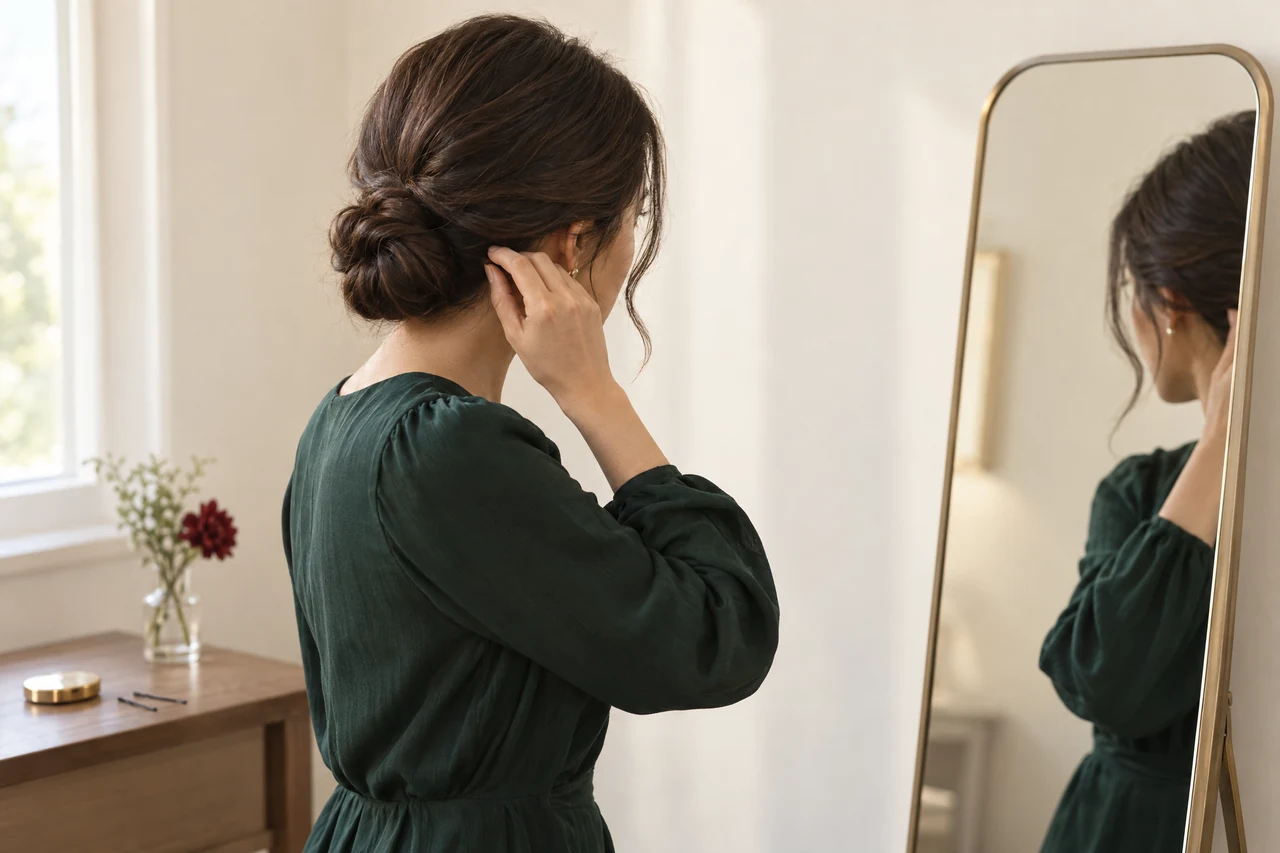
A long-hair reference can still be useful for shorter or layered hair if you name the feature you like. You may want the exposed ears, a side parting or the outline of a low twist rather than the full bun volume. Show the stylist where your shortest layers end and how your fringe normally falls. A smaller gathered shape or partial gathering may be a more relevant alternative than trying to reproduce a large chignon with insufficient length.
For long or dense hair, discuss the size of the gathered shape as well as its height. For finer hair, decide whether you prefer a compact finish or a more open-looking surface; fullness in a reference does not reveal whether extra supports were used. Naturally wavy or curly hair can contribute visible texture, while a smooth reference involves a different finish goal. Share recent colour, straightening or perm history when discussing any heat preparation; how to protect hair from heat styling offers related care questions.
Review hair styling to check its service scope and the details to share before arranging the related work.
Choose a face-framing detail you will enjoy wearing
Specify whether a strand should end beside the cheek, near the jaw or be gathered away altogether. Consider whether you will tolerate it moving closer to the eyes or mouth while dancing. An exposed ear on one side and a softer line on the other can express your preference without copying every element of a reference. The useful result of the discussion is a clear priority: what should stay visible, what can move naturally and what should not keep needing your attention.
Compare party updo outlines by movement, clothing clearance and portrait emphasis
| Direction | What it emphasises | What to check before choosing |
|---|---|---|
| Compact low bun or chignon | A gathered back outline with room for a clear side parting | Collar and headrest contact; available length; preferred bun width |
| Higher gathered shape | More exposed nape and a higher visual focal point | Comfort with the gathering direction; crown height; balance beside earrings |
| Textured low twist | Visible sections and softness without leaving all the lengths down | Which layers can join the twist; how much surface movement you accept |
| Updo with a face-framing strand | A softer front while the main lengths remain gathered | Strand landing point; eye clearance; contact with earrings during turns |
| Partial gathering as an alternative | Front clearance while retaining some loose length | Whether the remaining hair covers the neckline or needs attention during dancing |
Your preparation checklist
- Describe the evening's activity, including seated dinner, dancing and any outdoor walking, and identify the loose pieces you tend to keep adjusting.
- Bring current hair photographs and references from the front, side and back; label the gathering height or texture you want to discuss.
- Show the outfit's neckline and back, plus the actual earrings, glasses and hair ornament you intend to wear.
- Share your shortest layers, usual parting, recent chemical services and any discomfort you experience with gathered hair.
- Plan dressing and travel around the finished shape, then confirm the appointment timing, service scope and quoted work before relying on the arrangement.
- Check comfortable head movement before leaving and ask what you can adjust, how to remove the supports and whether any later assistance needs separate agreement.
Frequently asked questions
Will an updo stay unchanged throughout dancing?
Movement, sweat, weather and hair behaviour can alter the finish. Discuss your activity level and a realistic shape; an all-evening result is not guaranteed.
Can a short layered style use a long-hair prom reference?
Use it to explain the gathering height or face-framing detail, then ask for an adaptation. The full structure may not be feasible with your current length.
Should I choose the hairstyle before buying an ornament?
Consider them together. The ornament's weight and fastening affect placement, so discuss the intended outline and show the actual accessory before assuming it will fit.
Bring your party plans into a clearer updo enquiry
Send Vit So your event date, current hair photographs, outfit neckline and preferred updo references for a Sheung Wan salon enquiry. Explain your dancing plans and any accessory you want to wear so the shape, practical scope and quote can be discussed together. An enquiry is not a confirmed booking; agree on availability and the work before making your final arrangements.
Start your WhatsApp enquirySources & further reading
- Hairstyles that pull can lead to hair loss
Pain as a sign that a hairstyle is too tight, and the risk from repeated pulling over time.
- Hair styling without damage
Breakage risk when combing hair after applying long-lasting-hold products, relevant to handling a set finish.



