







Middle part vs comma hair: where the forehead opens
Compare the amount of forehead visible in the middle and at each side. A central opening and an offset curved piece create different lines even with similar top length. Point to the opening you like in the reference rather than treating both options as interchangeable names for any parted haircut.
A middle part can have a narrow gap with hair beside the brows, or a wider opening with both front sections moving away from the face. Comma hair can leave much of the centre visible while a curved strand occupies one side. These shapes can overlap: a near-central part may still have a comma-like bend. The useful question is which line you want to notice first, rather than which label wins.
Continue with curtains haircut for that specific comparison and the preparation questions it raises.
Middle part vs comma hair from the front view
Use a photograph taken straight on, without tilting your head. Look at the central gap, the brow beside each front piece and the exposed corners of the hairline. Decide whether the opening should look balanced or deliberately heavier on one side. A side-angle photograph can exaggerate an opening, so do not use it alone to judge coverage. If you wear glasses, compare the strand's landing point with the top of your frames; a curve that looks appealing above the brow may be distracting if it rests against a lens.

Comma hair needs a curve, not just a new name
A comma haircut can support the length and weight of the curved front piece, but the bend in a finished image may come from styling or natural movement. Explain whether you want a gentle turn or a stronger curl. A cut alone does not establish that either curve will remain after washing.
The wikiHow comma hairstyle guide identifies the look by front pieces curved inward like a comma and describes using styling tools to form that shape. It also discusses adding comma bangs to an existing haircut. This is a useful reminder that the front detail does not require you to copy every feature of a reference, such as very short sides or a sharply separated top.
Keep the front piece substantial enough for the line you want, but discuss how much weight should stay behind it. A delicate curved strand and a broad, heavier fringe are different requests. If the main issue is coverage rather than curvature, the men's fringe haircut guide helps you compare fall and weight before choosing a finish.
Review men's haircut to check its service scope and the details to share before arranging the related work.
Men's wash, cut and blow dry is HK$380. Use that listed service price as a starting point for a cut enquiry, not as a quote for additional chemical work. Describe whether you want to preserve the option of wearing the front open or prefer a dedicated curved piece.
The cut supports the front piece but may not create its bend
Ask to see where the intended curved strand starts and where its tip should finish when dry. A bend close to the root opens the face differently from a turn only at the end. Shortening the strand changes its landing point; changing its weight can change how it separates from the surrounding hair. Rather than requesting a fixed length from a picture, agree on a visible boundary, such as keeping the tip clear of your eye.
Work with the direction your hair already takes
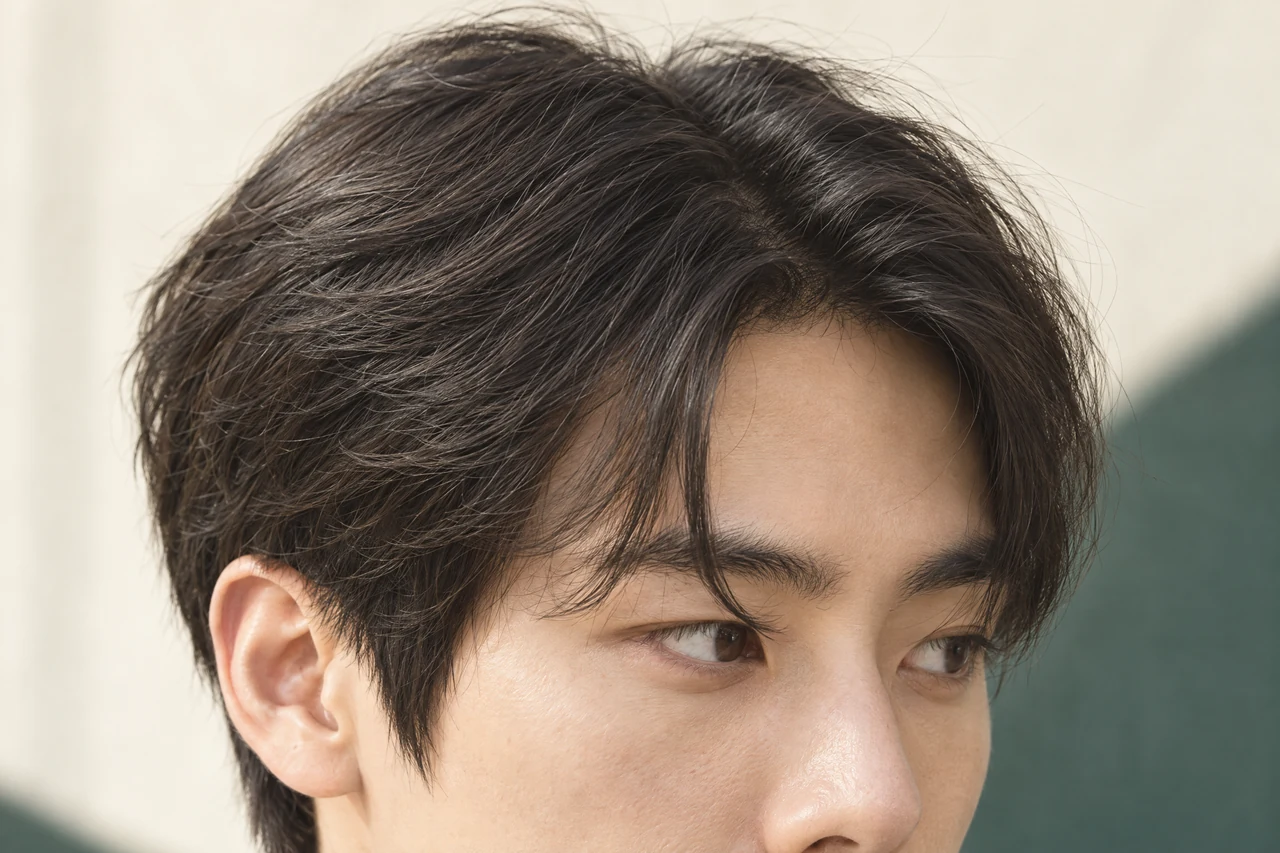
Observe which side the front naturally moves towards and where it separates without styling. That direction can influence how easily a curved piece forms or how balanced a central opening feels. Use your own dry-hair photograph alongside the reference; growth direction is more useful than a fixed face-shape rule.
Notice the difference between the root direction and the movement at the ends. Your roots might sweep sideways while the tips turn gently inward, making an offset opening a sensible starting point. Alternatively, the front may already divide near the centre while each side falls differently. Tell the stylist which part of that behaviour you like. You do not need to remove every asymmetry to have an intentional middle part.
A one-sided sweep can be easier than a forced centre
Try a loose central opening and then an opening slightly towards your usual side, without pulling hard or repeatedly adding product. Note which position stays comfortable when you move your head. If a precise centre keeps closing, discuss a softer division rather than committing to an elaborate correction routine. For naturally wavy hair, choose the front section by its dry pattern; forcing every strand into the same smooth curve may defeat the movement you wanted to retain.

Separate a haircut decision from a texture service
Ask what daily drying would be needed for the chosen line and whether a softer version works with your natural hair. If you are considering a perm, discuss suitability separately and disclose previous chemical services. A visual preference for comma hair is not itself proof that a treatment is necessary.
Begin by explaining the missing feature: perhaps the front falls straight when you want a turn, or the opening collapses when you want it to stay wider. Those are more useful descriptions than asking for a perm solely because a photograph has a curved fringe. The consultation can then distinguish a length problem, a drying-direction problem and a request to change the hair's movement. A treatment decision should follow that assessment, not replace it.
Review men's perm to check its service scope and the details to share before arranging the related work.
Discuss the routine before adding a treatment
Say whether you will use a dryer, whether you own a brush and whether you want an acceptable air-dried version. Share previous colour, bleach, straightening and perm work, including treatment still present in the front lengths. Ask what the proposed service would change and what you would still need to arrange each morning. A softer curve that suits your existing movement may be preferable to a stronger bend that you would then spend time loosening or repositioning.

Choose the version you can reset on an ordinary morning
For a middle part, the daily task is finding the opening and settling the front sections around it. For comma hair, it also includes arranging the curved piece so its tip lands where you want. Ask for a demonstration using tools you actually have. If the salon finish involves an iron but your usual routine is air drying, compare a softer everyday version before deciding that the sharper curve is essential.
The American Academy of Dermatology's styling guidance advises partially air drying hair and limiting blow-drying frequency. It recommends using flat irons only on dry hair at a low or medium heat setting. For this choice, that makes a simpler front shape worth considering if maintaining the exact curve would otherwise mean frequent hot-tool use.
The AAD's guide to hair care habits that can cause damage also recommends absorbing water with a towel instead of rubbing and using the lowest heat setting. These are handling principles, not promises that either hairstyle will hold. Ask how to settle the opening gently rather than repeatedly reheating a strand that has moved.
Keep a relaxed alternative for commuting and exercise
Think about the front after a walk to work, after wearing a cap or after exercise. Would you still like it if the central gap became narrower or the comma relaxed into a sweep? If not, explain that the precise opening is a priority and ask about realistic upkeep. If yes, retain a relaxed alternative that keeps hair clear of your eyes. That flexibility is often more useful than choosing a finish that only appeals when every strand is perfectly positioned.

Turn the reference into a clear front-shape request
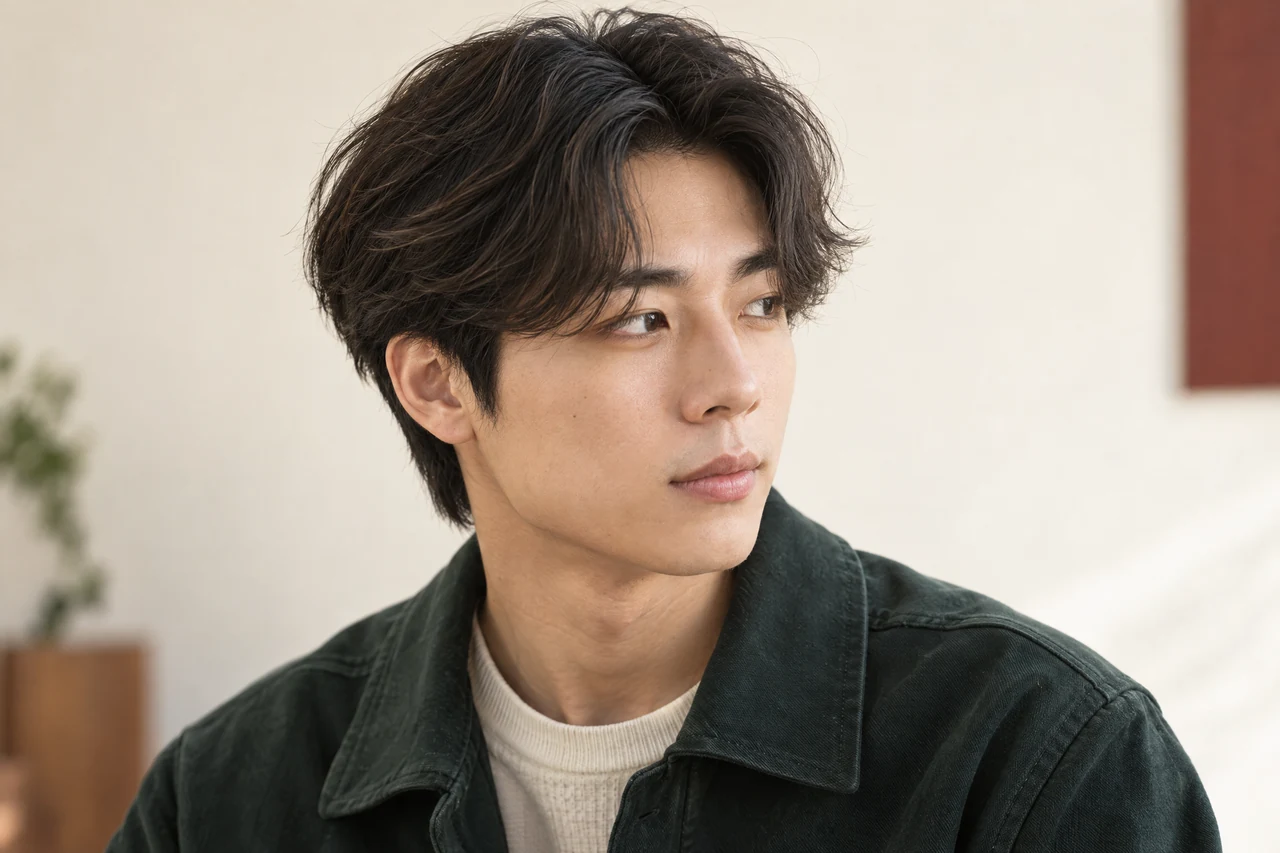
Choose references that reveal the front instead of hiding it behind a hand or dramatic lighting. For a middle part, identify the width of the opening and how far the hair sits from the brows. For comma hair, point to the strand, its curve and its finishing point. Use haircut reference photos to separate those details from features you do not want to copy.
An adaptable base cut may let you wear a loose middle part on casual days and a curved piece when you style it more carefully. Tell the stylist that switching is a goal before the front is shortened. If only one version matters to you, say so; keeping unnecessary length for an alternative you will never wear can make the daily decision harder.
Check the front after releasing it
At the consultation, compare the arranged front with how it falls when released. Ask which details come from the cut and which come from the finish. A useful request might be: keep a small central opening, leave hair beside the brows and allow a gentle inward turn on my usual side. That describes an achievable conversation about your hair rather than asking the stylist to reproduce another person's face, density or growth pattern.
Compare the front shape, not an assumed complete haircut package
| Decision | Middle part | Comma hair |
|---|---|---|
| Main visual detail | Hair opens around a central division. | A front piece curves inward; the opening may be offset. |
| Forehead coverage | Depends on gap width and the fall beside each brow. | Depends on the curved piece's width and finishing point. |
| Natural direction | Start with where the front separates without force. | Start with the sweep and bend your front already has. |
| Everyday reset | Find the opening and settle the surrounding sections. | Find the opening and arrange the curved tip. |
| Cut or texture service | A cut supports the division but does not fix movement. | A cut supports the piece; a perm is a separate assessment. |
Your preparation checklist
- Bring an unstyled dry-hair photograph showing the separation your front naturally takes.
- Mark the preferred opening on your reference: central, slightly offset, narrow or wide.
- For comma hair, identify the curved strand and whether its tip should finish above or beside the brow.
- Describe the drying tools you use and whether you want a relaxed alternative without an iron.
- Share previous chemical services before considering any change to the front's movement.
- Confirm the retained front length, service scope and charge before proceeding.
Frequently asked questions
Can the same base cut support both front shapes?
Sometimes, if the retained length and weight allow it. Ask how each finish would be styled and whether changing direction is realistic for your growth pattern.
Does comma hair always require a perm?
No. Natural movement or styling may form the curve. A perm is a separate suitability decision, not an automatic requirement of the style name.
Which option shows less forehead?
It depends on the opening and front-piece length you choose. Compare actual references instead of assuming that every middle part or comma shape covers the same area.
Can comma hair still have a middle part?
Yes. A central division describes the opening, while a comma describes a bend in a front piece. You can combine those details. Show which strand should curve so the request does not become an assumption that both sides need identical bends.
Find an opening and curve that suit your routine
Enquire with Vit So in Sheung Wan with a front-view reference and a photograph of your own dry hair. Describe the forehead coverage you prefer, the side your hair follows and the tools you normally use. This helps focus the conversation on a cut or a separate texture assessment. An enquiry is not a confirmed booking; confirm availability, service scope and charges before visiting.
Start your WhatsApp enquirySources & further reading
- The Ultimate Guide to the Trendy Comma Hairstyle
The inward-curved fringe that defines comma hair and the possibility of styling that front detail on an existing cut.
- Hair styling without damage
Partially air drying, limiting blow-drying frequency and using flat irons only on dry hair at low or medium heat.
- 10 hair care habits that can damage your hair
Gentle towel handling, the lowest heat setting and limiting hot-tool use when planning a repeatable front-shape routine.



