







Conditioning bleached hair before wearing clip in extensions starts with two checks
The first check is how comfortably you can handle your natural hair. Note which sections catch during combing, feel rough after washing or have shorter broken strands. The second is whether the proposed supporting sections can reasonably carry an attachment. These are different questions: a conditioner may make the ends easier to separate, but the smoothness you feel cannot tell you what a clip will do when you move or remove it.
The American Academy of Dermatology's advice on preventing extension damage recommends caring for natural hair, keeping it clean and free of product build-up, and using conditioner. That is not an instruction to coat every future attachment area. It supports retaining a sensible care routine rather than neglecting your hair for a hairstyle. Your own product directions and the actual clip-in instructions still need to be considered together before you fit anything.
A practical check for conditioning bleached hair before wearing clip in extensions
Describe the lengths and the proposed clip positions separately. Your older pale ends may need help with tangles, while a lower supporting section may include both regrowth and previously lightened hair. Do not assume that a dark-looking area is unprocessed or suitable. If you cannot identify where the clips would sit without repeatedly combing a fragile section, ask for an assessment before attempting the fit.
Confirm the clip design before changing your care routine
A removable clip-in is not the same as a tape attachment, bonded strand or fitted row. Advice about keeping oil away from adhesive cannot automatically become a rule for all clips. Check the product name, attachment design and instructions supplied with your set. Ask what the clips contact, how each one opens, and whether any preparation products are specified. A social-media routine for another system is not a substitute for those details.
The manufacturer's Donna Bella clip-in guide describes wefts attached with pressure clips and advises against a lot of oil or product before installation. Its separate washing guidance also includes conditioning the extensions themselves. This illustrates why attachment preparation and added-hair care must be distinguished. It does not establish a universal recipe for bleached supporting hair, and it is not a recommendation to buy that brand or a statement that Vit So uses it.
Ask what a preparation instruction actually refers to
If the leaflet says to condition, establish whether it means your natural hair, the removable wefts or both. If it asks for texture, ask how that can be achieved without stressing your processed sections; do not automatically backcomb them. The guide to how to choose a hair extension method helps organise these attachment and removal questions. Availability and suitability at Vit So require separate confirmation.
Place care where it is needed, not wherever a clip might sit
Read whether your conditioner is rinse-off or leave-in and follow its application and rinsing directions. If those directions allow care mainly through the lengths, concentrate on the troublesome sections rather than treating the whole head identically. This is a placement discussion, not a universal rule that roots must never receive conditioning. If your scalp needs its own prescribed care, do not change that care to accommodate extensions; obtain advice about whether wearing them is appropriate.
Avoid layering a mask, conditioner, oil and finishing serum simply because the ends still look imperfect. More layers can make it difficult to identify what leaves residue or interferes with the intended preparation. Change only what is necessary and permitted by the products, then judge handling as well as appearance. A discussion about hair treatment can address cosmetic manageability, but choosing a treatment does not certify the hair as suitable for clip-in support.
Balancing soft ends and temporary extension attachment grip
Imagine a person whose lower blonde ends tangle but whose planned clip positions feel coated after a leave-in spray. The useful question is whether an approved placement change can care for the ends without coating those positions. It is not whether they should make the entire head rougher. If the product must cover a section that the attachment instructions require differently prepared, pause the fitting and resolve the conflict first.
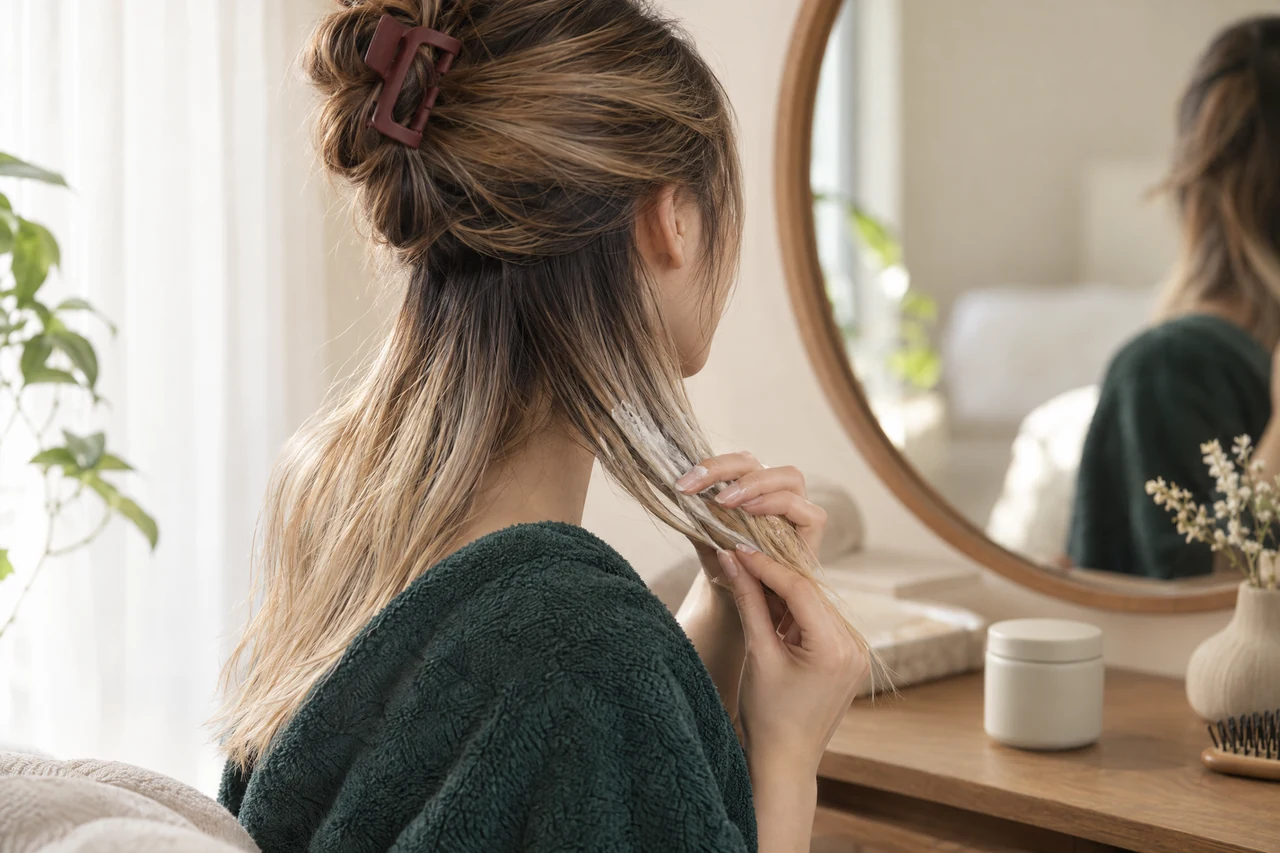
Finish gentle detangling before assessing the fit
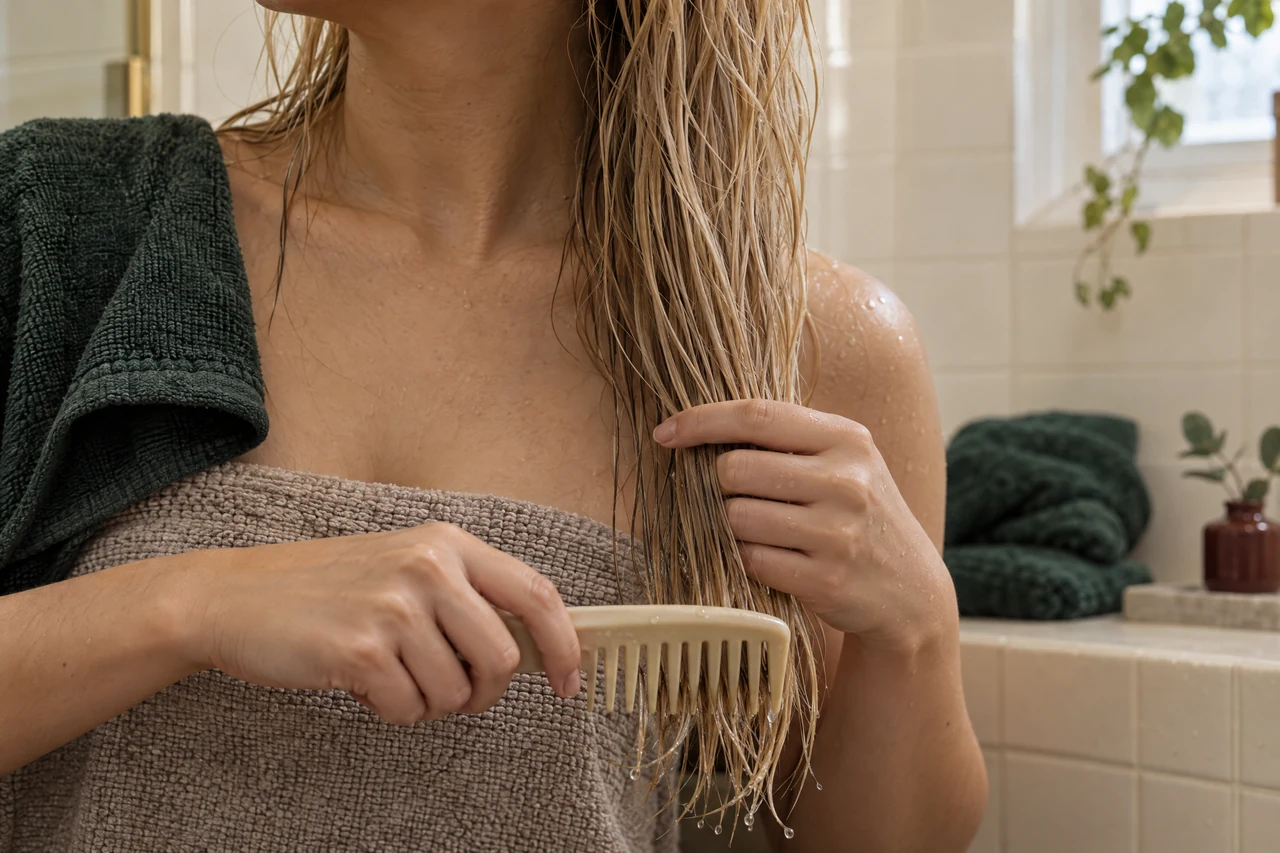
Prepare your natural hair with the additions removed, rather than trying to wash or untangle everything together. Choose the detangling stage and tool that suit your texture and product instructions. Where appropriate, support a small section above the tangle and release the ends gradually without dragging a comb from the roots through a knot. A wide-toothed comb in a concept image shows one approach, not a rule that every hair type must be combed wet.
Check the drying requirement for both the natural hair and the removable set. Do not rush attachment onto damp supporting hair because the surface feels smooth. If drying requires heat, use a gentle approach consistent with your care directions rather than repeatedly straightening the same bleached sections to match the additions. The guidance on hair care after bleaching can help you review handling; fitting should not add a new demand that the lengths cannot comfortably tolerate.
Separate matching the finish from preparing the attachment
The added hair may have a smoother texture or a different wave from your own. That mismatch is not a reason to pile on coating products or increase heat until both look identical. Ask whether a different finished style would blend more gently, or whether styling only your existing hair makes more sense. There is no universal waiting period after bleaching that replaces checking current condition and the actual fitting instructions.
Choose comfort over a more secure-looking hold
If a clip slides, do not immediately add more clips, backcomb harder or keep repositioning it into the same weak area. Stop and consider whether the product residue, clip condition, placement or proposed amount of added hair needs professional review. These possibilities cannot be diagnosed from softness alone. A clip that stays put is not necessarily a comfortable fit, and a small attachment is not automatically a low-stress one. Avoid using fragile hairline strands as a convenient anchor.
The AAD's extension safety guidance explains that repeated pulling can cause breakage and traction alopecia, and that pain or headache signals excessive tightness. Stop wearing an uncomfortable attachment rather than waiting for it to feel normal. If you are concerned about hair loss, arrange a dermatologist assessment. These safety points apply even when the added hair is removable; the absence of glue or heat during installation does not remove the possibility of pulling.
Know when care takes priority over fitting
Repeated snapping during ordinary gentle handling, a difficult mat around a proposed support section or discomfort before fitting are reasons to postpone additions. Do not schedule further bleaching or another chemical service simply to improve the blend while those problems are unresolved. Seek healthcare advice for persistent scalp pain, irritation or suspected hair loss. A salon care discussion cannot diagnose a scalp condition or promise that a conditioning service will reverse damage.
Prepare an enquiry that allows a care-first decision
These 6 preparation questions help separate care needs from attachment requirements. Use the checklist to collect information before changing your wash routine or choosing a treatment. Include the bleaching history of the actual supporting sections, not just your latest colour appointment. Photograph your hair in natural light from the front, side and back, and send a separate photograph of the removable attachment if useful. Photographs can start the conversation, but cannot establish strength or comfort on their own.
For an event enquiry, explain the finish you want and whether you already own the set. Ask if advice or fitting for that removable system is available, what to bring, and whether styling your natural hair is a suitable alternative. Confirm any preparation, service scope and charge before arranging a visit. This gives room for an honest care-first answer instead of treating the event deadline as a reason to push ahead with an unsuitable attachment.
Make removal part of the plan before you wear the set
Ask how to release each clip without dragging it through the natural hair and what to do if it catches. Follow the set's wear and removal directions; do not assume temporary hair can stay in for washing or sleep. The AAD specifically advises removing clip-ins before washing natural hair. Have a style without additions ready, so finding that a set is unsuitable does not leave you dependent on forcing it to work.

Compare the preparation decision, not softness alone
| Situation | What to confirm | Care-first response |
|---|---|---|
| Dry ends but comfortable supporting sections | Product placement permitted by both sets of directions | Care for the lengths; assess attachment suitability separately. |
| Coated hair where clips would sit | Which product is leaving residue and what the set requires | Review permitted placement rather than skipping all conditioning. |
| Clip slips during fitting | Clip condition, placement and suitability of the proposed set | Stop; do not chase grip with stronger pulling or repeated teasing. |
| Supporting hair keeps snapping | Current condition and whether any additions are appropriate | Postpone fitting and further chemical work pending assessment. |
| Scalp pain or concern about hair loss | Whether healthcare advice is needed | Stop uncomfortable wear; seek medical assessment rather than cosmetic reassurance. |
Your preparation checklist
- Which exact removable set and clip design are you planning to use?
- Which proposed supporting sections have been bleached, and what problems have you noticed?
- What do your rinse-off and leave-in product directions say about placement?
- What do the attachment instructions require for residue, drying and preparation?
- Can the intended style and removal be managed without pulling or repeated teasing?
- If care needs and fitting instructions conflict, what style without additions could you choose?
Frequently asked questions
Should I skip conditioner so clip-ins hold better on bleached hair?
Not as a blanket rule. Keep needed care for your natural hair and check the actual attachment instructions alongside your product directions. A restriction around a supporting section is not automatically a ban on conditioning the ends. If you cannot meet both safely, prioritise care and postpone the set rather than making the hair harder to handle for grip.
Is balancing soft ends and temporary extension attachment grip mainly about using less oil?
No. Product amount is only one part of the question. Placement, rinsing, the clip mechanism, supporting hair condition and removal all matter. Less oil cannot make a fragile section suitable for extra weight, and a secure-looking attachment can still pull. Review the complete preparation with someone familiar with the system instead of selecting an oil quantity as a safety test.
Does a conditioning treatment mean I can wear clip-ins straight afterwards?
No. A softer cosmetic finish does not prove attachment suitability or override product and fitting directions. Confirm the preparation and drying requirements, then assess the supporting sections separately. If the hair keeps breaking, tangles severely or the fit feels uncomfortable, choose existing-hair styling and seek appropriate advice. No fixed interval after a treatment can guarantee that wearing the set will be suitable.
Ask about care before committing to temporary added hair
Contact Vit So on WhatsApp +85253057561 with your bleaching history, current care products, clip-in instructions and intended style. Ask whether an assessment, relevant care or existing-hair styling can be arranged at 252 Hollywood Road, Sheung Wan, Hong Kong. Confirm removable-system service availability, preparation, consultation language and the actual charge before visiting. An enquiry is not a confirmed appointment or a guarantee that fitting will be suitable.
Start your WhatsApp enquirySources & further reading
- American Academy of Dermatology: How to prevent hair damage from a weave or extensions
Dermatologist guidance on caring for natural hair, removing clip-ins before washing, avoiding excessive pulling and seeking help for hair-loss concerns. It does not supply a bleached-hair fitting guarantee.
- Donna Bella Hair: How to Use Clip-In Hair Extensions
A manufacturer-specific example of pressure-clip wefts, avoiding excessive oil or product before fitting, and conditioning the removable hair separately. Not a product endorsement or a universal preparation routine for bleached hair.



