







Hair porosity and hair treatment: one factor among several
Consider how the hair behaves when wet and dry alongside its processing history and strand thickness. Older, chemically treated ends may not respond like unprocessed roots. Those differences are useful observations, but they do not justify a universal ingredient prescription. Describe the sections and care response rather than forcing all your hair into one category.
Porosity concerns how the hair fibre takes up and retains water in relation to its outer protective layer, the cuticle. The New York Society of Cosmetic Chemists overview of hair porosity explains that porosity can vary between fibres and along their lengths. High and low are useful comparison terms, not fixed identities that describe every strand equally.
Keep strand diameter separate from this discussion. Fine hair describes an individual strand's thickness; it does not establish how processed its surface is. Likewise, a dense head of hair may take longer to dry because there is more hair, rather than because every strand has low porosity. Describe the amount of hair, its natural pattern and its processing history before interpreting drying behaviour.
For example, when you are growing out highlights, unlightened new growth and repeatedly lightened ends have different histories. The useful question is where care is needed, not which single category wins. If bleaching is part of that history, hair care after bleaching helps you consider handling and protection of those particular lengths.
Use hair porosity and hair treatment as a discussion framework
Give observations a location and a time. Say that the ends catch during detangling after washing, or that the crown feels heavy after a mask, rather than simply saying your hair rejects moisture. Explain whether you want easier combing, less roughness or lighter movement. These goals can overlap, but the amount and placement of product may need to differ across the head.
Questions about high porosity hair treatment
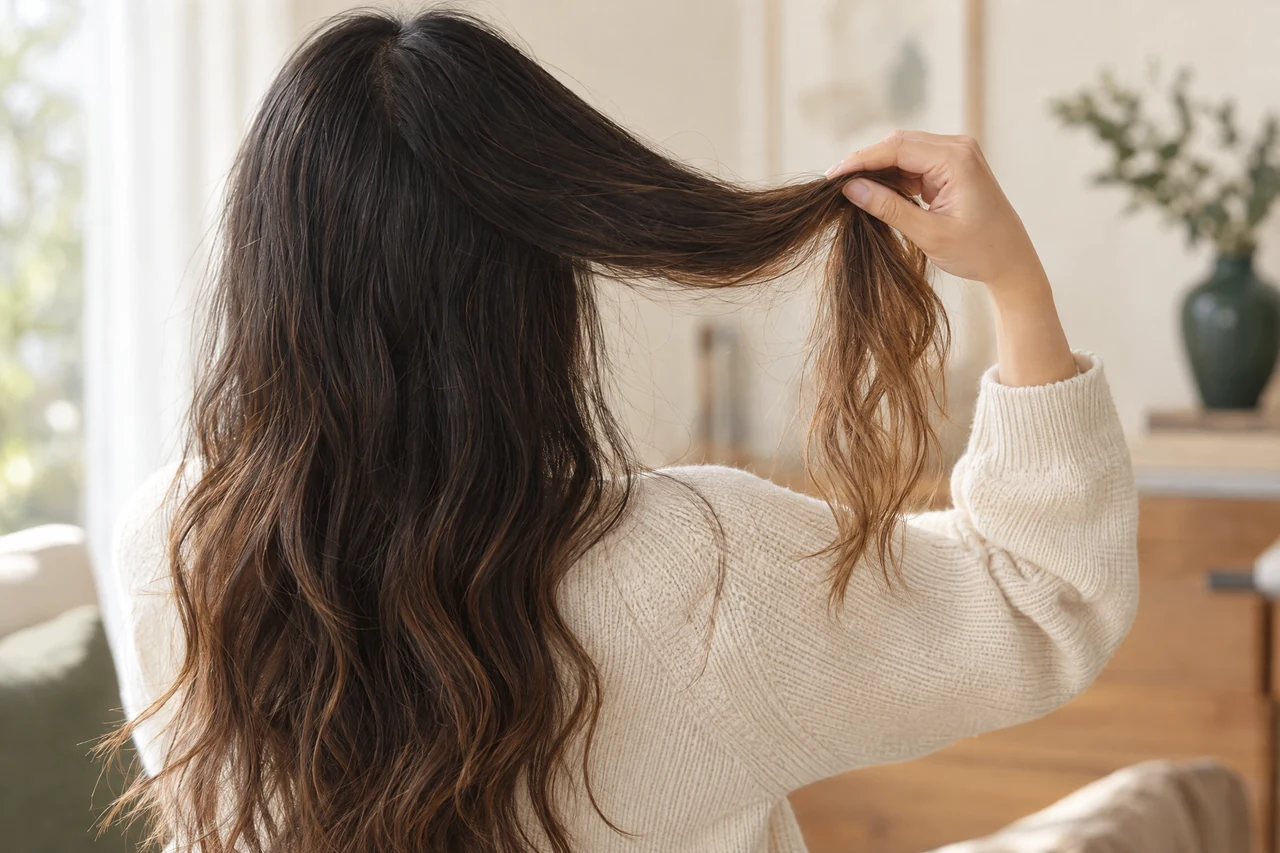
High porosity hair treatment is often discussed where hair takes up moisture readily but feels rough or hard to manage. Deep conditioning for high porosity hair should still be chosen by the actual formula, directions and hair history. Do not assume a richer product will repair damaged sections permanently or make them suitable for another chemical service.
Readily wetting lengths can still feel dry or difficult to comb once they are dry. That feeling is not a direct measurement of water inside the hair. The cosmetic chemists' overview notes that perceived moisturisation does not necessarily correspond to actual moisture content. A product may make hair feel softer through lubrication or surface deposition, so judge the practical benefit without treating touch as laboratory evidence.
The review Hair Cosmetics: An Overview describes bleached and chemically treated hair as more porous and more receptive to conditioning ingredients than virgin hair. It also identifies reduced friction and improved combability as conditioner functions. This supports discussing the treatment history and detangling goal; it does not mean the richest mask is automatically best for every processed strand.
Continue with deep conditioning treatment for that specific comparison and the preparation questions it raises.
If your ends feel rough but collapse under several layers of cream and oil, more product may trade manageable texture for unwanted weight. Ask whether an existing rinse-out conditioner can be applied more carefully before adding another step. Where strands are snapping or tangles repeatedly catch at the same area, explain that separately from frizz so fragile lengths are not mistaken for a simple request for extra gloss.
Review moisture behaviour and fragile lengths together
Check whether the difficulty began after bleaching, a perm, straightening or repeated heat styling. Record where those processes overlap. During detangling, support the section and avoid pulling through resistance. A comfortable, smoother finish is a worthwhile cosmetic goal, but it is not permission to repeat a chemical service on the same lengths. Keep the next colour or texture appointment in the conversation when discussing care.

Questions about low porosity hair treatment
Low porosity hair treatment discussions may focus on how care sits on the surface and whether hair feels coated or heavy. Review the amount, placement and rinsing directions before adding more. Do not invent extra heat or extend contact time to force a product into the hair; follow its instructions and discuss the response of the actual lengths.
A coated feeling can be useful feedback without proving low porosity. Consider whether a mask reached the roots, whether it was rinsed as directed, and whether a leave-in was layered over other styling products. A formula that feels pleasant on the ends may be too noticeable near the crown. Review those choices before rejecting an entire ingredient family or assuming your hair needs stronger treatment.
Surface activity is not automatically a failure. Conditioning ingredients can improve slip and reduce friction without every ingredient needing to travel deep into the fibre. The hair cosmetics review emphasises interactions within a formula, rather than attributing performance to one fashionable ingredient. Compare the whole product, its intended role and the finish after washing instead of deciding from a single word on the label.
Continue with moisture vs protein treatment for that specific comparison and the preparation questions it raises.
Watch for product weight without forcing absorption
Change a controllable detail, such as placement or the directed amount, rather than changing the shampoo, mask and styling routine together. Distribute care through the intended area and rinse thoroughly when required. Notice whether the ends still move and whether the crown stays comfortable. If you dislike the finish, bring the product name and instructions to the discussion; a vague description such as heavy treatment leaves too much uncertain.
Why a float test cannot settle the care plan
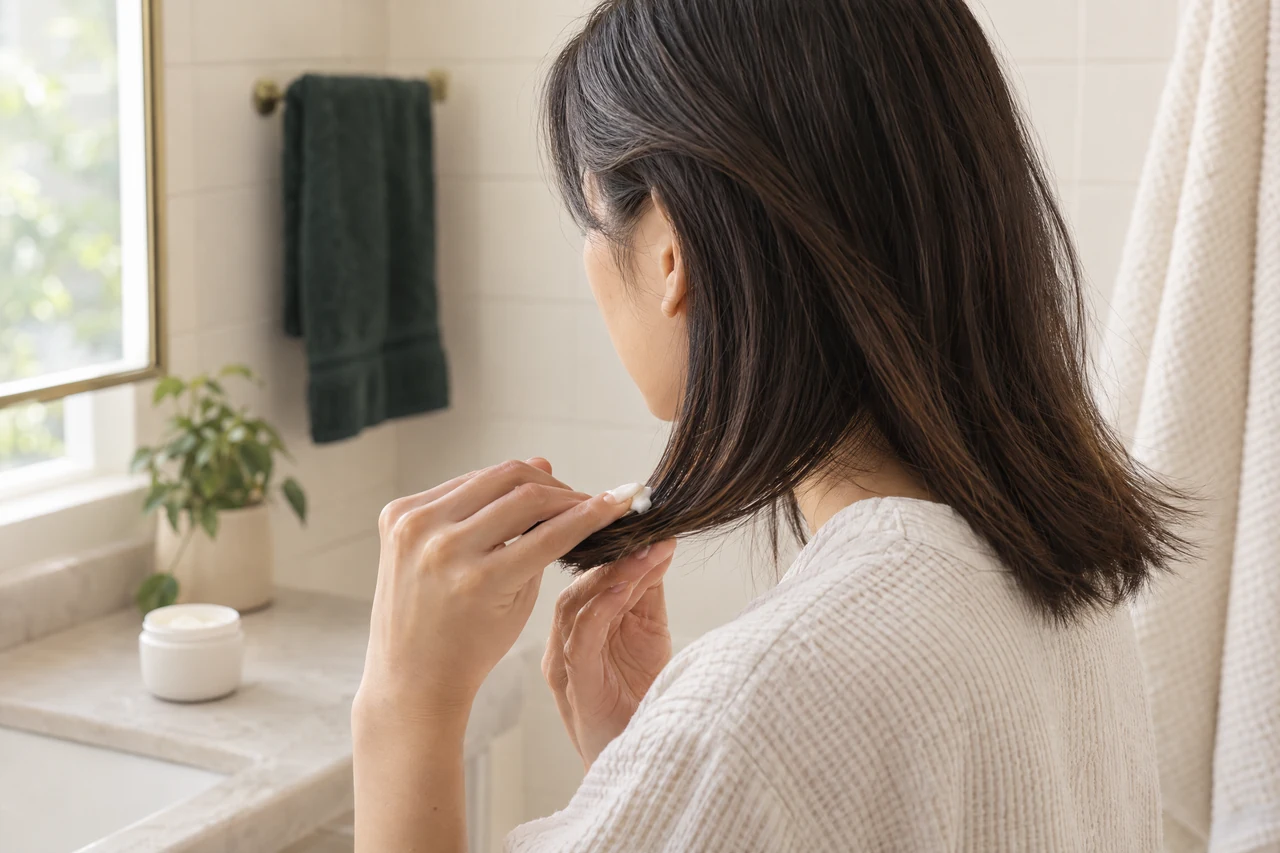
A strand floating or sinking in water is not a complete assessment of the hair or a medical test. Product residue and the handling of the sample can affect what you see. Bring observations from ordinary washing, drying and detangling, together with the processing history, so care can be discussed without overstating a home result.
The cosmetic chemists' overview describes consumer float and spray tests as qualitative methods with limitations, even when conditions are controlled. A strand in a glass cannot tell you how much weight you will tolerate, how a mask interacts with your styling products or whether processed ends can withstand another service. There is no need to keep repeating the test until a preferred label appears.
Water beading or a long drying time should also stay in context. Note whether hair was freshly washed, whether a leave-in was present and whether it was left in a towel or tied up. Those observations make a care conversation more specific, but they do not create a home diagnosis. The aim is a routine that works on your actual hair, not a perfect category.
Everyday observations are more useful than a single result
Compare the same areas during your usual wash routine, after rinsing and once dry. Look for recurring differences: coated roots, rough ends, difficult knots or reduced movement. Keep the washing and styling context similar where practical, and record any changes you do make. Do not deliberately over-wash, stretch wet strands or add heat for the sake of testing. Ordinary care provides enough useful details to start the discussion.
Give different hair sections different care priorities
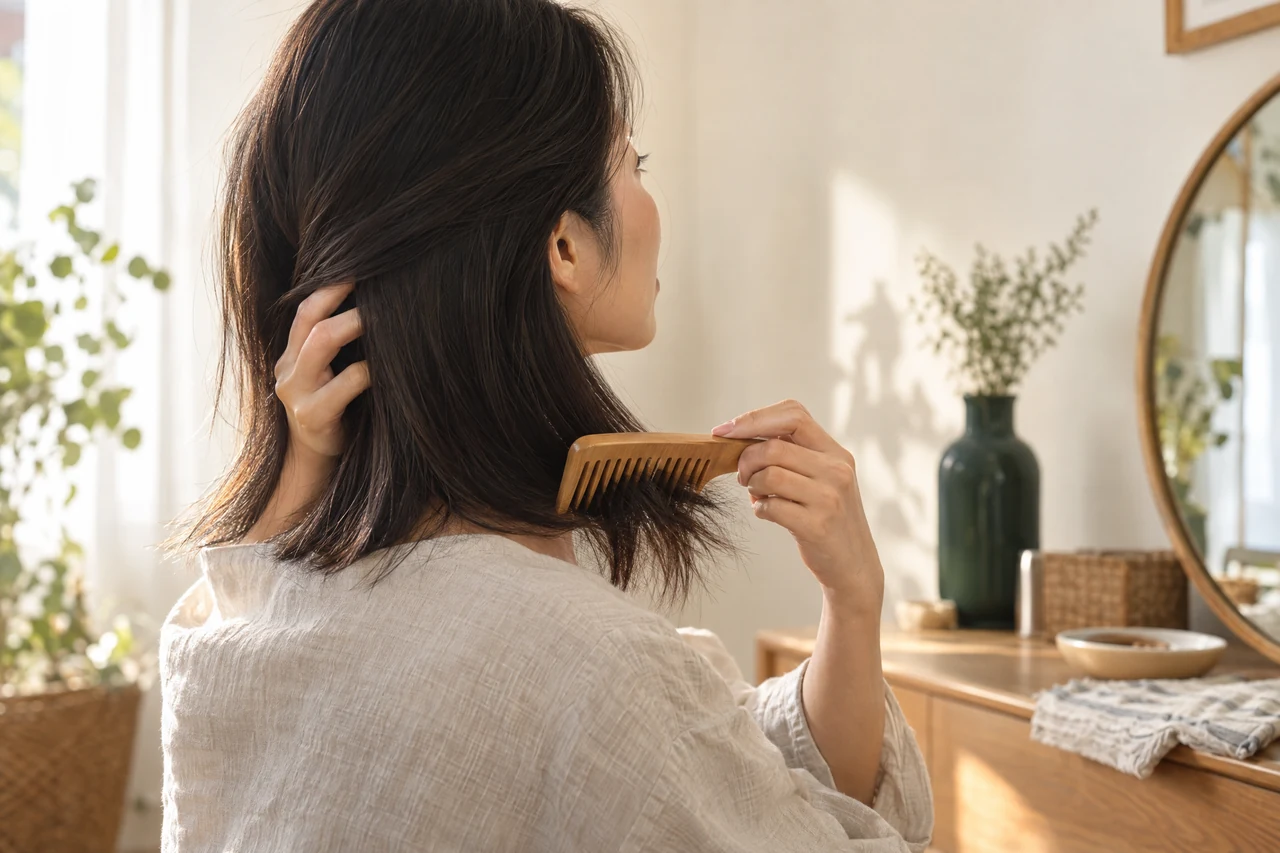
An oily scalp and rough lengths can coexist. Increasing mask application at the roots does not necessarily help the ends, while using a stronger cleanser everywhere may make already awkward lengths harder to handle. Separate scalp cleansing from the placement of conditioning care. This is particularly useful when you want to retain light roots without leaving processed ends difficult to comb.
The American Academy of Dermatology's tips for healthy hair recommend conditioner after washing, focusing on the ends for fine or straight hair and the lengths for dry or curly hair. The guidance also recommends gentle detangling starting at the ends and limiting excessive heat. These are general care principles, not a test that assigns porosity.
Keep the finish you want in view
For natural waves or curls, decide whether you want defined groups of strands or a looser finish before layering styling products. For straighter hair, watch whether softness comes with an unwanted flat outline. Product weight is a separate decision from porosity: the guide to how to choose a hair treatment for fine hair explores that balance without assuming fine strands all behave alike.

Prepare a useful porosity and care enquiry
Use the 6-step checklist below to prepare a care enquiry. These are editorial preparation steps, not a scoring system or a measurement of porosity. A short description of the awkward areas, together with your current products and processing history, is more useful than a firm label based on a home test.
When comparing a salon option, ask which sections would receive care, what the procedure aims to improve and how you should judge the response at home. Clarify any heat involved, the products used and the aftercare directions. Ask about duration and the quote before arranging the visit; neither a porosity label nor the word treatment specifies those details.
Review hair treatment to check its service scope and the details to share before arranging the related work.
Describe changes after the first ordinary wash
When reviewing the finish, explain what happened after washing and your usual styling rather than judging only the fresh blow-dry. Note whether detangling became easier, which areas felt coated and whether the movement you wanted remained. Share discomfort promptly; persistent scalp irritation, sores or unexplained hair loss need medical assessment rather than a stronger cosmetic mask. Useful feedback keeps the next care decision focused.

Compare porosity-related behaviour without turning observations into a diagnosis
| Observation | What to consider | Practical care question |
|---|---|---|
| Lengths wet readily but feel rough when dry | Processing history and surface condition, not touch alone | Does the directed conditioner improve detangling without excessive weight? |
| Products seem to sit on the hair | Amount, placement, rinsing and existing styling layers | Would more careful application work better than adding another mask? |
| Roots feel light but older ends catch | Different histories within the same head of hair | Can care focus on the ends while preserving root movement? |
| Hair takes a long time to dry | Density, length, product use and drying method as well as fibre behaviour | What else changed in the routine before the drying time changed? |
| A strand floats or sinks | A limited qualitative observation, not a complete assessment | What do ordinary washing and detangling reveal about the sections needing care? |
Your preparation checklist
- Identify the sections that feel rough, coated or difficult to detangle; distinguish the roots from the mid-lengths and ends.
- List bleaching, colouring, perming and straightening history, including approximate timing and overlap on existing lengths.
- Bring current shampoo, conditioner, mask and leave-in names or photographs of their labels and directions.
- Describe your washing and drying routine, including heat styling and when heaviness or roughness becomes noticeable.
- Choose the finish you want to preserve, such as root lightness, natural curl shape or freely moving ends.
- Ask about product placement, the intended cosmetic benefit, procedure directions, aftercare, duration and the quote before arranging a visit.
Frequently asked questions
Can roots and ends have different needs?
Yes. They can have different chemical histories and respond differently to care. Describe each area rather than assuming one label explains the entire head of hair.
Is fine hair always low porosity?
No. Strand thickness and porosity describe different characteristics. Consider both alongside product response and processing history when discussing care.
Does porosity tell me I need protein?
Not by itself. A porosity label is not proof of a deficiency or a prescription. Compare the actual product, your history and the care goal.
Can conditioning change my natural curl pattern permanently?
A softer, more manageable finish is not the same goal as permanently changing the hair's shape. Clarify whether a proposed service is ordinary conditioning or involves a smoothing or straightening procedure; the names alone do not settle that distinction.
Make your care enquiry specific to your roots and ends
Contact Vit So in Sheung Wan with your processing history, current care products and the finish you want to keep. Discuss the areas needing attention and confirm the proposed scope, timing and quote. An enquiry is not a confirmed booking.
Start your WhatsApp enquirySources & further reading
- An Overview on Hair Porosity
Porosity variation along fibres, limitations of qualitative home tests and the distinction between perceived moisturisation and measured moisture.
- Hair Cosmetics: An Overview
Chemical processing, hair weathering, conditioning affinity and the roles of formulation interactions and friction reduction.
- Tips for healthy hair
General conditioner placement, gentle detangling and limiting heat; not a porosity diagnosis or endorsement of a salon.



