







Why is my hair dry after conditioning? Locate the roughness
Compare the roots, mid-lengths and ends under your usual wash routine. Note which areas were bleached, coloured or repeatedly heat-styled and where hair catches when combing. A dry feel does not identify a single ingredient deficiency. The pattern and history help frame a useful care discussion without diagnosing the hair from appearance alone.
Make the description more specific than 'my conditioner does nothing'. Does the hair feel slippery while wet but rough once dry? Are the tips difficult to separate while the middle feels soft? Or does the whole length feel coated and stiff after styling? These observations point to different steps to review. You do not need to rub strands repeatedly or pull them until they snap to collect useful information.
The review Hair Cosmetics: An Overview explains that conditioners lubricate the hair surface, reduce friction and improve combability. This helps explain why easier detangling can coexist with rough tips. A better feel is a useful cosmetic benefit, but it is not evidence that every previously processed section has returned to its original condition.
Start the question why is my hair dry after conditioning with location
Look at the back as well as the front pieces you can easily reach. Note whether roughness follows an older lightened area, a frequently styled fringe or the last part of the ends. Record when it becomes noticeable: after rinsing, after towel drying or later in the day. Keep scalp sensations separate from the feel of the lengths. An oily root area does not mean that older ends need no conditioning, and rough ends do not establish that the scalp is dry.

Check how the conditioning step is used
Review the product's application area, amount, contact time and rinsing directions. A formula can feel heavy in one area while another remains rough. Change one step at a time so you can judge its effect. Do not extend contact time or layer multiple masks on the assumption that a stronger routine must solve persistent dryness.
Check whether the product actually reaches the sections that catch. Spreading a large amount over the outer surface can leave the underside unevenly covered. Gently separate the lengths for application without dragging fingers through knots. Follow the label's instructions about wet or towel-dried hair, and use its stated contact time rather than a social-media rule. A thicker texture is not a reliable measure of suitability.
The American Academy of Dermatology's healthy hair tips distinguish placement by hair type: conditioner on the ends for fine or straight hair, and across the length for dry or curly hair. Use this as a practical starting point alongside the product directions. If you are comparing a hair mask vs conditioner, first establish whether the mask replaces or supplements your usual step rather than automatically applying both.
Directions and placement before extra layers
Rinse-out and leave-in products are not interchangeable. The AAD's leave-in conditioner guidance explains that they have different formulations. Do not turn a rinse-out product into a homemade leave-in by diluting it. A suitable leave-in may help some longer or chemically treated lengths, but begin with a small amount where needed. Fine hair may need a lighter formula to avoid a limp, greasy finish.
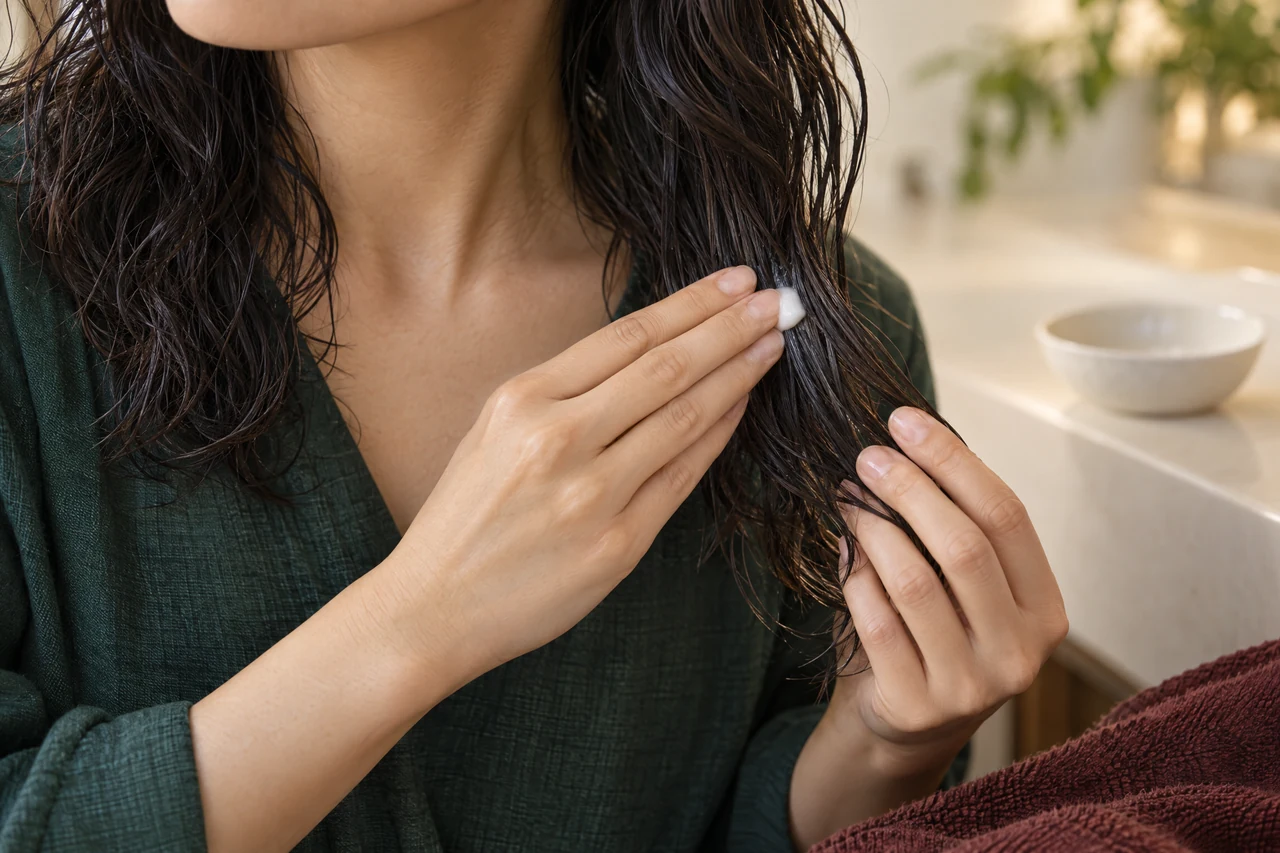
Hair care for dry ends
Hair care for dry ends combines suitable conditioning with gentler detangling and less friction or repeated heat. Follow product directions and avoid dragging a brush through resistance. If the tips are split or repeatedly catch despite softer feel, discuss trimming separately. Conditioning should not promise to permanently join existing splits or undo every effect of old chemical processing.
Softness and the condition of the tip are separate observations. A product may make the surrounding length easier to handle while a visibly divided end remains. Before agreeing to a trim, show which lengths you want to retain and ask which areas would be removed. A targeted discussion is more useful than assuming every rough strand requires a large cut, or that keeping every centimetre is always the gentlest option.
Continue with trim or treatment for split ends for that specific comparison and the preparation questions it raises.
Reduce avoidable wear on the oldest lengths
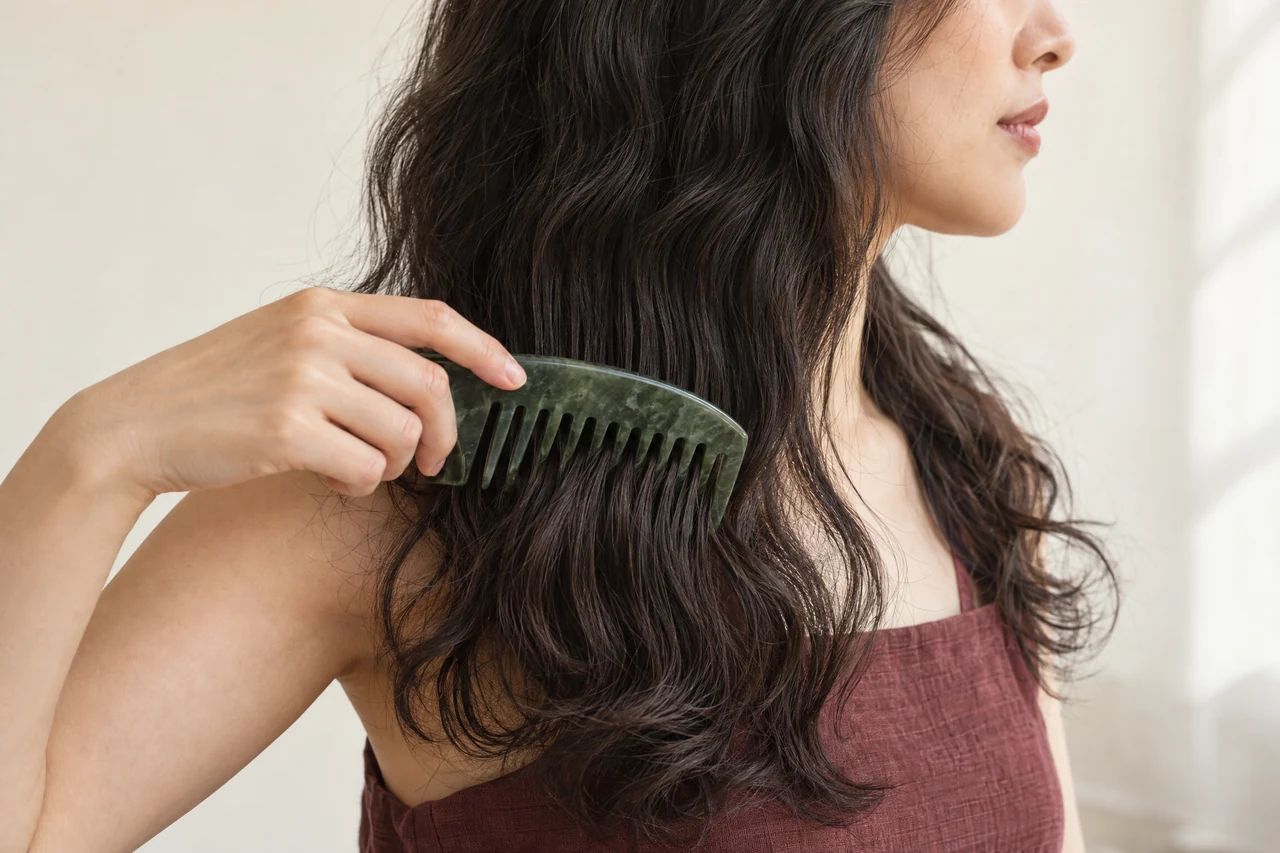
Start detangling at the ends and work upwards as resistance clears, supporting the section rather than pulling at the roots. The AAD advises a wide-tooth comb for wet detangling and notes that timing differs for straight and thick curly hair. For fragile ends, do not keep brushing to test whether conditioning has worked. Also notice repeated contact with bag straps, collars and tight fastenings; moving trapped hair out of the way is a simple handling change, not another product purchase.

Keep hair soft between salon treatments
For how to keep hair soft between salon treatments, choose a manageable routine based on the actual care directions and observe normal washing, combing and drying. Keep notes on slip, roughness and weight. Review recent product changes and habits before repeating a visit; home care and salon care should complement each other rather than become a race to add more steps.
A salon finish is not always a fair baseline for your normal home routine. Sectioning, drying direction and finishing products may differ. Compare your next home wash with a previous home wash, not only with the polished finish immediately after a visit. In Hong Kong, a rainy commute or a busy workday can also change how hair sits; appearance alone does not prove the conditioner has stopped helping.
If roughness appears mainly after repeated drying or ironing, review how to protect hair from heat styling separately instead of making the conditioning step responsible for all subsequent wear.
Continue with how often should i get a salon hair treatment for that specific comparison and the preparation questions it raises.
Build a routine you can repeat without overloading
Keep the helpful steps realistic for an ordinary morning. Gently absorb water with a towel or T-shirt instead of rubbing; the AAD specifically recommends gentle absorption and limiting excessive heat. Choose a routine that leaves time for careful handling rather than several rushed layers. If you miss a styling step, note it without compensating with a much larger dose of conditioner at the next wash. Consistency makes the difference in feel easier to interpret.

Run a single-change check at home
Choose the most obvious mismatch first. If conditioner misses the underside, improve distribution while keeping the formula and contact time unchanged. If the rough feel starts after vigorous towel rubbing, change the towel technique without also buying a mask. If a new finishing cream leaves hair stiff, review that step instead of assuming you need a protein product. These are practical comparisons, not tests that diagnose a deficiency.
Use the 5-point checklist below to prepare your next routine review. It is an observation aid, not a required treatment schedule. Keep the comparison within your usual wash pattern and record unusual circumstances, such as swimming or a different styling method. Never continue using an irritating product merely to complete a comparison.
Judge the result by the goal you chose
Decide what improvement would matter: easier separation of the ends, less catching during gentle combing or a softer dry feel without added weight. Note each separately. Better slip with excessive heaviness is a trade-off, not an unqualified success. No improvement after a careful use review is a reason to reconsider suitability or seek advice, rather than to extend processing time indefinitely.

Bring useful observations to a salon discussion
Share the conditioner name, its directions and how you actually use it. Include masks and leave-ins as well as recent bleaching, colour, perms or straightening, even if the older work is now only at the ends. Explain whether softness is your main goal or whether you also want a different shape. Easier combing does not necessarily mean losing natural waves, and a straighter silhouette is a different request.
Review hair treatment to check its service scope and the details to share before arranging the related work.
Ask for a clear next step rather than a stronger label
Ask what the proposed care is intended to improve, which lengths it addresses and what home routine accompanies it. Confirm whether trimming is a separate decision and check the service scope and charge before proceeding. If breakage persists despite careful conditioning and handling, the AAD advises dermatological help. Scalp pain, persistent irritation or unexpected hair loss also belong in a healthcare discussion, rather than being treated as a reason to add cosmetic layers.
Dry feel after conditioning: match the observation to the next review
| What you notice | Review first | Avoid assuming |
|---|---|---|
| Soft middle, catching tips | End placement, gentle detangling and visible splits | A richer mask will permanently join split ends |
| Wet slip, roughness after drying | Towel handling and repeated heat | The conditioner had no benefit |
| Heavy surface, rough underside | Distribution and suitability of the amount | More product everywhere is better |
| Stiffness after a new finishing product | The changed styling step | Dry feel proves a need for protein |
| Persistent snapping on processed lengths | Processing history and professional advice | Another chemical service will resolve fragility |
Your preparation checklist
- Locate the rough area and note whether it appears after rinsing, drying or everyday wear.
- Record the conditioner, mask and leave-in names, directions and actual placement.
- Map older bleaching, colour, perms or straightening to the lengths still present.
- Choose a single suitable change and compare slip, dry feel and weight under a familiar routine.
- Flag visible splits or persistent breakage, and state your retained-length goal before discussing care or trimming.
Frequently asked questions
Does dry feel prove that I need protein?
No. Product use, old chemical processing and everyday wear can all matter. A dry feel alone is not a diagnosis or an ingredient prescription.
Should I buy a richer mask immediately?
First review your current product directions, placement and response. A richer formula may add weight without addressing the roughest sections or daily handling.
When should I ask for a hair-condition discussion?
If roughness is persistent or strands are breaking, bring your product routine and processing history. Pause additional chemical work on fragile areas while suitability is discussed.
Turn persistent roughness into a clearer care enquiry
Contact Vit So in Sheung Wan with the location of the dry feel, your current routine and the processing history of the lengths. Explain the softness you want and the length or natural movement you hope to retain. This helps frame a discussion about care, handling and any separate trimming decision. An enquiry is not a confirmed booking; suitability, service details and availability need confirmation.
Start your WhatsApp enquirySources & further reading
- Tips for healthy hair
Conditioner placement for different hair types, gentle towel absorption, detangling from the ends and limiting excessive heat.
- Dermatologists' top tips for using leave-in conditioner
Rinse-out versus leave-in formulations, modest targeted application, lighter products for fine straight hair and advice for persistent breakage.
- Hair Cosmetics: An Overview
Conditioning as surface lubrication and friction reduction, improved combability and the vulnerability of chemically treated lengths.



