







How to soften chunky highlights: name the problem first
A wide lightened ribbon does not physically become narrower just because finer strands are added elsewhere. Compare the ribbon width, surrounding depth and overall lightness in normal lighting. Decide whether you dislike the size of the bright area or the contrast around it; the distinction helps frame an assessment rather than promising a simple reversal.
Start with your usual parting and let your hair fall as you normally wear it. Locate the first area your eye goes to: a pale stripe beside the face, a broad panel across the crown or a bright block at the ends. A front ribbon may feel overpowering even when the back looks balanced. Describe its position instead of asking for the entire head to be made more natural.
Photograph the same area in indirect daylight and your everyday indoor lighting, without a colour filter. Then look from a normal mirror distance rather than only at an enlarged close-up. This separates a feature that dominates your daily appearance from a small detail that mainly stands out in a photograph. Keep an unmarked photo as well as a version showing the area you dislike.
Review hair highlights to check its service scope and the details to share before arranging the related work.
How to soften chunky highlights when the width is the concern
Ask whether changing the visible depth within selected light areas could interrupt the broad pattern, rather than requesting finer light strands around every existing ribbon. The distinction matters because adding lightness to the surrounding dark hair may reduce contrast while also moving you towards a much blonder overall result. Say whether you want less visible striping, less blonde overall or both. These are different targets, and the acceptable darker areas should be identified before discussing a technique.

Colour tone versus brightness
If the main concern is an unwanted warm reflection, ask about tone assessment. If the whole area feels too light, discuss the depth you would like to retain instead. Tone work does not permanently undo earlier lightening, and darker colour choices may behave differently on porous lengths, so the existing strands need review.
A ribbon can be a comfortable width but look too yellow beside a cooler brown base. Equally, a cool pale ribbon can still look stark against very dark hair. Cooler does not automatically mean subtler. When selecting a reference, compare its lightest pieces with the base, not only whether the shade is labelled ash, beige or caramel. Explain whether you would still dislike your current stripe if its warmth changed but its brightness remained similar.
The discussion of toner or colour correction for brassy hair is useful when unwanted warmth is the main issue, rather than the size or placement of the highlighted area. A product name alone does not establish how much darker a ribbon would become or whether its appearance would blend with the surrounding hair.
A warmer strand may need a different discussion from a pale one
Identify the warmth you dislike and the warmth you can accept. You may prefer a softly warm brown ribbon but not a yellow-looking end, or want to retain a light face frame while reducing its orange reflection. Bring a reference for the acceptable depth as well as the tone. Ask how colour might behave across the root, middle and ends, and what change could become visible as it fades. Avoid choosing the darkest or coolest option solely because it seems the opposite of the current problem.

Retaining darker spaces or letting the pattern grow
A softer impression may involve reconsidering the balance of light and dark areas or simply allowing the existing pattern to grow. Adding darker strands is a possible topic to assess, not an automatically available service or lasting reversal. Explain whether avoiding further lightening matters more to you than recreating a particular reference.
In its guide to dimensional blonde hair with lowlights, Wella describes adding pigment and pockets of depth to lightened hair. It also notes that darker pieces can feel like a substantial change and that this is an additional chemical service. For broad highlights, the useful question is where depth might help, not simply whether more dark strands are always better. Very dark pieces beside remaining pale ribbons may create a different strong contrast.
Keeping some bright hair can be a deliberate choice. You might want to preserve movement through the ends but quieten the crown, or retain a face-framing accent without repeated lightening elsewhere. Growing out the pattern avoids a new colour step, but does not immediately remove the old bright lengths. Decide which visible transition you can live with while those lengths remain.
Continue with growing out highlights for that specific comparison and the preparation questions it raises.
Avoid assuming more lightening will create softness
Fine highlights can be useful in a new design, but they should not be treated as an eraser for old broad ones. If your priority is to look darker overall, adding light strands may work against that goal. If your priority is avoiding another chemical appointment, accepting some visible ribbons may be preferable to chasing a perfectly blended reference. Discuss both the immediate appearance and what you would be willing to maintain later.

Bring the history of the existing ribbons
Share dates and details of previous colour work, especially areas that have been lightened more than once. Current photos can identify the visual concern but cannot establish chemical condition alone. Agree which areas would be left untouched and what work is feasible before confirming a correction plan; no home formula or one-visit guarantee is provided here.
Record salon lightening, home dyes, toners and colour-depositing products separately. Include straightening or perming if those processes affected the same lengths. If you do not know the product or technique, say so rather than guessing. An older photo can help show where a former face frame or full-head highlight pattern sits now, even if you cannot retrieve every appointment detail.
Tell the stylist about tangling, breakage or a change in feel, and mention any previous scalp or skin reaction. The American Academy of Dermatology's colouring advice says to follow manufacturer instructions when testing store-bought colour and not to dye if an allergic reaction occurs. A visual strand assessment and a skin-safety discussion answer different questions; neither should be replaced by a flattering reference photo.
Continue with colour correction for that specific comparison and the preparation questions it raises.
Old processed areas and new growth should not be conflated
Your natural root colour can be a useful guide to the depth you miss, but it is not evidence that the lighter lengths will accept colour in the same way. Point out where the bright ribbons begin and whether the ends have been processed during several appointments. Ask which areas need direct examination or a strand test before a colour decision. Make the keep list as clear as the change list, especially when some older light sections still suit you.
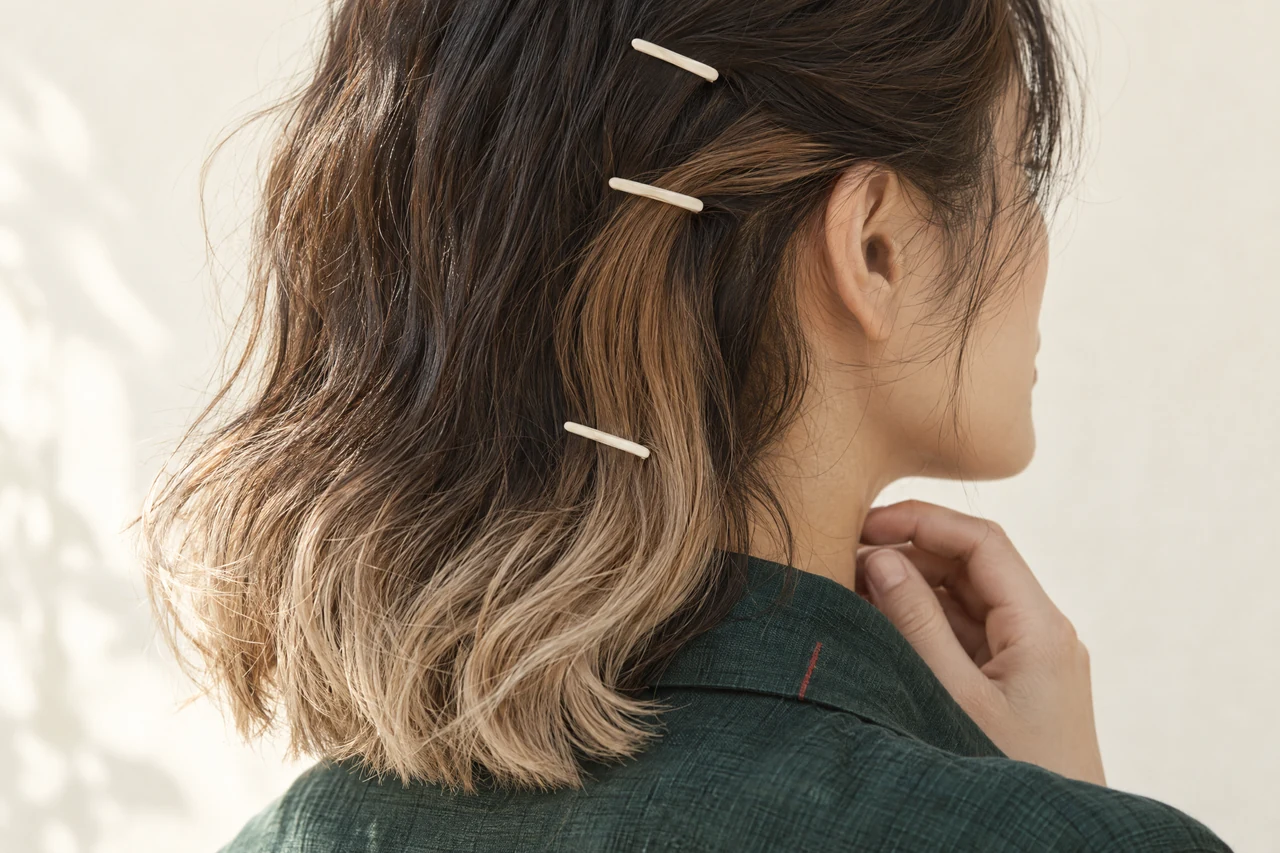
Make the pattern easier to live with while deciding
Try your usual loose style, a gentle change of parting and a loosely secured ponytail before deciding which area needs attention. These can change which ribbons are exposed without changing their colour. They are temporary presentation choices, not chemical fixes. If your hair is naturally wavy, assess the pattern in that texture as well as a straight finish; a reference styled with large waves may hide boundaries that remain obvious when your hair falls straight.
Do not rely on daily high-heat curling to disguise stripes you dislike. In its guidance on preventing everyday hair damage, the AAD recommends conditioner after every shampoo, absorbing water with a towel instead of rubbing, and using the lowest heat setting. These practices concern handling and damage prevention, not changing highlight width. For the old lightened lengths you plan to keep, hair care after bleaching explains the separate care questions worth considering.
Keep observation separate from attempts to cover the colour
Tell the stylist what you currently use rather than adding a new dark dye or strong colour-depositing product before the enquiry. Keep photos of the existing pattern and ask for product-specific advice if maintaining the tone becomes part of the plan. If hair feels fragile, choose gentle handling over pulling it tightly to hide a bright section. The aim while deciding is to preserve a clear picture of your starting point and a routine you can realistically continue.

Agree on a smaller, clearer softening goal
Use the 6-step preparation checklist below to turn dissatisfaction into a focused enquiry. Instead of asking to remove every chunky highlight, describe what a successful change would let you do: wear your normal parting comfortably, keep some brightness through the ends or stop adding lightness to the crown. For a Sheung Wan consultation, your everyday hair and honest history are more useful than a heavily edited inspiration image.
Before agreeing to work, confirm the proposed areas, any assessment needed, what would remain visible and the quote for that scope. Ask what you would do if a darker colour fades and the old ribbons become more noticeable again. A modest change that respects your keep list may be a better fit than an ambitious redesign requiring ongoing colour maintenance you do not want.
Choose the compromise you would actually maintain
Rank your priorities: retaining brightness, reducing contrast or avoiding further processing. You can discuss all of them, but they may not point to the same plan. If an event is approaching, share the date without assuming a complete transformation is feasible beforehand. Agree whether the next step is examination, a limited colour change or leaving the pattern alone for now.

Compare the concern behind chunky highlights before choosing a softening direction
| What bothers you | Direction to discuss | Trade-off to understand |
|---|---|---|
| Broad ribbons look striped | Review the visible depth and placement within selected light areas | Fine new highlights do not remove the original lightened width |
| Warm reflection feels unwanted | Assess tone while specifying the brightness you want to retain | A cooler pale ribbon may still contrast strongly with dark hair |
| The whole pattern feels too blonde | Consider whether selected darker areas could retain dimension | Too much darkness can feel drastic and may create new contrast |
| You want to avoid further processing | Leave the old pattern to grow while reviewing daily presentation | Bright processed lengths remain visible during the transition |
| Only the front looks overpowering | Identify the face-framing area and protect liked sections elsewhere | A local concern does not automatically call for full-head work |
Your preparation checklist
- Photograph the current ribbons in indirect daylight and everyday indoor lighting, keeping unfiltered originals.
- Mark the bright areas you dislike and identify the lighter pieces or darker spaces you want to preserve.
- State whether width, warmth, brightness or placement is the main concern, and rank your priorities.
- Gather the dates and known details of lightening, colour and other chemical work on the existing lengths.
- Report changes in feel, tangling or breakage and any previous skin reaction; list current colour-depositing products.
- Confirm assessment requirements, the proposed areas, acceptable remaining contrast, maintenance expectations and the quote before agreeing to work.
Frequently asked questions
Will babylights make every broad ribbon disappear?
No. Fine new strands do not remove the original width of an already lightened area. Assess the contrast and existing condition before deciding whether more processing is appropriate.
Can darker colour permanently restore my natural base?
It can change the visible colour, but it does not restore the original unprocessed strand. Fading and porous areas may affect the result, so expectations need assessment.
Should I use a box dye to cover the highlights first?
Avoid adding another chemical step just to prepare for an enquiry. Share your current pattern and history so suitable options can be assessed without new unknowns.
Explain which bright ribbons you want to quieten
Send Vit So current photos, your previous colour history and the areas you would like to keep. Enquire about assessing a softer balance of light and dark for your everyday hair in Sheung Wan. The suitable scope, quote and visit arrangements need confirmation; an enquiry is not a confirmed booking.
Start your WhatsApp enquirySources & further reading
- How to Create Dimensional Blonde Hair with Lowlights
Lowlights add pigment and depth; darker pieces can feel like a substantial change, and applying them to previously lightened hair is another chemical service.
- Coloring and perming tips for healthier-looking hair
Manufacturer-directed testing of store-bought colour and avoiding dye when an allergic reaction develops.
- How to stop damaging your hair
Conditioning after shampoo, avoiding towel rubbing and reducing heat stress while caring for retained lightened lengths.



